
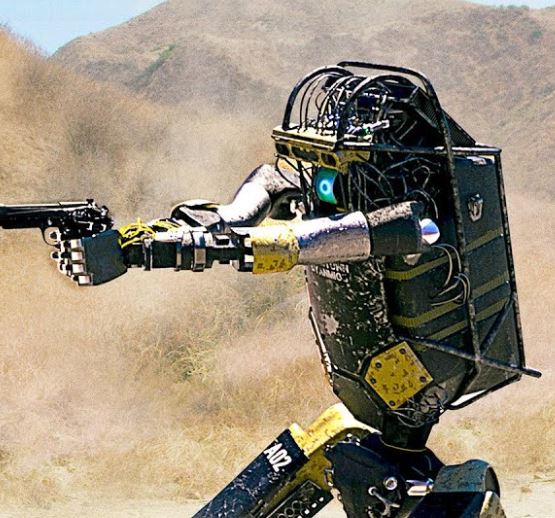
The Pentagon has requested $54 billion for artificial intelligence–driven warfare, a figure that dwarfs prior allocations and signals a decisive shift in how conflicts will be conducted going forward.
This is a restructuring of warfare, where autonomous systems are being positioned to operate across air, land, and sea, replacing traditional deployments with machine-driven execution at scale. CIA director David Petraeus said it was “the largest single commitment to autonomous warfare in history.” As the Guardian noted, $54 billion is an astounding figure that amounts to half of the UK’s entire defense budget.
What stands out immediately is the pace, because this is not a gradual transition. Autonomous drones, remote systems, and AI-assisted targeting are already being deployed in active theaters, and the cost structure of warfare is changing as a result, since low-cost, scalable systems reduce the financial barrier to engagement. This is a new arena with untold potential for destruction of civilizations.
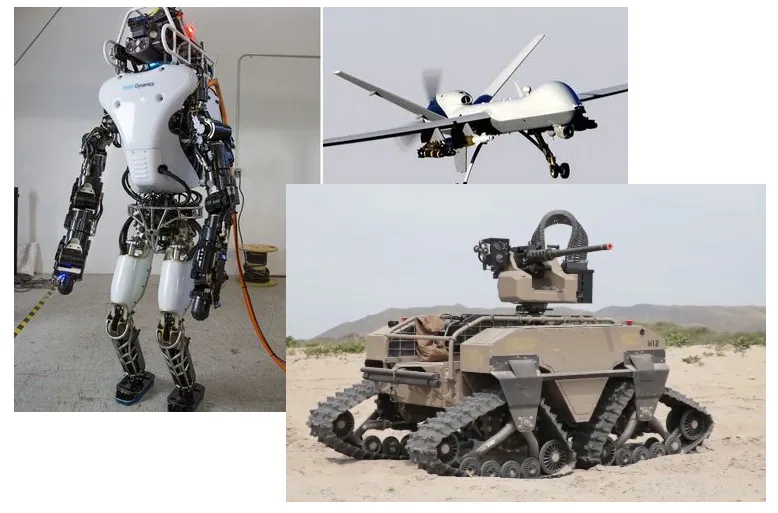
This is why the government and private sector are harvesting surveillance data. The same systems designed for data processing, automation, and consumer use are now being adapted for surveillance, targeting, and operational control, creating a convergence that centralizes both capability and influence.
Government is simulating battlefield outcomes in real time, which reduces reliance on human judgment and shifts authority toward machine-generated conclusions. A top general with experience will be second-tier to an advanced AI system capable of computing millions of scenarios in real-time.
There is no fully established doctrine governing the deployment of autonomous systems at scale, particularly for coordinated drone operations, and current models remain vulnerable to failure and manipulation. Again, deploying such systems without fully understanding their limitations introduces risks that extend far beyond conventional warfare.
This $54 billion request is absolutely absurd, considering the Pentagon already has a $1 trillion budget. But the Pentagon has never had a real budget—the agency has failed EVERY audit, and when a whistleblower was close to exposing fraud, a rogue terrorist defied the laws of physics by flying a plane into the building where the files were held. The Pentagon will spend that money whether the funding is approved or not, but the real question remains: how will advanced artificial intelligence change the future of warfare?