Author name: moderat ereport

Politics

What to know about the push for open primaries in Pennsylvania

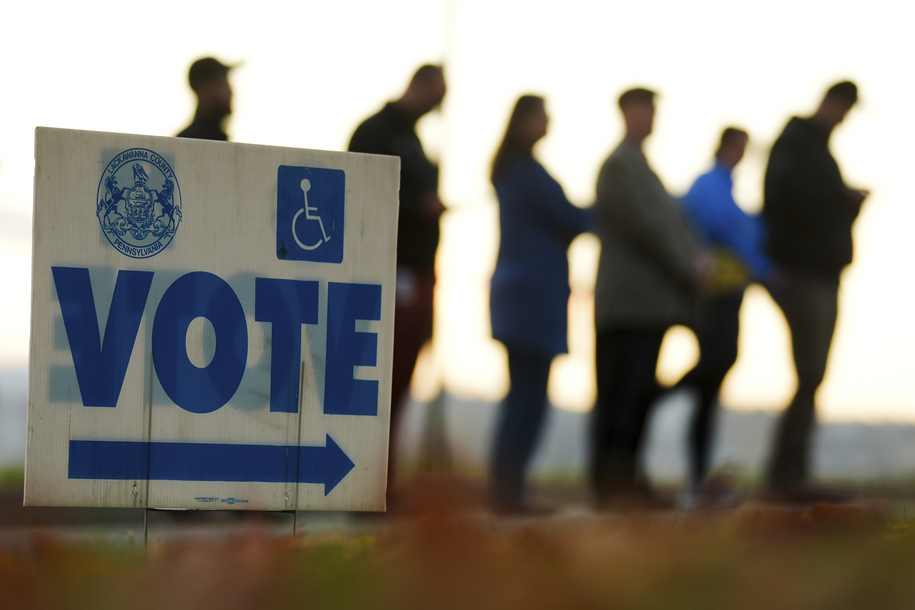
Proposals to give independent and unaffiliated voters a greater voice are popular, but they face tough odds in the legislature. By Carter Walker for Votebeat More than 3 out of 4 voters in Pennsylvania support opening up the state’s primary elections to independent voters, according to an August 2024 Franklin & Marshall poll. But despite that broad consensus, and the yearslong push from some state lawmakers and advocates to make it happen, Pennsylvania remains one of the most restrictive states in determining who can participate in primary elections. Lawmakers have introduced bills to open primaries, but so far, they haven’t gained much traction. Here’s a look at the effort, and where it stands. What is an open primary? According to the National Conference of State Legislators, an “open primary” occurs in states that do not ask voters to select a party when they register to vote, and that allow voters to choose each time which party’s primary they wish to participate in. But the term is often used as a catchall to describe a range of processes, including fully closed or partially open primaries. Pennsylvania has the most restrictive primary voting system possible, known as a fully closed primary. Under this system, only voters registered with a political party can vote in that party’s primary. According to the NCSL, Pennsylvania is one of just 10 states with such a strict boundary. Related | How debate over proof-of-citizenship laws reopened after decades Nine other states have “partially closed” primaries. They allow political parties to choose whether they want to allow unaffiliated voters to participate in their primaries, but parties can exclude registered members of other parties. Arizona, along with six other states, permits unaffiliated voters to participate in any party primary, but doesn’t allow registered party members to vote in another party’s primary. Fully open-primary states such as Michigan allow voters to cross party lines and vote in whichever primary they choose, regardless of party registration. But voters must choose a single party’s primary, and cannot switch between the parties for different races. What would a shift to open primaries mean? Proponents of opening Pennsylvania’s primaries to independent and unaffiliated voters argue that the move would have several benefits. First, they point out that independent, unaffiliated, and third-party voters are making up a larger portion of the electorate: The number of Democrats on Pennsylvania’s rolls has been shrinking, while Republican registrations have been growing, but the number of people registering as independent, unaffiliated, or members of a third party has grown more. Currently, more than 1.4 million voters are in that category, compared with roughly half that number 25 years ago. Related | Work on new voting system guidelines already in motion after Trump executive order While Democrats and Republicans are fairly close in registration numbers statewide, in many local communities, one of the two parties has a clear majority. This means candidates who win the primary often coast to victory in the fall, with only nominal opposition. A 2024 Spotlight PA analysis found that the vast majority of state legislative races on the ballot that year were decided in the primary. Proponents of opening up Pennsylvania’s primaries argue that this pattern effectively creates a system where the 1.4 million voters who aren’t registered with a major party cannot meaningfully participate in local elections. And “your tax dollars to pay for that primary election regardless,” said Lauren Cristella, president of the Philadelphia-based good government group Committee of Seventy, which favors opening the state’s primaries. “So it’s also an issue of taxation without representation.” Another key argument is that it would increase voter turnout. The May 20 municipal primary saw about 20% of registered voters participate. A study from the Bipartisan Policy Center found that when states open their primaries to unaffiliated voters, turnout increases by 5 percentage points. Research also suggests opening primaries can result in more ideologically moderate candidates. Opponents have argued that primaries are intended for members of a given political party to select who best represents the ideals of that party, and that opening it up to outside participants could mean electing representatives who don’t embody that party’s values. “Some of the argument is ‘Oh well these are our teams. You wouldn’t want the Steelers to pick the running back for the Eagles, or vice versa,’” state Sen. Camera Bartolotta (R., Washington) said at a recent Keep Our Republic event. “Right now I think because of social media, and the nastiness and the vitriol and the extremes (in) both parties, more and more and more people are abandoning that party affiliation.” Election administrators have noted that there may be some logistical challenges as well. For instance, members of local political committees are also elected during primaries. If the legislature were to pass a bill that allowed unaffiliated voters to participate in some primaries, such as for county commissioner, but not for party committee members, that would require more ballot configurations and more training to ensure that poll workers don’t hand voters the wrong ballot. What’s the status of the push for open primaries? There are currently two bills in the state legislature aimed at opening up Pennsylvania’s primaries. Rep. Jared Solomon (D., Philadelphia) has a bill currently making its way through the state House that would allow unaffiliated voters to participate in either the Democratic or Republican primary, but wouldn’t allow third-party voters. State Sen. Lisa Boscola (D., Lehigh) has said she plans to reintroduce a bill from the last legislative session that Sen. Dan Laughlin (R., Erie) co-sponsored, which would similarly open the primary election to independent voters, but not third-party voters. Additionally, it would prohibit independent voters from voting for party officers or committee members, a key difference between this proposal and Solomon’s. Related | What to make of a brazen case of election fraud in Pennsylvania However, election legislation of all types has had trouble in recent years getting through both chambers and to the governor’s desk. Republican leadership in the state Senate has been clear that any election reform must include expanded voter ID requirements. “Right now, there’s just gridlock in Harrisburg,” Cristella said. “There’s


Politics

Cartoon: Terms for our times

To support this work and receive my weekly newsletter with background on each cartoon, please consider joining the Sorensen Subscription Service! Also on Patreon. Follow me on Bluesky or Mastodon Related | Elon Musk’s America Party is all about keeping him in control

Politics

Takeover By Trump Allies Jeopardizes Jon Stewart And Stephen Colbert Shows

PoliticusUSA is independent, because our support comes 100% from readers like you. As corporate media bends to Trump, you can keep independent media alive by becoming a subscriber. Subscribe now Now that what is being called shakedown money in the form of a lawsuit settlement has been paid, the Paramount merger with Skydance, which is run by Trump allies the Ellison brothers will be completed in a matter of weeks. Paramount owns CBS and Comedy Central among other networks, and the new incoming ownership has made it clear that they want to remove what they call the liberal taint from their purchase. Paramount currently employs Jon Stewart and Stephen Colbert, and both of their futures are now uncertain. Oliver Darcy wrote in the Status newsletter: Inside “The Daily Show,” I’m told staffers have taken pride that Stewart showed once again he is willing to stand up to powerful interests, even if it potentially risks his future employment. And while they may not yet know it, inside certain power circles, there is an open question: How much longer will Stewart have this platform? Indeed, the reality is that the ground under not only Stewart, but also Stephen Colbert, is shifting fast. Skydance, led by Larry and David Ellison, now believes its merger with Paramount will close in the next several weeks, I’m told. Much of the attention has focused on how the Ellisons will reshape “60 Minutes” and CBS News. We first reported that David Ellison met with Bari Weiss about a possible role at CBS News, and it is clear the Ellisons want to rid the network of what they see as a liberal taint. But little has been said about the futures of Colbert and Stewart, who have been two of Trump’s most consistent comedic antagonists, under the new corporate leadership. Jon Stewart’s contract is up at the end of 2026, and he is likely being paid a large sum of money to do one show a week and oversee The Daily Show. New ownership could elect not to renew Stewart, call it a cost-cutting move, and avoid firing him. Read more

Politics

How Joseph Kurihara Lost His Faith in America

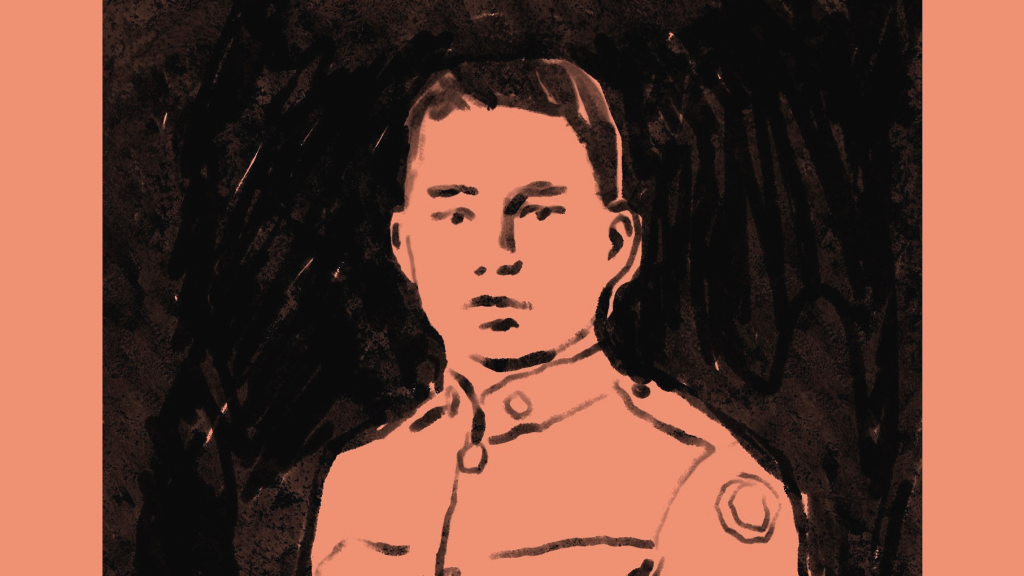
Joseph Kurihara watched the furniture pile higher and higher on the streets of Terminal Island. Tables and chairs, mattresses and bed frames, refrigerators and radio consoles had been dragged into alleyways and arranged in haphazard stacks. It was February 25, 1942, two and a half months after the attack on Pearl Harbor, and the U.S. Navy had given the island’s residents 48 hours to pack up and leave. An industrial stretch of land in the Port of Los Angeles, Terminal Island was home to a string of canneries, a Japanese American fishing community of about 3,500, and, crucially, a naval base. A week earlier, President Franklin D. Roosevelt had signed Executive Order 9066, authorizing military commanders to designate areas from which “any or all persons may be excluded.” The order made no mention of race, but its target was clear: people who were ethnically Japanese. FBI agents had already rounded up and arrested most of Terminal Island’s men, leaving women to choose what to keep and what to leave behind. Kurihara watched as children cried in the street and peddlers bought air-conditioning units and pianos from evacuating families for prices he described as “next to robbery.” “Could this be America,” he later wrote, “the America which so blatantly preaches ‘Democracy’? ” Before long, the chaos Kurihara witnessed on Terminal Island was playing out elsewhere. In March, Lieutenant General John L. DeWitt, the head of the Western Defense Command, began using Roosevelt’s executive order to exclude all people “of Japanese ancestry” from large swaths of the West Coast. The Japanese, DeWitt reasoned, were racially untrustworthy, and thus even people like Kurihara, an American citizen who had joined the Army and deployed to the Western Front during the First World War, posed an espionage risk. “A Jap is a Jap,” DeWitt told newspapers. The military forced Kurihara and more than 125,000 others from their homes, confining them to a circuit of remote prison camps. Many Japanese Americans attempted to demonstrate their loyalty to the United States through stoic acceptance of the government’s orders. Some even volunteered to fight for the country that had imprisoned them: The 442nd Regimental Combat Team and 100th Infantry Battalion, a segregated Army unit of Japanese Americans, became the most decorated military unit in American history (relative to its size and length of service), fighting the Nazis through Italy and into France. Scouts from the unit were among the first troops to liberate one of Dachau’s camps. In the years after the war, their feats helped burnish a legend of Asian American exceptionalism; their sacrifice affirmed their belonging. This was the narrative of “Japanese internment” that reigned among my father’s generation. When my grandmother was 20, she and her family were uprooted from Los Angeles and sent to a barbed-wire-enclosed camp in Heart Mountain, Wyoming, for nearly a year; my grandfather volunteered for the 442nd from Hawaii and was wounded by a grenade fragment in northern Italy. I grew up understanding the 442nd’s success as a triumphant denouement to internment, which in turn obscured the suffering of the period. I didn’t have to think too hard about what had happened at Terminal Island or Heart Mountain, or what either said about America. Kurihara, though, was unwilling to ignore the gap between his country’s stated principles and its actions. He had always believed in democracy, he wrote, but what he saw at Terminal Island demonstrated that “even democracy is a demon in time of war.” During the years he spent incarcerated, shuttled through a succession of punitive detention sites, his doubts festered. He had already served in a war for the United States, and still the country accused him of disloyalty. Kurihara became a scourge of the Japanese Americans urging acquiescence, a radical who for a time openly embraced violence. If America had no faith in him, why would he have faith in America? The care package, it seemed, had meant a lot. “I hereby most sincerely thank you for the generous package you have sent us Soldier Boys,” Kurihara wrote to the Red Cross chapter of Hurley, Wisconsin. It was 1917, the era of the original I WANT YOU poster, and the 22-year-old Kurihara had volunteered for the Army. Stationed at Camp Custer, in Michigan, he was the only nonwhite soldier in his 1,100-man artillery unit. “By the name you will note that I am a Japanese,” his letter continued, “but just the same I’m an American. An American to the last.” Kurihara was born in Hawaii in 1895. His parents had emigrated from Japan as plantation workers, joining a cohort that came to be known as the issei, or first generation of the Japanese diaspora. Kurihara and his four siblings were nisei, members of the second generation. After Hawaii was seized by the United States in 1898, Kurihara and others born in the islands were granted U.S. citizenship. [From the January 2025 issue: Adrienne LaFrance on what America owes Hawai‘i] In 1915, he moved to California alone, in hopes of eventually attending medical school. There, his biographer, Eileen Tamura, notes, he was shocked to discover widespread antipathy toward Asians. Once, as Kurihara walked through central Sacramento, a man approached and kicked him in the stomach. Elsewhere in the city, children pelted him with rocks. The word Jap, he wrote in an unpublished autobiography, was almost a “universal title.” But Kurihara seemed to believe that this was the bigotry of individuals, not of the country itself. A friend told Kurihara that midwesterners were more tolerant, so he moved to Michigan. Not long afterward, he enlisted. On July 30, 1918, Kurihara’s division deployed to the Western Front and prepared to drive into Germany, but its planned assault never occurred: On November 11, the armistice ended the war. The following September, Kurihara returned to the United States and was discharged in San Francisco. On a streetcar in the city, still wearing his Army uniform, he heard a man spit “Jap.” After the war, Kurihara settled in Los Angeles, working as

Scroll to Top