Author name: moderat ereport

Politics

America Has Never Seen Corruption Like This

The White House has seen its share of shady deals. Ulysses S. Grant’s brother-in-law used his family ties to engineer an insider-trading scheme that tanked the gold market. Warren Harding’s secretary of the interior secretly leased land to oil barons, who paid a fortune for his troubles. To bankroll Richard Nixon’s reelection, corporate executives sneaked suitcases full of cash into the capital. But Americans have never witnessed anything like the corruption that President Donald Trump and his inner circle have perpetrated in recent months. Its brazenness, volume, and variety defy historical comparison, even in a country with a centuries-long history of graft—including, notably, Trump’s first four years in office. Indeed, his second term makes the financial scandals of his first—foreign regimes staying at Trump’s hotel in Washington, D.C.; the (aborted) plan to host the G7 at Trump’s hotel in Florida—seem quaint. Trump 2.0 is just getting started, yet it already represents the high-water mark of American kleptocracy. There are good reasons to think it will get much worse. Virtually every week, the Trump family seems to find a new way to profit from the presidency. The Trump Organization has brokered a growing catalog of real-estate projects with autocratic regimes, including a Trump tower in Saudi Arabia, a Trump hotel in Oman, and a Trump golf club in Vietnam. “We’re the hottest brand in the world right now,” Eric Trump recently proclaimed. In May, Qatar gave the White House a $400 million jet—a gift that looked a lot like a bribe but that Trump had no qualms accepting. [David Frum: The Trump presidency’s world-historical heist] And that’s just the foreign front. Domestically, Trump has used flimsy complaints to go after media organizations, resulting in settlements that resemble shakedowns. Last year, he accused 60 Minutes of deceptively editing an interview with his Democratic presidential opponent, Kamala Harris. Legal experts saw the claim as weak. Rather than fighting it in court, however, Paramount agreed to pay $16 million, which will subsidize Trump’s future presidential library and cover his legal fees. Following a similarly dubious lawsuit, ABC sent $15 million to Trump’s library fund and issued a “statement of regret.” Beyond the court, the president has peddled Trump perfumes, Trump sneakers, and Trump phones, shamelessly using the prestige of the presidency to boost his family’s income. And then there’s crypto: the $TRUMP meme coin, the pay-to-play dinners with investors, the paused prosecution of a crypto kingpin who had purchased $30 million in Trump-backed tokens. “The law is totally on my side,” Trump said after his election in 2016, when he was asked about mixing his financial affairs with his new office. “The president can’t have a conflict of interest.” That statement is now alarmingly close to the truth. Thanks to last year’s Supreme Court ruling, Trump has presumptive immunity from criminal prosecution for any “official act.” He has appointed an attorney general, Pam Bondi, who appears willing to do his bidding no matter the cost to the Department of Justice. He has gutted independent bodies that went after white-collar criminal networks, task forces that investigated kleptocracy, public prosecutors that chased public corruption, and regulation that targeted transnational money laundering. The list goes on. Trump’s Treasury Department effectively terminated America’s new shell-company registry. His DOJ dissolved task forces that seized stolen assets. The administration froze the Foreign Corrupt Practices Act, the bedrock of America’s antibribery regime. In sum, Trump has dismantled a network of agencies, laws, and norms that thwarted all kinds of kleptocracy, including the kind that enriches a sitting president. Foreign agents are watching as America’s anti-corruption regime crumbles. They see an extraordinary window of opportunity, and they know they’ll have to act quickly to take full advantage. Succoring Trump and his family has already proved one of the fastest ways to guarantee favorable policy. Are U.S. sanctions hurting your economy? Consider building a Trump resort. Want to stay in America’s good graces? Invest in Trump-backed crypto. All of this grafting is likely to accelerate. Consider the Qatari jet. The gift prompted plenty of hand-wringing in the United States, but also in the United Arab Emirates and Saudi Arabia, which saw their regional foe gain leverage over them by charming Trump. Don’t think of the jet as the culmination of the president’s greed; think of it as the new bar for bids to come. Any Middle Eastern dictator who wants to surpass Qatar in America’s estimation now knows his price. [Read: The MAGA-world rift over Trump’s Qatari jet] In India, oligarchs and other government allies are opening Trump properties in rapid succession, while Pakistan recently announced a new national crypto reserve, signing a “letter of intent” to work with a Trump-backed group. Serbia and Albania have both recently vied for Trump’s affections, each signing deals for luxury properties with his family. The incentive to out-bribe one’s competition could soon take hold in geopolitical rivalries around the world. Perhaps most worrisome is the tacit permission that Trump granted foreign powers to directly bankroll U.S. politicians. This was the precedent he set when he strong-armed prosecutors into dropping the case against New York City Mayor Eric Adams, who was accused of soliciting campaign funds from Turkey. “You win the race by raising money,” Adams said. “Everything else is fluff.” One could imagine the president saying the same. Foreign regimes are beginning to see just how far their money can go in Trump’s America. The highest bidder has never had so much to gain.
Politics

What the Next Phase of Trump’s Presidency Will Look Like

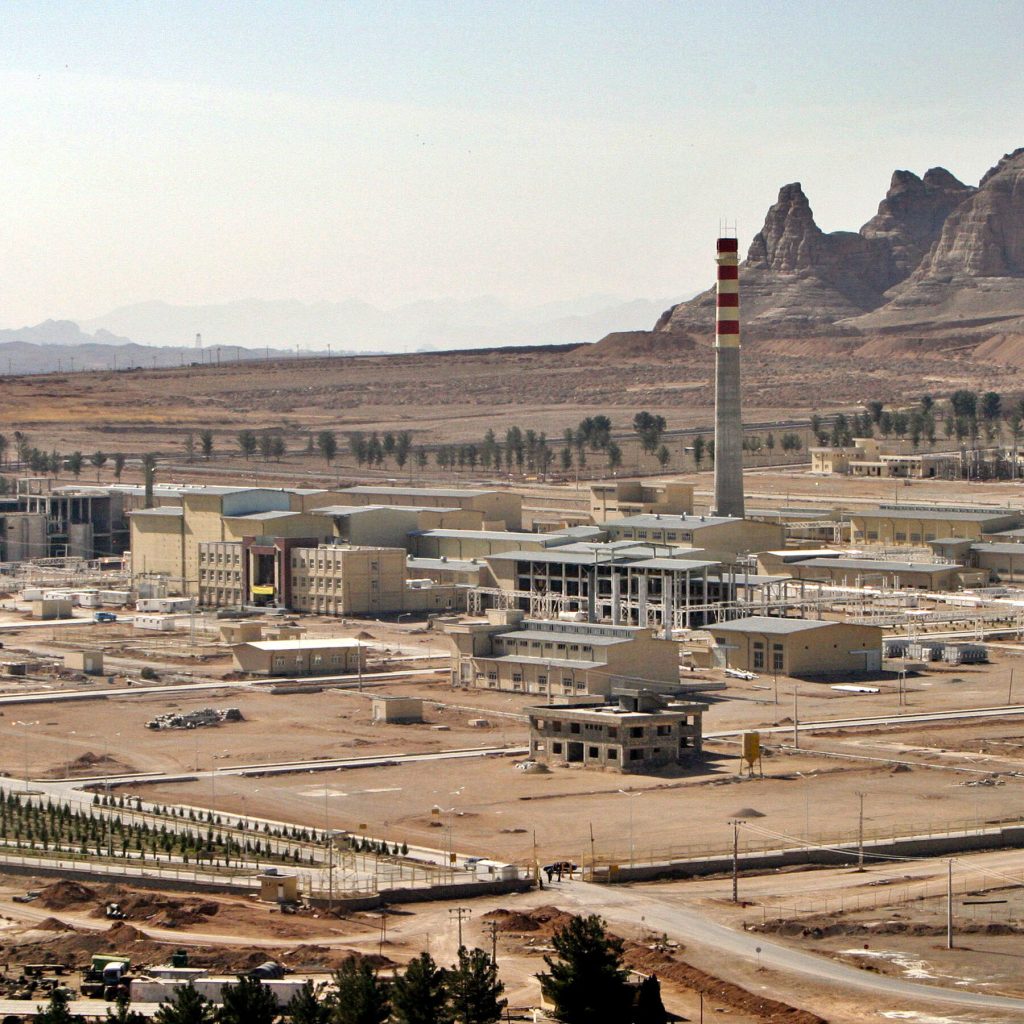
The One Big Beautiful Bill is law. Now what? Not quite six months into his new term, President Donald Trump has fulfilled many of his campaign promises. He has cut taxes, launched trade wars, frustrated longtime international allies, cracked down on border crossings, and slashed the federal government. He steamrolled the opposition, including members of his own party, to push through Congress a far-reaching and expensive piece of legislation that contains nearly his entire domestic agenda. Now the next phase of his presidency—as well as next year’s midterms—could be defined by his bet that the Republican bill, and other Trump policies, will usher in a booming economy. If that wager pays off, it would reinforce one of Trump’s strongest issues—but Democrats see an opening to hit the president for disproportionately helping the wealthy at the expense of the poor. The White House won’t push for another big legislative package between now and next November, five White House aides and outside advisers told us. Instead, Trump will turn to selling and defending what his party just passed, in addition to focusing on what he believes are his core political strengths: high-stakes trade deals and high-profile immigration clashes. Oh, and he wouldn’t mind winning a Nobel Peace Prize too. Trump and his team spent the four years after his first term drafting a sweeping plan to overwhelm Washington—and, in particular, the Democrats—with a flurry of action. In his first months back in office, he signed one executive order after another. Elon Musk’s DOGE haphazardly chopped its way through government agencies. Law firms, universities, and media companies acceded to the administration’s demands. Its lawyers kept pushing the bounds of executive power in the courts. The point was to punish and confuse. And, although the administration stumbled along the way, the strategy allowed Trump to seize perhaps more power than he’d ever had in Washington. [From the June 2025 issue: “I run the country and the world”] Then, the past three weeks yielded what White House aides believe are a pair of monumental triumphs: the air strikes that Trump authorized on Iran’s nuclear program, and the passage of the so-called One Big Beautiful Bill in time for Trump to sign it on July 4. White House officials believe they are entering the second phase of Trump’s second term with momentum. At the same time, the West Wing recognizes that, more than any other issue, the economy will dictate the outcome of next year’s midterms. The Republican legislation instituted a set of tax cuts that Trump believes to be the formula for rapid economic expansion. But they will primarily benefit the wealthy, and the bill was financed by cuts to federal safety-net programs, while adding more than $3 trillion to the national debt. Democratic groups plan to spend hundreds of millions of dollars arguing that the bill rewarded wealthy donors and failed to address inflation, whereas Republicans hope that it will lead to real wage increases and a surging stock market deep into next year. “It’s going to be: How is the economy doing in a year and three months from now?” a GOP House strategist told us. (This person, like others interviewed for this story, was granted anonymity to discuss private conversations and internal strategy.) “If the economy continues to improve, we are going to have a great message to sell to voters.” Trump and his Cabinet plan to barnstorm the country in support of the bill. “We also have to sell it, right? Just because it passed doesn’t mean it goes away,” a White House official told us. Ads slamming Republicans for the bill are now running in swing districts across the country. At the core of the emerging Democratic message is a simple argument about the issue that still ranks as the most important for voters: affordability. A private polling memo from the Democratic group Future Forward USA Action that we obtained advises Democrats that voters tend to pin the blame for high prices on “elites in leadership positions in government and business,” who have “no idea what life is like for regular people.” The group argues that Democrats should tie Trump’s tax bill to these concerns. “When asked to choose who has benefitted more because of Trump’s policies, the most chosen actors are: billionaires (chosen 72% of the time); wealthy Americans (70%) and corporate CEOs (67%),” the memo, dated June 5, explains. “These rank much higher than middle class Americans and working people, each chosen just 43% of the time.” Trump’s approval on the economy is now lower than at any time in his first term, having dropped about 20 percentage points since January. So, for the first time since the presidential election, Democrats feel that they can go on the offensive regarding what has been a weak issue for their party. “The combination of what Trump did in the megabill and what he did with the tariffs set up a reality for voters where they believe that Republicans are on the wrong side on everyday costs,” the Democratic strategist Jesse Ferguson told us. To this point in Trump’s term, unemployment and inflation have largely been steady, though consumer spending has started to slow. It will take time for the impact of the law to become apparent. This week, however, Trump added another combustible element to his economic agenda: He revived his trade war, threatening to increase tariffs on more than a dozen countries by August 1. Aides insisted to us that Trump, after blinking on imposing sweeping tariffs earlier this year, will not back down this time. (His belief in tariffs is one of his few consistent ideological positions, even though most economists oppose high tariffs.) [James Surowiecki: Trump’s only-okay economy] The advisers added that they hoped for a more systematic approach to trade negotiations in the months ahead—more senior-level talks, fewer Truth Social screeds—with Treasury Secretary Scott Bessent leading the discussions. One aide acknowledged to us that, even so, “there will be some fights” with other countries. Aides

Scroll to Top