Author name: moderat ereport

The Hill

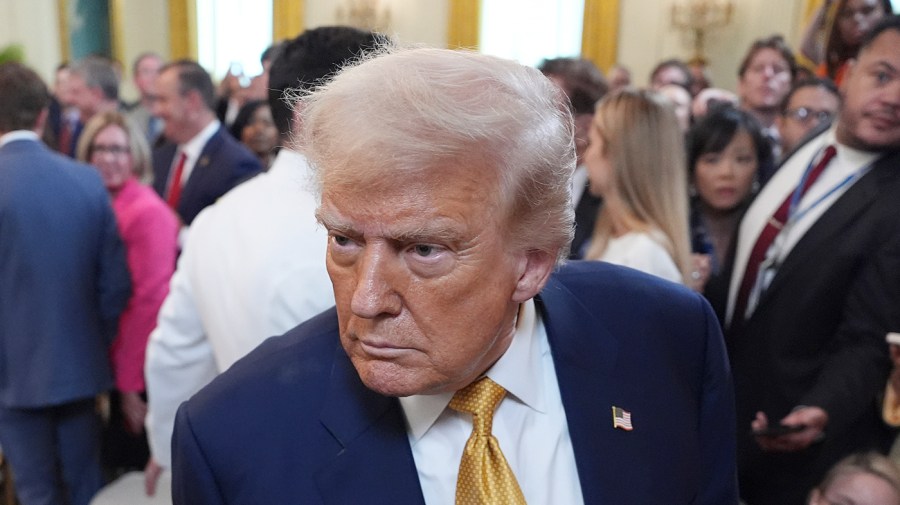
Most say Trump hasn’t paid enough attention to key issues: Survey

Most Americans say President Trump isn’t prioritizing the most important issues facing the country, according to the latest CNN/SSRS poll. In the survey, conducted over the weekend, 63 percent of respondents said Trump hasn’t paid enough attention to today’s problems, compared to 37 percent who said Trump has the right priorities. That’s a slight change…

The Hill

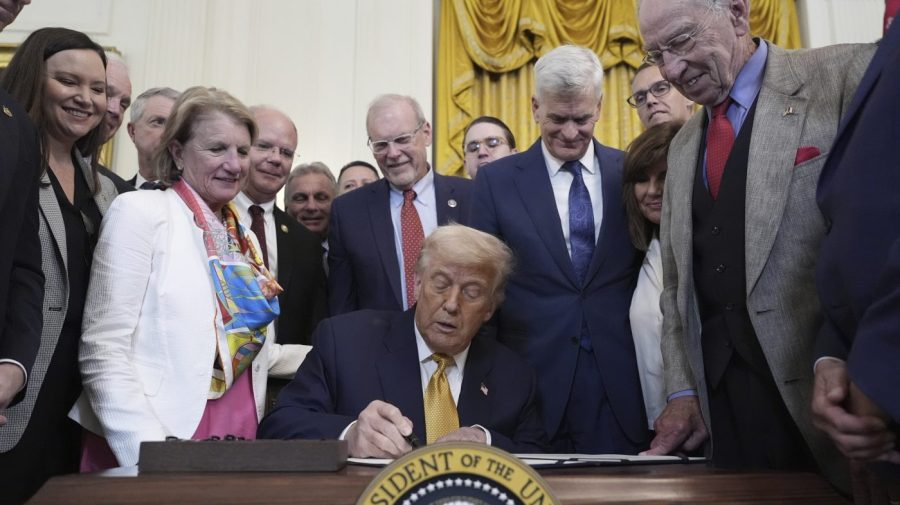
Trump signs legislation toughening fentanyl-related drug penalties

President Trump on Wednesday signed legislation aimed at cracking down on illegal fentanyl and toughening prison sentences for those who traffic the drug. Trump signed the Halt All Lethal Trafficking of Fentanyl Act at a White House ceremony, where he was joined by lawmakers and individuals whose family members have died from fentanyl overdoses. The…

The Hill

5 takeaways from the latest campaign finance reports

The latest campaign filings released this week are beginning to illustrate the contours of several highly watched Senate races while also raising questions about whether some members of Congress might seek retirement. Candidates were required to file their federal campaign reports from the second quarter of this year, which spans between April and June, by…

ProPublica

FDA Inspectors Again Find Dangerous Breakdowns at an Indian Factory Supplying Medications to U.S. Consumers

by Megan Rose and Debbie Cenziper ProPublica is a nonprofit newsroom that investigates abuses of power. Sign up to receive our biggest stories as soon as they’re published. U.S. inspectors have uncovered new and dangerous breakdowns in drugmaking at an Indian factory owned by Sun Pharma that produces generic medications for American consumers. The latest problems come 2 1/2 years after the Food and Drug Administration gave the facility a special pass to continue sending certain drugs made there to the United States, even after the factory was officially banned from the U.S. market. The factory failed to investigate the source of bacteria found in test vials or deal with damaged equipment that had caused drugs to be contaminated with metal particles, according to the June inspection report, which ProPublica obtained through a Freedom of Information Act request. Workers improperly handled vials and stoppers meant for sterile medications and, in some cases, failed to disinfect manufacturing areas and equipment, according to the report. One FDA inspector saw a worker put on a sterile gown and then brush up against a waste bin and use their hands to push down the overflowing trash. Investigators also saw liquid dripping through ceiling cracks and the growth of what appeared to be fungus and mold in a storage area for samples used for testing. The FDA in late 2022 had banned the factory in the city of Halol from shipping drugs to the United States because of similar manufacturing failures. ProPublica reported last month that a low-profile group inside the agency at the same time exempted some medications from that ban, ostensibly to prevent drug shortages. The FDA has granted similar exemptions for drugs made at more than 20 other foreign factories that violated critical standards in drugmaking and were barred from the U.S. market. The FDA kept the practice largely hidden from the public. The agency did not regularly test drugs coming from the banned factories or proactively monitor reports about potential harm among consumers, ProPublica found. In Sun’s case, more than a dozen drugs were initially excluded from the Halol import ban. The company is still allowed to send five to the United States, government records show, including vecuronium bromide, a muscle relaxer used during surgery, and the cancer drug doxorubicin. Also excluded are divalproex delayed release tablets, which treat seizures and other conditions; leuprolide injection, used by people with prostate cancer, endometriosis and other conditions; and temozolomide capsules, for brain cancer. The inspection last month marked the first time the FDA had been back to the factory in the 2.5 years since it imposed the import ban and Sun started sending exempted drugs to the United States. Inspectors found that procedures designed to prevent microbiological contamination of sterile drugs were not established or followed and that equipment wasn’t maintained to prevent malfunctions that would “alter the safety, identity, strength, quality or purity of the drug product,” according to the report. Some of the concerns focused on the exempted drugs still being sent to the United States, according to a person familiar with the situation who did not want to be named because they were not authorized to speak publicly. The FDA blacked out the names of the drugs that were potentially compromised on its publicly released inspection report, including a medication made on a manufacturing line in which several batches had to be rejected because they were filled with black particles. A portion of the FDA’s June inspection report redacted the names of potentially compromised drugs manufactured by Sun that continue to be released to the U.S. market. (Obtained by ProPublica) “It’s disappointing to see issues continue to come up at this site given the site’s role in potentially manufacturing critical drugs for U.S. consumers,” said the person familiar with the inspection findings. Sun did not respond to questions about the latest inspection or its regulatory history with the FDA. In an email, the company said that adherence to quality standards “is a top priority for Sun, and we maintain a relentless focus on quality and compliance to ensure the uninterrupted supply of medicines to our customers and patients worldwide. We continue to work proactively with the US FDA and remain committed to achieve full resolution of any FDA regulatory issues at our facilities.” The FDA said factories that receive exemptions from import bans are required to conduct extra testing on drugs with third-party oversight before they are sent to the United States, helping to ensure patient safety. Sun’s Halol plant, however, was cited in 2022 and again last month for failing to thoroughly investigate unexplained quality problems, including impurities, found during drug testing. The FDA did not respond to a request for comment about the latest Sun inspection. U.S. Rep. Debbie Dingell, D-Michigan, who recently co-sponsored a bill to lower prescription drug costs, said in a statement to ProPublica that the FDA has a responsibility to ensure that drugs coming into the country are safe. “We need full transparency about the extent to which exemptions enabled sub-par, unsafe, or ineffective drugs to be distributed to American patients,” she said. Medill Investigative Lab student Katherine Dailey contributed reporting.

Politics

Pentagon scales back its invasion of Los Angeles

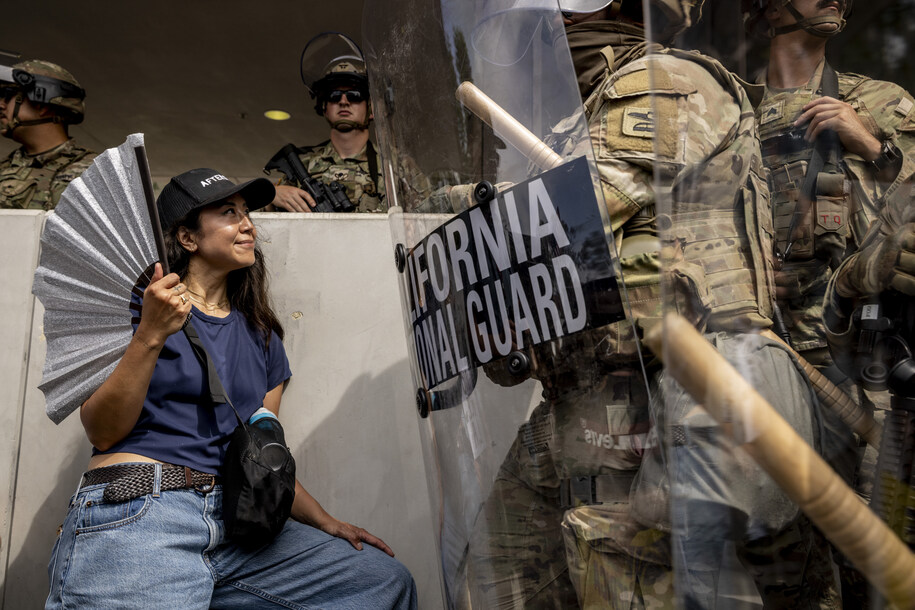
After weeks of infighting, Defense Secretary Pete Hegseth on Tuesday night ordered the withdrawal of roughly 2,000 National Guard troops from Los Angeles—about half of the total force stationed there—amid mounting political backlash over their controversial presence. “Thanks to our troops who stepped up to answer the call, the lawlessness in Los Angeles is subsiding,” Pentagon spokesperson Sean Parnell said in a statement. The move marks a major scaling back of a military operation that began in early June, after a wave of immigration raids triggered citywide protests. President Donald Trump had federalized the California National Guard and dispatched 4,000 troops, along with more than 700 active-duty Marines, in one of the largest domestic deployments in recent history. Protesters gather near the metropolitan detention center on June 9, in downtown Los Angeles. The White House initially signaled a 60-day mission, but it’s unclear why the drawdown began ahead of schedule—or how long the remaining forces will stay. What’s clear is that the decision follows intense criticism from state and local Democrats, who slammed the mobilization as a politically motivated show of force. By mid-June, most protests had quieted down, and Mayor Karen Bass lifted a curfew she had imposed in parts of downtown Los Angeles. But the troops remained. According to The New York Times, National Guard members were seen standing with rifles outside federal buildings and maneuvering through Los Angeles traffic in armored vehicles, raising alarm in immigrant communities already rattled by Immigration and Customs Enforcement activity. Trump’s decision to activate the Guard without California Gov. Gavin Newsom’s consent was unprecedented—it marked the first time a president had federalized National Guard troops over a governor’s objections since 1965. California sued, with Attorney General Rob Bonta calling the move unconstitutional and an infringement on state authority. But a federal appeals court rejected the challenge, ruling that Trump had “exercised his statutory authority.” Despite the legal defeat, California officials kept the pressure on. Bass and other leaders demanded a full withdrawal and framed the issue as one of state sovereignty and civil rights. “This happened because the people of Los Angeles stood united and stood strong,” Bass said Tuesday. “We organized peaceful protests, we came together at rallies, we took the Trump administration to court—all of this led to today’s retreat.” Newsom, meanwhile, called the deployment an “assault on democracy” and accused the White House of targeting “people who are least able to defend themselves.” Related | Trump and his minions keep lying about heinous ICE raids caught on camera The military has insisted that troops are not authorized to arrest civilians, only to detain individuals who pose a threat to federal personnel or property until law enforcement can take over. Still, the heavy presence has altered daily life in parts of the city, particularly immigrant-heavy neighborhoods. One LA-area mayor, Arturo Flores, a Marine veteran, described the actions of ICE and the presence of troops as a “campaign of domestic terror” and “psychological warfare.” The drawdown is a meaningful shift, but not a full retreat. About 2,000 National Guard troops and 700 Marines remain in the region. Los Angeles is still under military watch, but for the first time since the deployment began, there’s a sense that the end may finally be in sight.

Politics

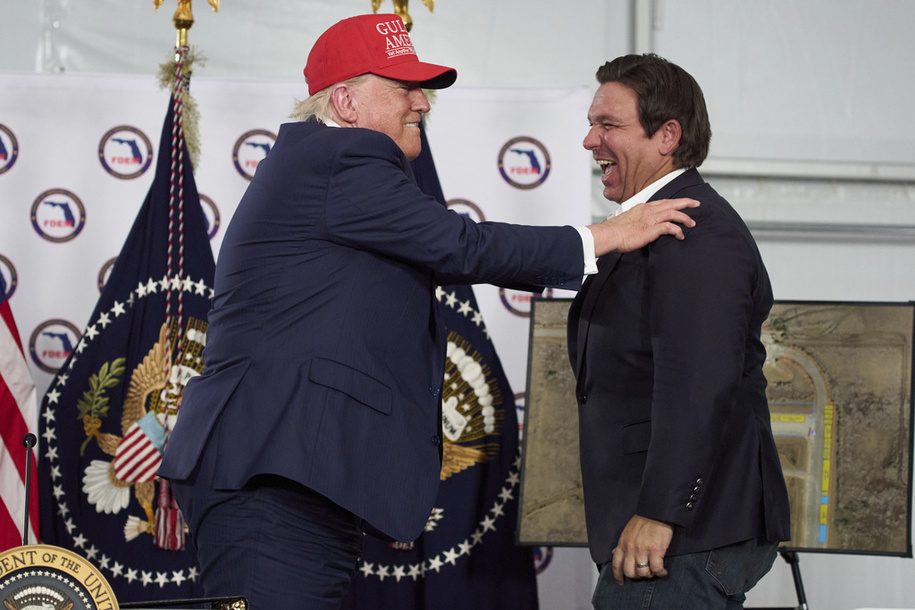
Florida GOP steals disaster relief tools for twisted ‘Alligator Alcatraz’

Newly uncovered documents detailing the process of building Florida’s so-called “Alligator Alcatraz” immigrant detention facility show that equipment meant to be used to respond to natural disasters was diverted to the right-wing project. Talking Points Memo examined the contracts between vendors and Florida Gov. Ron DeSantis’ administration, uncovering one with Baker’s Electronics & Communications Inc. that refers to an “Atlas trunked radio system,” which is used by public safety agencies for communication. The document indicates that the system was “pulled” from an existing disaster preparedness platform and sent to “Alligator Alcatraz.” The contract also indicated that the system had to “be back-filled to prevent a response gap during hurricane season given the unknown duration of detention center operation.” Flooding is seen in Florida following Hurricane Irma in 2017. No U.S. state has more hurricanes than Florida. The storms, flooding, and other destruction associated with such weather events have taken thousands of lives over the years. Despite Florida’s need for an extensive preparedness infrastructure, the contract appears to prove that the right’s pet project took priority instead. In addition to concerns about diverted emergency equipment, recent reporting from the Miami Herald revealed that several contractors involved in the facility’s construction were also donors to DeSantis and the Florida GOP. The detention facility is operating similar to a black site, run by the state government with little to no oversight. The reasons for why people are being detained are hidden from the public, and those inside are not informed of the terms of their incarceration. The state is receiving funding from the Trump administration as a reward for operating. Democratic officials in Florida recently sued the state after they were denied entry to conduct standard oversight. The DeSantis administration is notoriously secretive and has threatened the press over investigations into the governor’s wife, Casey Desantis. The tactic echoes the Trump administration’s approach at the federal level, where Democratic lawmakers have been arrested while trying to investigate ICE detention facilities. “Alligator Alcatraz”—a brand that Florida Republicans have now monetized with merchandise—is a manifestation of Trump’s previously expressed desire for an inhumane immigration detention facility.  He and other leading Republicans have expressed glee at the prospect of violating human rights—and they’re clearly willing to hobble emergency response systems for the opportunity to do so.

Politics

Sure, let the DOGE bros access another government database

Though the so-called Department of Government Efficiency doesn’t grab as many headlines as it did in its Elon-Musk-led heyday, its workers cling like wood ticks on various agencies and continue to have access to a staggering amount of data.  Take the Department of Agriculture.  On Tuesday, Democratic Sen. Tammy Baldwin of Wisconsin wrote a letter to Agriculture Secretary Brooke Rollins on behalf of Wisconsin farmers, expressing the legitimate concern that letting DOGE rummage around in USDA databases of private data seems not great. Baldwin also pointed out that DOGE also has access to the National Payment System, giving it control over billions of dollars in loans and payments to farmers.  Agriculture Secretary Brooke Rollins, shown in February. DOGE intrusion “not only breaches [farmers’] privacy, but also raises serious concerns about the future of USDA payments, our nation’s food security, and the consolidation of farmland and processing operations,” Baldwin wrote. This project seems to be led by a DOGE bro named Jordan Wick. Who is Jordan Wick? Surely someone with deep experience in agriculture, the intricacies of farm finances, and/or government payment systems? Oh, heavens no. He’s a 28-year-old former software engineer for Waymo, the self-driving car company. Yes, the very same Waymo that just recalled over 1,200 vehicles because they were prone to crashing into barriers, which is really not what you want in a taxi.   Nonetheless, Wick appears to have unprecedented access to USDA data. A source provided NPR with access logs revealing that Wick can see all the private, personal, and financial information at USDA, and can change or cancel payments and loans. He has access that no one else at USDA has. Even those tasked with the professional responsibility of explaining why Wick needs this level of access can come up with only a series of buzzwords. The “USDA Efficiency Team”—which is apparently what they’re calling the burrowed-in DOGE kids now—is reviewing “many loans, guarantees, and payments” for supposed fraud and national security concerns, per a USDA spokesperson.  Why? Because “the abuse of USDA systems and data centers is a serious issue,” said a USDA spokesperson, and the DOGE team has been “immensely supportive due to their unmatched skillset in protecting our data and ensuring those that use their positions to access systems to defraud American taxpayers.” It’s unclear if the spokesperson is accusing farmers or USDA employees of defrauding American taxpayers, but let’s talk about that “unmatched skillset” part. What skillset, exactly? Wick’s past experience programming self-driving cars? Or perhaps the spokesperson meant Wick is a genius at keeping data safe. Well, except for the part where he may have been a part of DOGE’s illegal exfiltration of National Labor Relations Board data.  Letting Wick determine what contracts and payments are valid will probably go as well as when the government let a different DOGE bro review Department of Veterans’ Affairs contracts. The bro wrote an AI program—or rather, he co-wrote it with another AI. Said new AI program then was turned loose in the VA systems, where it promptly and incorrectly determined that over 1,000 contracts were worth $34 million apiece, when some of them were worth more like $35,000.  These tech kiddies don’t have an “unmatched skillset.” They don’t even have a normal baseline skillset for the jobs they have barged into. The Trump administration’s project of firing all federal workers with specialized knowledge was bad enough, but it’s just adding insult to injury that we now have to pretend that random software guys understand the inner workings of government far better.

Scroll to Top