Author name: moderat ereport

The Hill

House Judiciary Democrats demand Epstein hearing, float subpoenas

House Judiciary Democrats are calling for a public hearing on the Jeffrey Epstein files, saying top officials in both the Justice Department and the FBI should account for their handling of information surrounding the deceased financier. The Justice Department last week released a new memo concluding that Epstein did not commit suicide and said the…

ProPublica

Microsoft’s “Digital Escort” Program Could Leave Sensitive Government Info Vulnerable to Espionage. Here’s What to Know.

by ProPublica ProPublica is a nonprofit newsroom that investigates abuses of power. Sign up to receive our biggest stories as soon as they’re published. For nearly a decade, Microsoft has used engineers in China to help maintain highly sensitive Defense Department computer systems. ProPublica’s investigation reveals how a model that relies on “digital escorts” to oversee foreign tech support could leave some of the nation’s most sensitive data vulnerable to hacking from its leading cyber adversary. Here are the key takeaways from that report: Only U.S. citizens with security clearances are permitted to access the Defense Department’s most sensitive data. Since 2011, cloud computing companies that wanted to sell their services to the U.S. government had to establish how they would ensure that personnel working with federal data would have the requisite “access authorizations” and background screenings. Additionally, the Defense Department requires that people handling sensitive data be U.S. citizens or permanent residents. This presented an issue for Microsoft, which relies on a vast global workforce with significant operations in India, China and the European Union. Microsoft established its low-profile “digital escort” program to get around this prohibition. Microsoft’s foreign workforce is not permitted to access sensitive cloud systems directly, so the tech giant hired U.S.-based “digital escorts,” who had security clearances that authorized them to access sensitive information, to take direction from the overseas experts. The engineers might briefly describe the job to be completed — for instance, updating a firewall, installing an update to fix a bug or reviewing logs to troubleshoot a problem. Then the escort copies and pastes the engineer’s commands into the federal cloud. The problem, ProPublica found, is that digital escorts don’t necessarily have the advanced technical expertise needed to spot problems. “We’re trusting that what they’re doing isn’t malicious, but we really can’t tell,” said one current escort. The escorts handle data that, if leaked, would have “catastrophic” effects. Microsoft uses the escort system to handle the government’s most sensitive information that falls below “classified.” According to the government, this includes “data that involves the protection of life and financial ruin.” The “loss of confidentiality, integrity, or availability” of this information “could be expected to have a severe or catastrophic adverse effect” on operations, assets and individuals, the government has said. Defense Department data in this category includes materials that directly support military operations. The program could expose Pentagon data to cyberattacks. Because the U.S.-based escorts are taking direction from foreign engineers, including those based in China, the nation’s greatest cyber adversary, it is possible that an escort could unwittingly insert malicious code into the Defense Department’s computer systems. A former Microsoft engineer who worked on the system acknowledged this possibility. “If someone ran a script called ‘fix_servers.sh’ but it actually did something malicious, then [escorts] would have no idea,” the engineer, Matthew Erickson, told ProPublica. Pradeep Nair, a former Microsoft vice president who said he helped develop the concept from the start, said a variety of safeguards including audit logs, the digital trail of system activity, could alert Microsoft or the government to potential problems. “Because these controls are stringent, residual risk is minimal,” Nair said. Digital escorts present a natural opportunity for spies, experts say. “If I were an operative, I would look at that as an avenue for extremely valuable access. We need to be very concerned about that,” said Harry Coker, who was a senior executive at the CIA and the National Security Agency. Coker, who also was national cyber director during the Biden administration, added that he and his former intelligence colleagues “would love to have had access like that.” Chinese laws allow government officials there to collect data “as long as they’re doing something that they’ve deemed legitimate,” said Jeremy Daum, senior research fellow at the Paul Tsai China Center at Yale Law School. Microsoft’s China-based tech support for the U.S. government presents an opening for Chinese espionage, “whether it be putting someone who’s already an intelligence professional into one of those jobs, or going to the people who are in the jobs and pumping them for information,” Daum said. “It would be difficult for any Chinese citizen or company to meaningfully resist a direct request from security forces or law enforcement.” Microsoft says the program is government-approved. In a statement, Microsoft said that its personnel and contractors operate in a manner “consistent with US Government requirements and processes.” The company’s global workers “have no direct access to customer data or customer systems,” the statement said. Escorts “with the appropriate clearances and training provide direct support. These personnel are provided specific training on protecting sensitive data, preventing harm, and use of the specific commands/controls within the environment.” Insight Global — a contractor that provides digital escorts to Microsoft — said it “evaluates the technical capabilities of each resource throughout the interview process to ensure they possess the technical skills required” for the job and provides training. Microsoft says it disclosed details of the escort program to the government. Former Pentagon officials said they’d never heard of it. Microsoft told ProPublica that it described the escort model in documents submitted to the government as part of cloud vendor authorization processes. Former defense and intelligence officials said in interviews that they had never heard of digital escorts. Even the Defense Department’s IT agency didn’t know about it until reached for comment by ProPublica. “I probably should have known about this,” said John Sherman, who was chief information officer for the Defense Department during the Biden administration. He said the system is a major security risk for the department and called for a “thorough review by [the Defense Information Systems Agency], Cyber Command and other stakeholders that are involved in this.” DISA said, “Experts under escort supervision have no direct, hands-on access to government systems; but rather offer guidance and recommendations to authorized administrators who perform tasks.” There were warnings early on about the risks. Multiple people raised concerns about the escort strategy over the years, including while it

The Hill

Trump Energy secretary: AI race is next Manhattan Project

Energy Secretary Chris Wright on Tuesday compared the race to dominate artificial intelligence (AI) to an American atomic bomb program during World War II. “The AI race is the second Manhattan project,” Wright said in a Tuesday post on the social platform X. During the World War II, the U.S. government’s Manhattan Project eventually succeeded…

Politics

Trump administration is happy to let kids starve

President Donald Trump and Secretary of State Marco Rubio have become so fixated on becoming “America First” that a batch of prepurchased high-energy biscuits will never make it into the hands of those in need. As of Tuesday, roughly 500 metric tons of emergency food intended for children in Afghanistan and Pakistan are about to expire, according to The Atlantic. Now, instead of potentially being able to feed 1.5 million children for a week, the U.S. will waste extra money—on top of the $800,000 spent to purchase it—to destroy the unviable rations.  Federal workers reportedly attempted to contact the new head of the U.S. Agency for International Development, who could pull the right strings and make use of the nutritionally dense food. Ultimately, though, their attempts were unsuccessful. On one hand, it’s hard to argue against giving lifesaving resources to children. On the other (less rational) hand, if you ask the Trump administration, distributing food to countries like Afghanistan or Yemen could potentially feed terrorists, which is enough of a reason for them to cut off aid completely.  The flag of the U.S. Agency for International Development flies alongside the American flag in front the USAID office in Washington on Feb. 3. In April, NPR reported that USAID contracts were slashed in these countries just from the fear that they were benefitting terrorist organizations alone.  But other countries have starving children, so why weren’t the rations sent there?  While 500 metric tons of biscuits is a small number comparatively when it comes to USAID supplies, the Trump administration is heavily curtailing its assistance overall.  Rubio announced via Substack that starting in July, the Trump administration would hand out assistance only to countries that “align with administration policies,” a message that sounds oddly familiar to their ongoing battle with Harvard University, among other colleges.  As Rubio shuts the door on those in need, new projections show how this will impact those most vulnerable. According to a study published in The Lancet, upward of 14 million people are projected to die by 2030 as a result of the Trump administration’s cuts to USAID. One third of those deaths—about 4.5 million—are expected to be among children under age 5.  But this vast amount of avoidable death doesn’t seem to phase the State Department. “You can go back and relitigate all these little decisions. That’s not our focus. That’s not the secretary’s focus,” one state department official told ABC News when confronted with the study’s findings. “We are excited about what sort of the America First foreign assistance agenda is going to look like, and how much impact we can have moving forward.”  Nothing excites the Trump administration than unnecessary pain.

Politics

Here’s how Trump’s gerrymandering scheme in Texas could backfire

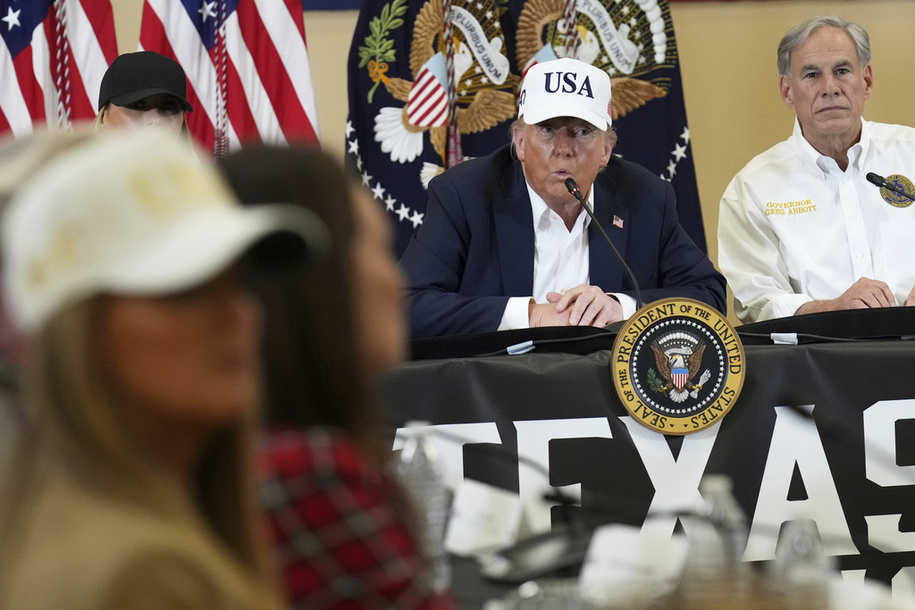
President Donald Trump has made it clear that he wants the 2026 midterms to be rigged in the GOP’s favor.  Speaking to Texas Republicans Tuesday morning, Trump outlined his redistricting wishlist: five new GOP congressional seats in Texas alone. The plan would significantly reshape the House, where Republicans currently hold one of the narrowest majorities in history. “I keep hearing about Texas ‘going Blue,’ but it is just another Democrat LIE. With the right candidate, Texas isn’t ‘going Blue’ anytime soon!” he wrote on Truth Social. To secure those extra seats, Trump has a key ally in Republican Gov. Greg Abbott, who scheduled redistricting for a special legislative session beginning July 21. The plan, which Democrats have called a blatant power grab, appears to aim at flipping two competitive South Texas districts and dismantling seven urban, heavily Democratic ones. Texas Gov. Greg Abbott is helping President Donald Trump in his gerrymandering efforts. Despite Trump winning just 56% of the vote in Texas in 2024, Republicans already hold two-thirds of House seats there. The 2021 map—one of the most gerrymandered in the country—created two new districts in majority white areas, even though people of color made up 95% of the state’s population growth.  And now they’re going even further. The Department of Justice recently sent a letter to Abbott and Texas Attorney General Ken Paxton suggesting that 4 existing Democratic districts may have been drawn using unconstitutional racial gerrymandering—a sharp reversal from the Biden-era DOJ, which backed a lawsuit claiming that the map diluted minority representation. GOP Sen. John Cornyn of Texas praised the move, writing that Hispanic voters have shifted rapidly toward the Republican Party and that redrawing the maps would lead to major GOP gains. But this is a risky strategy. Texas’ current map already maximizes GOP gains. Adding more Republican districts could carve up safe GOP territory, force incumbents into costly primaries, or cause early retirements. Finding five new red seats might require weakening current Republican strongholds. Even if it succeeds, it might not matter. Republicans gaining five seats in Texas wouldn’t come close to offsetting potential national losses. Trump’s first midterm in 2018 saw Democrats gain 41 seats. A similar result in 2026 would negate any advantage gained through redistricting. Meanwhile, Trump’s support in Texas is slipping. A June poll from the Texas Politics Project found that a majority of Texans disapprove of him, with 44% saying they strongly disapprove, and just 27% saying they strongly approve. California Gov. Gavin Newsom is among the Democrats fighting against President Donald Trump’s abuse of power. As Trump works on his map-rigging strategy, Republicans are still searching for a national message to promote their sweeping economic agenda, which cuts Medicaid and food aid to deliver tax cuts to the wealthy. Strategists are now pushing “Trump Working Family Tax Cuts” and highlighting popular items like eliminating taxes on tips to win back moderate Trump voters. But Democrats are not staying silent. California Gov. Gavin Newsom has hinted at a countereffort, though it’s unclear whether state law grants him the authority to act.  “Two can play this game,” he wrote on X. Democratic Sen. Adam Schiff of California warned, too, that if red states keep bending the rules, blue states may be forced to respond similarly. House Minority Leader Hakeem Jeffries and Texas Democrats held a press conference Tuesday morning to condemn the “aggressive and egregious gerrymander,” calling it a move to “disenfranchise millions of people in Texas.”  DCCC Chair Suzan DelBene also pointed out the irony that redrawing the map could actually cost Republicans voters.  “It’s basic math,” she said. Trump may view redistricting as his insurance policy, but it only works if Republicans win. If they stumble in 2026, no map—no matter how rigged—will be enough.

Scroll to Top