Author name: moderat ereport

Politics

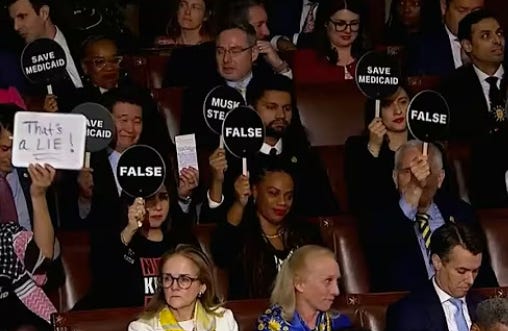
The Media Was Wrong: There Are Now More Democrats Than Republicans In The US

PoliticusUSA is an independent voice that will never bend the knee. Support our work by becoming a subscriber. Subscribe now All of the hysterical gloom and doom surrounding the coverage of the Democratic Party after Trump won the 2024 election focused on how Democrats were “out of touch” with the American people and how the country had “moved to the right.” Democratic and media elites went into a full-blown panic and claimed that the party was in crisis and needed to change all of its messaging because it wasn’t connecting with voters anymore. It turns out that none of it was true. According to new data from Gallup: In the second quarter of 2025, an average of 46% of U.S. adults identified as Democrats or said they are independents who lean toward the Democratic Party, while 43% identified as Republicans or said they lean Republican. That three-percentage-point Democratic advantage compares with a tie between the two parties in the first quarter of 2025, after a four-point Republican lead in the fourth quarter of 2024. Until now, the Republican Party had led or tied in most quarters since 2023. … The net three-point increase in Democratic affiliation between Q4 2024 and Q2 2025, from 43% to 46%, is entirely due to more Americans saying they are independents who lean toward the Democratic Party (up four points), not because more are identifying as Democrats outright (down one point). Meanwhile, Republicans’ four-point decline over the same period is due to equal two-point declines in the percentages of people identifying as and leaning Republican. So what’s happening here? Read more

Politics

Why Trump Broke With Bibi Over the Gaza Famine

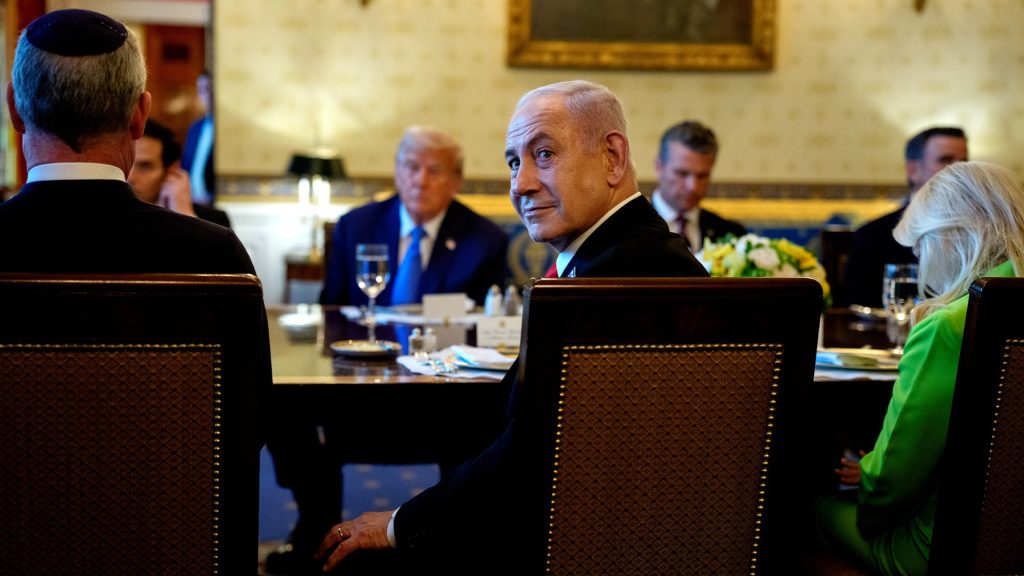
A few weeks ago, President Donald Trump and Israeli Prime Minister Benjamin Netanyahu each gave the other something of great symbolic value. Trump excoriated the “out-of-control” prosecutors responsible for the Israeli prime minister’s corruption trial, and Netanyahu nominated the American president for the Nobel Peace Prize he has long coveted. But whatever goodwill was generated by these gestures quickly dissipated, and was not enough to overcome deeper sources of conflict between the two men: starvation in the Gaza Strip, air strikes in Syria, and the lack of a cease-fire agreement between Israel and Hamas. Trump in recent days has publicly and repeatedly broken with Netanyahu, dismissing his on-again, off-again ally’s attempts to downplay the famine in Gaza, which has drawn international condemnation. Upset by images of dying children, Trump dispatched his diplomatic envoy, Steve Witkoff, to the region partly to pressure Israel to ease the hunger crisis. Meanwhile, the president and his senior aides were blindsided by recent Israeli strikes on Syria and a missile attack that hit Gaza’s only Catholic Church. Trump, two administration officials told us, has come to believe what many in Washington have thought for months: that Netanyahu is looking to prolong the conflict in Gaza, in open defiance of Trump’s wish for the war to end. The president and some of his aides think that Israel’s military objectives in Gaza were achieved long ago, and that Netanyahu has continued Israel’s assault, which has claimed tens of thousands of civilian lives, to maintain his own political power. The White House also believes that Netanyahu is taking steps that interfere with a potential cease-fire deal. [Yair Rosenberg: The corrupt bargain behind Gaza’s catastrophe] But the two officials said they did not anticipate that Trump would hold Netanyahu accountable in any meaningful sense. (Like others, they spoke with us on the condition of anonymity to discuss sensitive matters.) Even as Trump has felt disrespected by Netanyahu, his anger hasn’t translated into any significant shift in U.S. policy. The president blamed Hamas for the most recent breakdown of cease-fire talks. He resisted joining France and the United Kingdom in their vows this week to recognize a Palestinian state if Israel does not improve the humanitarian situation in Gaza and commit to a peace process. A White House official insisted to us that “there is no significant rupture” between Trump and Netanyahu and that “allies can sometimes disagree, even in a very real way.” This morning, seemingly trying to set aside his differences with Netanyahu, Trump wrote on Truth Social: “The fastest way to end the Humanitarian Crises in Gaza is for Hamas to SURRENDER AND RELEASE THE HOSTAGES!!!” Netanyahu has a long history of frustrating U.S. presidents. Joe Biden went from wrapping the prime minister in a bear hug in the days after the October 7, 2023, attacks to yelling at him over his prosecution of the war. Trump and Netanyahu were close during the president’s first term, until Trump grew angry at his Israeli counterpart for recognizing Biden’s 2020 victory. Their relationship has proceeded in fits and starts since then. Trump has hosted Netanyahu at the White House three times in the past six months, including a visit earlier this month, when they exchanged warm words. But Trump did not make a stop in Israel on his recent Middle East trip. The hunger crisis in Gaza has put a new strain on their relationship. In March, Israel enforced a blockade of the Strip, which is densely populated, preventing food and supplies from reaching Gazans after more than 20 months of war. Human-rights organizations warned this month about widespread famine, particularly among children. Under intense international pressure, Netanyahu has allowed some food aid into the region in recent days, but he has also insisted that there is “no starvation” in Gaza. Before a meeting with United Kingdom Prime Minister Keir Starmer in Scotland on Monday, Trump was asked by reporters whether he agreed with Netanyahu’s assessment. “Based on television, I would say not particularly, because those children look very hungry,” Trump said. Later, he added: “That’s real starvation stuff. I see it, and you can’t fake that.” This is not the first time that Trump has responded to gruesome photos. In 2017, he ordered missile strikes on a Syrian air base after he was shown what he said were “horrific” images of children killed by chemical weapons days before. Earlier this year, he unleashed some rare tough rhetoric on Vladimir Putin after being shown photos of Ukrainian children killed by a Russian air strike. And this week, the two administration officials told us, Trump was bothered by images of a Russian strike on a nursing home in Kyiv. [Hussein Ibish: Food aid in Gaza has become a horror] Trump’s frustration with the ongoing war in Russia has colored his response to what he is now seeing in Gaza, one of the officials and a close outside adviser to the president told us. During the 2024 campaign, Trump frequently boasted that he had kept the world free of conflict during his first term, and he returned to the Oval Office this year pledging to bring the wars in Gaza and Ukraine to a quick close. Instead, both have escalated, to Trump’s humiliation. Putin has repeatedly defied Trump’s wishes for a cease-fire, causing the president, who so often views foreign policy through a personal lens, to consider finally standing up to the Russian leader. (This week, Trump announced that he was giving Putin 10 days to stop the war in Ukraine or he would green-light a series of sanctions.) Similarly, Netanyahu’s recent strikes in Syria and his rejection of claims about the Gaza famine have angered Trump. The president is eager to stabilize the Middle East—and expand the Abraham Accords, which normalized relations between Israel and several Gulf states in his first term—in order to foster business and trade relationships in the region. Two additional U.S. officials told us that Trump’s willingness to contradict Netanyahu reflects less a new breach

Politics

ICE’s Mind-Bogglingly Massive Blank Check

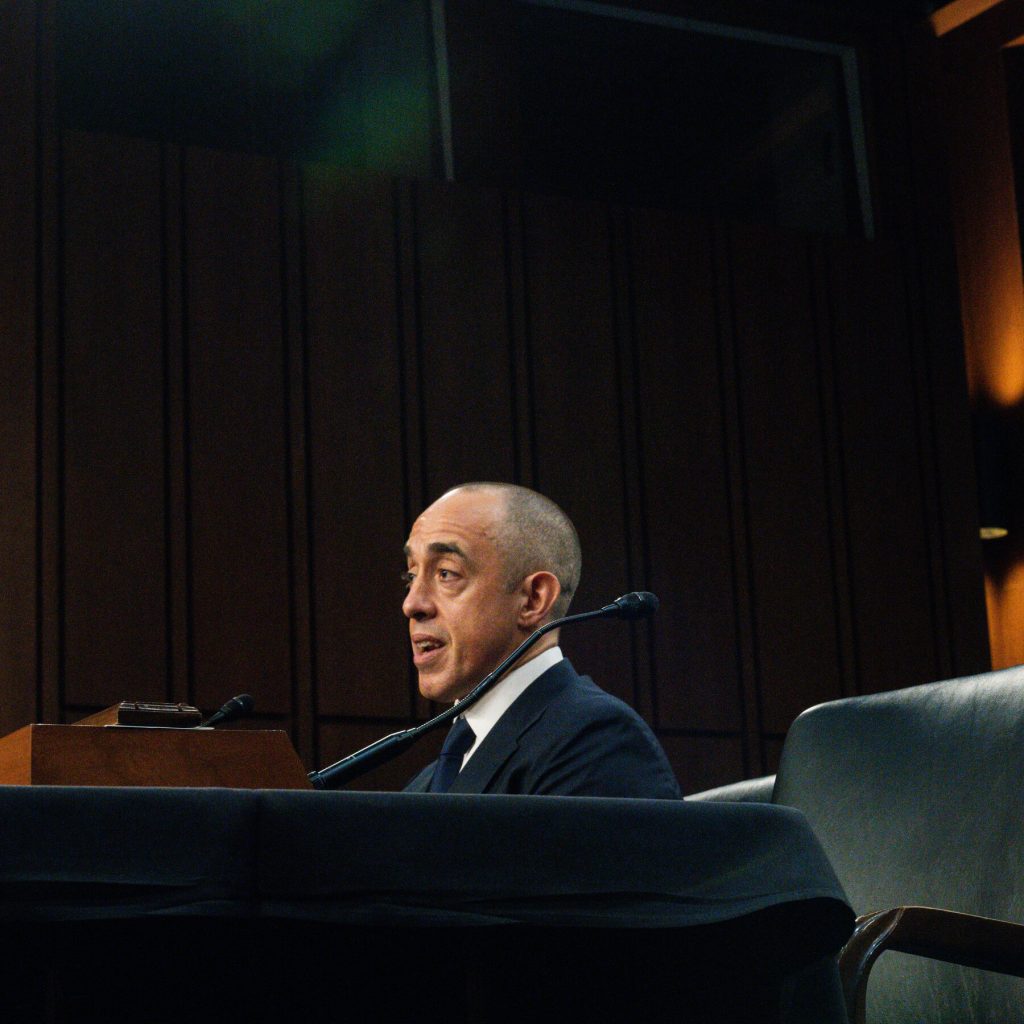
The more than $175 billion that Congress handed to the nation’s immigration enforcers when it passed the One Big Beautiful Bill Act is larger than the annual military budget of every country in the world except the United States and China. Immigration and Customs Enforcement—just one component of the Department of Homeland Security—is getting more money than any other law-enforcement agency in America. All of this cash will be used to fund the next three and a half years of a deportation campaign that the public is already starting to question, at a time when the southern border is all but deserted. But as striking as the overall amount of money is how little we know about why it was necessary or how the funds will be spent. The bill placed few guardrails on ICE or Customs and Border Protection—both of which have a history of financial mismanagement—and dedicated no money to oversight. What we do know from the agencies’ public statements and contracts that are already in the works is that the money will be used to expand detention and surveillance systems, and that it will enrich some of the administration’s closest friends. When Donald Trump was inaugurated, top executives at the two largest private-prison companies that contract with the federal government to detain immigrants reacted with glee. In an earnings call with investors, Damon Hininger, the CEO of CoreCivic, called this “truly one of the most exciting periods” in his 32-year career with the company. CoreCivic’s stock price rose by more than 80 percent in the week after Trump’s reelection, while that of its top competitor, the GEO Group, doubled in less than a month. GEO’s CEO, J. David Donahue, told investors that “we believe the scale of the opportunity before our company is unlike any we’ve previously experienced.” GEO’s executive chairman and founder, George Zoley, estimated that the company could make $1 billion in additional revenue. (Whereas some in the private-prison industry might have become jittery when Trump started talking about detaining immigrants in Guantánamo Bay or countries such as El Salvador, instead of the United States, Hininger assured his investors that there would be enough detained immigrants to go around. “I want to be very clear on this: We don’t see that as an either/or. We actually see it as a both,” he said.) [Read: Trump loves ICE. Its workforce has never been so miserable.] GEO invested $70 million preparing to expand its detention capacity before Trump even took office; CoreCivic spent $40 million doing the same before a single new contract was signed. Just three years earlier, President Joe Biden had signed an executive order directing the Justice Department not to renew its contracts with private-prison companies, saying that they amounted to “profit-based incentives to incarcerate” in a system that “imposes significant costs and hardships on our society and communities and does not make us safer.” JPMorgan Chase said it would stop working with the industry. But now, with Trump, the companies’ leaders had good reason to feel confident: His election meant the elevation of figures such as Pam Bondi, who worked as a lobbyist for GEO as recently as 2019 and became attorney general in February, and Tom Homan, the president’s border czar, who was a GEO consultant during the Biden administration. The website for Homan’s consulting firm touted a “proven track record of opening doors and bringing successful relationships to our clients, resulting in tens of millions of dollars of federal contracts to private companies.” Homan has said he is recusing himself from contract negotiations now that he is back working for the government. For years, high-level officials at ICE have retired from the agency into plum roles at both companies. Daniel Bible, who oversaw ICE’s detention system, is an executive vice president at GEO, and Matt Albence and Dan Ragsdale, ICE’s former acting director and deputy director, are senior vice presidents. CoreCivic has taken on at least two former ICE field-office directors and ICE’s former head of budgeting. David Venturella has ping-ponged between the two: After 22 years at ICE, he rose through the executive ranks at GEO to become the company’s head of client relations. Then, after Trump took office, he returned to ICE as a senior adviser. This revolving door of hiring effectively puts private-prison-company executives at the negotiating table across from their former underlings, who may also hope to cash out in the private sector when they leave their government jobs. These conditions are not exactly conducive to making sure that the government’s top negotiators don’t agree to overpay for what they are purchasing, or that they hold contractors to account. DHS officials didn’t respond to my request for a comment. Ryan Gustin, a spokesman for CoreCivic, told me the company follows rules set by the government for how former employees may interact with their previous agencies, and that “there’s no basis for the claim that hiring former ICE officials results in higher costs or reduced accountability.” The confidence expressed by GEO and CoreCivic executives has paid off. Trump’s spending bill provides $45 billion to ICE to expand the nation’s detention system. It also dedicates $3.33 billion to immigration courts, but caps the number of judges who can be hired at 800–one of the few limits the bill contains. At the same time, the administration has actually been firing immigration judges, who have the power to hand down deportation orders and without which a person can’t be removed from the United States. Hiring more will take months or years, and in the meantime, having fewer of them around now will only lead to more people being detained. “They’re not really serious about getting rid of as many people as they can. They’re serious about causing human pain and suffering,” a former high-level ICE official, who spoke on the condition of anonymity for fear of retribution, told me. “Putting someone into detention isn’t a removal, it’s a punishment.” Allies of the administration are also in for a windfall in

Scroll to Top