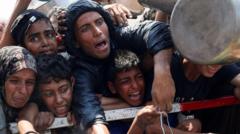
Israel to open Gaza humanitarian corridors as aid drops begin
IDF says it wants to improve humanitarian response in Gaza after days of pressure and growing reports of starvation.


IDF says it wants to improve humanitarian response in Gaza after days of pressure and growing reports of starvation.

Misinformation has been spreading rapidly in the wake of the Texas floods, with many blaming the Trump administration, cloud seeding technologies, and other false or misleading claims, while research shows that misinformation is often more of a symptom than a disease and should be addressed from the ground up rather than the top down.
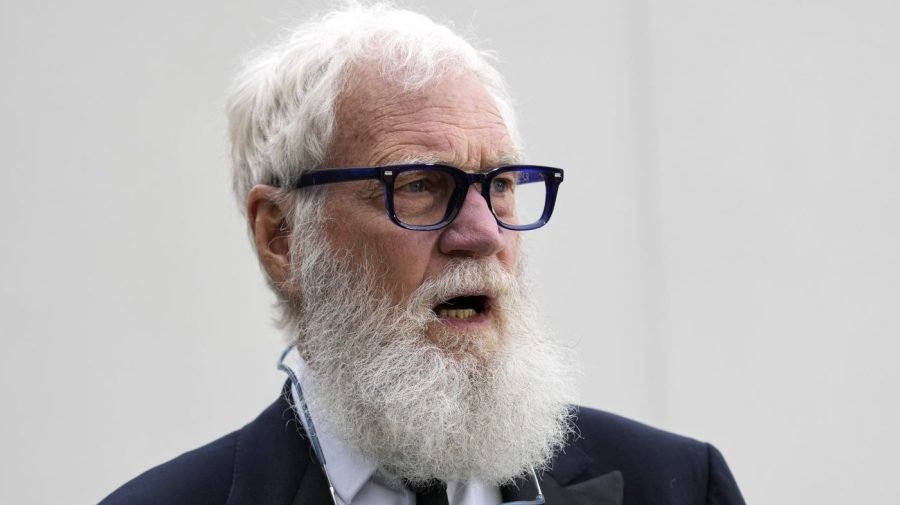
Comedian David Letterman on Friday joined the chorus of late-night hosts to bash CBS News after it announced it would sunset “The Late Show” after more than three decades on air, while praising host Stephen Colbert as a “martyr.” Letterman — the show’s first host — alluded to the recent $16 million settlement between CBS’s…
Taiwanese voters rejected a large-scale effort to recall opposition lawmakers from the Nationalist Party (KMT), dealing a blow to the ruling Democratic Progressive Party (DPP). The recall aimed to shift legislative power but failed to remove any KMT lawmakers.
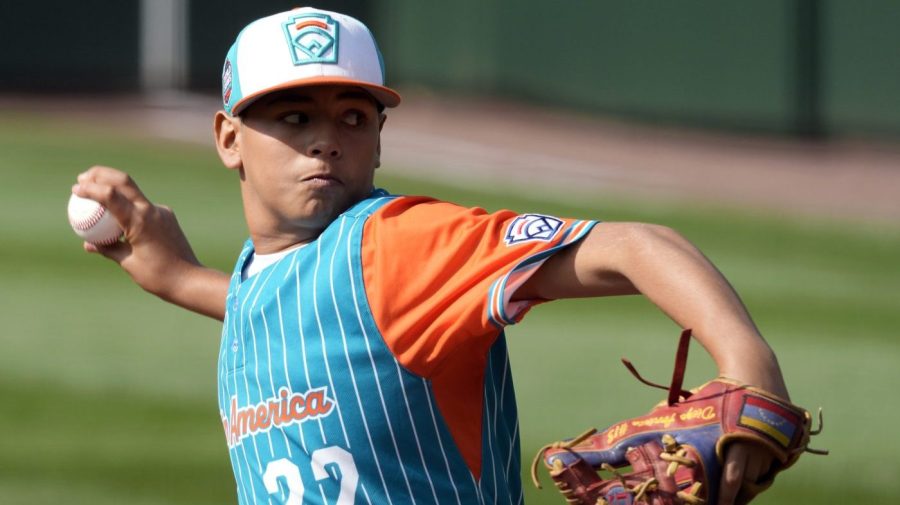
A Venezuelan Little League baseball team will miss the Senior Baseball World Series held in South Carolina after it was was denied entry into the U.S. because the players were unable to obtain visas. Cacique Mara Little League team, from Maracaibo, Venezuela, qualified for the World Series after winning the Latin American championship in Mexico,…
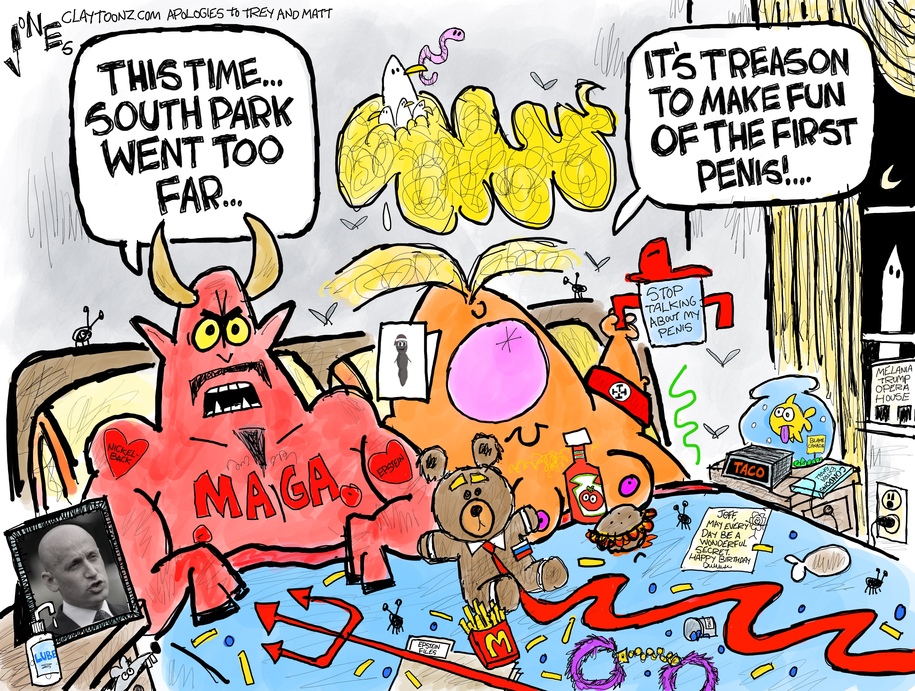
A cartoon by Clay Jones. Related | ‘South Park’ dresses down Trump in shocking PSA
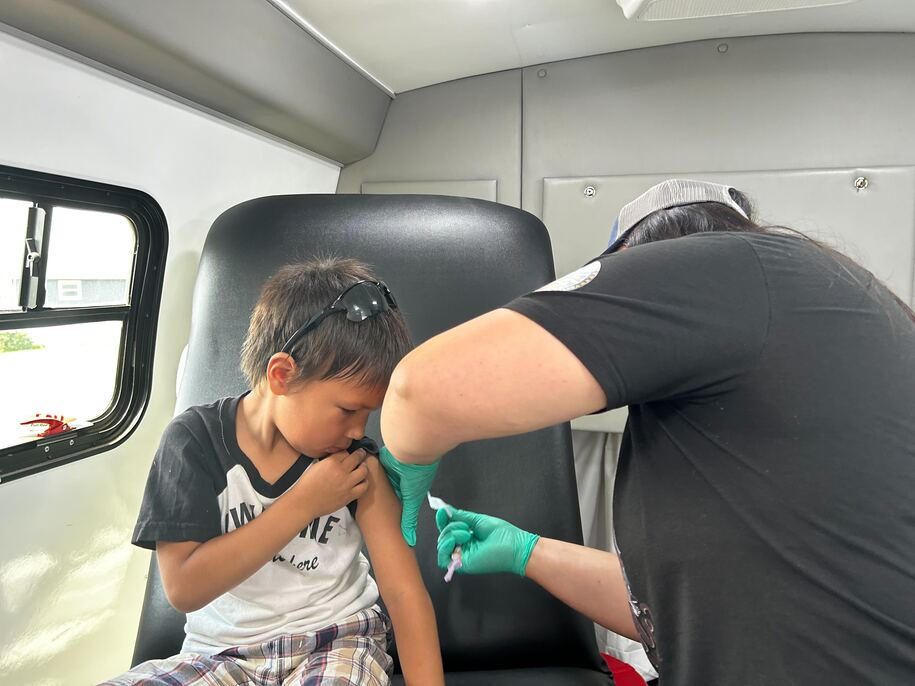
By Arielle Zionts for KFF Health News Cassandra Palmier had been meaning to get her son the second and final dose of the measles vaccine. But car problems made it difficult to get to the doctor. So she pounced on the opportunity to get him vaccinated after learning that a mobile clinic would be visiting her neighborhood. “I was definitely concerned about the epidemic and the measles,” Palmier, a member of the Oglala Sioux Tribe, said at the June event. “I wanted to do my part.” So did her son, Makaito Cuny. “I’m not going to be scared,” the 5-year-old announced as he walked onto the bus containing the clinic and hopped into an exam chair. Makaito sat still as a nurse gave him the shot in his arm. “I did it!” he said while smiling at his mother. The vaccine clinic was hosted by the Great Plains Tribal Leaders’ Health Board, which serves tribes across Iowa, Nebraska, and the Dakotas. It’s one way Native American tribes and organizations are responding to concerns about low measles vaccination rates and patients’ difficulty accessing health care as the disease spreads across the country. Meghan O’Connell, the board’s chief public health officer, said it is also working with tribes that want to host vaccine clinics. Related | RFK Jr. wants to overhaul a vital system that supports childhood immunization Elsewhere, tribal health organizations have launched social media campaigns, are making sure health providers are vaccinated, and are reaching out to the parents of unvaccinated children. This spring, Project ECHO at the University of New Mexico hosted an online video series about measles aimed at health care professionals and organizations that serve Native American communities. The presenters outlined the basics of measles diagnosis and treatment, discussed culturally relevant communication strategies, and shared how tribes are responding to the outbreak. Participants also strategized about ways to improve vaccination rates, said Harry Brown, a physician and an epidemiologist for the United South and Eastern Tribes, a nonprofit that works with 33 tribes in the Atlantic Coast and Southeast regions. “It’s a pretty hot topic right now in Indian Country and I think a lot of people are being proactive,” he said. Measles can survive for up to two hours in the air in a space where an infected person has been, sickening up to 90% of people who aren’t vaccinated, according to the Centers for Disease Control and Prevention. The U.S. has had 1,319 confirmed cases of measles this year as of July 23, according to the CDC. It’s the largest outbreak in the U.S. since 1992. Ninety-two percent of the 2025 cases involve unvaccinated patients or people with an unknown vaccination status. Three people had died in the U.S. and 165 had been hospitalized as of July 23. O’Connell said data on Native Americans’ vaccination rates is imperfect but that it suggests a lower percentage of them have received measles shots than the overall U.S. population. The limited national data on measles vaccination rates for Native Americans is based on small surveys of people who self-identify as Native American. Some show that Native Americans have slightly lower measles vaccination rates, while others show significant gaps. Data from some states, including South Dakota and Montana, shows that Native Americans are less likely than white children to be vaccinated on schedule. The national measles vaccination rate is significantly lower for Native Americans who use the mostly rural Indian Health Service. About 76% of children 16 to 27 months old had gotten the first shot, according to data collected by the agency during recent patient visits at 156 clinics. That’s a 10-percentage-point drop from 10 years ago. But the IHS data shows that its patients are at least as likely as other children to have received both recommended measles shots by the time they’re 17. O’Connell said it’s unclear if currently unvaccinated patients will continue the trend of eventually getting up to date on their shots or if they will remain unvaccinated. The immunization rate is probably higher for older children since schools require students to get vaccinated unless they have an exemption, Brown said. He said it’s important that parents get their children vaccinated on time, when they’re young and more at risk of being hospitalized or dying from the disease. The Oyate Health Center serves Native Americans in Rapid City, South Dakota, and surrounding areas. The center’s response to the measles outbreak has included hosting mobile vaccine clinics like this one outside the community center of a predominantly Native American neighborhood. Native Americans may have lower vaccination rates due to the challenges they face in accessing shots and other health care, O’Connell said. Those on rural reservations may be an hour or more from a clinic. Or, like Palmier, they may not have reliable transportation. Another reason, O’Connell said, is that some Native Americans distrust the Indian Health Service, which is chronically underfunded and understaffed. If the only nearby health care facility is run by the agency, patients may delay or skip care. O’Connell and Brown said vaccine skepticism and mistrust of the entire health care system are growing in Native American communities, as has occurred elsewhere nationwide. “Prior to social media, I think our population was pretty trustful of childhood vaccination. And American Indians have a long history of being severely impacted by infectious disease,” he said. European colonizers’ arrival in the late 1400s brought new diseases, including measles, that killed tens of millions of Indigenous people in North and South America by the early 1600s. Native Americans have also had high mortality rates in modern pandemics, including the 1918-20 Spanish flu and COVID-19. The Great Plains Tribal Leaders’ Health Board reacted quickly when measles cases began showing up near its headquarters in South Dakota this year. Nebraska health officials announced in late May that a child had measles in a rural part of the state, close to the Pine Ridge Indian Reservation. Then, four people from the Rapid City area got sick later that month and into the middle of June. “Our phones really rang off the hook” once that
Injustice for All is a weekly series about how the Trump administration is trying to weaponize the justice system—and the people who are fighting back. What exactly is Alina Habba’s job title these days? The pathetic and flailing attempts of the Department of Justice to keep former parking garage lawyer Alina Habba in the top job at the District of New Jersey may have come to an end, for now. Habba, without a doubt, is wildly unqualified for the role. Her past experience representing President Donald Trump in personal matters and the aforementioned parking garage gig do not in any way mean she should be the top prosecutor in that district. Alina Habba The problem for Trump is that Habba’s embarrassingly thin resume is likely too much even for the all-too-agreeable Senate Republicans. Interim U.S. attorneys can only keep that job for 120 days, after which the judges in the district could agree to extend it. They did not, which kicked off the world’s dumbest fight, where Attorney General Pam Bondi fired the career prosecutor the judges had named as Habba’s replacement, a move that does not help Habba get the job. But as of Friday, the matter seems resolved, and all it took was tons of chicanery and bad faith. The administration pulled Habba’s nomination from the Senate, so she is now able to serve as acting U.S. attorney for another 210 days. If Habba were truly a viable and reasonable candidate, she’d get past the Senate, the district court judges, or both. But she’s an inexperienced hothead in thrall to the president, and it’s that thrall, rather than any actual experience, that will keep her in the gig. Treat time at the Supreme Court By now, writing about Trump’s success at the nation’s highest court is a fill-in-the-blanks sort of thing: On ______, Trump went to the Supreme Court to ask for _________. The court’s conservatives agreed, staying the lower court order from ___________. This time around, the administration needed the Supreme Court to bless yet another of Trump’s illegal firings of members of independent boards and agencies. In May, Trump removed the Democratic appointees of the Consumer Product Safety Commission, part of his overall assault on independent agencies. Sure, removing them without cause is literally barred by statute, but why would that matter if you have the Supreme Court on speed dial. Obligingly, on Wednesday, the court’s conservatives ruled that Trump can go right ahead. Of course, they won’t actually decide on the merits, but instead are just doing this all on the shadow docket and just calling it a stay. This is a favorite trick of both Trump and the right-wing justices. But call it what it is: another shadow overruling of Humphrey’s Executor v. United States. That Supreme Court precedent forbids the president from doing exactly what he did here. However, in a May shadow docket ruling, Trump v. Wilcox, the Supreme Court told Trump to just go right ahead, but without having the honesty to openly overrule Humphrey. Now, in the CPSC case, the court’s conservatives relied on their own nonexistent reasoning in Wilcox to just say that welp, CPSC commissioners are just like the other ones we’re letting him fire, but no, we won’t tell you why. It’s a really terrific and sustainable way to run a justice system. Treat time at the Ninth Circuit It can’t just be the Supreme Court that has to do the hard work of kneecapping lower courts in service to Trump. This week, a three-judge panel of the Ninth Circuit Court of Appeals granted the administration’s request for a stay, so they don’t have to turn over their reduction-in-force plans. In a suit brought by the American Federation of Government Employees challenging the mass firings, the lower court initially enjoined the administration from carrying out the firings. The Supreme Court, as you could have predicted, stayed that order, because of course. When the case went back down after that, the lower court ordered the administration to provide the RIFs it is using in sealed copies to the court and attorneys for the plaintiffs. That seems fair and logical, because how can the plaintiff employees fight their mass termination without knowing the reasoning for that mass termination? Oh, you sweet summer child. Per the administration, even that is too much. Thanks to the Ninth Circuit, those will all stay secret—even from the plaintiffs affected. Also a really terrific and sustainable way to run a justice system. Treat time at the Eighth Circuit MyPillow CEO Mike Lindell … but this time for Mike Lindell! It’s nice to see that the federal courts can be solicitous toward not just Trump, but also to the lesser denizens of Trump World. So this time, an all-GOP panel on the Eighth Circuit Court of Appeals stretched the law well past its breaking point to figure out a way to let Lindell off the hook for the $5 million he owes a software developer who disproved his claims of election fraud. The decision is almost stupefyingly boring, turning as it does on a fight over the scope of the term “related to,” but the bottom line is that at least in this instance, everything is coming up Lindell. Missouri attorney general continues to act out Spare a thought for Missourians who have to endure having Andrew Bailey, a mini-Trump if ever there was one, as their attorney general. When he isn’t busy writing to technology companies complaining their chatbots aren’t nice enough to Trump, he’s suing Planned Parenthood. Anything to get attention from Daddy. The basis of Bailey’s suit is that Planned Parenthood is lying about the effects of mifepristone, the drug used in medication abortions. Never mind that literally over 100 studies found the drug to be safe and effective. Bailey thinks that even the Federal Drug Administration’s label language is wrong because of “recent studies” showing how dangerous it is. What studies? You don’t know them. They go to another school.

Authorities warn air quality is ‘unhealthy for sensitive groups’ in many parts of New York state on Saturday.
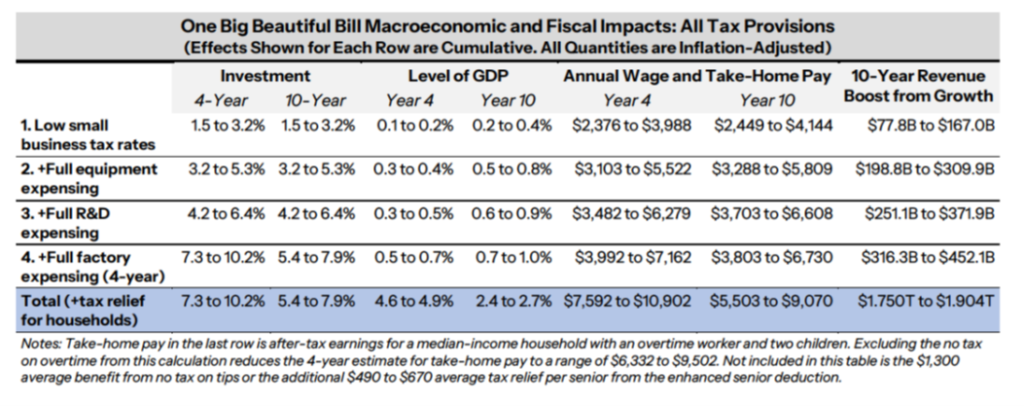
It’s usually in the Mid-Session Review, which comes out in July. But no table of forecasts is included this year (you can check–I did!). Which begs the question — how did they estimate the revenues going forward if they didn’t have GDP projections? Now, one could argue that the Administration couldn’t make a forecast given uncertainty regarding the OBBB’s passage and contents (the forecast is usually nailed down a couple months in advance, and OBBB was signed into law on July 4). Nonetheless, internally, they needed something in order to calculate a difference under administration preferred policies. I doubt they did what Vought did 2020 — just retained unchanged the January 2020 forecast associated with the FY2021 budget request in the July Mid-Session Review (see discussion here). So, here’s CEA’s assessment of the OBBB summarized: Source: CEA, The One Big Beautiful Bill – Legislation for Historic Prosperity and Deficit Reduction (June 2025). How did CEA estimate this effect? Source: CEA, The One Big Beautiful Bill – Legislation for Historic Prosperity and Deficit Reduction (June 2025),p10. Here’s the CEA’s forecast illustrated (I have used the midpoint of the 4.6%-4.9% level impact from the Table). Figure 1: GDP (bold black), CBO current law projection of January (tan), implied CEA forecast using CBO current law (red squares), mean forecast from July WSJ survey (blue circles), GDPNow of 7/24 (light green *), all in bn.Ch.2017$ SAAR. Source: BEA 2025Q1 3rd release, CBO January 2025, CEA (2025), WSJ survey, Atlanta Fed, and author’s calculations. So if you thought the (dynamic scoring) revenue projections for the OBBB from CEA were fantastical (per CRFB), you would have to agree that the growth projections are similarly fantastical. As noted above, this is not the first time the Trump administration has sought to hide their views on the economy’s likely path. Back in 2020, the Administration kept the same forecast in the Mid-Session Review as had been forwarded in February in the FY2021 budget, so that the pandemic was essentially ignored. Here’s my retrospective from the beginning of 2021. Figure 2: GDP as reported (black), Administration current forecast (red squares), and WSJ December 2020 survey mean (blue). Trough assumed to be 2020Q2. Source: BEA, OMB, WSJ, NBER, and author’s calculations. So…don’t believe anything that’s coming out of this administration economics-wise. And, I am sad to say, that includes CEA (see other written material here), aside the purely data product of Economic Indicators (joint CEA-JEC).