Author name: moderat ereport

Politics

A look at some cases dropped by the government’s consumer protection watchdog under Trump

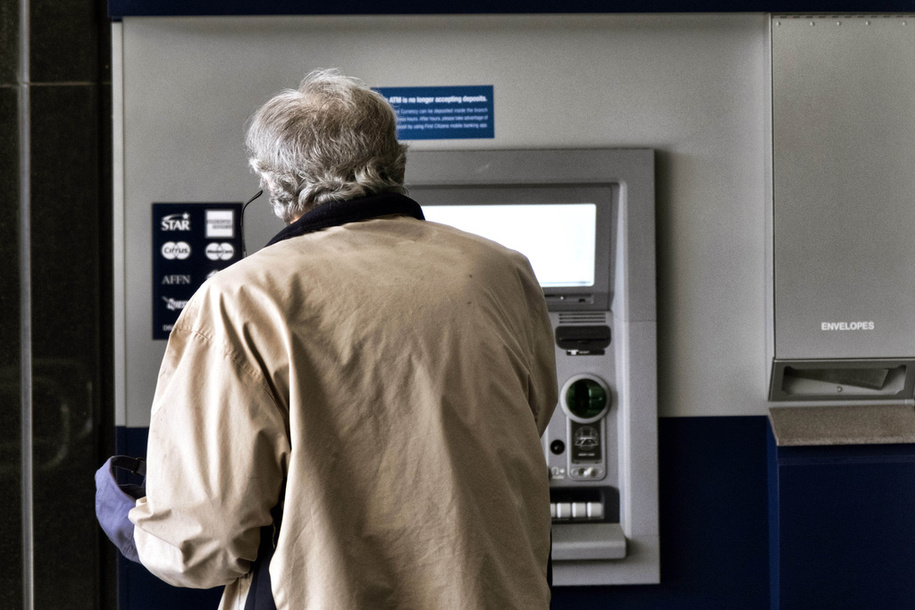
In the nearly six months since the Trump administration has had control of the Consumer Financial Protection Bureau, the bureau’s leadership has focused almost exclusively on rolling back any punishments, fines and penalties made against companies during the Biden administration. Related | Employees at the nation’s consumer financial watchdog say it’s become toothless under Trump In some cases, companies that were supposed to refund their customers or pay a penalty for unfair or deceptive practices are no longer bound to make their customers whole. Other companies facing charges of fraud of deceptive practices saw their lawsuits dropped in the early days of the Trump administration. A security officer works inside of the Consumer Financial Protection Bureau (CFPB) headquarters in Washington, D.C., on Feb. 10. Here are some of the Trump administration’s rollbacks: Navy Federal Credit Union The CFPB accused Navy Federal Credit Union, the nation’s largest credit union, of having unfair and deceptive overdraft fee practices. NFCU settled with the bureau and agreed to refund its members $80 million in overdraft fees. However, when the new administration took over, NFCU asked to have the order dismissed, which the CFPB agreed to do without giving a reason. Navy Federal has not said whether it would refund their members, which are mostly service men and women, families and veterans. Reduced overdraft fees The CFPB proposed new regulations that would have reduced overdraft fees to $5 from their industry average of $27. The regulations focused on a bureau analysis on what it actually cost banks to make short-term loans to customers to cover those purchases when a customer’s account went negative. The banking industry stood to lose billions of dollars in overdraft revenue, although banks have been weening themselves off overdraft fee revenue for years. The regulations were overturned by the Republican-controlled Congress in April. Capital One In the last days of the Biden administration, the CFPB sued banking giant Capital One for allegedly cheating its customers out of $2 billion in interest payments on their savings accounts. The case involved a product that Capital One sold known as 360 Savings, which the bank advertised as having the best savings rate in the country. Capital One failed to tell some customers that it had another product with a higher savings rate. The case was dropped within days of the Trump administration taking over the bureau. Walmart The CFPB filed a lawsuit in December against Walmart and workforce company Branch Messenger, accusing the companies of deceptively steering delivery drivers to open accounts with Branch, in order for those employees to get instant access to their wages. However, the CFPB said these Branch accounts came with high fees and deceptive marketing, and said Walmart and Branch should return $10 million to harmed drivers. Both Walmart and Branch denied the accusations. The lawsuit was dropped by the CFPB in the first weeks of the Trump administration. Zelle The parent company of Zelle, the peer-to-peer payment system, as well as some of the nation’s largest banks, were sued by the CFPB late last year over accusations they failed to protect hundreds of thousands of consumers from rampant fraud on Zelle, in violation of consumer financial laws. The CFPB’s lawsuit claimed hundreds of thousands of customers lost approximately $870 million in funds to fraud over the seven years that Zelle had been in existence. That lawsuit was dropped by the CFPB in March.
Politics

Even Republican elections officials aren’t down with Trump’s demands

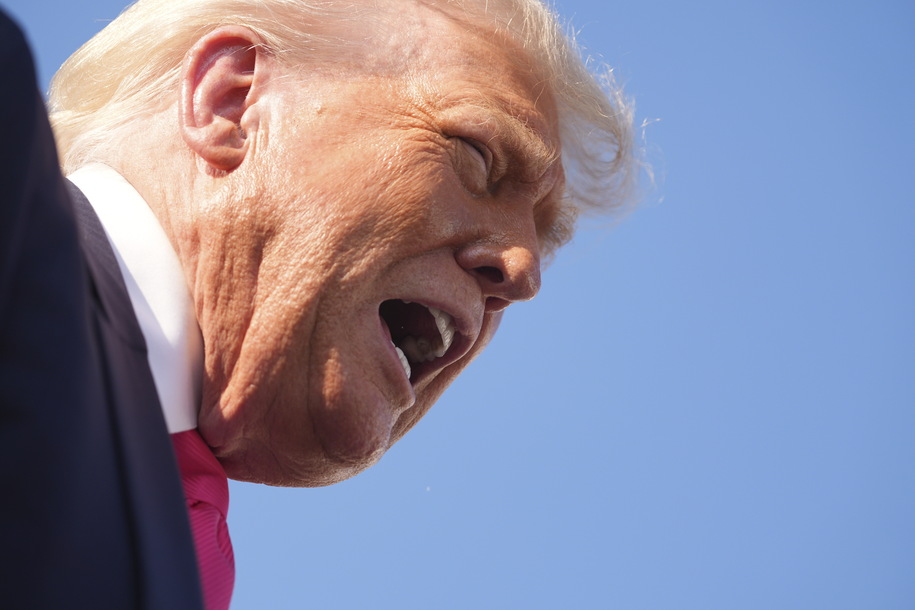
If you ever wondered what the next career move might be after “chief of staff for an election denier,” wonder no more.  Jeff Small, former chief of staff for GOP Rep. Lauren Boebert of Colorado, is now an elections consultant. Of course, his “consulting” looks a lot more like harassing elections officials based on President Donald Trump’s conspiracy theories, so much so that even fellow Republicans in the state are pushing back.  It likely goes without saying that Small has no background whatsoever in elections or election security, but he does have a resume that includes work for not just Boebert, but also Big Lie luminaries like former GOP Rep. Ken Buck of Colorado and current GOP Rep. Paul Gosar of Arizona, who keeps busy being extremely antisemitic when not pushing election conspiracies.  GOP Rep. Lauren Boebert of Colorado Regardless of his lack of relevant experience, Small has been contacting Colorado county clerks to let them know that he’s working with the Departments of Justice and Homeland Security. What does he want? Nothing big, really. Just to let an unnamed third party or perhaps the federal government muck around in their election equipment.  Both the DOJ and the White House declined to comment about Small’s involvement.  However, after Small told Steve Schleiker, the Republican clerk for El Paso County, Colorado, that he was working with the DOJ and DHS to “team up” with county clerks, Schleiker received a call from a DHS official.  “We would like to test the voting equipment to see if there’s any gaps,” they said.  Schleiker responded by saying that the federal government does not have the authority to “try to infiltrate a state’s or a county’s election equipment.”  Other Republican county clerks also refused, saying things like, “Nobody gets access to my voting equipment, for security reasons,” and, “To me, it felt like they were wanting to intervene before 2026.” The Trump administration seems to have overestimated the desire of Republican elections officials to participate in its project of undermining voter confidence. People who run elections are fanatical about election security, following detailed rules that ensure, for example, that no one is ever alone with voting equipment. There is, by design, no federal agency that has broad authority to access state or local election systems—because elections are run by states.  Colorado is being specifically targeted because of Tina Peters, former Mesa County clerk, who was convicted in state court after letting an election denier access voting machines to prove  that there was voter fraud in 2020. Peters is a right-wing cause célèbre, viewed as being imprisoned for her beliefs, rather than illegally letting randos root around in voting equipment.  Former Mesa County Clerk Tina Peters Trump has ordered the DOJ to try to find a way to free Peters, even though her conviction was in state court and the DOJ has no authority.  The DOJ is continuing to harass other states as well, though not as vociferously as Colorado. A letter to Minnesota about the state’s compliance with the Help America Vote Act was actually a demand for information about noncitizens and a complete voter list, including inactive voters.  The letter came from the acting chief of the voting section, Maureen Riordan, who made the same demand of Minnesota in her previous gig with the voter-suppression group Public Interest Legal Foundation.  Not content with harassment or civil threats, the DOJ is also exploring whether it would criminally charge elections officials who it determines haven’t properly safeguarded their election systems. You know what’s not safe? Letting conspiracy theorists—even ones who work for the government—dig around in voting machines to rewrite the 2020 election results.  And surprise, surprise—the states the DOJ is most concerned about just happen to be swing states like Wisconsin and North Carolina.  The Trump administration isn’t interested in election safety or even in the integrity of voter rolls. It’s purely interested in figuring out a way to make state and local elections officials complicit in Trump’s efforts. And what’s more effective than the threat of prosecution?

Politics

They came for us. We stood strong. We won.

A few weeks ago, I told you that Donald Trump’s Department of Justice had launched an action against Daily Kos. I couldn’t say much then—and I still can’t. As part of the resolution, we’re required to keep the nature of the action confidential for one year.  But here’s what I can say now: The DOJ has backed off. They’ve withdrawn. We stood our ground, and we won. This victory didn’t happen by accident. We didn’t cozy up to Trump for special treatment. We didn’t flinch. And most importantly, you didn’t flinch either. It’s easy to say “fight fight fight.” It’s something else entirely when doing so costs real money—especially while running an independent publication in a brutal media and political environment. But because this community stepped up when we asked, we were able to hire a top-notch legal team and face this challenge with confidence. Without your support, this could’ve ended very differently. And let’s be honest—this win feels even better because of how overwhelming things have felt lately. Under Trump, the courts and federal agencies have been warped into tools of political revenge. The news is a daily avalanche of chaos and cruelty. Tuning out is tempting. So yes, in the grand scheme of things, this may be a small win. But for us, it’s huge. A real threat is off our back. And more importantly, it proves something powerful: Even in this darkness, we can fight back and win. Now, for the first time in weeks, I can fully focus on something exciting: our future. On Tuesday, we officially launched the capital campaign to build the next version of Daily Kos—a faster, stronger, more secure platform built to last for decades to come. It’s the most important project we’ve undertaken in years, and it’s the key to making sure we’re ready for whatever comes next. If you haven’t yet, please contribute to that exciting effort!   Frankly? It’s a lot more energizing to talk about building the future than fending off fascists. Thank you for standing with us when it mattered most. I promise, we wouldn’t have won without you. And we certainly wouldn’t be here without you. And on May 6, 2026, I’ll be able—and happy—to tell the full story.

Scroll to Top