Author name: moderat ereport

The Hill

Kevin Spacey calls for release of Epstein files

Actor Kevin Spacey is demanding the release of all the files and names associated with late financier Jeffrey Epstein’s case. In a Tuesday morning post on X, Spacey called for the release of the files, adding that the “truth can’t come soon enough.” “Release the Epstein files. All of them,” he wrote. “For those of us with…

The Hill

Megyn Kelly, Ben Shapiro spar over Epstein theories, DOJ response

Commentators Megyn Kelly and Ben Shapiro sparred on Monday over Jeffrey Epstein’s files and theories regarding his death.  Kelly said sources have confirmed to her that Epstein did not kill himself but was targeted while working as an “agent” for the Israeli government, while Shapiro said unnamed whistleblowers were unreliable.  “I can claim that he…

ProPublica

The IRS Is Building a Vast System to Share Millions of Taxpayers’ Data With ICE

by William Turton, Christopher Bing and Avi Asher-Schapiro ProPublica is a nonprofit newsroom that investigates abuses of power. Sign up to receive our biggest stories as soon as they’re published. The Internal Revenue Service is building a computer program that would give deportation officers unprecedented access to confidential tax data. ProPublica has obtained a blueprint of the system, which would create an “on demand” process allowing Immigration and Customs Enforcement to obtain the home addresses of people it’s seeking to deport. Last month, in a previously undisclosed dispute, the acting general counsel at the IRS, Andrew De Mello, refused to turn over the addresses of 7.3 million taxpayers sought by ICE. In an email obtained by ProPublica, De Mello said he had identified multiple legal “deficiencies” in the agency’s request. Two days later, on June 27, De Mello was forced out of his job, people familiar with the dispute said. The addresses have not yet been released to ICE. De Mello did not respond to requests for comment, and the administration did not address questions sent by ProPublica about his departure. The Department of Government Efficiency began pushing the IRS to provide taxpayer data to immigration agents soon after President Donald Trump took office. The tax agency’s acting general counsel refused and was replaced by De Mello, who Trump administration officials viewed as more willing to carry out the president’s agenda. Soon after, the Department of Homeland Security, ICE’s parent agency, and the IRS negotiated a “memorandum of understanding” that included specific legal guardrails to safeguard taxpayers’ private information. In his email, De Mello said ICE’s request for millions of records did not meet those requirements, which include having a written assurance that each taxpayer whose address is being sought was under active criminal investigation. “There’s just no way ICE has 7 million real criminal investigations, that’s a fantasy,” said a former senior IRS official who had been advising the agency on this issue. The demands from the DHS were “unprecedented,” the official added, saying the agency was pressing the IRS to do what amounted to “a big data dump.” In the past, when law enforcement sought IRS data to support its investigations, agencies would give the IRS the full legal name of the target, an address on file and an explanation of why the information was relevant to a criminal inquiry. Such requests rarely involved more than a dozen people at a time, former IRS officials said. Danny Werfel, IRS commissioner during the Biden administration, said the privacy laws allowing federal investigators to obtain taxpayer data have never “been read to open the door to the sharing of thousands, tens of thousands, or hundreds of thousands of tax records for a broad-based enforcement initiative.” A spokesperson for the White House said the planned use of IRS data was legal and a means of fulfilling Trump’s campaign pledge to carry out mass deportations of “illegal criminal aliens.” Taxpayer data is among the most confidential in the federal government and is protected by strict privacy laws, which have historically limited its transfer to law enforcement and other government agencies. Unauthorized disclosure of taxpayer return information is a felony that can carry a penalty of up to five years in prison. The system that the IRS is now creating would give ICE automated access to home addresses en masse, limiting the ability of IRS officials to consider the legality of transfers. IRS insiders who reviewed a copy of the blueprint said it could result in immigration agents raiding wrong or outdated addresses. “If this program is implemented in its current form, it’s extremely likely that incorrect addresses will be given to DHS and individuals will be wrongly targeted,” said an IRS engineer who examined the blueprints and who, like other officials, spoke on condition of anonymity for fear of retribution. The dispute that ended in De Mello’s ouster was the culmination of months of pressure on the IRS to turn over massive amounts of data in ways that would redefine the relationship between the agency and law enforcement and reduce taxpayers’ privacy, records and interviews show. In one meeting in late March between senior IRS and DHS officials, a top ICE official made a suggestion: Why doesn’t Homeland Security simply provide the name and state of its targets and have the IRS return the addresses of everyone who matches that criteria? The IRS lawyers were stunned. They feared they could face criminal liability if they handed over the addresses of individuals who were not under a criminal investigation. The conversation and news of deeper collaboration with ICE so disturbed career staff that it led to a series of departures in late March and early April across the IRS’ legal, IT and privacy offices. They were “pushing the boundaries of the law,” one official said. “Everyone at IRS felt the same way.” The Blueprint The technical blueprint obtained by ProPublica shows that engineers at the agency are preparing to give DHS what it wants: a system that enables massive automated data sharing. The goal is to launch the new system before the end of July, two people familiar with the matter said. The DHS effort to obtain IRS data comes as top immigration enforcement leaders face escalating White House pressure to deport some 3,000 people per day, according to reports. One federal agent tasked with assisting ICE on deportations said recent operations have been hamstrung by outdated addresses. Better information could dramatically speed up arrests. “Some of the leads that they were giving us were old,” said the agent, who spoke on condition of anonymity because he was not authorized to speak with the press. “They’re like from two administrations ago.” In early March, immigrants rights groups sued the IRS hoping to block the plan, arguing that the memorandum of understanding between DHS and the IRS is illegal. But a judge in early May ruled against them, saying the broader agreement complied with Section 6103, the existing law regulating IRS data sharing.

Politics

Trump’s approval with Latino voters craters as he carries out evil deportation agenda

President Donald Trump’s approval rating among Latino voters is in free fall, as they realize that no one is safe from his evil deportation agenda. A YouGov poll released Monday found that Trump is a massive 27 percentage points underwater among Hispanic voters, with 62% disapproving of the job Trump is doing as opposed to the 35% who approve. That’s a massive change from less than a month ago, when NPR/PBS News/Marist released a poll finding 49% of Latino voters disapproved of the job Trump is doing in office, as opposed to 44% who approved. And the change is likely due to Trump’s handling of immigration, which voters are now overwhelmingly opposed to as he works to make good on his promise to deport millions of undocumented immigrants. “The word to describe Trump’s net approval on immigration ‘oof.’ Ranging from ‘horrible’ (-27 pt) to ‘bad’ (-7 pt), he’s lost a ton of ground on what was his best issue. Could be a reason Trump’s overall net approval among Hispanics has fallen: -2 pt in Feb to -26 pt in June,” CNN’s Harry Enten wrote in a post on X. The precipitous drop comes after Tom Homan, Trump’s immigration czar, admitted that Immigration and Customs Enforcement is racially profiling Latino people as they seek to meet White House aide and racist sociopath Stephen Miller’s goal of arresting 3,000 undocumented immigrants per day. “People need to understand ICE officers and Border Patrol, they don’t need probable cause to walk up to somebody, briefly detain them, and question them,” Homan said on Fox News, adding that he says ICE agents can detain people “based on … their physical appearance.” YouTube Video Trump is also cheering on the creation of “Alligator Alcatraz,” a temporary prison facility in the Florida Everglades where detained immigrants—most of whom either have no criminal records or minor traffic violations—are being housed in open-air cages under tents in the sweltering Florida heat. The Associated Press reported that the internment camp has squalid conditions, with wastewater on the floor, worms in the food, no access to showers, and those detained can only speak with attorneys by phone. “There are really disturbing, vile conditions and this place needs to be shut the hell down,” Rep. Debbie Wasserman Schultz (D-FL) told reporters on Sunday after she visited the facility. Trump also disturbingly fantasized about immigrants at the facility being eaten by alligators if they tried to escape its inhumane conditions. YouTube Video After Trump won in 2024, Republicans were ecstatic that he made gains among Latino voters, with Republicans bragging that it could be a permanent realignment.  But many of those voters have now turned on Trump, after realizing that he was never going to spare them his cruelty—even though it’s long been clear that he’s a racist. Now, it looks like Republicans are at risk of squandering their gains with Latino voters as they cheer on Trump’s immigration agenda, and gave him billions to make mask-wearing ICE goons the largest federal police force.

Politics

Republicans block Epstein files release as they bow to Trump

House Republicans on Monday night voted against a measure introduced by Democrats that would have compelled the government to release information on convicted sex offender Jeffrey Epstein, including a rumored client list of his. The move potentially protects powerful people from being implicated in Epstein’s crimes, even as Republicans have touted themselves as being for “law and order.” The measure was introduced by Democratic Rep. Ro Khanna of California during a meeting of the House Rules Committee as it debated a cryptocurrency-related bill. If the vote had passed, the amendment would have been attached to the bill, and if the bill were enacted, it would have required the Department of Justice to compile and publicly release all of its records on Epstein, who died in 2019 in prison. The vote failed 5 to 6, with only one Republican—South Carolina Rep. Ralph Norman—joining all Democrats in voting in favor of the amendment. “This is about trust. Republicans said, ‘Trust us. Vote for us and we will release these files.’ Well here we are—they’re backtracking,” Rep. Jim McGovern of Massachusetts said, chiding Republicans for their obstruction. Rep. Virginia Foxx of North Carolina, chair of the committee, defended the party’s vote. “I think most of us believe what’s appropriate will be released when it is time for the president to release it,” she said. A still of a video of Donald Trump and Jeffrey Epstein attending a party at Trump’s estate in the early 1990s. But in recent days President Donald Trump and his administration have been accused of covering up on behalf of Epstein, who sex-trafficked underage women. For years, Trump and other Republicans invoked the Epstein issue to cast aspersions on their political opponents, whom they implied—without evidence—were clients of Epstein. In February, Attorney General Pam Bondi even invited right-wing influencers to the White House to purportedly release Epstein-related data, much of which was already public. Now the Trump administration has claimed that the alleged client list doesn’t exist, and Trump has demanded that his MAGA supporters stop bringing up the issue. Pro-Trump media outlets like Fox News quickly fell in line. The network severely curtailed its mentions of Epstein shortly after Trump’s edict. Trump’s decision to pivot away from revealing Epstein-related information also raises questions about his own relationship with the convicted criminal. The two men were friends for decades, and Epstein was seen on multiple occasions partying with Trump at his Mar-a-Lago estate. Trump is an admitted serial sexual assailant and was found liable for sexually abusing columnist E. Jean Carroll. Trump financier Elon Musk has previously claimed that Trump’s name was in Epstein’s files, but with the administration obfuscating on the details, the full truth has not come out. Republicans in Congress have now made it more difficult to know the true extent of Epstein’s crimes and which powerful people, if any, may have been complicit.

Politics

Supreme Court further endorses Trump as king

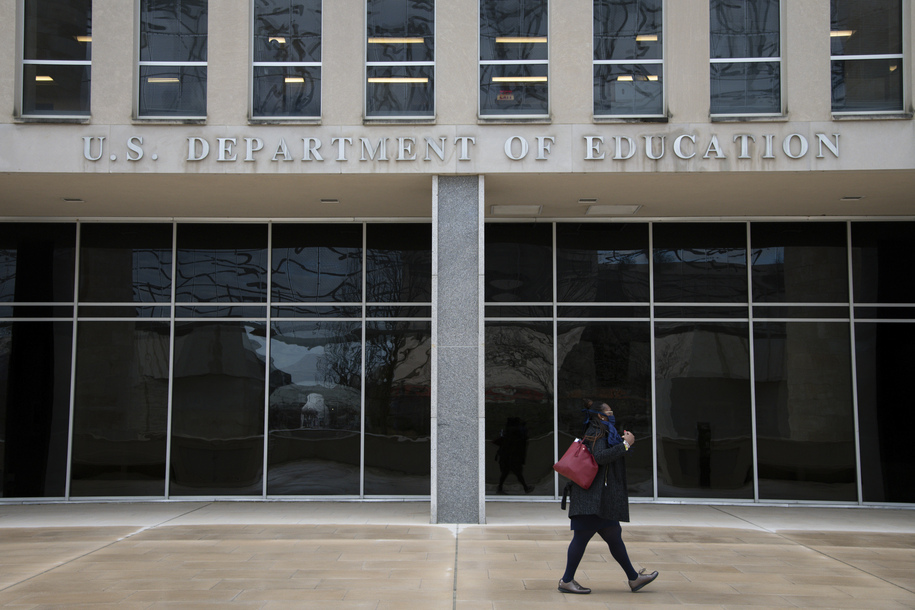
Another day, another Supreme Court ruling that shows the court’s conservatives are 100% down with whatever President Donald Trump wants to do. This time, they gave Trump the green light to functionally destroy the Department of Education.  Monday’s no-explanation order in McMahon v. New York allows Trump to execute his plan to fire almost 1,400 Education Department employees. When you combine these cuts with the probationary employees Trump fired earlier this year and employees who resigned, the department will be about half the size it was when Trump took office in January.  It’s basically the same big treat that the court gave to Trump last week, allowing him to fire over 1,300 State Department employees. And unlike the administration’s inability to swiftly execute tasks like bringing one man home from Salvadoran prison, it took only three days from the court’s ruling to the mass firings at the State Department. So you can expect they will purge the Education Department as quickly as they can.  Also the same as last week’s ruling? The court couldn’t be bothered to explain itself. Apparently, to the court’s conservatives, letting Trump illegally and unconstitutionally dismantle Cabinet-level agencies created by Congress is such a nothingburger that it didn’t even warrant a mention.  Secretary of Education Linda McMahon Giving Trump this vast authority over the Department of Education sure is a different vibe than the conservative majority had about that agency when Joe Biden was president. There, the notion that Biden relied on an existing law allowing for student loan relief to expand the scope of student loan relief was the most outrageous thing a president could possibly do. In fact, Chief Justice John Roberts’ majority opinion said Biden had engaged in an “exhaustive rewriting of the statute” by expanding student loan relief.  This time around? When no statute authorizes Trump to dismantle an agency created by Congress? Or when the only thing the administration relies upon for gutting departments is a series of Trump executive orders—which are very much not law—saying he can do it? Totally fine, totally cool, totally constitutional, go right ahead.  Actually, we have no idea what the court’s conservatives think about the underlying claim that Trump has the authority to dismantle departments because he feels like it. Monday’s ruling—as with last week’s State Department ruling and with the horrific ruling that the administration can deport immigrants to countries they are not from—does not address the merits of the case.  In other words, the court isn’t ruling that Trump can gut the Education Department. They’re just saying it’s so important that Trump gets to start gutting the Education Department immediately that he can’t wait for this case to be fully litigated. So, maybe someday, they tell themselves, when this case comes back to the court, they might determine Trump never had the authority to do these things, but hey, no harm, no foul. Surely, it’s no big deal to have been illegally fired if, a couple of years from now, the court says that shouldn’t have happened, right? Or for migrants that the administration sent to South Sudan? They can probably come back here super easily, and they definitely will not have suffered by being imprisoned or tortured in whatever random country the administration sent them to, right? Right? The emergency appeal route is Trump’s preferred method for getting matters in front of the court, and the conservatives are happy to pretend that everything Trump wants is a genuine emergency, but they’re turning the concept of emergency relief on its head. Trump not being able to do something ASAP is an emergency, but people who are going to get deported without due process are not facing an emergency. Sure.  They’re also happy to grant Trump’s every wish. Since April 4, out of 17 emergency applications filed by the administration, they’ve ruled in favor of Trump 15 times. As bad as that statistic is, it’s actually worse. Three of the birthright-citizenship cases were combined, so Trump is batting a thousand. And only three of those 15 rulings included a majority opinion.  Supreme Court Justice Sonia Sotomayor In her dissent in McMahon v. New York, Justice Sonia Sotomayor called this what it is: the court enabling the illegal behavior of the administration. “When the Executive publicly announces its intent to break the law, and then executes on that promise, it is the Judiciary’s duty to check that lawlessness, not expedite it,” she wrote. “The majority is either willfully blind to the implications of its ruling or naive, but either way the threat to our Constitution’s separation of powers is grave.” Sotomayor is coming in hot here, and it’s completely warranted, but she’s pulling her punches a bit by giving the majority a bit of an out here by speculating that perhaps they’re just naive and don’t understand the implications of what they’re doing. But the truth is that she knows that’s not what’s going on here, and we know that’s not what’s going on here.  There’s no credible explanation or legal justification for the court’s actions here. The only rational explanation is that they are wholly aligned with Trump’s project of turning himself into a king. They’re just as lawless as Trump, and they don’t care.

Politics

Dismantling the Department of Education, Without Saying Why

The Supreme Court is allowing Donald Trump to dismantle the Department of Education. But it won’t say why. Yesterday—almost exactly a week after the Court lifted a lower court’s block on Trump’s plans to fire thousands of federal employees—a majority of the justices decided to give the president the go-ahead for a different set of mass layoffs. Last week, the Court provided a handful of sentences that vaguely gestured at why it might have allowed the administration to move forward. This week, it offered nothing at all. There’s something taunting, almost bullying, about this lack of reasoning, as if the conservative supermajority is saying to the country: You don’t even deserve an explanation. Whereas last week’s case involved orders to lay off employees from across the entire federal government, this week’s involves just the Education Department. Over the course of his 2024 campaign and in the first few months of his second term, Trump repeatedly announced his plans to close the agency. The department was “a big con job,” he told reporters in February, and he would “like to close it immediately.” In March, Education Secretary Linda McMahon announced plans to cut the department’s workforce in half. Trump followed up with an executive order mandating that McMahon “take all necessary steps to facilitate the closure of the Department of Education.” There was one minor problem with this plan: The executive branch, at least theoretically, did not have the unilateral authority to abolish the Education Department, which was created by an act of Congress in 1979. A coalition of states, school districts, and unions sued, and a federal district court temporarily blocked the administration from moving forward. That court order required the department to rehire employees already laid off, pointing to both the Constitution and a statutory prohibition against “arbitrary and capricious” actions by federal agencies. [David A. Graham: What does the Department of Education actually do?] In that lower court, the government argued that it sought only to improve the “efficiency” and “accountability” of the department through “reorganization,” but District Judge Myong J. Joun was unconvinced. “A department without enough employees to perform statutorily mandated functions is not a department at all,” he wrote. An appeals court upheld Joun’s ruling, freezing Trump’s plans while the district court continued to weigh the underlying legal questions. At this point—stop me if you’ve heard this one before—the Supreme Court stepped in. Despite a frustrated dissent from the Court’s three liberal justices, the majority’s unsigned emergency ruling allowed Trump to carry out his plans while the litigation in the lower courts continues. “The majority is either willfully blind to the implications of its ruling or naive,” Justice Sonia Sotomayor wrote, “but either way the threat to our Constitution’s separation of powers is grave.” She went on: “The President must take care that the laws are faithfully executed, not set out to dismantle them.” The odd protocol of the Court’s emergency docket—sometimes called the “shadow docket”—means that the underlying question of whether Trump has the legal authority to tear apart the Education Department remains unresolved, even as a majority of the justices have allowed him to carry out his plans. Courts—even the Supreme Court—could still find the department’s dismantling illegal down the road. But in the meantime, the agency will have been devastated, perhaps irreparably. Layoffs will dramatically reduce the staffing of the already overworked Office of Civil Rights, which is responsible for ensuring equal access to education, including for disabled students. The administration will eviscerate the office responsible for helping students with financial aid for higher education; the government has said that this portion of the agency’s portfolio will be shifted over to the Treasury Department, but what this will look like in practice is unclear. The cuts will almost erase the Institute for Education Science, which publishes authoritative data on American schools and has already missed key deadlines this year. Given the potentially devastating effects of the Supreme Court’s ruling on congressionally mandated programs, it’s all the more galling that the majority didn’t bother to provide even a cursory explanation of its thinking. This terseness has become common as the Court has scaled up its use of emergency rulings—rulings that, it’s hard not to notice, have a striking tendency to align with the Trump administration’s priorities. Stephen I. Vladeck, a law professor at Georgetown University and an authority on the shadow docket, tallied the Education Department order as the 15th since early April in which the Court has granted Trump emergency relief, and the seventh in which the justices have provided not a word of explanation. (Until recently, the shadow docket was used far more rarely, and only for truly urgent matters.) Do the conservative justices feel that the president really does have the legal authority to destroy a Cabinet department on his own? Or perhaps they believe that the plaintiffs lacked the ability to bring the case at all in federal court? Maybe the reason was something else altogether. There’s no way to know. This silence is damaging, both to the legitimacy of the Court and to the rule of law. The judiciary is a branch of government that is meant to provide reasons for its actions—to explain, both to litigants and to the public, why judges have done what they have done. This is part of what distinguishes law from the raw exercise of power, and what anchors the courts as a component of a democratic system rather than setting them apart as unaccountable sages. With a written opinion, people can evaluate the justices’ reasoning for themselves. Without it, they are left to puzzle over the Court’s thinking like ancients struggling to decipher the wrath of gods in the scattering of entrails.

Scroll to Top