Author name: moderat ereport

The Hill

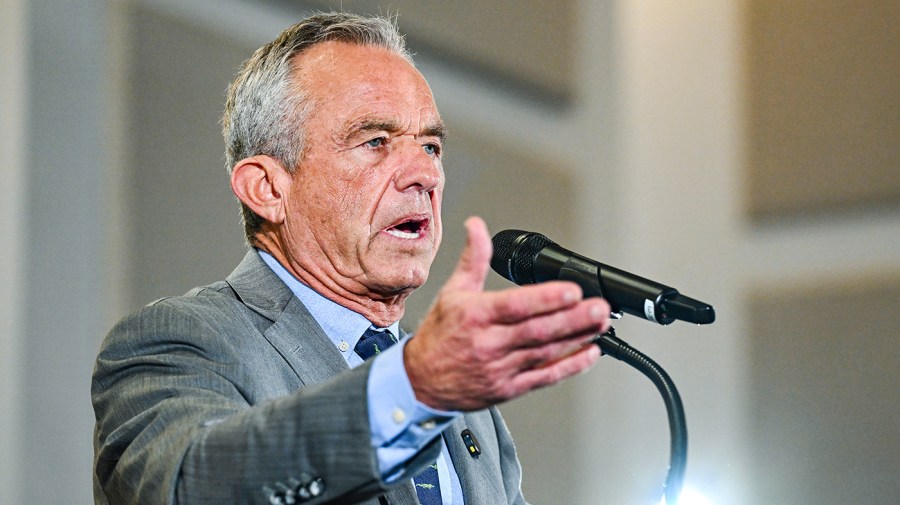
Kennedy targets vaccination injury program

Health and Human Services Secretary Robert F. Kennedy Jr. is targeting a little-known but crucial program that underpins all childhood vaccinations.   Kennedy took to social media and the show of conservative activist Charlie Kirk this week to rail against the Vaccine Injury Compensation Program (VICP) and pledge significant changes.  “The VICP is broken, and…

The Hill

BLS commissioner reacts to Trump firing 

Erika McEntarfer, commissioner of the Bureau of Labor Statistics (BLS), whom President Trump fired following a dismal jobs report, said it was the “honor of my life” to serve in the position. “It has been the honor of my life to serve as Commissioner of BLS alongside the many dedicated civil servants tasked with measuring a…

The Hill

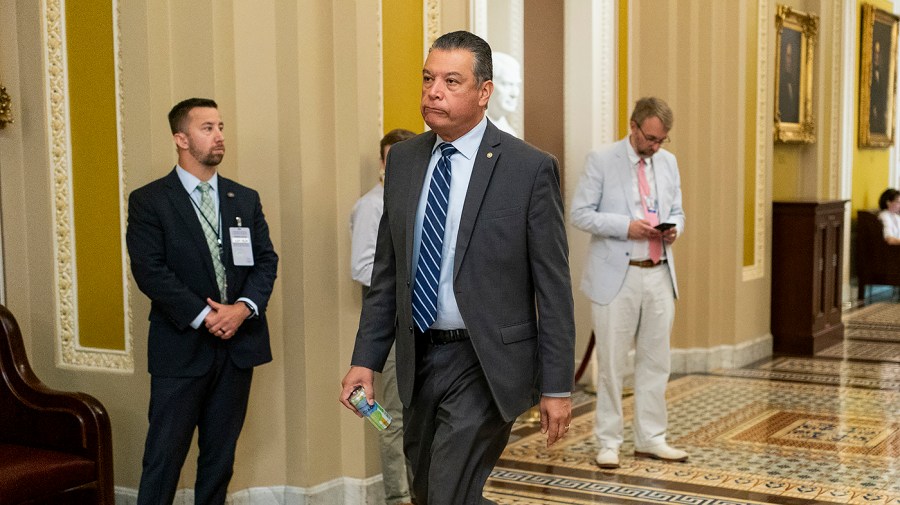
Padilla on redistricting effort: ‘If Republicans were confident on their policy agenda, they’d be eager to defend it’

Sen. Alex Padilla (D-Calif.) blasted Republicans for undertaking a mid-decade redistricting effort in Texas, saying the move reveals concerns about the party’s economic message ahead of the midterms. “If Republicans were confident on their policy agenda, they’d be eager to defend it with the people and to defend at the ballot box next November,” Padilla…

The Hill

DNC chair says Democrats ‘absolutely’ ready to fight back against GOP redistricting

Democratic National Committee (DNC) Chair Ken Martin said on Sunday that Democrats are “absolutely” well positioned to fight back against Republicans redistricting efforts. Martin was asked in an interview on NewsNation’s “The Hill Sunday,” whether Democrats are “really in a position to fight back on this,” considering states like California would likely need to change…

Politics

Cuts to food benefits stand in the way of RFK Jr.’s goals for a healthier national diet

By Renuka Rayasam for KFF Health News Belinda McLoyd has been thinking about peanut butter. McLoyd, 64, receives a small monthly payment through the federal Supplemental Nutrition Assistance Program, previously known as food stamps. “They don’t give you that much to work with,” she said. To fit her tight budget, she eats ramen noodles — high on sodium and low on nutrition — multiple times a week. If she had more money, said McLoyd, who has been diagnosed with multiple sclerosis and heart problems, she’d buy more grapes, melons, chuck roast, ground turkey, cabbage, and turnip greens. That’s what she did when lawmakers nearly doubled her SNAP benefit during the pandemic. But now that a GOP-led Congress has approved $186 billion in cuts to the food assistance program through 2034, McLoyd, who worked in retail until she retired in 2016, isn’t sure how she will be able to eat any healthy food if her benefits get reduced again. Research shows that programs encouraging SNAP recipients to buy healthy food are more effective than regulating what they can buy. McLoyd said her only hope for healthy eating might be to resort to peanut butter, which she heard “has everything” in it. “I get whatever I can get,” said McLoyd, who uses a walker to get around her senior community in southwestern Georgia. “I try to eat healthy, but some things I can’t, because I don’t have enough money to take care of that.” The second Trump administration has said that healthy eating is a priority. It released a “Make America Healthy Again” report citing poor diet as a cause of childhood illnesses and chronic diseases. And it’s allowing states — including Arkansas, Idaho, and Utah — to limit purchases of unhealthy food with federal SNAP benefits for the first time in the history of the century-old anti-hunger program. President Donald Trump also signed a tax and spending law on July 4 that will shift costs to states and make it harder for people to qualify for SNAP by expanding existing work requirements. The bill cuts about 20% of SNAP’s budget, the deepest cut the program has faced. About 40 million people now receive SNAP payments, but 3 million of them will lose their nutrition assistance completely, and millions more will see their benefits reduced, according to an analysis of an earlier version of the bill by the nonpartisan Congressional Budget Office. Researchers say SNAP cuts run counter to efforts to help people prevent chronic illness through healthy food. “People are going to have to rely on cheaper food, which we know is more likely to be processed, less healthy,” said Kate Bauer, an associate professor of nutritional sciences at the University of Michigan School of Public Health. “It’s, ‘Oh, we care about health — but for the rich people,’” she said. About 47 million people lived in households with limited or uncertain access to food in 2023, according to the U.S. Department of Agriculture. The agency’s research shows that people living in food-insecure households are more likely to develop hypertension, arthritis, diabetes, asthma, and chronic obstructive pulmonary disease. Related | RFK Jr. and Dr. Oz scold poor parents who can’t afford healthy food The Trump administration counters that the funding cuts would not harm people who receive benefits. “This is total fearmongering,” said White House spokesperson Anna Kelly in an email. “The bill will ultimately strengthen SNAP for those who need it by implementing cost-sharing measures with states and commonsense work requirements.” McLoyd and other residents in Georgia’s Dougherty County, where Albany is located, already face steep barriers to accessing healthy food, from tight budgets and high rates of poverty to a lack of grocery stores and transportation, said Tiffany Terrell, who founded A Better Way Grocers in 2017 to bring fresh food to people who can’t travel to a grocery store. Tiffany Terrell started A Better Way Grocers in Albany, Georgia, to help residents obtain fresh food.  More than a third of residents receive SNAP benefits in the rural, majority-Black county that W.E.B. Du Bois described as “the heart of the Black Belt” and a place “of curiously mingled hope and pain,” where people struggled to get ahead in a land of former cotton plantations, in his 1903 book, “The Souls of Black Folk.” Tiffany Terrell believes federal cuts to food assistance would devastate the region, setting back efforts to help residents boost their diets with fruits, vegetables, and other nutritious food and curb chronic diseases. Terrell said that a healthier diet could mitigate many of the illnesses she sees in her community. In 2017, she replaced school bus seats with shelves stocked with fruits, vegetables, meats, and eggs and drove her mobile grocery store around to senior communities, public housing developments, and rural areas. Tiffany Terrell said that a healthier diet could mitigate many of the illnesses she sees in her southwestern Georgia community. But cuts to food assistance will devastate the region, setting back efforts to help residents boost their diet with fruits, vegetables, and other nutritious food and tackle chronic disease, she said. Terrell saw how SNAP recipients like McLoyd ate healthier when food assistance rose during the pandemic. They got eggs, instead of ramen noodles, and fresh meat and produce, instead of canned sausages. Starting in 2020, SNAP recipients received extra pandemic assistance, which corresponded to a 9% decrease in people saying there was sometimes or often not enough food to eat, according to the Institute for Policy Research at Northwestern University. Once those payments ended in 2023, more families had trouble purchasing enough food, according to a study published in Health Affairs in October. Non-Hispanic Black families, in particular, saw an increase in anxiety, the study found. “We know that even short periods of food insecurity for kids can really significantly harm their long-term health and cognitive development,” said Katie Bergh, a senior policy analyst on the food assistance team at the Center on Budget Policy and Priorities. Cuts to SNAP “will put a healthy diet even farther out of reach for these families.” In 2017, Terrell

Politics

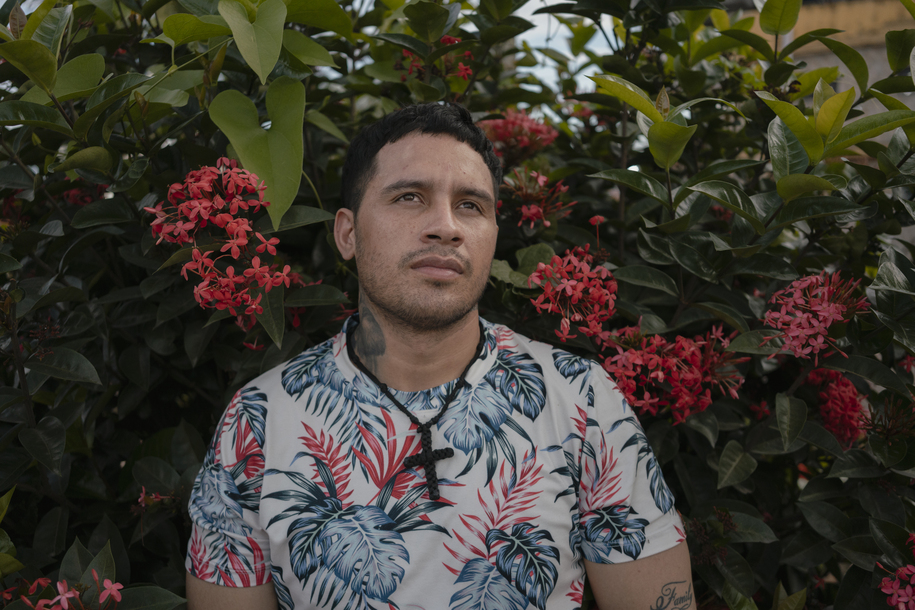
He was asked about tattoos and TikTok video in court. Five days later, he was in Salvadoran prison.

Albert Jesús Rodríguez Parra was one of more than 230 Venezuelan immigrants the Trump administration sent to a maximum-security prison in El Salvador. After his release, he says he wants the world to know what happened to him. By Melissa Sanchez for ProPublica In the early days of President Donald Trump’s second term, I spent a few weeks observing Chicago’s immigration court to get a sense of how things were changing. One afternoon in March, the case of a 27-year-old Venezuelan asylum-seeker caught my attention. Albert Jesús Rodríguez Parra stared into the camera at his virtual bond hearing. He wore the orange shirt given to inmates at a jail in Laredo, Texas, and headphones to listen to the proceedings through an interpreter. More than a year earlier, Rodríguez had been convicted of shoplifting in the Chicago suburbs. But since then he had seemed to get his life on track. He found a job at Wrigley Field, sent money home to his mom in Venezuela and went to the gym and church with his girlfriend. Then, in November, federal authorities detained him at his apartment on Chicago’s South Side and accused him of belonging to the Venezuelan gang Tren de Aragua. “Are any of your tattoos gang related?” his attorney asked at the hearing, going through the evidence laid out against him in an Immigration and Customs Enforcement report. “No,” said Rodríguez, whose tattoos include an angel holding a gun, a wolf and a rose. At one point, he lifted his shirt to show his parents’ names inked across his chest. He was asked about a TikTok video that shows him dancing to an audio clip of someone shouting, “Te va agarrar el Tren de Aragua,” which means, “The Tren de Aragua is going to get you,” followed by a dance beat. That audio clip has been shared some 60,000 times on TikTok — it’s popular among Venezuelans ridiculing the stereotype that everyone from their country is a gangster. Rodríguez looked incredulous at the thought that this was the evidence against him. Related | ‘It was a kidnapping’: Mom shares horror of son’s inhumane deportation That day, the judge didn’t address the gang allegations. But she denied Rodríguez bond, citing the misdemeanor shoplifting conviction. She reminded him that his final hearing was on March 20, just 10 days away. If she granted him asylum, he’d be a free man and could continue his life in the U.S. I told my editors and colleagues about what I’d heard and made plans to attend the next hearing. I saw the potential for the kind of complicated narrative story that I like: Here was a young immigrant who, yes, had come into the country illegally, but he had turned himself in to border authorities to seek asylum. Yes, he had a criminal record, but it was for a nonviolent offense. And, yes, he had tattoos, but so do the nice, white American moms in my book club. I was certain there are members of Tren de Aragua in the U.S., but if this was the kind of evidence the government had, I found it hard to believe it was an “invasion” as Trump claimed. I asked Rodríguez’s attorney for an interview and began requesting police and court records. Five days later, on March 15, the Trump administration expelled more than 230 Venezuelan men to a maximum security prison in El Salvador, a country many of them had never even set foot in. Trump called them all terrorists and gang members. It would be a few days before the men’s names would be made public. Perhaps naively, it didn’t occur to me that Rodríguez might be in that group. Then I logged into his final hearing and heard his attorney say he didn’t know where the government had taken him. The lawyer sounded tired and defeated. Later, he would tell me he had barely slept, afraid that Rodríguez might turn up dead. At the hearing, he begged a government lawyer for information: “For his family’s sake, would you happen to know what country he was sent to?” She told him she didn’t know, either. Rodríguez lifts his shirt to display some of his tattoos. The Trump administration has relied, in part, on tattoos to brand Venezuelan immigrants as possible members of the Tren de Aragua gang. Experts have told us tattoos are not an indicator of membership in the gang.  I was astonished. I am familiar with the history of authoritarian leaders disappearing people they don’t like in Latin America, the part of the world that my family comes from. I wanted to think that doesn’t happen in this country. But what I had just witnessed felt uncomfortably similar. As soon as the hearing ended, I got on a call with my colleagues Mica Rosenberg and Perla Trevizo, both of whom cover immigration and had recently written about how the U.S. government had sent other Venezuelan men to Guantanamo. We talked about what we should do with what I’d just heard. Mica contacted a source in the federal government who confirmed, almost immediately, that Rodríguez was among the men that our country had sent to El Salvador. The news suddenly felt more real and intimate to me. One of the men sent to a brutal prison in El Salvador now had a name and a face and a story that I had heard from his own mouth. I couldn’t stop thinking about him. As a news organization, we decided to put significant resources into investigating who these men really are and what happened to them, bringing in many talented ProPublica journalists to help pull records, sift through social media accounts, analyze court data and find the men’s families. We teamed up with a group of Venezuelan journalists from the outlets Alianza Rebelde Investiga and Cazadores de Fake News who were also starting to track down information about the men. Related | Parents of men illegally sent to El Salvador beg you not to look away We spoke to the relatives and

Scroll to Top