Author name: moderat ereport

The Hill

DOJ investigating George Mason University employment practices

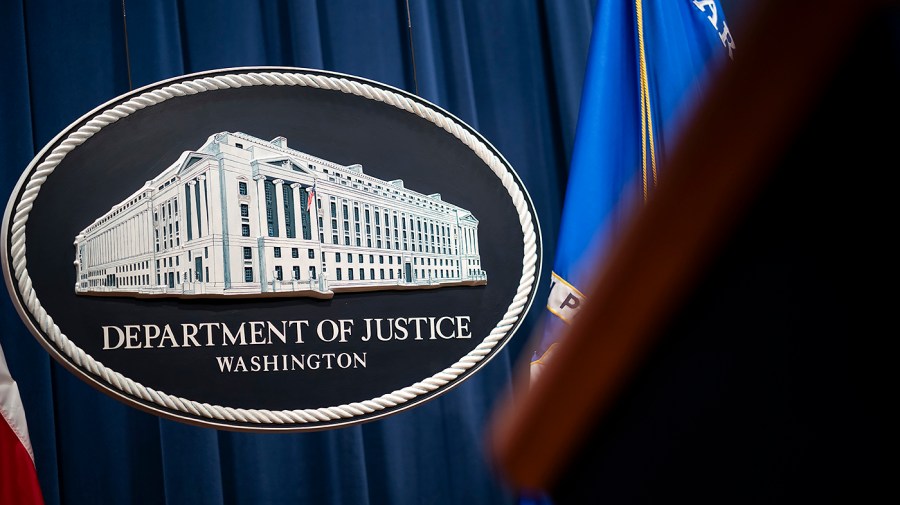
The Department of Justice (DOJ) announced Thursday it is investigating George Mason University over alleged “discriminatory employment practices based on race and sex,” a probe that comes as the Education Department is also investigating the school over diversity, equity and inclusion (DEI) initiatives. The department said the investigation stems from statements the university president made…

The Hill

72 percent of Democratic voters ‘extremely motivated’ ahead of midterms

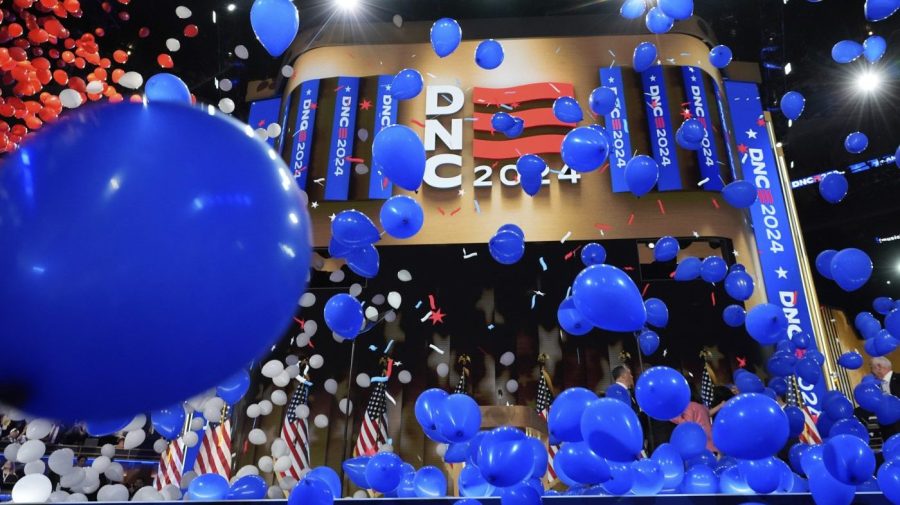
Nearly three-quarters of Democratic voters are feeling motivated to vote in the next election cycle, according to the latest CNN/SSRS poll. The survey, conducted this past weekend, shows 72 percent of Democrats and Democratic-leaning voters are “extremely motivated” to vote ahead of the midterms, compared to 50 percent of Republicans and Republican-leaning voters. Among Democrats,…

The Hill

House passes crypto market structure bill after GOP revolt 

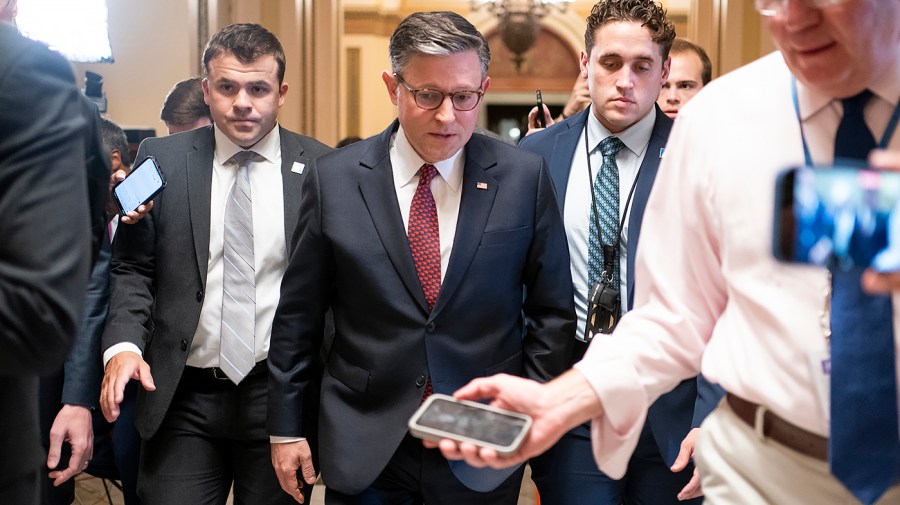
The House on Thursday passed legislation laying out regulatory rules for the crypto industry, after GOP leadership managed to stem a revolt from competing factions in the conference that brought the floor to a standstill and left crypto legislation in limbo.  The Digital Asset Market Clarity Act cleared the House in a 294-134, with 78…

The Hill

What to know about Trump’s health and diagnosis

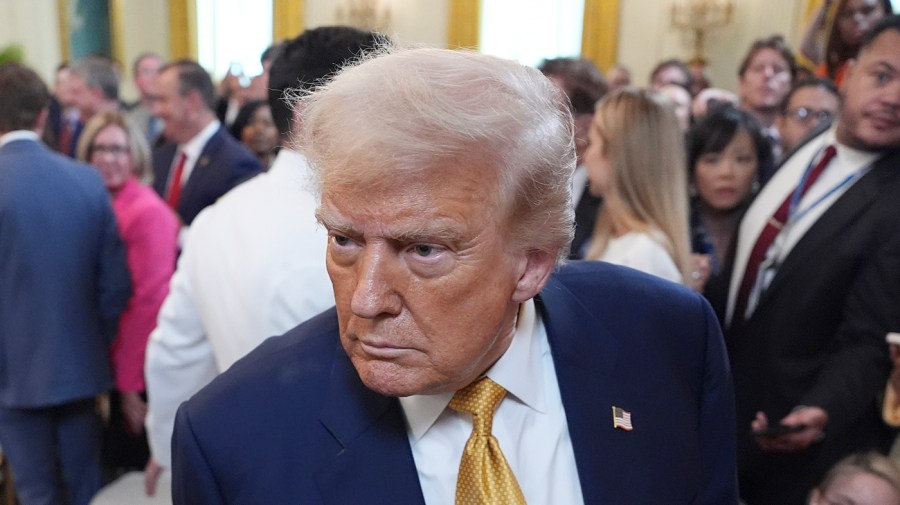
The White House said President Trump was diagnosed with chronic venous insufficiency Thursday after the leader noticed swelling in his lower limbs and ankles.  Trump diagnosed with common vein condition after leg swelling White House press secretary Karoline Leavitt said the president underwent a “comprehensive examination” that revealed the reason behind inflammation in his lower…

Factcheck.org

Big Beautiful Bill Projected to Lead to Preventable Deaths

Este artículo estará disponible en español en El Tiempo Latino. Contrary to President Donald Trump’s claim that no one will die as a result of the Republican budget bill, an analysis from the University of Pennsylvania and Yale University estimated that the legislation’s changes to Medicaid and the Affordable Care Act will result in at least 42,500 preventable deaths each year. At the same time, independent Sen. Bernie Sanders has slightly overstated the estimate. In the run-up to and in the wake of the passage of the One Big Beautiful Bill Act, which Trump signed into law on July 4, politicians of both parties have sparred over the budget reconciliation bill’s effects on mortality. Democrats, including House Minority Leader Hakeem Jeffries and Senate Minority Leader Chuck Schumer, have said that “tens of thousands” of people will die as a result of losing health insurance. “51,000 Americans will die each year so that the top 1% can get a $1 trillion tax break,” Sanders wrote in a July 3 post on X. “This bill is a death sentence.” Sanders repeated the claim in a July 9 post, using a figure of “more than 50,000.” Meanwhile, Trump has insisted that the Democratic talking point isn’t true. “The Democrats have come up with a false narrative. … It’s death, death, everyone’s going to die,” he said in a July 8 Cabinet meeting. As he had before, Trump said that the bill was “just the opposite. Everyone’s going to live.” “Somebody gave them a soundbite, ‘it’s going to cause death,’” Trump said in a July 12 interview on Fox News, referring to Democrats and the law. “It is not going to cause death. It’s going to keep people alive and it’s going to make our country successful.” Sanders is using a higher estimate than he should, but researchers at Yale and Penn’s Leonard Davis Institute of Health Economics projected in June that the House-passed version of the bill would “result in more than 42,500 deaths annually.”  The tally includes 11,300 deaths as a result of people losing Medicaid or Affordable Care Act marketplace insurance, as well as 18,200 deaths from low-income Medicare patients losing prescription drug benefits and 13,000 deaths from rescinding a Biden-era rule that required a higher minimum staffing level in nursing homes.  The group, which performed its analysis in response to an inquiry from Sanders and Sen. Ron Wyden, a Democrat from Oregon, based its projections on a preliminary Congressional Budget Office estimate that 7.7 million people would lose insurance coverage as a result of the bill. The CBO later projected that due to the House bill, 10.9 million people would be uninsured in 2034, a figure that includes 7.8 million becoming uninsured because of Medicaid changes in the bill and 3.1 million losing coverage due to changes to the Affordable Care Act. The CBO hasn’t yet provided an estimate for the final legislation, but said that a modified Senate version of that bill would increase the uninsured by 11.8 million people in 2034. Dr. Rachel Werner, a co-author of the analysis and LDI’s executive director, told us in an email that it’s “incorrect to say that no one will die as a result” of the legislation. “There is strong evidence that Medicaid coverage saves lives,” she said. Photo by Orathai / stock.adobe.com “Getting someone insurance allows them to get screened for diseases like cancer. It’s a major source of providing people with treatment for the opioid epidemic,” Werner explained in a conversation with the Tradeoffs podcast. “It allows people to get medications to manage their chronic conditions. And so if you suddenly pull back all those resources that have been allowing people to get the care they need, the evidence is very clear now that we will lose lives.” Another projection, published in mid-June in the Annals of Internal Medicine by researchers at Harvard Medical School and the City University of New York, estimated that the House bill’s Medicaid spending cuts would lead to between 8,200 and 24,600 medically preventable deaths a year, with a mid-range estimate of 16,642.  The study’s estimate, Werner explained, is “comparable” to the single 11,300 component of deaths from loss of insurance in her group’s total estimate. As she said on the Tradeoffs podcast, “we’re at the low end of that range, which is reassuring to us.” Both the Harvard-CUNY and Penn-Yale authors have noted that the CBO estimates themselves may be low. When doing its calculations, the CBO assumed that states, which will lose some federal Medicaid funding under the bill, would use state money to make up for half of those losses. “I think that that is a long shot,” Werner told Tradeoffs. “States budgets are very tight right now. Some states may be able to make up half of what they lose from the federal government, but I think it’s not a stretch to say most states can’t. And so if the funding that’s available for Medicaid goes down more than the CBO estimated, more people are going to lose access to coverage. So I think that I’m pretty confident that we are at the low end of the right ballpark.” Both projections capture only a portion of the possible mortality effects. Dr. Eric Roberts, a co-author of the Penn-Yale analysis, said that his estimate does not include any deaths that might result from potential hospital closures, for example. We asked the White House if they were aware of the Penn-Yale analysis and for support for Trump’s claim that the budget law would not lead to preventable deaths. “Reporters ignoring the commonsense reforms of The One, Big, Beautiful Bill that protect and preserve Medicaid while raising wages and growth to instead push debunked Democrat talking points with these sort of pointless ‘fact checks’ that rely on mindless hairsplitting is exactly why public trust in the media is at a record low,” White House spokesman Kush Desai replied in an email. As for Sanders’ 51,000 figure, the number appears in the Penn-Yale estimate, and a Sanders spokesperson confirmed the analysis was the source of his claim. But it reflects an additional 8,811 preventable deaths that come from not extending expanded ACA premium

Factcheck.org

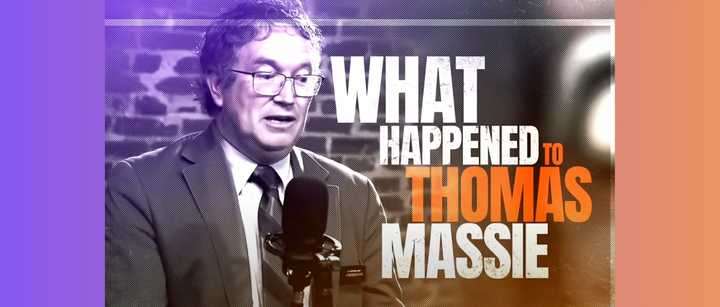
MAGA Ad Distorts How Massie Diverges from Trump

Este artículo estará disponible en español en El Tiempo Latino. An attack ad by a super PAC called MAGA Kentucky targets Republican Rep. Thomas Massie — a longtime conservative foil of President Donald Trump — with claims that distort the congressman’s votes on some of Trump’s policy goals. The 30-second broadcast and digital ad, the first phase in a $1 million ad buy, according to Axios, began airing in late June in the northern Kentucky district where Massie is seeking reelection in 2026. The ad is titled “RADICAL DEMOCRATS,” and its narrator asks, “What happened to Thomas Massie? When did he decide to start voting with the radical Democrats? Massie voted against President Trump’s tax cuts. Massie voted against finishing Trump’s wall. Massie even voted against Trump’s ban on taxpayer-funded sex changes for minors.” The ad is referring to Massie’s votes against Trump’s One Big Beautiful Bill Act. Massie was one of only two Republicans to vote against the initial House version of the bill on May 22, and the final Senate version of the bill on July 3. Although the bill contained elements of all three issues highlighted in the ad, Massie’s opposition was based on the bill’s impact on the national debt. The ad singles out aspects of the bill that Massie has generally supported. During Trump’s first term, Massie voted for Trump’s Tax Cuts and Jobs Act in 2017, and he has said repeatedly that he supports extending tax cuts in it that were scheduled to expire at the end of this year. “Look, I’m for the tax cuts, extending those tax cuts. I voted for those in 2017,” Massie said in a May 20 interview on Newsmax2. “Here’s the problem: we’re cutting more taxes, and we’re increasing spending. And to the extent they say we’re cutting spending, that doesn’t happen in these first few years. They’re saying, ‘We’ll do that in the later years.’ The problem is the later years never come.” “There are a lot of good things in this bill,” Massie said in a Newsmax interview on June 11. “We do need to deport the people who’ve come to this country illegally. I do support renewing the 2017 Tax Cuts and Jobs Act that I voted for.  But let me tell you what they’re not talking about … Number one issue, no tax on tips, no tax on overtime, the tax break for seniors, that all expires in three years. And that’s because they’re using a budget gimmick where they’re trying to say this thing balances five years from now. But it doesn’t balance now.” As for voting against “finishing Trump’s wall,” Massie has been a staunch supporter of building more border wall, though he has not always agreed with Trump’s method for funding it. In 2019, for example, Massie voted with Democrats to upend Trump’s attempt to fund the wall by declaring a national emergency. Massie argued that Congress, not the president, should decide on funding for construction of the border wall. But he also supported and voted to provide more than $5 billion to fund Trump’s border wall in fiscal year 2019. And in 2023, Massie co-sponsored H.R. 164, the Close Biden’s Open Border Act, which sought to provide $15 billion for border wall construction. As for the ad’s claim that Massie “even voted against Trump’s ban on taxpayer-funded sex changes for minors,” Massie has opposed gender-affirming surgery for children. Massie said in post on X after his vote: “Although there were some conservative wins in the budget reconciliation bill (OBBBA), I voted No on final passage because it will significantly increase U.S. budget deficits in the near term, negatively impacting all Americans through sustained inflation and high interest rates.” As we’ve written, multiple independent analyses have found that the legislation, which Trump signed into law on July 4, will add trillions of dollars to the federal deficit over 10 years. Massie had sought to amend the reconciliation bill to address federal jurisdiction in various cases of gender-affirming surgery. When the bill made its way through the Senate, according to Massie, the legislation allowed for funding of such medical procedures. Alluding to the MAGA Kentucky ad, Massie said on X, “What’s ironic is the senate stripped the ban on sex changes for minors from the BBB (referenced in the ad), so now everyone supporting the current BBB is for sex change for minors, using their logic?” Long History of Animosity The political friction between Trump and Massie goes back years. In March 2020, the Kentucky lawmaker tried to block Trump’s $2 trillion coronavirus economic stimulus package by forcing Congress to return to Washington for a vote on the bill, leading Trump to call Massie a “third rate Grandstander.” In 2024, Massie was critical of Trump for not fighting to ensure funding to complete the southern border wall during the president’s first term. Massie also endorsed one of Trump’s early challengers in 2024, Florida Gov. Ron DeSantis, in the Republican presidential primary. Massie and Trump clashed again in June, after the U.S. bombed the uranium enrichment facilities in Iran. Massie posted support for a War Powers Resolution vote in Congress to rein in Trump’s actions. “This is not our war,” Massie said on X. “But if it were, Congress must decide such matters according to our Constitution.” After Massie registered opposition to the One Big Beautiful Bill Act, Trump lambasted Massie on Truth Social as “a LOSER” and as “weak, ineffective,” and Trump has vowed in speeches to endorse a Republican primary opponent to Massie in the 2026 election. “I think he should be voted out of office,” Trump said. Massie’s War Chest Massie has held his office in Kentucky’s 4th Congressional District since 2012, and he easily defeated primary challengers in the last three election cycles, winning 75% of the vote in 2024, 75% in 2022 and 81% in 2020. Trump advisers are looking for a viable challenger in 2026, and Fox News posted a July 1 video of Trump saying Massie will have “a good opponent.” Massie has been gearing up for the fight. He has $1.7 million in his war chest, the

Scroll to Top