Author name: moderat ereport

The Hill

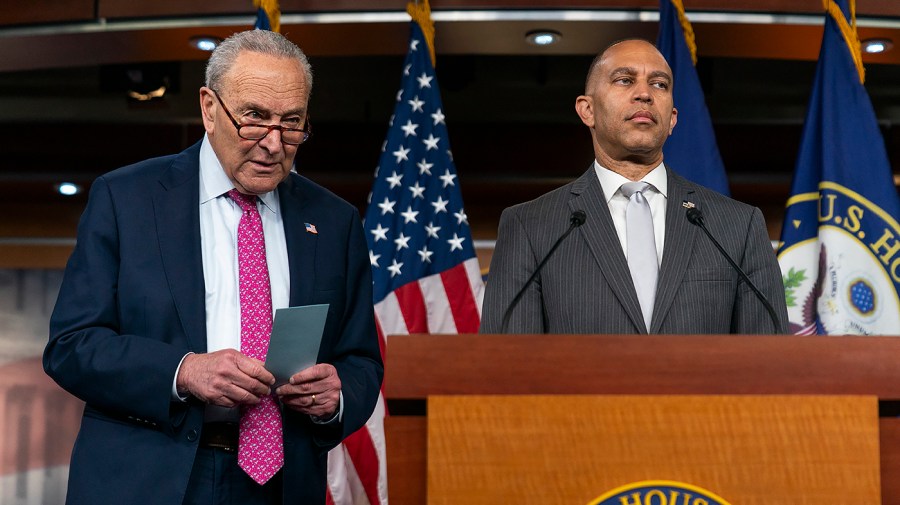
Schumer, Jeffries meet to discuss government funding strategy

Senate Democratic Leader Chuck Schumer (N.Y.) and House Democratic Leader Hakeem Jeffries (N.Y.) are scheduled to meet Tuesday to discuss and coordinate Democratic strategy ahead of September’s partisan battle to fund the government and avoid shutting down federal agencies, according to a senior Democratic aide. Government funding will expire on Sept. 30 and Senate Democrats…

The Hill

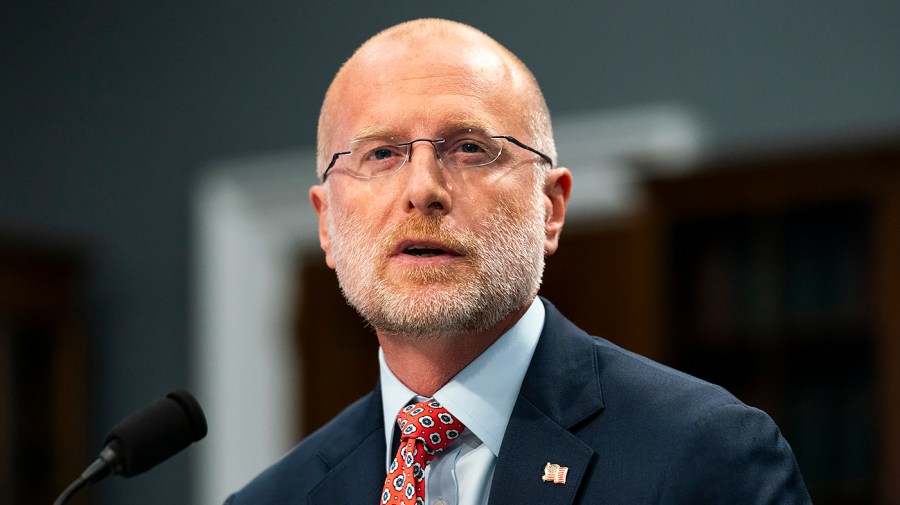
FCC chair mocks Dems ‘wailing’ over ‘The Late Show’ cancellation

Brendan Carr, President Trump’s Federal Communications Commission (FCC) chair, mocked critics of Paramount and CBS over the network’s decision to cancel “The Late Show with Stephen Colbert.” “The partisan left’s ritualist wailing and gnashing of teeth over Colbert is quite revealing,” Carr, who posts frequently on social media, wrote Tuesday on the social platform X.…

The Hill

NPR top editor stepping down

NPR’s top editor will leave the outlet in the coming weeks, a departure that comes at a tumultuous time for the public broadcaster. Edith Chapin, who since 2023 has served as the public media company’s top newsroom executive, told colleagues she will step down, saying she is ready to “take a break,” NPR reported. News…

The Hill

State Department: Beijing blocked US employee from leaving China

Beijing blocked a U.S. federal employee from leaving China after the individual traveled to the country in a personal capacity, the State Department confirmed Tuesday. The employee, who works for the U.S. Patent and Trademark Office (USPTO), was “made subject to an exit ban in China,” a State Department spokesperson said. “We are tracking this…

The Hill

Bernice King on Trump releasing MLK files: Now do Epstein

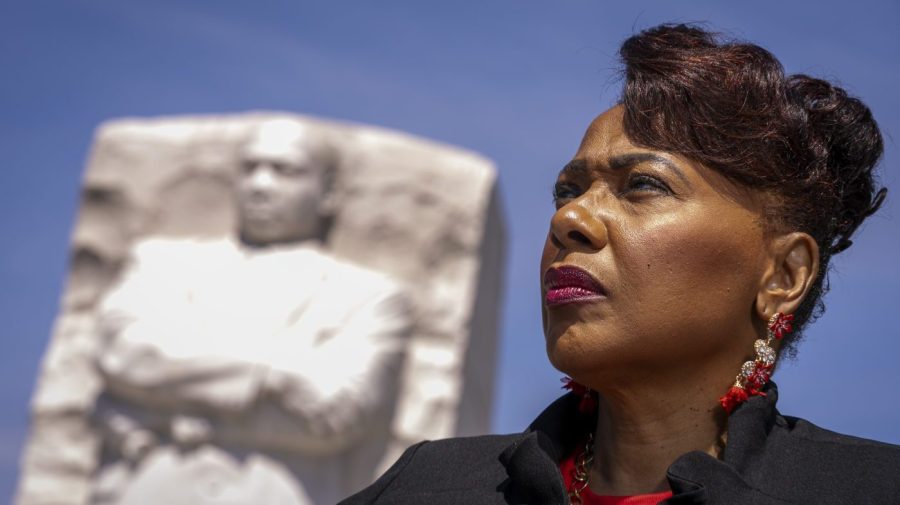
Bernice King, the youngest daughter of the late Martin Luther King Jr., weighed in on President Trump’s decision to release hundreds of thousands of documents related to her father’s assassination, while urging them to unveil the files tied to disgraced financier Jeffrey Epstein. King’s message came on Monday, shortly after Director of National Intelligence Tulsi…

Politics

Trump’s tariffs are wrecking this key industry

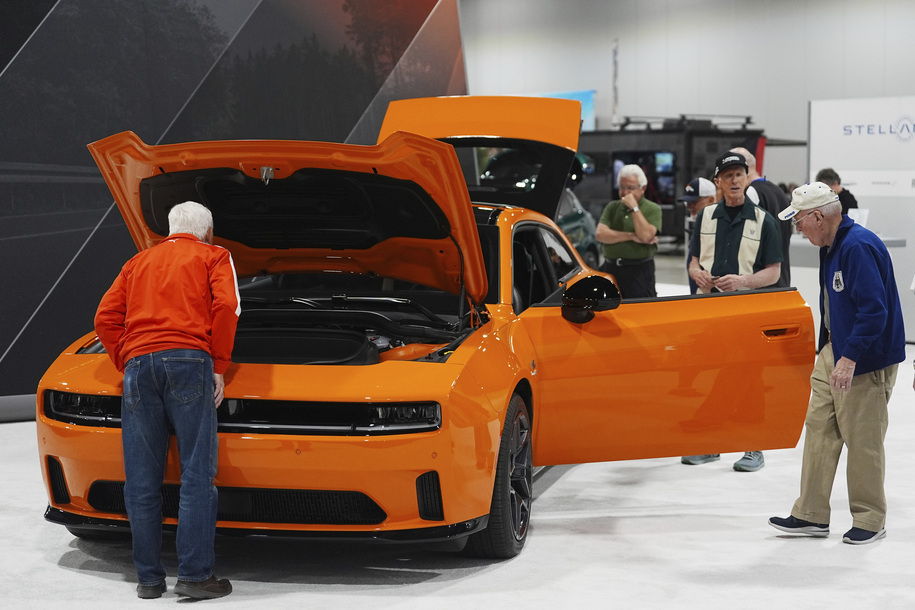
Two of the largest automakers, which each employ thousands in the U.S., are saying that President Donald Trump’s tariff policies have lost them billions in profits in the first half of 2025. The news highlights ongoing economic problems caused by Trump’s tariffs, despite the improving economy that Trump inherited. General Motors said on Tuesday that it had lost $1 billion in the second quarter of 2025, compared with its profits at the same time last year. A year ago, when Joe Biden was in the White House, GM had profits of $2.9 billion, but this year, under Trump, that was down to $1.9 billion. The company also saw a 2% drop in sales this year. Stellantis, which oversees brands like Chrysler, Jeep, and Dodge, reported similar bad news on Monday. In an announcement that shocked Wall Street, the company said it estimated that it would experience a net loss of nearly $2.7 billion in the first half of 2025. The company attributed much of the problem to the early effects of Trump’s tariffs. President Donald Trump proudly announces his new economy-wrecking tariffs at the White House on April 2, only to heavily—but not fully—walk them back days later. Following Trump’s April announcement of his “Liberation Day” tariffs on nearly all countries, his administration claimed that it would swiftly close new trade deals and that the tariffs would not hurt the economy. That hasn’t happened. Instead, the administration has promised over and over that deals are coming, with little to show for it. In fact, as GM was relaying the bad news on Tuesday, Treasury Secretary Scott Bessent told Fox Business, “We’re about to announce a rash of trade deals in the coming days.” Bessent also said the administration’s deadline for negotiating tariffs with China would once again be extended, since that nation has largely refused to bend to Trump’s demands. Trump has continued to push his tariff-based economic policies despite their harm to the global economy. In recent days, he has floated additional tariffs on the European Union and Mexico, which are expected to lead to increased prices for consumer goods for Americans. But the public doesn’t believe his policies will work. In an April poll by Gallup, 70% of Americans said the tariffs will cost Americans more money than the tariffs will bring in from foreign sources. An overwhelming majority of independents (74%) and Democrats (96%) expressed skepticism about Trump’s actions. But even 36% of Republicans think his policies are primed to fail. Datawrapper Content In addition to the hit on automakers, other businesses are shutting their doors under the weight of tariffs, including Howard Miller, a 100-year-old furniture manufacturing business in western Michigan—a state Trump won in the 2024 presidential election. When they’re not going under, businesses like Amazon are instead passing on the price hikes caused by tariffs on to the consumer. Meanwhile, a recent report by congressional Democrats revealed that China has benefitted from the chaos, swooping in to sign economic agreements while America has walked away from global commerce and erected new trade barriers. Trump inherited an economy in recovery, after Biden put in place policies to respond to Trump’s mismanagement of affairs during the COVID-19 outbreak and his first presidential administration. Now that recovery is going in reverse because of Trump’s tariff obsession.

Politics

What Trump’s Feud With Jerome Powell Is Really About

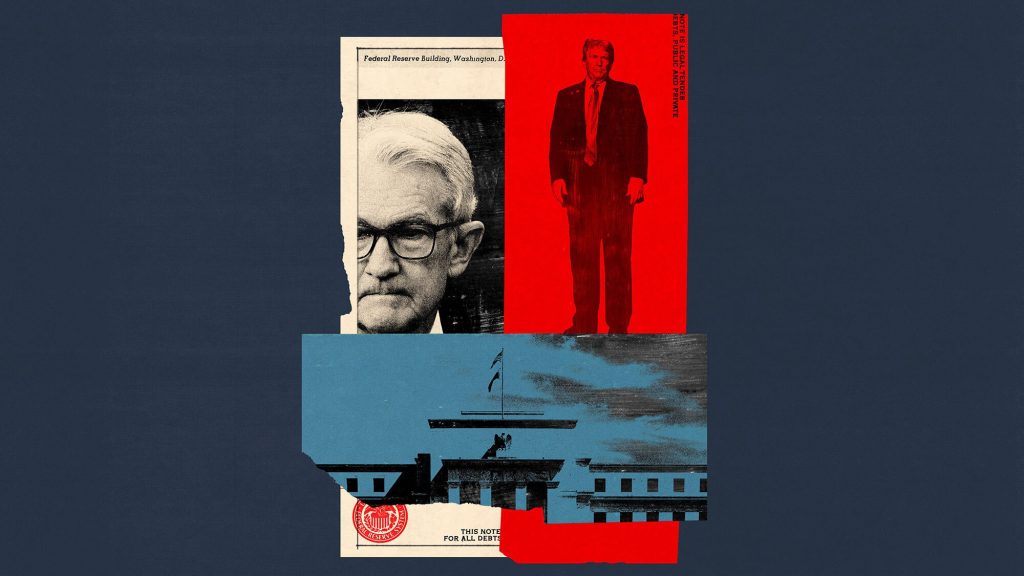
Donald Trump has been bullying Federal Reserve Chair Jerome Powell—calling him “too late,” insulting his intelligence, and trying to gin up a case that Powell spent too much on renovations of the agency’s headquarters as a pretext for firing him. The New York Times recently observed that the two men have a “toxic relationship,” which is true, as far as it goes. But the actual reason for the president’s hostility is neither alleged cost overruns nor Powell’s ability to manage the business cycle. Trump doesn’t think Powell is bad at his job. He objects to the job itself. The Federal Reserve’s assignment is to steward the long-term interests of the U.S. economy—even at the occasional expense of short-term pain—by balancing the twin objectives of suppressing inflation and managing the unemployment rate. Trump, however, believes that the Fed’s objective should be to speed up the economy under Republican administrations and slow it down under Democratic ones. To the extent that the central bank balances unemployment and inflation, he would like to see the pain of high unemployment shifted onto Democratic administrations so that Republican ones can benefit from rapid economic growth. Trump’s philosophy on monetary policy is easy to define because he has been publicly vilifying the Fed for at least a decade and a half. His opinions shift, but they shift predictably between two forms, with no relationship to economic circumstances. If the president is a Democrat, Trump complains that interest rates are too low. If the president is a Republican, he complains that they’re too high. [David Frum: Trump needs someone to blame] During the Obama years, the U.S. economy featured low inflation and elevated unemployment as it recovered from the Great Recession. Trump nonetheless spent that time complaining about low interest rates. “The Fed’s reckless monetary policies will cause problems in the years to come,” he tweeted in 2011. “The Fed has to be reined in or we will soon be Greece.” Five years later, with inflation still below target and the job market still recovering, he was still at it. “They’re keeping the rates down so that everything else doesn’t go down,” Trump complained in 2016. “We have a very false economy.” Then Trump became president, and abruptly reversed his position. “I do like a low-interest-rate policy, I must be honest with you,” he told The Wall Street Journal in April 2017. As the Federal Reserve began raising rates, which it generally does when the economy is running hot, Trump denounced those moves. He pushed repeatedly for lower rates, even when the economy was at its peak. “I think they should drop rates and get rid of quantitative tightening,” he said in 2019. “You would see a rocket ship.” At that time, rates were historically low. That changed after the pandemic sent prices soaring in 2021. Did Trump push back on the Fed’s decision to raise rates to combat inflation? Of course not, because Joe Biden was now president. Last October, Trump denounced Powell for easing interest rates by half a percentage point. “It was too big a cut, and everyone knows that was a political maneuver that they tried to do before the election,” he claimed. Almost immediately after winning his second term, however, he resumed his public drumbeat for cheaper money, a demand he has now backed with the threat of firing Powell. Whether Trump will follow through on that threat remains unclear, as does whether the courts would allow him to. Even if Trump eventually installs a more pliant figure in Powell’s place (his term as Fed chair expires next year), experts question whether that would actually lead to reduced interest rates. If the Fed loses credibility in the market, borrowing costs could paradoxically get even higher. [Annie Lowrey: Trump is flirting with economic disaster] Trump does not appear to have any master plan for how the Fed should function in a world in which he has compromised its independence. For one thing, he doesn’t believe that independence is possible. Laced through his commentary about the Fed over the years is a belief that its commitment to apolitical economic stewardship is a facade hiding naked partisanship. “Janet Yellen is highly political, and she’s not raising rates for a very specific reason,” he said a decade ago: “because Obama told her not to, because he wants to be out playing golf in a year from now and he wants to be doing other things, and he doesn’t want to see a big bubble burst during his administration.” Trump offered the same diagnosis when Powell was preparing to cut rates last year. “I think he’s political,” he told Fox News. “I think he’s going to do something to probably help the Democrats, I think, if he lowers interest rates.” Just as Trump is convinced that every president has secretly deployed the Justice Department for their own partisan ends, he believes that monetary policy is nothing but a way to win elections. Trying to advance the national interest, rather than some venal end goal, is a foreign concept. Economic analysts are now trying to predict what would happen under a regime in which the Fed chair is merely following the president’s short-term whims. Trump’s convictions begin with the premise that this is the world that has always existed.

Scroll to Top