Author name: moderat ereport

ProPublica

Texas Lawmakers Largely Ignored Recommendations Aimed at Helping Rural Areas Like Kerr County Prepare for Flooding

by Lexi Churchill and Lomi Kriel, ProPublica and The Texas Tribune This article is co-published with The Texas Tribune, a nonprofit, nonpartisan local newsroom that informs and engages with Texans. Sign up for The Brief Weekly to get up to speed on their essential coverage of Texas issues. Sixteen months had passed since Hurricane Harvey tore through the Texas coast in August 2017, killing more than 80 people and flattening entire neighborhoods. And when Texas lawmakers gathered in Austin for their biennial session, the scale of the storm’s destruction was hard to ignore. Legislators responded by greenlighting a yearslong statewide initiative to evaluate flood risks and improve preparedness for increasingly frequent and deadly storms. “If we get our planning right on the front end and prevent more damage on the front end, then we have less on the back end,” Charles Perry, a Republican senator from Lubbock who chairs a committee overseeing environmental issues, said at the time. In the years that followed, hundreds of local officials and volunteers canvassed communities across Texas, mapping out vulnerabilities. The result of their work came in 2024 with the release of Texas’ first-ever state flood plan. Their findings identified nearly $55 billion in proposed projects and outlined 15 key recommendations, including nine suggestions for legislation. Several were aimed at aiding rural communities like Kerr County, where flash flooding over the Fourth of July weekend killed more than 100 people. Three are still missing. But this year, lawmakers largely ignored those recommendations. Instead, the legislative session that ended June 2 was dominated by high-profile battles over school vouchers and lawmakers’ decision to spend $51 billion to maintain and provide new property tax cuts, an amount nearly equal to the funding identified by the Texas Water Development Board, a state agency that has historically overseen water supply and conservation efforts. Although it had been only seven years since Hurricane Harvey, legislators now prioritized the state’s water and drought crisis over flooding needs. Legislators allocated more than $1.6 billion in new revenue for water infrastructure projects, only some of which would go toward flood mitigation. They also passed a bill that will ask voters in November to decide whether to approve $1 billion annually over the next two decades that would prioritize water and wastewater over flood mitigation projects. At that pace, water experts said that it could take decades before existing mitigation needs are addressed — even without further floods. Even if they had been approved by lawmakers this year, many of the plan’s recommendations would not have been implemented before the July 4 disaster. But a ProPublica and Texas Tribune analysis of legislative proposals, along with interviews with lawmakers and flood experts, found that the Legislature has repeatedly failed to enact key measures that would help communities prepare for frequent flooding. Such inaction often hits rural and economically disadvantaged communities hardest because they lack the tax base to fund major flood prevention projects and often cannot afford to produce the data they need to qualify for state and federal grants, environmental experts and lawmakers said. Over the years, legislators have declined to pass at least three bills that would create siren or alert systems, tools experts say can be especially helpful in rural communities that lack reliable internet and cell service. A 2019 state-commissioned report estimated flood prevention needs at over $30 billion. Since then, lawmakers have allocated just $1.4 billion. And they ignored the key recommendations from the state’s 2024 flood plan that are meant to help rural areas like Kerr County, which is dubbed “Flash Flood Alley” due to its geography. U.S. Secretary of Homeland Security Kristi Noem, left, and U.S. Sen. John Cornyn, right, look on as Texas Gov. Greg Abbott signs an emergency proclamation during a press conference in Kerrville. (Ronaldo Bolaños/The Texas Tribune) Spokespeople for Gov. Greg Abbott and House Speaker Dustin Burrows, R-Lubbock, did not answer questions about why the plan’s recommendations were overlooked but defended the Legislature’s investment in flood mitigation as significant. They pointed to millions more spent on other prevention efforts, including flood control dam construction and maintenance, regional flood projects, and increased floodplain disclosures and drainage requirements for border counties. Lt. Gov. Dan Patrick did not respond to questions. This week, the Legislature will convene for a special session that Abbott called to address a range of priorities, including flood warning systems, natural disaster preparation and relief funding. Patrick promised that the state would purchase warning sirens for counties in flash flood zones. Similar efforts, however, have previously been rejected by the Legislature. Alongside Burrows, Patrick also announced the formation of committees on disaster preparedness and flooding and called the move “just the beginning of the Legislature looking at every aspect of this tragic event.” Burrows said the House is “ready to better fortify our state against future disasters.” But Rep. Ana-María Rodríguez Ramos, a Democrat from Richardson, near Dallas, said state lawmakers have brushed off dire flood prevention needs for decades. “The manual was there, and we ignored it, and we’ve continued to ignore these recommendations,” said Rodríguez Ramos, who has served on the House Natural Resources Committee overseeing water issues for three sessions. “It’s performative to say we’re trying to do something knowing well we’re not doing enough.” One recommendation from the 2024 flood plan would have cost the state nothing to enact. It called for granting counties the authority to levy drainage fees, including in unincorporated areas, that could fund local flood projects. Only about 150 of 1,450 Texas cities and counties have dedicated drainage fees, according to a study cited in the state assessment. Kerr, a conservative county of 53,000 people, has struggled to gain support for projects that would raise taxes. About a week after the flooding, some residents protested when county commissioners discussed a property tax increase to help cover the costs of recovery efforts. The inability to raise such fees is one of the biggest impediments for local governments seeking to fund flood mitigation projects, said
Politics

Trump wants to make team names racist again

President Donald Trump demanded on Sunday that the Washington Commanders and Cleveland Guardians return to their old, offensive team names. The complaints about the NFL and MLB teams echo other racist obsessions from Trump, who has integrated bigotry throughout his administration. Trump said he “may put a restriction” on the District of Columbia’s ongoing negotiations to build a new stadium for the team if the old “Washington Redskins” name is not restored. “The Team would be much more valuable, and the Deal would be more exciting for everyone” if the racist team name were restored, Trump wrote. The Commanders changed their name in July 2020, during the global protests against racial injustice following a police officer’s murder of George Floyd. For many years before that, Native American tribes and groups had requested the name change, noting that the team name was an offensive racial slur. For two seasons, the team was known as the Washington Football Team. In early 2022, the team revealed its new name, the Washington Commanders. Workers finish installing the Cleveland Guardians sign above the scoreboard at Progressive Field in March 2022, in Cleveland. On Sunday, Trump also claimed that Matt Dolan, a partial owner of the Cleveland Guardians, should force the team to restore the “Cleveland Indians” name in order to help Dolan’s political ambitions. Dolan ran as a Republican candidate in two failed Senate campaigns in Ohio. However, Trump’s animosity toward Dolan is likely because he did not support Trump. The Guardians announced their decision to change the team name in 2020, around the same time of Washington’s announcement. At the time, Trump was president and lashed out at both teams for “changing their names in order to be politically correct.” The Trump administration has also complained about efforts at the local level to change team names. In June, Education Secretary Linda McMahon threatened to withhold funding from schools in New York after Massapequa High School discussed changing its mascot from “Chiefs.” Trump’s antagonism toward racial reconciliation stems from the fact that he is a racist. Trump has used his second term in the presidency to mount a full-scale assault on anti-racism, and to impose racist policies on American citizens and institutions. Trump has repeatedly elevated white supremacy while simultaneously attempting to undermine and erase the achievements of Blacks, Asians, Latinos, and other racial and ethnic minorities. In one of his Sunday posts, Trump claimed that his crusade to restore racist sports names is about the “heritage and prestige” of Native Americans. But studies show strong Native American opposition to these names. A 2020 study published in the journal of Social Psychological and Personality Science found that, of people polled on sports mascots, 57% who strongly identified as Native American were deeply offended by these portrayals. Trump’s team-name advocacy is rooted in his long history of white supremacy and is out of touch with the people he is claiming to support.

Politics

Here’s why your hamburger might cost you an arm and a leg

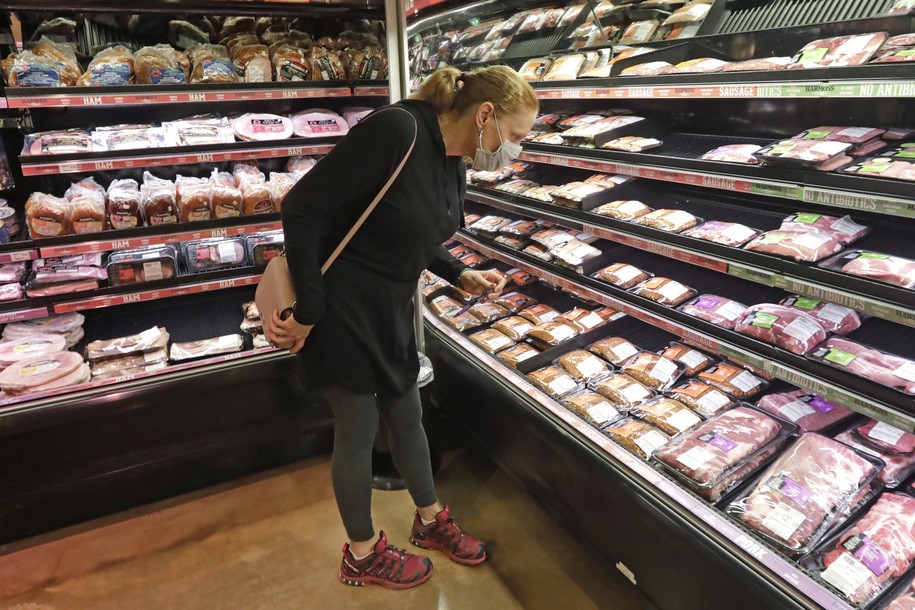
First, eggs were breaking the bank. Now it’s beef. Egg prices surged earlier this year due to a severe avian flu outbreak, but they eventually stabilized as producers restocked and supply chains normalized. However, that reset has not occurred with beef. Instead, prices continue to rise—just in time for peak grilling season—and there’s no relief in sight. In June, ground beef reached $6.12 a pound, according to the U.S. Bureau of Labor Statistics. That’s nearly a 12% increase since last June, when it was $5.47 a pound. This marks the first time since the Consumer Price Index began tracking the data in the 1980s that ground beef has gone above $6. But it’s not just ground beef. The price of uncooked steak is also soaring. Last month, it hit $11.49 a pound—an 8% increase from last June, when it was $10.64 a pound.  Datawrapper Content What’s worse, it’s not just a seasonal fluctuation. Experts say the worst may still be ahead. “Beef is way more complicated than eggs,” Michael Swanson, the chief agricultural economist at Wells Fargo, told CNN. “The cattle industry is still the ‘Wild West’ of the protein market, whereas the egg market is more ‘Corporate America’ with its supply and demand management.” Patrick Montgomery, CEO of KC Cattle Company, told Axios this is “just the tip of the iceberg,” adding, “Prices for beef will continue to be tumultuous for the next two to four years.” This problem has been years in the making. Droughts, rising costs, shrinking herds, and, more recently, freezes and cuts to various Agriculture Department programs have pushed ranchers out of the industry. U.S. herd sizes are now at their lowest point in decades, according to the American Farm Bureau Federation, a major lobbying group. The number of farms in the U.S. is also on a slow decline, with roughly 1.9 million in 2024—down 8% since 2017—according to the USDA. Imports have helped fill the gap, especially from Brazil, which now supplies nearly a quarter of all U.S. beef imports. But that supply route is also under threat. President Donald Trump recently ordered for a 50% tariff on Brazilian beef to start on Aug. 1, and according to Reuters, some exporters are reassessing future shipments to the U.S. Cattle graze on a ranch in Lufkin, Texas, in April 2023. The U.S. is Brazil’s second-largest beef market, after China. With domestic production declining, these new tariffs could hit hard, especially on ground beef. American meatpackers often rely on lean beef trimmings from countries like Australia, Brazil, and New Zealand to blend with fattier domestic beef and produce hamburger meat. Now Brazil’s lean cuts are set to become much more expensive—or vanish altogether. U.S. beef importers “will either have to pay the higher cost of Brazilian beef or obtain it from other higher-cost sources,” David Ortega, a food economist at Michigan State University, told Al-Jazeera. “That could lead to higher prices for certain beef products, particularly ground beef and hamburger meat. This comes at a time when the U.S. cattle herd is at the lowest level in many decades, demand for beef is strong, and as a result, beef prices are up.” Brazil isn’t the only supplier under pressure. Imports from Mexico—another major partner—have been disrupted by an outbreak of the flesh-eating parasite known as the screwworm. In short, the lean-beef pipeline is shrinking just as demand peaks. Tyson Foods CEO Donnie King didn’t hold back on a recent earnings call. “Beef is experiencing the most challenging market conditions we’ve ever seen,” he said. Even if herd numbers recover, it won’t result in immediate price drops. Climate shocks, shrinking ranch land, trade disruptions, and persistent consumer demand are all converging, making the meat aisle increasingly difficult to afford with each passing month.

Politics

Hunter Biden Goes Off And Slams Jake Tapper

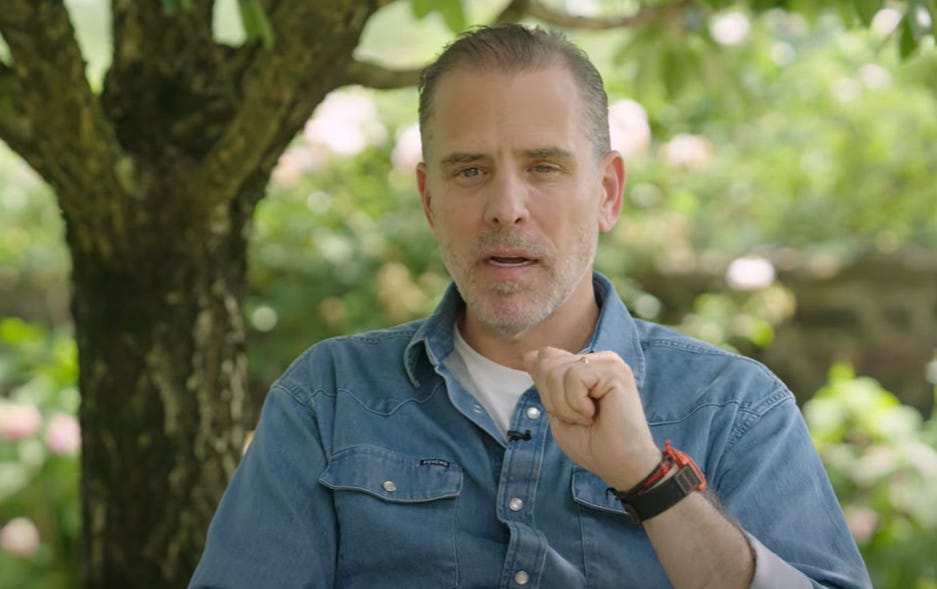
PoliticusUSA is independent news you can depend on. Please consider supporting our work by becoming a subscriber. Subscribe now Hunter Biden has had his struggles and his problems, but he is very loyal and loving toward his father. In a wide-ranging interview with Andrew Callagan on his YouTube channel, Hunter Biden says things about Jake Tapper and his book, along with those who worked to kick his father off the 2024 ticket that his dad never would. The full interview is over three hours long, and you can watch it below: Biden had some things to say about Jake Tapper: Hunter Biden said about Tapper, “ What influence does Jake Tapper have over anything? He has the smallest audience on cable news and beyond that, I think that the book is right now on Amazon that he put out. His ratings just went to shit after he put the book out and, they did a two week infomercial for it. It was such a money grab such a disservice to everybody that he serves with the journalism that he purports to take part in, and he is very personal. He has a real problem with me. He does this whole rant about how I was the acting chief of staff and that I took control of the White House and I orchestrated this cover-up of my dad’s health and well-being at the same time as who would ever trust a person like me that was a crack addict that got their sister-in-law, addicted to crack cocaine.” Video clip: Jake Tapper’s book contained zero medical sourcing. It did contain a lot of Democrats who were looking to cover their backsides after they turned the election into a complete fiasco by destabilizing the Democratic Party with just months to go before election day. Tapper’s book died a quick death once it was revealed that Joe Biden has cancer, but it still deserves to go down in history as one of the biggest smear jobs ever perpetuated by mainstream media. Hunter Biden also had a lot to say about George Clooney and the Obama circle that pushed Joe Biden out:  F*ck him, f*ck him, f*ck him. And. Everybody around him. I don’t have to be f*cking nice. Number one, I agree with Quentin Tarantino. F*cking, George Clooney is not a f*cking actor. He is a f*cking, like he, I don’t know what he is. He, he, he’s a brand. And by the way, and God bless him, you know what he, I, he supposedly treats his friends really well, you know what I mean? Video clip: Buys them things. And he’s got a really great place in Lake Cuomo, and he’s great friends with Barack Obama. F*ck you. What do you have to do with f*cking anything? Why do I have to f*cking listen to you? What right do you have to step on a man who’s given 52 years of his f*cking life to the service of this country and decide that you, George Clooney, are gonna take out basically a full page ad in the f*cking New York Times to undermine the president at a time in which, by the way, what do people care about the most? Why do you think that the Republicans have an advantage over us? Because they’re unified. They will go along with anything. I wasn’t asking anybody to go along with anything. I was asking people to go along with this. PoliticusUSA is a reader-supported publication. To receive new posts and support our work, consider becoming a free or paid subscriber. The most successful administration in my lifetime, and I’m including the Obama administration, I’m including the Reagan administration. I’m including every administration in my lifetime, we had gotten more done for the agenda of the things that your generation and my generation cared about than any president in history, and we didn’t get it all done. Right, but more than anybody else with the slimmest majority ever, and everybody said that there’s no way that he is ever gonna be able to do that. And you know what George Clooney did? Because he sat down, I guess because he was like given the blessing by the Obama team or the Obama people and who, whoever else. And David, Axelrod, and whoever the f*ck else is to go, okay. Yeah. You know what we’re gonna, we are going to insert our judgment over yours. We, me and James Carville, who hasn’t run a race in 40 fucking years, and David Axelrod, who had one success in his political life, and that was Barack Obama. And that was because of Barack Obama, not because of f*cking David Axelrod and David Plouffe and all of these guys and the Pod Save America guys who were junior f*cking speech writers in Barack Obama’s senate staff who’d been dining out on the, on the relationship with him or years making millions of dollars. The Anita Dunns of the world who’s made $40, $50 million off the Democratic Party, they’re all gonna insert their judgment over a man who has figured out, unlike anybody else, how to get elected to the United States Senate over seven times. How to pass more legislation than any president in history, how to have a better midterm election than anybody in history, and how to garner more votes than any president that has ever won, and they’re gonna replace their judgment for his. Some Democrats want to claim that the election was rigged. The DNC in their autopsy for why the party lost didn’t look at the impact removing Joe Biden from the ticket had on Democratic voters. Which is kind of like ignoring the bullet hole when trying to figure out how a gunshot victim died. Democratic elites don’t take any responsibility for the fact that they ruined any chance that Democrats may have had to win the election when they pushed Biden off the ticket. Biden was probably going to lose, but

Politics

Shocker: Lisa Murkowski admits she fell for Trump’s BS again

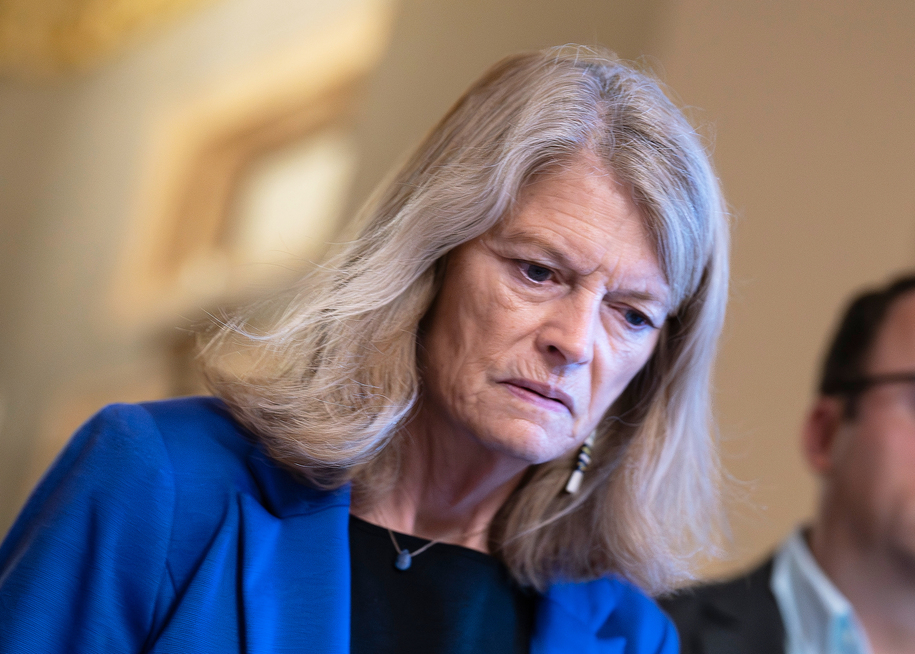
In the most predictable series of events, GOP Sen. Lisa Murkowski of Alaska said that she feels duped by President Donald Trump for not sticking to the agreement they made in exchange for her cowardly vote for the “One Big, Beautiful Bill Act.” “I feel cheated. I feel like we made a deal and then hours later, a deal was made to somebody else,” she told the Alaska Daily News. Murkowski was referencing the Senate’s changes to the House version of the bill, which protected tax credits for wind and solar projects for 12 months as opposed to their immediate cancellation. But just 6 days after the Senate passed the bill—thanks to Murkowski’s vote—Trump issued an executive order declaring that, within 45 days, Treasury Secretary Scott Bessent could begin terminating wind and solar tax credits and Interior Secretary Doug Burgum could create new regulations on clean energy projects. U.S. wind turbines Burgum already heeded that directive, making a new rule that requires giving approval for any wind or solar project that is to be built on federal land—which could be an effort to slow those projects beyond the 12-month window to ensure that they are killed. Murkowski said that this “just pulls the rug out from underneath the deal. “I read it as just a total affront to what we had negotiated,” she said. “So now you have an executive order that goes against what the president himself signed into law, in my view.” Of course, anyone with half a brain knows that Trump’s promises are meaningless, and since he has a bizarre and notorious hatred of wind power—making insane false claims that wind turbines make whales “crazy” and cause cancer—it’s not shocking that he’s trying to stop wind energy projects. Aside from the fact that Murkowski feels “cheated,” Trump’s executive order will have negative effects for all Americans, who will see their energy bills skyrocket due to an increasing demand for energy. And of course, people in states that voted for Trump will experience the highest price increases. “The president and Secretary Burgum will then be responsible for raising electricity prices on every state in this country because that will be the end result of that kind of abuse of permitting,” Democratic Sen. Martin Heinrich of New Mexico told Politico. “I would warn them if they create this as a precedent and it survives, a future administration could play the same game with oil and gas pipelines and leases.”

Scroll to Top