
6 months in, Trump’s unorthodox foreign policy is rewriting the rules
The outcomes speak for themselves: concrete achievements that decades of conventional wisdom could not produce.


The outcomes speak for themselves: concrete achievements that decades of conventional wisdom could not produce.

The U.S. fertility rate dropped to an all-time low to 1.6 children per woman in 2024, according to data released Thursday by the Centers for Disease Control and Prevention. The country’s fertility rate has been declining for decades, in part, because of people waiting to get married and have children until later in life. …

Trump is reshaping media to serve his personal agendas — and daring us not to notice.
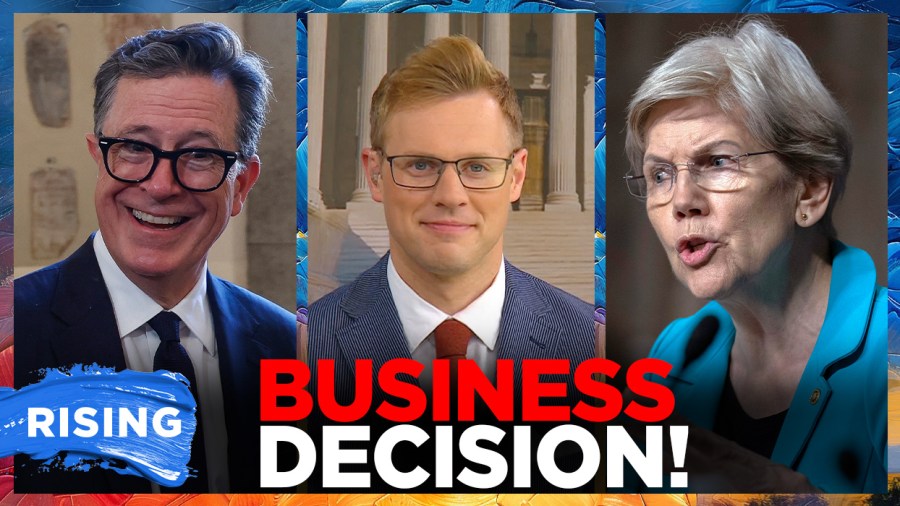
Why is the Democratic Party so mad about a talk-show host?

by Zach Despart, The Texas Tribune This article is co-published with The Texas Tribune, a nonprofit, nonpartisan local newsroom that informs and engages with Texans. Sign up for The Brief Weekly to get up to speed on their essential coverage of Texas issues. One day in late May 2024, lawyer Zina Bash spent 6 1/2 hours working on a case against Facebook parent company Meta on behalf of the state of Texas. She reviewed draft legal filings. She participated in a court-ordered mediation session and then discussed the outcome with state Attorney General Ken Paxton. In her previous job as senior counsel on Paxton’s leadership team, that labor would have cost Texas taxpayers $641. But Bash had moved to private practice. Paxton hired her firm to work on the Meta case, allowing her to bill $3,780 an hour, so that day of work will cost taxpayers $24,570. In the past five years, Paxton has grown increasingly reliant on pricey private lawyers to argue cases on behalf of the state, rather than the hundreds of attorneys who work within his office, an investigation by The Texas Tribune and ProPublica found. These are often attorneys, like Bash, with whom Paxton has personal or political ties. In addition to Bash, one such contract went to Tony Buzbee, the trial lawyer who successfully defended Paxton during his 2023 impeachment trial on corruption charges. Three other contracts went to firms whose senior attorneys have donated to Paxton’s political campaigns. Despite these connections and what experts say are potential conflicts of interest, Paxton does not appear to have recused himself from the selection process. Although he is not required to by law, this raises a concern about appearing improper, experts who study attorneys general said. Paxton appears to have also outsourced cases more frequently than his predecessors, available records show. And he’s inked the kind of contingent-fee contracts, in which firms receive a share of a settlement if they win, far more often than the attorneys general in other large states, including California, New York and Pennsylvania. Since 2015, the New York and California attorneys general have awarded zero contingent-fee contracts; Pennsylvania’s has signed one. During that period, Paxton’s office approved 13. One of those was with Bash’s firm, Chicago-based Keller Postman, at the time known as Keller Lenkner, which she joined as partner in February 2021 after resigning from her job at the attorney general’s office. Paxton had signed a contract with the company two months earlier to investigate Google for deceptive business practices and violations of antitrust law. A little more than a year later, Bash’s firm won a state contract to work on the Meta litigation, alleging its facial recognition software violated Texans’ privacy. This time, Bash was the co-lead counsel. Meta, which called the lawsuit meritless, settled the case for $1.4 billion in the summer of 2024. It was a windfall for Keller Postman. The firm billed $97 million, the largest fee charged by outside counsel under Paxton’s tenure. Bash’s work alone accounted for $3.6 million of that total. A letter from Zina Bash to the Texas attorney general’s office informs the office that the state owes her firm, Keller Postman, almost $97 million for its work on the state’s case against Meta. (Obtained by The Texas Tribune. Highlighted by ProPublica.) Bash, a former U.S. Supreme Court clerk, said in a statement she is honored the attorney general’s office partnered with Keller Postman based on the firm’s “first-rate attorneys and extensive experience.” “We have a record of taking on the most significant litigation in the country against the most powerful defendants in the world,” Bash said. Keller Postman did not respond to a request for comment. There is little to stop Paxton, or any other occupant of his office, from handing these contracts out. The attorney general can award them without seeking bids from other law firms or asking anyone’s permission. Asked to provide competitive-bid documents for the contingent-fee contracts it has awarded, the attorney general’s office said it had none because state law “exempts the OAG from having to do all of the solicitation steps when hiring outside counsel.” Given the high-profile nature of representing an attorney general and the potential for a big payday, many qualified firms would be eager to compete for this work, said Paul Nolette, a professor of political science at Marquette University who studies attorneys general. “I’d be curious to know what the justification is for this not going on the open market,” Nolette said. Paxton declined interview requests for this story. He has publicly defended the practice of hiring outside law firms, arguing that his office lacks the resources in-house to take on massive corporations like tech companies and pharmaceutical manufacturers. “These parties have practically unlimited resources that would swamp most legal teams and delay effective enforcement,” Paxton told the Senate finance committee during a budget hearing in January. A spokesperson for Paxton said in a statement that the outside lawyers hired by the office are some of the best in the nation. With the contingent-fee settlements to date, more than $2 billion, the state “could not have gotten a better return on its investment,” the statement said. Chris Toth, former executive director of the National Association of Attorneys General, questioned why so much extra help is needed. Outside counsel is appropriate for small states, he said, that “only have so many lawyers with so many levels of expertise.” The Texas attorney general’s office, one of the largest in the country, has more than 700 attorneys. “Large states typically don’t hire outside counsel,” Toth said. “They should have the people in-house that should be able to go toe-to-toe with the best attorneys that are out there.” A Troubled History When a Texas attorney general previously made a practice of giving lucrative contracts to private counsel, it didn’t end well. Dan Morales was the last Democrat to hold the office. He became embroiled in scandal after he used outside firms to help secure a $17

The Monitor’s 10 best books for July take you on a spin through humor, history, true crime, and nature.
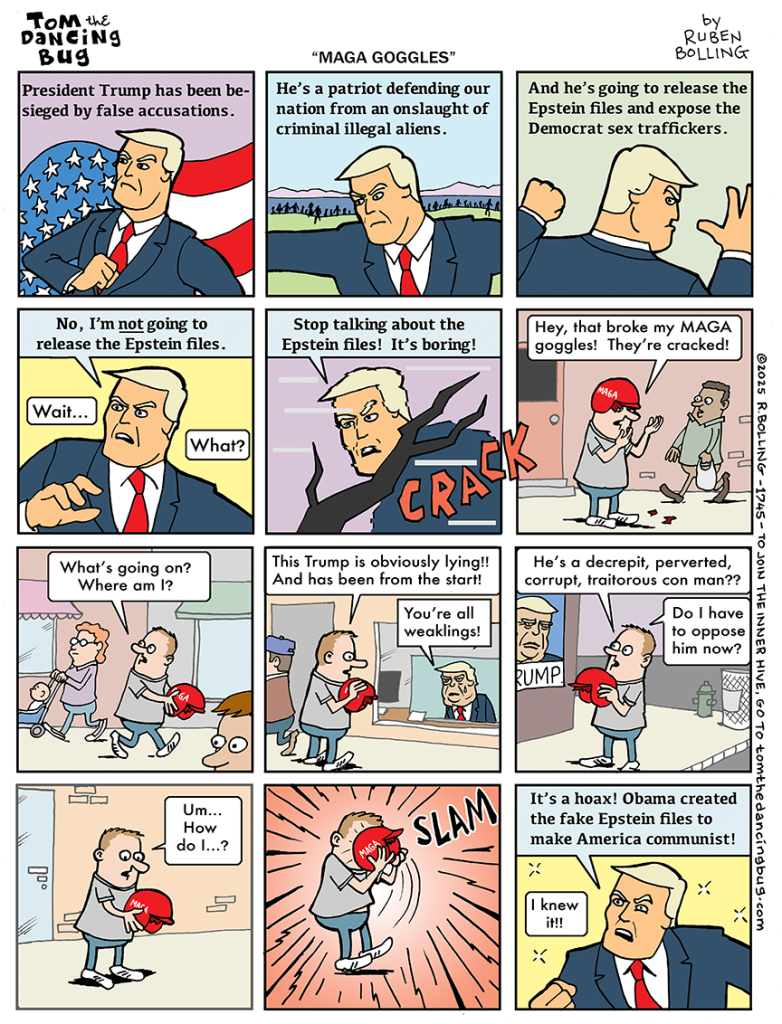
Coming this year: Volumes 1 and 2 of The Complete Tom the Dancing Bug! “Tom the Dancing Bug: Secret Origins” and “Sex, Tom the Dancing Bug, & Rock ‘n’ Roll”! Sign up now to be informed when the Kickstarter launches later this summer! Support your friendly neighborhood independent comic strip: SIGN UP FOR THE INNER HIVE and you’ll get each week’s Tom the Dancing Bug comic at least a day before publication. Plus other exclusive content like extra comics, commentary, juicy gossip, puzzles, jokes, and Otis pics. Please do join the team that makes it possible for Tom the Dancing Bug to exist. Sign up for the free weekly Tom the Dancing Bug Review! Not nearly as good as joining the Inner Hive, but it’s free! Follow @RubenBolling on Bluesky and/or Mastodon and/or Threads and/or Facebook and/or Instagram and/or Reddit. Related | What will happen to Trump when his MAGA weirdos bail?
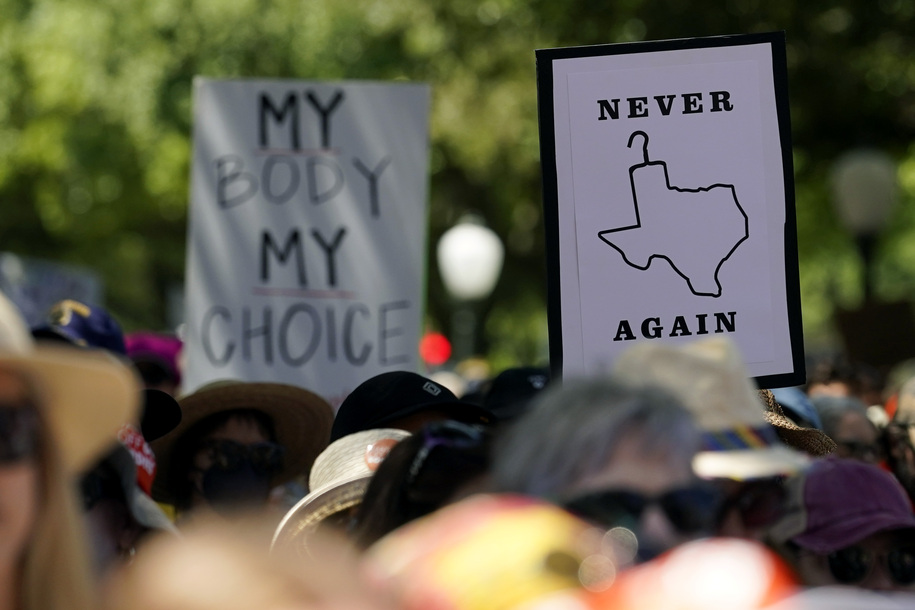
Anti-abortion Texas lawyer Jonathan Mitchell is at it again. This time, he’s representing Jerry Rodriguez, a Texas man who is suing a California doctor for allegedly mailing abortion medication to his girlfriend. But as usual with Mitchell, there’s much more here than just the travails of Rodriguez. First, the lawsuit is teeing up an attack on abortion pill manufacturers and distributors. Second, it’s an attempt to get a court to rule that the Comstock Act, an 1873 law that criminalized the mailing of “obscene materials,” should apply to abortion pills to prevent the mailing of them, even in states where abortion is legal. The complaint is, in a word, gross. It’s littered with references to how Dr. Remy Coeytaux “murdered his unborn child” and how his girlfriend, Kendal Garza, “killed Mr. Rodriguez’s unborn son with abortion pills that were illegally obtained.” Three members of the Women’s March group protest in Texas in support of abortion medication in March 2023. It’s a veritable cavalcade of statements about ownership. His unborn son, his murdered child. Mine, mine, mine. Never one to miss an opportunity to swing for the fences, Mitchell doesn’t just say that Coeytaux is on the hook for wrongful death. The manufacturers and distributors of the abortion pills allegedly taken by Garza are also liable. Per Mitchell, that liability comes from the Comstock Act, which the complaint says “imposes federal criminal liability on anyone who knowingly sends or receives abortion pills through the mail or by using any express company, common carrier, or interactive computer service.” Except it doesn’t. Though conservatives are incredibly eager to use the Comstock Act to decimate abortion rights, even in pro-choice states, no court has successfully ruled that it applies to abortion pills. Hardcore right-wing Judge Matthew Kacsmaryk did rule that the Comstock Act bans the mailing of abortion pills, but when the case made its way to the Supreme Court, he was overruled. Mitchell’s complaint treats his allegation as settled law. This isn’t a legal argument; it’s a polemic. Related | Texas wants to force red-state abortion bans into blue states Mitchell wants an injunction to bar Coeytaux from sending abortion pills to Texas. That’s fairly normal—if horrible—given that Texas does have a very robust set of anti-abortion laws, in large part thanks to Mitchell. But then it gets much weirder and much worse. Not content to only seek relief for Rodriguez, Mitchell wants the court to certify a class, which would allow him to pursue a class action lawsuit. Who would be in the class? Literally every man. No, seriously. The proposed class is “all current and future fathers of unborn children in the United States.” But in theory, an injunction and class action in this case would only apply to Coeytaux. However, Mitchell states in the complaint that he plans to add the manufacturers and distributors as defendants once he identifies them. Those companies are definitely not in Texas, and they are definitely not bound by Texas’ rabid anti-abortion laws. At best, they could be barred from sending pills into the state, but that’s not what Mitchell is proposing here. An abortion rights activist holds a box of mifepristone pills during a rally at the Supreme Court in March 2024. Mitchell’s proposed injunction is that anyone who distributes abortion medication is violating the Comstock Act. And since Mitchell’s proposed class includes every man, they would be able to invoke the Comstock Act to block anyone from obtaining abortion pills, even where it’s legal. In normal times, this sort of case would quickly be dismissed. But we do not live in normal times, and we do not have normal judges. Mitchell filed this case in the Galveston Division of the Southern District of Texas, where there is only one judge. So Mitchell knew that he would draw Trump-appointed Judge Jeff Brown, who has a record of being actively hostile toward abortion rights, including opposing Roe v. Wade and serving on an advisory board for an anti-choice organization in Texas. It’s not quite as blatant as the GOP judge shopping efforts to get cases in front of Kacsmaryk, but it’s still bad. This is literally Mitchell’s life’s work. He was the architect of the Texas law that allows anyone to sue anyone they allege aided or abetted an abortion. He keeps trying to depose abortion funds and researchers, and in 2024, he filed petitions targeting individual women for traveling out of state to get abortions. He also handled the case of a Texas man who sued his ex-wife’s friends, alleging they helped facilitate her abortion. Mitchell’s arguments here are nonsense, but that doesn’t matter when the courts are stuffed with conservatives eager to ban abortion. He’ll never stop trying to find new, innovative ways to deprive people of their right to choose. What a way to live.
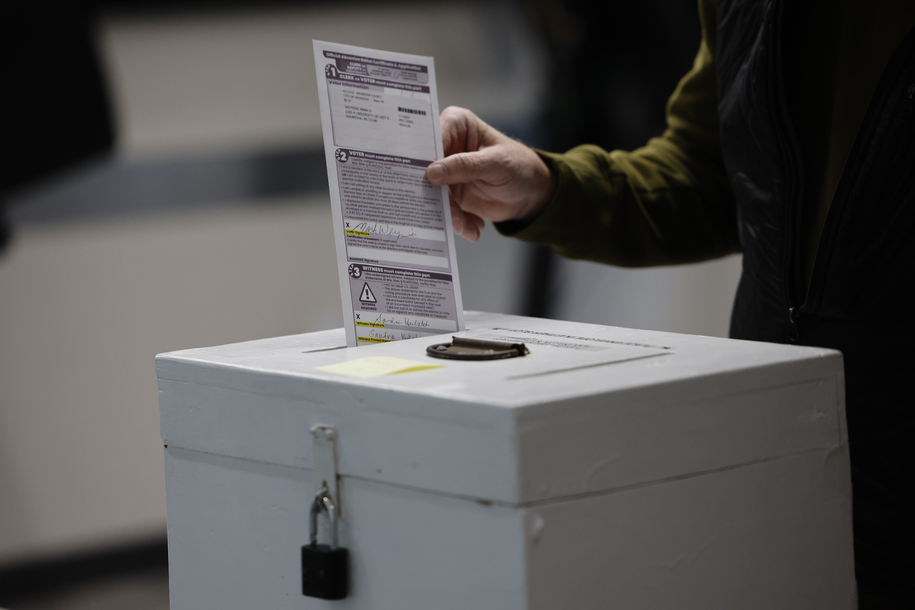
The agency has sent a flurry of letters seeking access to voter rolls and details on registration procedures. Some experts warn of federal overreach. By Carter Walker and Jen Fifield for ProPublica The U.S. Department of Justice has unnerved some state election officials by issuing sweeping requests for information that it says is pertinent to enforcing federal election laws and investigating voting crimes, which President Donald Trump has identified as priorities. In letters sent to at least a dozen states over the past two months, according to documents obtained by Votebeat and reported elsewhere, the department asked for varied sets of data and records, including voter rolls, information on potential election and voting crimes, data from past elections, and details about procedures for maintaining voter lists and checking voters’ eligibility. State officials say privately that they have been struck by the scope of the requests and uncertainty around what the administration plans to do with the information, and have been talking to one another about them. Many of these officials have faced years of near-constant scrutiny as Trump and his allies have repeatedly made unsubstantiated claims of election malfeasance, and the president has tried to use his influence and official authority to rewrite the history of his 2020 election loss. While the requests so far are mostly for data or procedures that are public information or accessible by law to the Justice Department, election law experts said, some of them were more questionable. Related | Trump launches new ‘lawless’ attack on voting rights Bryan Sells, a voting rights lawyer who worked at the Justice Department during the Obama administration, said federal law has long given the department the right to access some state data related to voter registrations, and it’s not uncommon or improper for it to use that power. “But I think the question I had after reading these emails is whether what they’re really looking for goes beyond what Congress allowed for,” he said. For example, the Justice Department sent Michigan and Arizona officials emails asking for information on “individuals who have registered to vote or have voted in your state despite being ineligible to vote.” That request arguably falls within the department’s purview, Sells said. But a request for information on people “who may otherwise have engaged in unlawful conduct relevant to the election process” is broad and might not be. Kory Langhofer, a Republican lawyer who has been counsel for the Republican National Committee and the Trump campaign in Arizona, said that it’s fair to be cautious, or even skeptical of broad data requests from the federal government. But Langhofer said, “I don’t think it’s reasonable to say the sky is falling, because the information requested here is already in the hands of both the state and federal governments,” if not necessarily the Justice Department specifically. President’s executive order stressed election law enforcement The information requests are another example of the Justice Department’s shift in enforcement priorities under the Trump administration toward finding and prosecuting election crimes, something the president explicitly called on the attorney general to do in a March executive order on elections. Federal courts have blocked key provisions of the order from going into effect, but the Justice Department and the U.S. Election Assistance Commission have begun taking steps to implement some other provisions that are still in force. That appears to be the goal of a recent round of Justice Department correspondence to key swing states including Pennsylvania, Arizona, and Michigan. In emails obtained by Votebeat, the department asks for a call with a goal of setting up an agreement to share information on election crimes, such as individuals providing false information on registration forms or registering to vote when they are ineligible. “With your cooperation, we plan to use this information to enforce Federal election laws and protect the integrity of Federal elections,” Justice Department lawyers wrote in at least two such emails. Trump’s executive order instructs the Justice Department to attempt to establish such information-sharing agreements with states, and orders it to “prioritize enforcement of Federal election integrity laws” in any state that declines to do so, as well as consider withholding federal grants to such states. The Justice Department declined to comment for this story. Michigan’s Department of State said it is reviewing the request. Officials in Pennsylvania said that they met with Justice Department officials and that “the discussion was consistent with our longstanding cooperation with our federal partners to protect the integrity of elections.” JP Martin, a spokesperson for the Arizona Secretary of State’s Office, said the office is “dealing with DOJ in a good faith manner while ensuring we are following the letter of federal and state laws.” States receive requests for voter rolls Meanwhile, several states are receiving Justice Department requests for their voter rolls, and information about voter roll cleaning. They include Wisconsin, where the department asked in June for a copy of its voter rolls, along with responses to several questions about voter registration activities, in response to complaints the department said it had received about possible violations of federal voting law. Eight other states received similar requests, the Washington Post reported. Wisconsin election officials directed the department to an online portal where the public version of the voter rolls could be purchased for $12,500. Trump’s executive order also directs the Homeland Security Department to review “publicly available” versions of the voter lists “alongside Federal immigration databases … for consistency with Federal requirements.” Related | Election officials face limited options as federal security resources fall away The DOJ requests are presumably an attempt to “gather all the relevant data in one place, conduct an authoritative study, and put these issues to rest,” Langhofer said, referring to questions Republicans have repeatedly raised about whether ineligible voters are casting ballots. “It is important to know that our voters are citizens and residents, and are not voting in more than one jurisdiction,” he said in a text message. “If there is a problem in one of those areas, we should fix it — and if there is *not* a problem there, people should know that
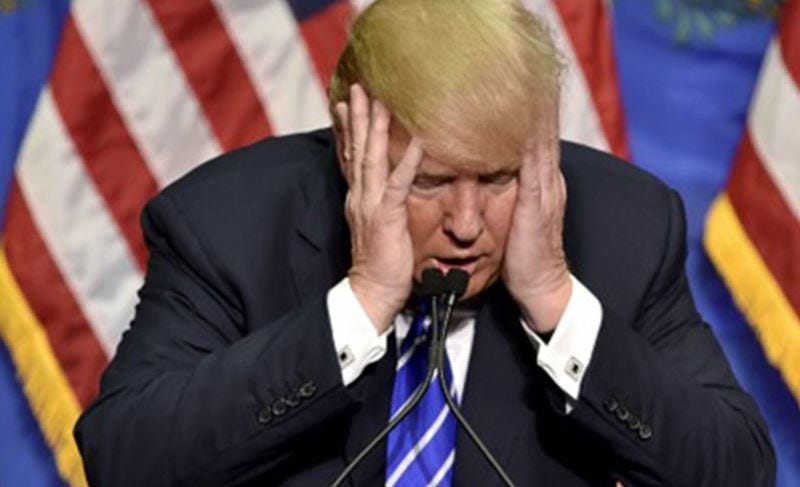
PoliticusUSA is 100% supported by readers like you. There are no billionaires looking over our shoulders, corporations, or political parties, but we need your help to stay independent. Please keep us strong by becoming a subscriber. Subscribe now None of it had to be this way. That’s the point that the American people should remember as the nation continues to go deeper into the Epstein files rabbit hole. The scandal blew up when Donald Trump ordered his Attorney General to reverse course and proclaim that there was no Epstein client list, and no more files would be released. The official Trump spin on this is that it was Bondi’s decision to kill the Epstein files to protect Epstein’s victims and the people mentioned in the documents from hearsay, but it looks like Bondi has positioned as Trump’s human shield and the person who will eventually take the fall. When The Wall Street Journal published its latest Epstein bombshell, it was proof of a cover-up at the White House, but the cover-up began when Trump ordered his administration to reverse course on the Epstein files. According to Politico, even Donald Trump knows where this is all heading: Trump has ruminated about the Epstein fallout for weeks. “They’re going to accuse me of some funny business,” he said recently in the Oval Office, according to a Republican close to the White House who personally heard the president make these comments. Trump again maintained his distance from Epstein’s criminal behavior, but lamented: “They’re going to fuck me anyways.” PoliticusUSA is a reader-supported publication. To receive new posts and support our work, consider becoming a free or paid subscriber. As usual, Trump is playing the innocent victim, and he seems oblivious to the reality that he created this scandal. Donald Trump campaigned on releasing the Epstein files. His administration made promises about releasing the files, but when the president found out that the files were a political ticking time bomb for him, they had to disappear. Trump 2.0 is a weaker creature than during his first term. Trump is term limited and that ticking clock means that his shelf life is constantly diminishing. Outside of people who have to worry about what he can do with the presidency right now, Donald Trump is a declining force. As the House is setting up hearings for the Epstein files in August, the scandal is set to dominate summer. The media or Democrats didn’t ‘F’ Donald Trump. Donald Trump F-ed himself. What do you think about Trump’s realization? Share your thoughts in the comments below. Leave a comment