Author name: moderat ereport

Politics

GOP senators push Obama conspiracy to hide Trump’s Epstein scandal

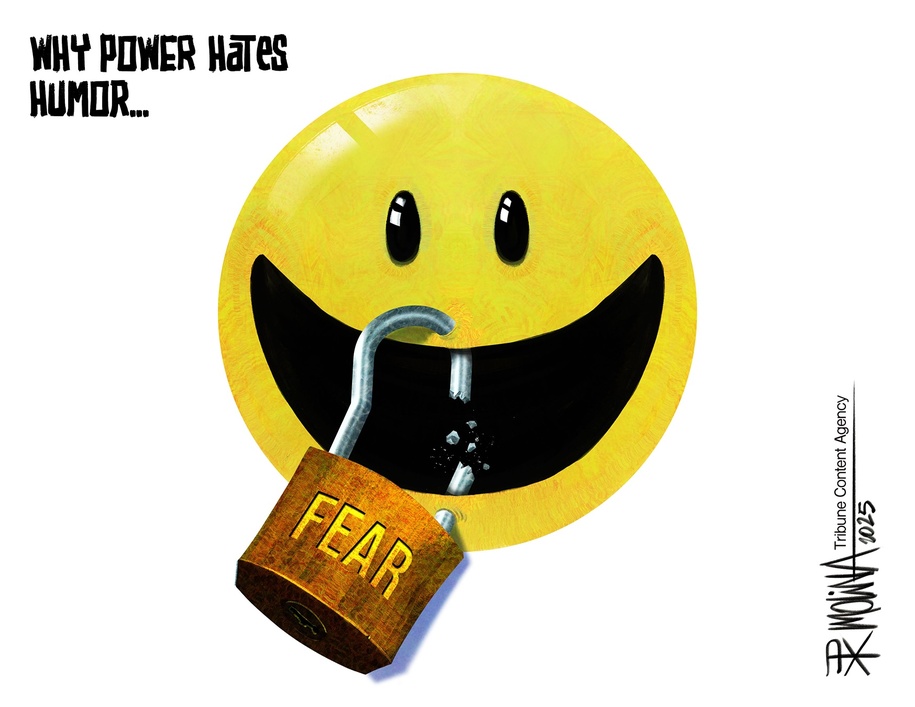
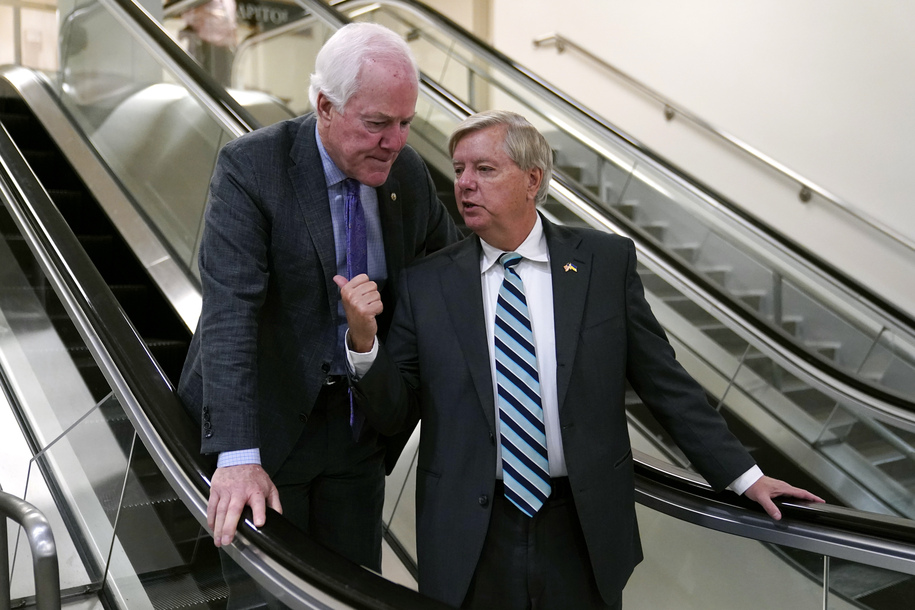
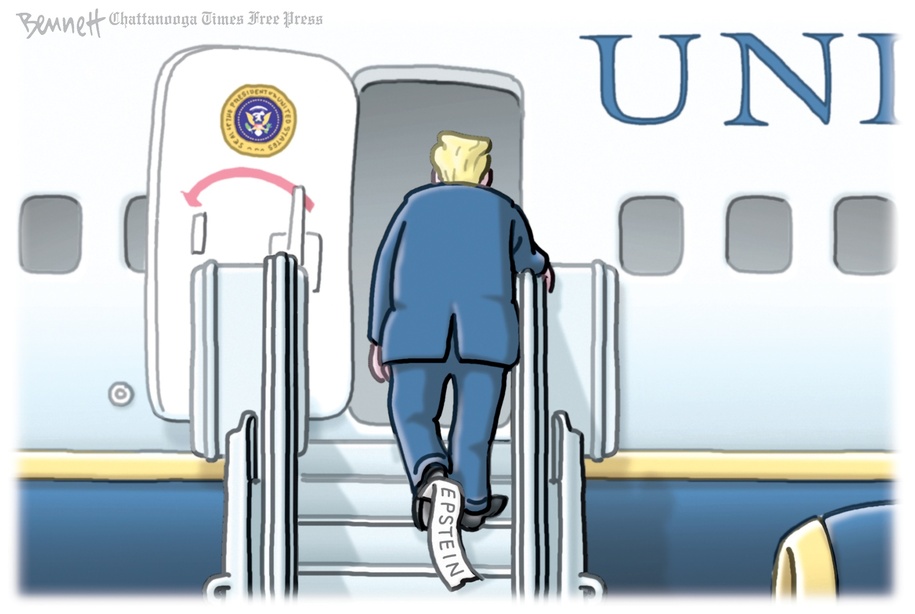
Republican Sens. Lindsey Graham of South Carolina and John Cornyn of Texas are following President Donald Trump’s command to distract from the Epstein files by going after President Barack Obama.  Both lawmakers are now calling for a special counsel to probe whether Obama committed treason through the investigation into Russia’s role in the 2016 election, which consumed much of Trump’s first term. A cartoon by Pedro Molina. “For the good of the country, Senator [Cornyn] and I urge Attorney General Bondi to appoint a special counsel to investigate the extent to which former President Obama, his staff and administration officials manipulated the U.S. national security apparatus for a political outcome,” Graham wrote on X Thursday. Graham and Cornyn are referring to the ridiculous lie cooked up by Director of National Intelligence Tulsi Gabbard, who baselessly accused Obama of a “treasonous conspiracy” in which he “manufactured intelligence” about Russian election interference in 2016 to “subvert the will of the American people” by “trying to usurp the President from fulfilling the mandate bestowed upon him by the American people.” Trump then directed GOP lawmakers to spread the ridiculous conspiracy theory to distract from the Epstein files scandal, which his administration created itself when it said that there are no documents in the government’s possession that incriminate powerful third parties. “You should mention that every time they give you a question that’s not appropriate. Just say, ‘Oh, by the way, Obama cheated on the election.’ You’ll watch the camera turn off instantly,” Trump ordered GOP lawmakers. YouTube Video The Associated Press published a report on Thursday all but calling Gabbard and Trump’s accusations bullshit. Multiple probes into the Russia investigation “either concluded—or accepted the conclusion—that Russia embarked on a campaign to interfere in the election through the use of social media and hacked material,” according to the AP. In fact, one of those probes was overseen by Trump’s Secretary of State Marco Rubio. As for Graham and Cornyn’s new request, if appointing a special counsel to probe this non-story sounds familiar to you, that’s because it is. Former Trump Attorney General Bill Barr had already appointed a special counsel in October 2020—just before the election Trump went on to lose—to probe the Russia investigation.  The special counsel’s name was, as you might recall, John Durham. Attorney General Bill Barr’s special counsel John Durham Bill appointed Durham to, “investigate whether any federal official, employee, or any other person or entity violated the law in connection with the intelligence, counter-intelligence, or law-enforcement activities directed at the 2016 presidential campaigns, individuals associated with those campaigns, and individuals associated with the administration of President Donald J. Trump, including but not limited to Crossfire Hurricane and the investigation of Special Counsel Robert S. Mueller, Ill,” according to the document Burr filed at the time. Durham ultimately charged three people as a result of his probe, two of whom were acquitted on charges that they lied to the FBI, and the other pleaded guilty. Durham then released a big nothing burger report in 2023 before sailing off into the sunset as a gigantic failure. But now, Graham and Cornyn are trying to get a new special counsel involved—as if that would uncover anything different. Of course, Cornyn has other motivations here. He is in an existential primary battle against Texas Attorney General Ken Paxton, who has accused Cornyn of not being pro-Trump enough. By calling for a special counsel, Cornyn is trying to get on Trump’s good side and maybe even earn an endorsement, which could revive what currently looks to be a doomed reelection effort. Ultimately, this is all just a ridiculous distraction from the real story, which is that Trump—who was told that his name is in the Epstein files—is trying to bury the scandal to save his own skin.

Politics

‘South Park’ dresses down Trump in shocking PSA

The popular animated show “South Park” came gunning for President Donald Trump in the premiere of its 27th season on Wednesday night. The episode depicted Trump in bed with Satan and tackled the president’s ties to convicted sex offender Jeffrey Epstein. “It’s weird that whenever it comes up, you just tell everyone to relax,” Satan tells Trump at one point in the episode. Along with the episode, the creators launched a website called “He Trumped Us,” styled to resemble the “He Gets Us” ads, which promote Christianity and regularly air during sporting events. However, the “South Park” guys’ site strikes a far, far different note. It features a scathing PSA attacking both Trump and the show’s own corporate backer, Paramount. The two-minute video begins with the animated characters agreeing to settle a lawsuit with Trump, a jab at the recent embarrassing deal CBS—which Paramount owns—made with Trump. The rest of the video is a satirical, computer-manipulated takedown of Trump that you’ll have to see to believe. The video, it must be said, is not safe for work. YouTube Video This bold bit of satire comes on the heels of Trump critic Stephen Colbert’s popular late-night show on CBS being abruptly canceled, with its final episodes airing next May. And the PSA’s use of “synthetic media,” as the video’s YouTube page describes it, is particularly fitting because of Trump’s penchant for reposting inflammatory, AI-generated material.

Politics

‘That’s bullsh-t’: Pete Buttigieg slams Trump’s anti-DEI crusade

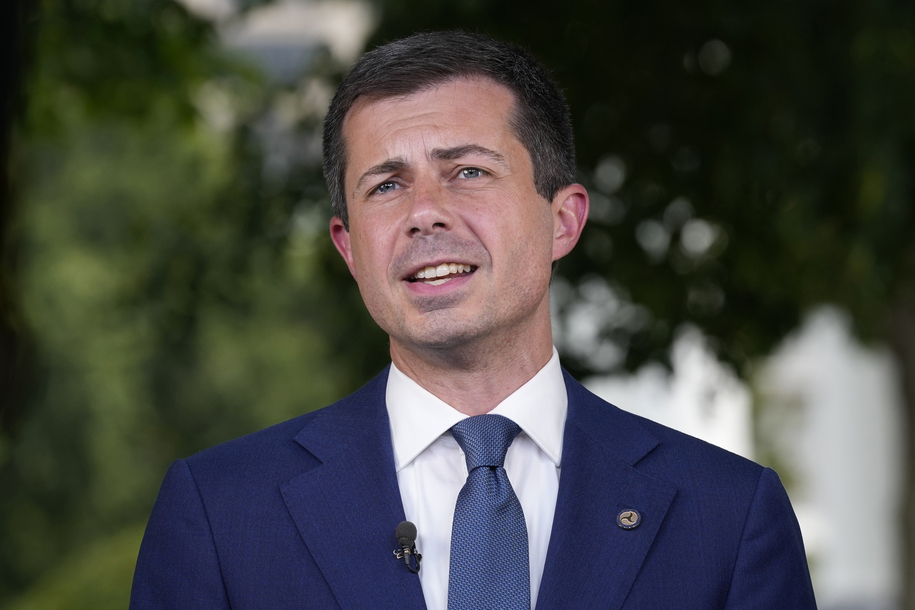
Former Transportation Secretary Pete Buttigieg appeared on “The Breakfast Club” radio show Thursday to address the New York Post’s inflammatory claims that air traffic control upgrades were delayed because the Biden administration spent $80 billion on grants for diversity, equity, and inclusion efforts. Former Transportation Secretary Pete Buttigieg speaks at a news conference on resolving consumer complaints against airlines in April 2024. “Obviously, I think that’s bullshit,” Buttigieg said. “We’re talking about transportation funding that they’re now getting rid of. So, Milwaukee, 6th Street: We funded a project—$34 million—to help make a set of improvements to a very dangerous street where there’ve been a lot of crashes, and that has divided the community. He continued, “They’re also going to improve the sewer while they’re at it. I mean, this is bread-and-butter stuff that’s going to make the city better off. The Trump administration killed that grant because the application talked about ‘equity.’ It talked about one of the reasons for funding this project being that that neighborhood had been underinvested in.” Buttigieg went on to call out exactly what the Trump administration means when it calls something “DEI.” “When they talk about ‘DEI grants,’ often they’re talking about fixing roads and bridges that happened to go into a Black neighborhood or a low-income area,” he said. YouTube Video Buttigieg continued to list a number of ways that the Trump administration’s racist application of “DEI” is unsafe for communities in need of infrastructure upgrades. He also noted that the NY Post article provided no evidence supporting its $80 billion claims. Buttigieg, who has gained a reputation for excelling in new media forums, also pointed out that his replacement at the Department of Transportation, former reality TV star Sean Duffy, was previously an airline lobbyist—while Buttigieg was a more stringent regulator of the airline industry.  There’s a stark difference between an administration that believes the government should make everyday Americans’ lives better and one that aims to deify the wealthy.

Politics

Columbia caves to Trump, setting dangerous precedent for higher ed

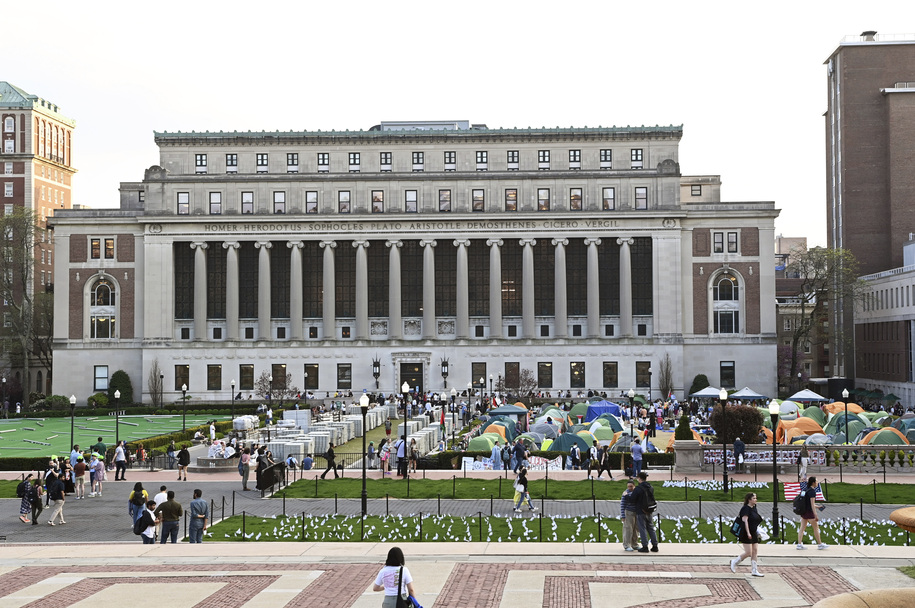
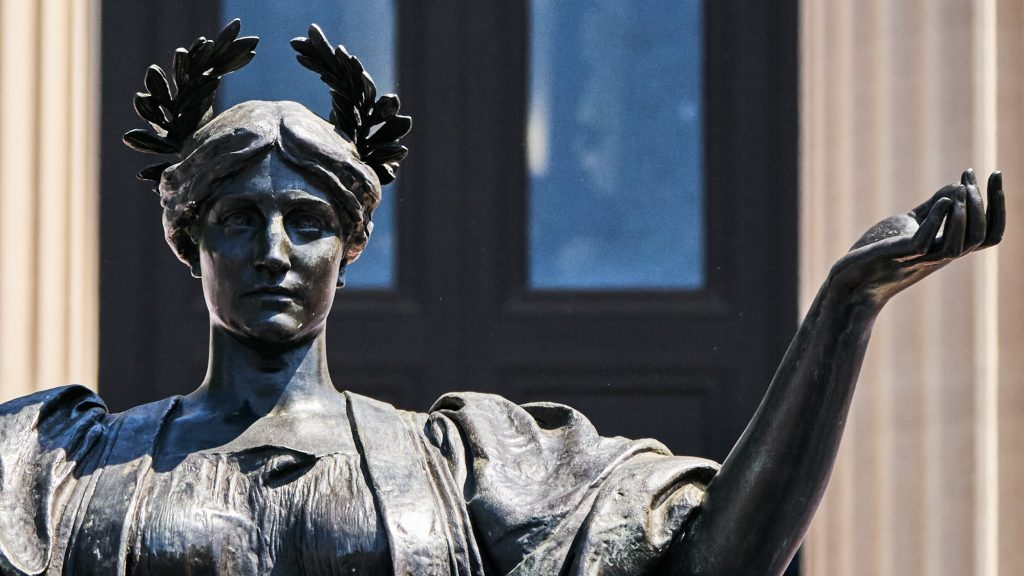
Columbia University has reached a sweeping agreement with President Donald Trump’s administration, ending months of political and financial warfare that turned the Ivy League school into a high-profile test case for Trump’s authoritarian crackdown on higher education. The university will pay $200 million over three years to settle federal claims tied to alleged discriminatory practices, plus another $21 million to resolve Equal Employment Opportunity Commission investigations. In return, the federal government will reinstate most of the $400 million in research funding it froze earlier this year and restore Columbia’s access to billions in future grants. The deal also brings external oversight and forces Columbia to adopt Trump-backed policy changes, including a controversial federal definition of antisemitism that will now guide teaching and disciplinary reviews. Related | Here is the latest way the Trump administration is attacking colleges The administration accused Columbia of failing to protect Jewish students and faculty following the October 7, 2023, Hamas attack on Israel and said the school had become a hostile environment. Columbia did not admit wrongdoing but agreed to reforms. Acting university President Claire Shipman said the agreement ends a period of sustained federal scrutiny and institutional uncertainty. She acknowledged the $221 million settlement was a substantial cost but said the university risked losing top scientists and its global research standing if restrictions continued. “I recognize these are substantial settlements. [But] we had to look at all the facts,” she said. “We have seen not only $400 million in federal grants frozen, but also the majority of our $1.3 billion a year in federal funding placed on hold. The prospect of that continuing indefinitely, along with the potential loss of top scientists, would jeopardize our status as a world-leading research institution.” Trump saw the deal as a win. On Truth Social, he claimed Columbia had agreed to end what he called “ridiculous DEI policies” and admit students based only on merit. He warned that other universities that had been unfair or misused federal dollars were next on his hit-list. Education Secretary Linda McMahon called the Columbia settlement a road map for other elite schools and a seismic shift in the nation’s efforts to hold them accountable. Columbia’s agreement follows months of behind-the-scenes negotiations in which the university took a less confrontational approach than Harvard University and signaled openness to some administration demands. The White House responded in kind, agreeing to reinstate most of Columbia’s grants. But Trump has suggested this won’t end his threats against higher education. He told CNN earlier this month that his administration could settle with Harvard next, but said there’s no rush. He added that either deal would involve “a lot of money.” The outcome at Columbia is likely to carry weight. For universities resisting federal pressure, the message is clear: Columbia backed down and got its money back—but only after making serious concessions. That could weaken Harvard’s hand in court and increase pressure on any school that dares to challenge Trump’s agenda The administration has made clear this is about more than one campus. Elite universities have been told to rein in supposed antisemitism and dismantle DEI efforts or risk losing access to federal funds. Columbia was among the first targets of Trump’s crackdown on pro-Palestinian campus protests and what he claims is rising antisemitism in academia. Columbia’s own antisemitism task force concluded last summer that during the spring 2024 demonstrations, some Jewish students were subjected to verbal harassment, social exclusion, and demeaning treatment in academic settings At the same time, other Jewish students were active participants in the protests. Organizers have repeatedly insisted their criticism was aimed at the Israeli government and its war in Gaza—not at Jewish individuals or communities. Since coming under federal fire, Columbia has cycled through three interim presidents and declared that the campus climate must change. But critics argue the federal response has gone far beyond ensuring safety. By forcing schools to adopt new definitions of antisemitism and crack down on political speech, the Trump administration is redrawing the boundaries of campus expression—and raising alarms about free speech and academic freedom. Columbia’s decision echoes a similar move by the University of Pennsylvania, which earlier this month quietly stripped a transgender athlete of her records following demands from the administration. The message from the White House is clear: Institutions that want to keep their federal funding must fall in line. Their capitulation spells trouble for Harvard—and really any other university. It doesn’t take much for Republicans to accuse schools of antisemitism or anti-Republican bias. Columbia may have gotten its money back—but only by bending hard. Other universities might not get off so easily.

Politics

‘What are you afraid of?’: Booker slams Senate GOP over Epstein cover-up

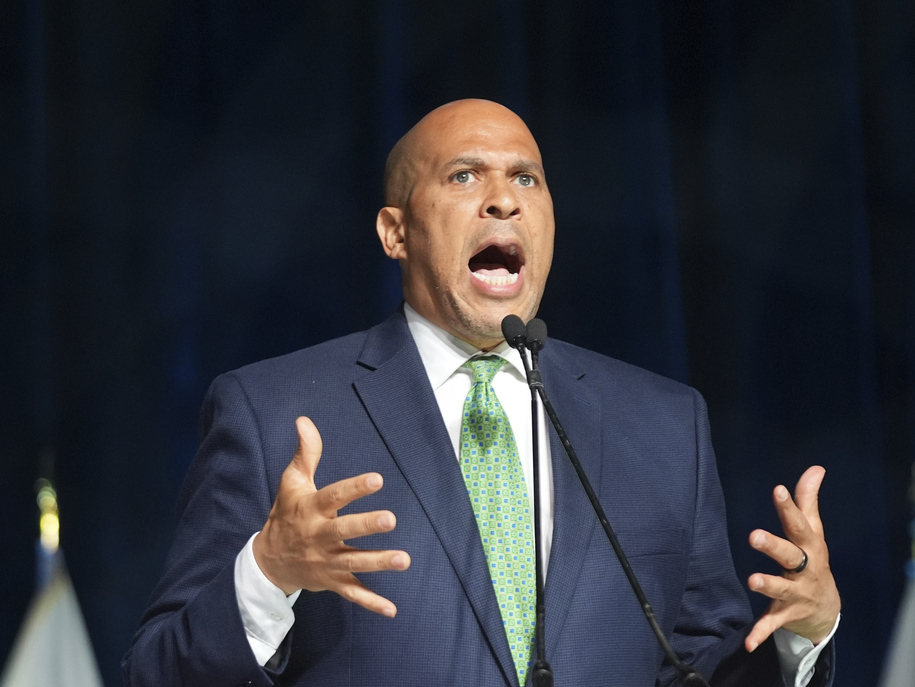
Democratic Sen. Cory Booker of New Jersey criticized Senate Republicans on Thursday as they worked to block his amendment to create government transparency on the Jeffrey Epstein case. Booker introduced his amendment while the Senate Judiciary Committee discussed a bill relating to opioid overdoses. In response, Republican Sen. John Cornyn of Texas, introduced a measure seeking to nullify Booker’s request. And Booker noted that requests for transparency on Epstein have come from both Republicans and Democrats “We want transparency and accountability on a matter of public safety. Sen. Cornyn said that Jeffrey Epstein is dead. But his victims are not,” Booker said. “There are women who have horrific stories of vile violence that was committed against them.” Booker also noted that Attorney General Pam Bondi previously said there were “truckloads” of evidence about possible co-conspirators and others involved. Slamming Cornyn’s amendment, Booker concluded, “The real effort was just to not have accountability and transparency—what are you afraid of?” YouTube Video Ultimately, the committee, led by Republican Chuck Grassley, rejected Booker’s amendment and sided with Cornyn. The move echoes ongoing efforts by House Republicans to block legislation from Democrats pushing for openness on the Epstein case and the release of related files, including a rumored client list. The Senate confrontation occurred the same week that House Speaker Mike Johnson chose to shut down his chamber’s legislative activity rather than face additional votes on Epstein-related issues. Republicans have stuck to their guns in obstructing Epstein inquiries, even after the Wall Street Journal reported that Bondi told Trump in May that his name was included multiple times in Epstein files. Epstein was convicted in 2008 of soliciting a minor for sex and was charged with sex trafficking minors before his death in federal custody in 2019. Attempting to blunt fallout from the Trump administration’s reluctance to release information on the Epstein case, Trump and his team—led by National Intelligence Director Tulsi Gabbard—have sought to divert attention to an absurd election-related conspiracy theory involving former President Barack Obama. And the administration is getting an assist from Fox News, which has downplayed the story—even when news was broken by another outlet in owner Rupert Murdoch’s media empire.

Politics

Trump’s Presidency Is Unraveling As His Approval Rating Crashes To New Low

PoliticusUSA is news that speaks truth to power, so please help amplify our voice by becoming a subscriber. Subscribe now Donald Trump was a bad president the first time he was in office, which is what made it stunning to many that he was able to get reelected. However, Trump’s second victory is more attributable to the decline in support for Democrats than any spike in popularity for Trump. Since taking office, Trump has delivered a steady stream of broken promises and unpopular policies while ignoring what the majority of Americans want. In this context, the latest poll from Gallup fits the direction that the country is moving toward: President Donald Trump’s job approval rating has dipped to 37%, the lowest of this term and just slightly higher than his all-time worst rating of 34% at the end of his first term. Trump’s rating has fallen 10 percentage points among U.S. adults since he began his second term in January, including a 17-point decline among independents, to 29%, matching his lowest rating with that group in either of his terms. … Trump’s ratings for handling each of eight separate foreign and domestic issues are also generally poor. He earns the highest marks for his handling of the situation with Iran (42%) and foreign affairs (41%). Approval is slightly lower for his job on immigration (38%), the economy (37%), the situation in the Middle East between the Israelis and Palestinians (36%), and foreign trade (36%). Americans’ ratings of Trump’s handling of the situation in Ukraine (33%) and the federal budget (29%) are even lower. The reason why Trump is so desperate to gerrymander Texas to find more Republican House seats is that poll numbers that are this bad signal a potential bloodbath for the incumbent party in the midterm election. The One Big Beautiful Bill has made Trump and his party’s situation worse, not better. Trump has fallen into the thirties on immigration and trade. There isn’t a single issue where Donald Trump has a positive approval rating. Trump is shaping up to be one of the least popular and failed presidents in history, and the worst part for Republicans is that I don’t think Trump has bottomed out yet. I think he has more support he could lose. Republicans gleefully boarded a second version of the Titanic and yet are still surprised that an even more flawed political boat hit an iceberg in less time. What do you think about Trump’s new terrible numbers? Share your thoughts in the comments below. Leave a comment

Politics

Columbia Protected Its Funding and Sacrificed Its Freedom

Exhausted and demoralized, Columbia University agreed last night to pay the Trump administration $221 million in exchange for peace. By early next week, it will deposit the first of three installments into the U.S. Treasury, as part of a settlement that ends the government’s investigations into the school’s failure to protect Jewish students from discrimination. By paying tribute to the administration—and making other concessions aimed at shifting its campus culture ideologically—Columbia hopes to ensure that research grants will begin to flow again, and that the threat of deep cuts will be lifted. In the context of the administration’s assault on American higher education, Columbia will feel as if it has dodged the worst. A large swath of the university community, including trustees who yearned for reform of their broken institution, may even be quietly grateful: When past presidents attempted to take even minor steps to address the problem of campus anti-Semitism, they faced resistance from faculty and obstreperous administrators. Ongoing federal monitoring of Columbia’s civil-rights compliance, arguably the most significant component of the deal, will almost certainly compel the university to act more decisively in response to claims of anti-Jewish bias. [Franklin Foer: Columbia University’s anti-Semitism problem] Columbia’s decision to settle is understandable, but it’s also evidence of how badly the Trump era has numbed the conscience of the American elite. To protect its funding, Columbia sacrificed its freedom. The settlement is contingent on Columbia following through on a series of promises that it made in March, when the Trump administration revoked $400 million in grants. The university agreed to install a vice provost to review academic programs focused on the Middle East to ensure they are “balanced.” It also pledged to hire new faculty for the Institute for Israel and Jewish Studies. As it happens, I agree: Many of Columbia’s programs espouse an unabashedly partisan view of the Israel-Palestine conflict, and more faculty at the Institute for Israel and Jewish Studies would be a welcome development. The fields that will receive scrutiny have professors with documented records of bigotry. Columbia has long nurtured a coterie of activist academics who regard Israel’s very existence as a moral offense. Some have been accused of belittling students who challenged their views—and their example helped shape the culture of the institution. In time, students mimicked their teachers, ostracizing classmates who identified as Zionists or who simply happened to be born in Israel. After October 7, 2023, life on campus became unbearable for a meaningful number of Jewish students. [Rose Horowitch: Anti-Semitism gets the DEI treatment] But in the government’s ideological intervention into campus culture, a precedent has been set: What Secretary of Education Linda McMahon calls “a roadmap for elite universities” is a threat to the free exchange of ideas on campuses across the country, and abuse of that map is painfully easy to contemplate. In part, many people at Columbia have shrugged at the settlement’s troubling provisions regulating the ideological composition of academic departments because the university already announced those steps in the spring. But it’s chilling to see them enshrined in a court document—signed by the university’s acting president, Claire Shipman, along with Attorney General Pam Bondi and two other Cabinet secretaries. The university’s deal with the Trump administration “was carefully crafted to protect the values that define us,” Shipman said in a statement. The settlement contains a line meant to allay critics who worry about the loss of academic freedom: “No provision of this Agreement, individually or taken together, shall be construed as giving the United States authority to dictate faculty hiring, university admissions decisions, or the content of academic speech.” If the government doesn’t like whom Columbia hires, it can raise its concerns with a mutually agreed-upon “monitor” named Bart Schwartz, a former prosecutor who worked under Rudy Giuliani during his tenure as U.S. attorney for the Southern District of New York, who will ostensibly render a neutral verdict. Schwartz’s ruling, however, won’t be binding. And if the government remains dissatisfied with Columbia’s conduct, it reserves the right to open a new investigation. But Shipman’s protestations of independence ring hollow. The university has already agreed, under duress, to alter the ideological contours of its faculty. And even if I happen to support those particular changes, I can’t ignore the principle they establish. The tactics now being used to achieve outcomes I favor can just as easily be turned toward results I find abhorrent. That’s the nature of the American culture war. One side unearths a novel tactic; the other side applies it as retribution. The Trump administration is likely to take the Columbia template and press it more aggressively upon other schools. It will transpose this victory into other contexts, using it to pursue broader purges of its perceived enemies. There’s no need to speculate about hidden motives: Both Donald Trump and Vice President J. D. Vance have been explicit about their desire to diminish the power and prestige of the American university, to strip it of its ability to inculcate ideas they find abhorrent. They are trying to tame a profession they regard as a cultural adversary. “This is a monumental victory for conservatives who wanted to do things on these elite campuses for a long time because we had such far-left-leaning professors,” McMahon told Fox Business. Universities are desperately in need of reform. The paucity of intellectual pluralism in the academy undermines the integrity of the pursuit of knowledge. Failure of university trustees and presidents to make these changes on their own terms has invited government intervention. But the government has a new toehold in faculty rooms, not just at Columbia but at every private university in the country.

Scroll to Top