Author name: moderat ereport

Politics

How Zohran Mamdani Should Govern

Waleed Shahid Running New York City is brutal. But if he wins in November, there are key lessons from past mayors that Mamdani should learn from. The post How Zohran Mamdani Should Govern appeared first on The Nation.

Politics

Why have rules protecting consumers and workers when you could just not?

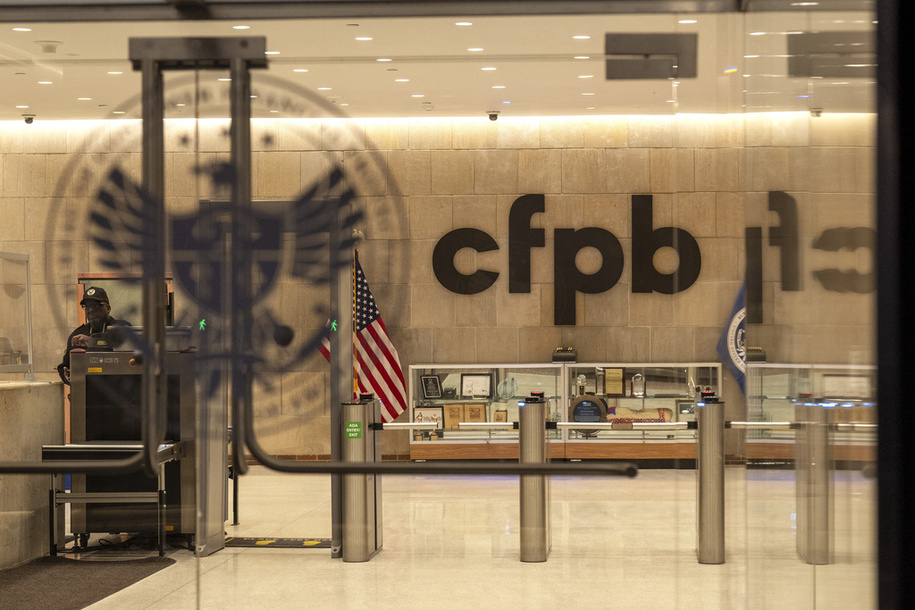
President Donald Trump sees the government as having two key functions: to enrich himself and his pals, and to hurt everyone else. His rollbacks of key consumer and worker protections—or his administration standing aside while federal courts roll those back for him—combine both those ignoble impulses. He gets to reward corporate interests and the ultrarich while making life worse for the rest of us.  What’s jarring about his moves is that there is no credible argument that doing so helps most Americans. The only underlying justifications are profit and cruelty.  For example, who benefits from the Department of Labor withdrawing a Biden administration plan to ban the practice of paying disabled workers a subminimum wage? The only use case for paying disabled employees as little as 25 cents per hour is that it ensures the employers make much more money by exploiting their labor. It isn’t surprising the Trump administration would ride to the rescue of just those types of employers, but it’s still depressing.  Or try to figure out a non-nefarious reason for canceling the proposed Consumer Financial Protection Bureau rule to stop scuzzy data brokers from buying and selling your data without your consent. The vague explanation from Russell Vought, head of the Office of Management and Budget, Project 2025 drafter, and Christian nationalist, was that the rule did not align with the “current interpretation of the [Fair Credit Reporting Act],” which somehow CFPB was also still “in the process of revising.”  President Donald Trump, shown on July 16. At least the administration is being transparent about the fact that their interpretation of the Fair Credit Reporting Act does not involve protecting people. Killing CFPB rules is really a belt-and-suspenders approach here. The administration has thoroughly hamstrung the agency via mass firings. The employees who remain, meanwhile, have been instructed to do no work. While agency employees can no longer protect people from credit card or mortgage scams, agency heads are refunding or cancelling existing settlements, even those where the settlement required banks to return money to consumers.  When it comes to the brave new frontier of cryptocurrency crime, the administration’s stance is essentially “screw those suckers.” The Justice Department disbanded the team that had been tasked with investigating crypto exchanges and related entities to determine whether they facilitate the misuse of cryptocurrency to enable criminal activity. No longer, of course, because the president himself is entangled with the shadiest crypto stuff, so we can’t have a team focused on protecting people from crypto crime, now can we? Kicking Americans in the teeth isn’t a solo project from the Trump administration, though. Sometimes the courts help kick.  This month, District Judge Sean Jordan, a Trump appointee, obligingly tossed the Biden-era medical debt rule, which would have removed unpaid consumer medical debt from consumer credit reports. Apparently, it exceeds the CFPB’s authority to protect consumers from having medical debt destroy every aspect of their lives.  The 8th U.S. Circuit Court of Appeals, which now has only one Democratic appointee and is rapidly becoming as sure a bet as the 5th Circuit at giving conservatives favorable rulings, also just tossed the Federal Trade Commission’s click-to-cancel rule, which would have required businesses to make it as easy to cancel services as it is to sign up for them. As with the medical debt rule, this isn’t driven by the goal of protecting consumers. The only constituency that hates the idea of making it easier to cancel a gym membership is companies that make their money by trapping consumers in memberships.  For cases still moving through the courts, the administration is tipping their hand by telling courts they are “reconsidering” the rule they are supposed to be defending, and asking for the case to be paused. The Department of Justice told a Washington, D.C., federal court that it will not enforce part of the Mental Health Parity and Addiction Equity Act, erasing Biden-era protections requiring insurance companies to treat coverage for mental health and substance abuse the same as other medical coverage.  The DOJ also told the 5th Circuit that it is reconsidering a Department of Labor rule to increase the minimum salary threshold for the “white-collar” exemption. Under the Fair Labor Standards Act, certain executive and professional employees are exempt from overtime pay. Currently, that exemption kicks in at $35,568 per year, meaning that businesses are not required to pay overtime for those white-collar employees with salaries above that amount. The rule promulgated under former President Joe Biden would have increased it in two steps, first to $43,888 and then to $58,656. Secretaries making $36,000 a year will no doubt be thrilled to learn that the Trump administration is making sure they don’t get overtime pay.  Speaking of the minimum wage, Trump wasted little time in overturning Biden’s executive order that had increased the minimum wage for federal contractors to $15 per hour in 2022, with annual adjustments. No longer will federal contractors know the tyranny of a higher wage and can instead return gratefully to being paid a minimum of $13.30 per hour.  Not a single one of these actions benefits consumers or workers, but every one of them benefits the interests of those who make money by exploiting people. And since that is Trump’s natural constituency, he’s going to do everything he can to help them out.  And this is only the beginning. 

Politics

As politicians quarrel over wildfire smoke, research on its health impacts piles up

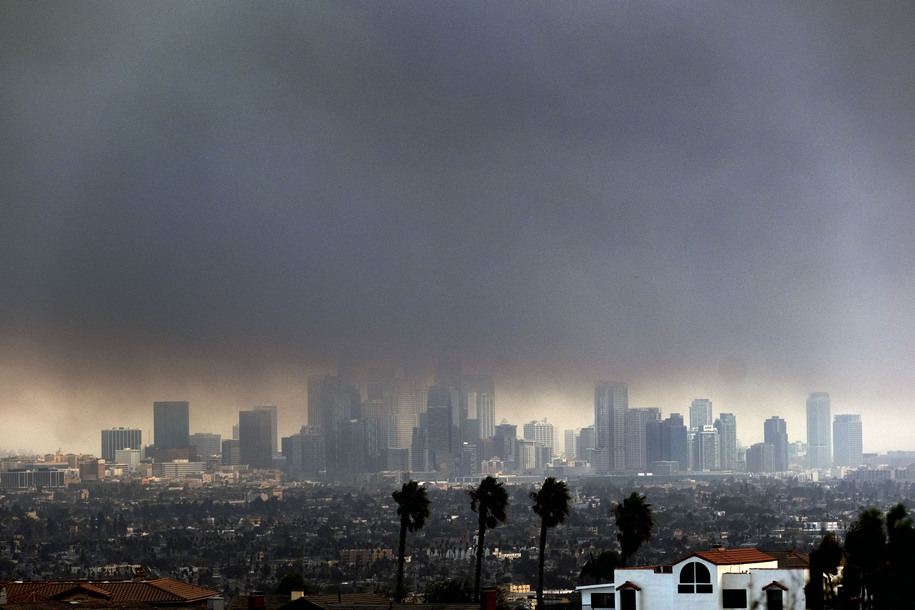
A growing body of research shows the cascading health impacts of wildfire smoke, from cognitive decline to heart issues. By Kiley Price for Inside Climate News The dog days of summer are synonymous with sizzling temperatures, longer nights and … wildfire smoke? As climate change supercharges wildfires, smoke from these blazes is becoming more pervasive, particularly throughout the peak months of the season in July and August. The health impacts of this haze go far beyond a pesky cough. In recent years, piles of research have helped piece together many of the short- and long-term risks of wildfire smoke, from lung problems to reproductive issues. Now, several new studies provide even more clues to this unsettling public health puzzle. Meanwhile, as wildfires rage across North America, government rollbacks and arguments between the U.S. and Canada are fanning the flames of controversy around wildfire smoke—and how best to combat it. A Long List of Risks Oftentimes, people see the smoke produced by a wildfire before the inferno itself. Tearing through forests, grasslands and even cities, wildfires release massive amounts of fine particulate matter, which are incredibly small at 2.5 micrometers or less in diameter. Once inhaled, these particles can wreak all sorts of havoc on the body. Wildfire smoke can penetrate deep into the lungs, where it causes difficulty breathing and exacerbates asthma. Recently released data showed a significant rise in asthma-related emergency visits in 2023 when wildfire smoke drifted across the border from Canada into southern New Jersey, where residents are concerned about the rising risks of smoke in the region, as Anna Mattson reported for Inside Climate News. New York City saw a similar uptick in asthma-related ER visits during that event. The Manhattan skyline shrouded in smoke from Canadian wildfires in June 2023. Smoke particles can also cross into the bloodstream and travel to different parts of the body, including the brain and heart. Data suggests that wildfire smoke can cause memory loss, worsen existing mental illnesses or inhibit cognitive development. Studies show that these emissions can also have profound impacts on reproduction, associated with decreased sperm motility and increased risk of preterm birth. Wildfire smoke affects some people disproportionately, especially firefighters and those who have pre-existing lung conditions, little access to proper filtration during a blaze or work outside. Kids are particularly at risk due to their more rapid breaths and smaller lungs, Mongabay reports. Recent UNICEF data revealed that haze from landscape fires caused 270,000 deaths in children younger than 5 years old, the majority in low-income countries. So what exactly is causing this slew of health problems? Scientists are still figuring this out, but a study published in June found that exposure to smoke can alter the immune system at a cellular level. The researchers found that blood from 31 smoke-exposed adults showed elevated levels of memory CD8+ T cells—suggesting an immune reaction—and biomarkers that indicate inflammation and immune activity. Their blood also revealed changes in more than 130 genes related to allergies and asthma, and more of their immune cells were polluted with toxic metals such as mercury and cadmium. Fiery Politics One of the most dangerous things about wildfire smoke is that it isn’t confined to its source. These hazes can travel hundreds or thousands of miles, worsening air quality across every region it passes through. Like many people, I’ve witnessed this phenomenon myself when smoke from the 2023 Canada wildfires traveled hundreds of miles to New York City, turning blue skies orange—almost as if a sepia filter had been applied to the entire region. People walk in the smoky haze along Park Avenue and Grand Central Terminal in June 2023. The same thing is happening this year as deadly wildfires tear through Western Canada and push smoke to states in the upper Midwestern U.S. In response, six Republican members of Congress from Wisconsin and Minnesota sent a letter to their Canadian neighbors with one main message: Keep the smoke away from this side of the border. “As we are entering the height of the fire season, we would like to know how your government plans on mitigating wildfire and the smoke that makes its way south,” the letter reads. It was addressed to Kirsten Hillman, Canada’s ambassador to the United States. “In our neck of the woods, summer months are the best time of the year to spend time outdoors recreating, enjoying time with family, and creating new memories, but this wildfire smoke makes it difficult to do all those things.” The letter blamed Canada’s wildfire problems primarily on arson and a lack of forest management, though experts say the vast majority of these infernos have been caused by lightning and dry vegetation, a problem worsened by the extreme weather conditions of a rapidly changing climate. The flames are primarily burning through remote areas where forest management techniques like prescribed burns are not feasible, The New York Times reports. San Francisco in an orange haze from wildfire smoke in Sept. 2020. Tarryn Elliott, a spokeswoman at the Canadian Embassy, said in an email to The New York Times that “Canada takes the prevention, response and mitigation of wildfires very seriously.” Meanwhile, Wab Kinew, the premier of Manitoba—where two people recently died in the wildfires—rebuked the letter. “This is what turns people off politics … when you’ve got a group of congresspeople trying to trivialize and make hay out of a wildfire season where we’ve lost lives in our province,” Kinew said at a press conference last Thursday. Beyond slowing or stopping a fire, there is no way to keep smoke from traveling to different countries once it starts to spread. That goes for America, too: Recent wildfires in California and Washington blew a haze into Western Canada. The U.S. monitors its own air quality levels through a network of countrywide sensors that feed into tools like the Environmental Protection Agency’s AirNow system. However, experts are concerned that recent staff cuts and proposals to ax funding at the agency could make it difficult to access data, communicate public health risks and continue long-term research projects on wildfire smoke, which Leigh Giangreco recently reported for Inside Climate News right after smoke pervaded

Politics

Trump the Magnificent

As always, if you find value in this work I do, please consider helping me keep it sustainable by joining my weekly newsletter, Sparky’s List! You can get it in your inbox or read it on Patreon, the content is the same. Don’t forget to visit the Tom Tomorrow Merchandise Mall, and, if you’re so inclined, follow me on Bluesky! Related | Trump melts down after lewd letter to Jeffrey Epstein is made public

Scroll to Top