
President Trump to survey flood damage in central Texas on Friday
President Trump is expected to visit Kerr County, Texas, on Friday to survey damage from last week’s catastrophic flooding and to receive updates from local officials.


President Trump is expected to visit Kerr County, Texas, on Friday to survey damage from last week’s catastrophic flooding and to receive updates from local officials.
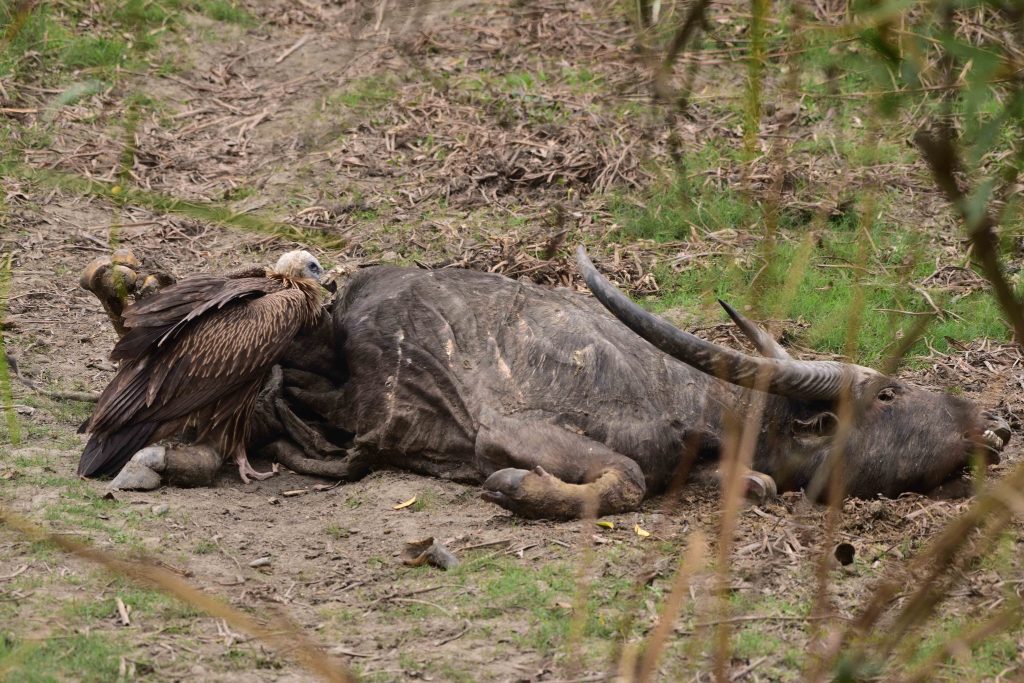
Large scavengers like vultures and hyenas do an important job in protecting human health. But studies show these creatures are on the decline, allowing for the emergence of disease. (Image credit: Anuwar Hazarika/NurPhoto)
President Trump is heading to Texas to assess the damage caused by the recent flooding. DOGE has access to a database that controls government payments to farmers and ranchers. (Image credit: Brandon Bell)
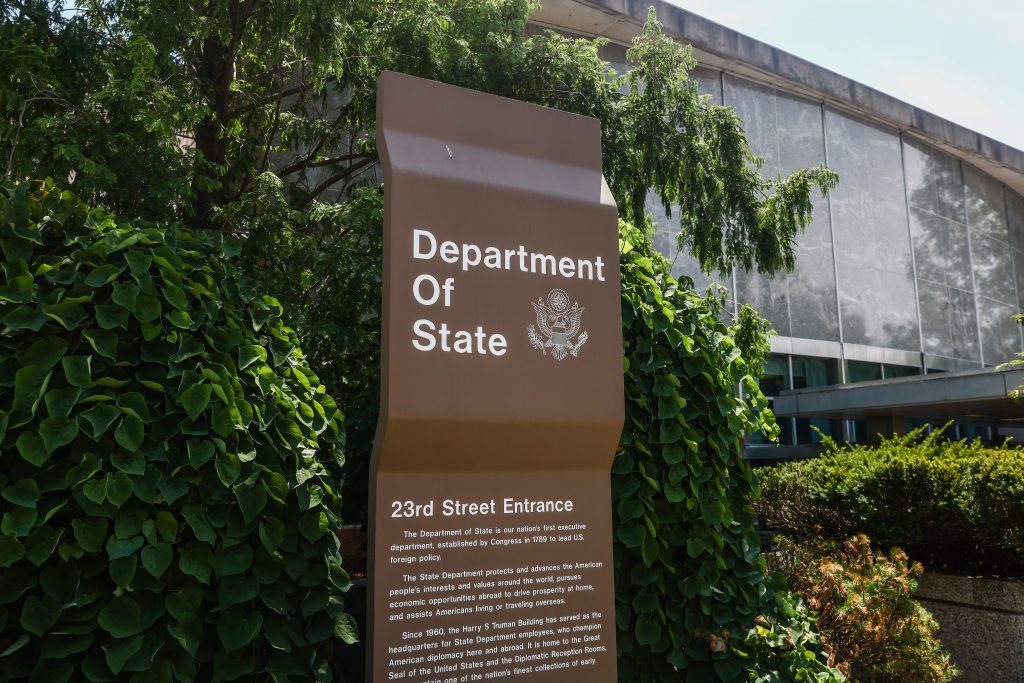
The State Department is slashing hundreds of jobs in what’s being called its biggest shake-up in decades — drawing sharp criticism from former diplomats who say the cuts risk gutting America’s diplomatic muscle. (Image credit: Beata Zawrzel)
by Katherine Mangan, special to ProPublica ProPublica is a nonprofit newsroom that investigates abuses of power. Sign up to receive our biggest stories as soon as they’re published. When the Education Department’s Office for Civil Rights notified George Mason University on July 1 that it was opening an antisemitism investigation based on a recent complaint, the university’s president, Gregory Washington, said he was “perplexed.” Compared with other campuses, where protesters had ransacked buildings and hunkered down in encampments, George Mason had been relatively quiet over the past year, he said. His administration had taken extensive steps to improve relations with the Jewish community, had enacted strict rules on protests and had communicated all of that to the OCR during a previous antisemitism investigation that remained open. By the next day, though, there were signs that the new investigation was part of a coordinated campaign to oust him. One piece of evidence: the speed with which conservative news outlets reported on the OCR’s action, which hadn’t been publicly announced. The OCR letter was embedded in a July 2 article published by a right-wing news outlet, The Washington Free Beacon. The next day, the City Journal, published by the influential and conservative Manhattan Institute, ran an opinion essay headlined “George Mason University’s Disastrous President.” The article accused Washington, the university’s first Black president and a first-generation college graduate, of backing “racially discriminatory DEI programs” — referring to diversity, equity and inclusion efforts — and failing to address campus antisemitism. It concluded that “Washington’s track record warrants his resignation or dismissal.” The similarities to recent events at another public university in Virginia were hard to ignore. The OCR’s George Mason investigation was opened just four days after the University of Virginia’s president, James E. Ryan, announced that he was resigning to help settle a federal probe into the university’s DEI commitments. That happened after a group of conservative University of Virginia alumni, the Jefferson Council, published blog entries and newspaper ads decrying the president — in part for focusing too heavily on diversity efforts — and demanding that he resign. The council’s connections to board members and Justice Department lawyers led many observers in higher education to conclude that Ryan’s forced resignation was the result of a coordinated assault. Now, Washington is feeling the same heat coming from similar sources. The temperature cranked up several degrees Thursday morning, when the Education Department notified George Mason that it’s opening a second investigation — this one alleging the university illegally considers race in hiring and promoting employees. The department said it was acting on complaints from “multiple professors” at GMU. In a press statement Thursday, Craig Trainor, the Education Department’s acting assistant secretary for civil rights, suggested that the agency has already reached sweeping conclusions about the university’s hiring practices. “Despite the leadership of George Mason University claiming that it does not discriminate on the basis of race, it appears that its hiring and promotion policies and practices from 2020 to the present, implemented under the guise of so-called ‘Diversity, Equity, and Inclusion,’ not only allow but champion illegal racial preferencing in violation of Title VI of the Civil Rights Act of 1964. This kind of pernicious and wide-spread discrimination — packaged as ‘anti-racism’ — was allowed to flourish under the Biden Administration, but it will not be tolerated by this one,” he wrote. The university rebutted those accusations in a statement saying it is complying with all federal and state mandates and does not discriminate. The university “received a new Department of Education letter of investigation this morning as it was simultaneously released to news outlets, which is unprecedented in our experience,” the statement said. “As always, we will work in good faith to give a full and prompt response.” Meanwhile, dozens of Jewish faculty members at GMU have signed on to a statement condemning “an attack on our university community and our GMU President that is quickly intensifying under a false, racially divisive, and deeply cynical claim of combating antisemitism.” Even before Thursday’s announcement, Washington said he had detected a pattern that’s been playing out at other universities targeted by President Donald Trump’s administration: Multiple investigations are filed in quick succession and word leaks to news organizations. “It seems like this is orchestrated,” Washington said during an interview Wednesday. “The same people who are kind of aligned that got rid of Jim Ryan are aligned against me.” He finds the timing of the attacks against him and his university troubling. “Given that the Office for Civil Rights doesn’t publicly announce who is under investigation, we were wondering how these conservative outlets even got the information in the first place,” Washington said. The “almost hateful discussions of me” in the City Journal article looked like “a concerted effort to try to paint the institution in a negative light.” Washington said the piece seemed to be urging the Trump administration to take the investigation to the next level, the Department of Justice, which could levy punishments against the university. Many faculty members at George Mason agree. They worry that despite the OCR’s insistence in its letter to the university that its investigation will be unbiased, the Trump administration has already reached a verdict on the institution’s president and wants him out. As evidence, they point to a web of ties between right-wing news organizations and politicians — including Virginia’s Republican governor, Glenn Youngkin — as well as some George Mason board members. “The same unfounded and coordinated attacks that pushed Ryan out of UVa are now being leveled at GMU President Greg Washington,” the campus chapter of the American Association of University Professors wrote in an online post. “We think the DOJ, Governor Youngkin, and Youngkin’s appointees” to GMU’s governing board “are trying to force President Washington out so they can hire an ideological ally who will impose the Governor’s political ideologies on Mason’s governance and curriculum.” Late Wednesday, Virginia’s two Democratic U.S. senators, Mark R. Warner and Tim Kaine, doubled down on those
by Kyle Hopkins, Anchorage Daily News This article was produced for ProPublica’s Local Reporting Network in partnership with the Anchorage Daily News. Sign up for Dispatches to get our stories in your inbox every week. Anchorage Mayor Suzanne LaFrance said this week that the city has hired a full roster of prosecutors and is no longer dropping criminal charges due to short staffing. The announcement comes nine months after the Anchorage Daily News and ProPublica reported the mass dismissals. “Public safety begins with accountability — and we cannot hold people accountable if we don’t have prosecutors in court,” LaFrance said in a news release, announcing that Alaska’s largest city has filled all “frontline” prosecutor jobs for the first time since 2020. “This was about more than filling positions. It was about rebuilding the systems that keep Anchorage safe.” An investigation by the newsrooms, published in October, found that city prosecutors dropped hundreds of misdemeanor cases because there weren’t enough attorneys on the payroll. Between May 1 and Oct. 2 of last year, the city dropped more than 250 domestic violence assault cases and more than 270 drunken driving cases due to an inability to meet the 120-day deadline Alaska sets for upholding a defendant’s right to a speedy trial. Days after the investigation came out, the state of Alaska announced it would help prosecute city cases to avoid speedy-trial dismissals. But those state prosecutors are no longer needed. According to the city, the municipal prosecutor’s office now has a full staff of 12 “frontline” prosecutors who take cases to trial, plus a supervisor and an attorney who files motions and appeals. The only vacancy, they said, is a supervisory role: deputy municipal prosecutor. That amounts to a vacancy rate of about 7% in the prosecutor’s office. In contrast, more than 40% of city prosecutor positions were vacant as of mid-2024, according to a city spokesperson. At a Wednesday “trial call” hearing at downtown Anchorage’s Boney Courthouse, Assistant Municipal Prosecutor Andy Garbe announced the city was ready to go to trial in case after case, including a drunken driving arrest, weapons charges and domestic violence assaults. It was a far different scene from September, when prosecutors were routinely forced to drop charges in cases nearing the speedy-trial deadline. “We’re not in the position we were last fall,” Garbe said, referring to the forced dismissals. “That’s not happening anymore.” City prosecutors said they are still dismissing cases for reasons other than speedy-trial deadlines. For example, on Wednesday, Garbe moved to dismiss two cases, including a domestic violence assault, citing factors such as the weakness of the case and unavailable witnesses. A defense attorney had warned the cases were nearing the 120-day speedy-trial deadline, but Garbe said the timing was not the reason for the dismissals. In Anchorage, city prosecutors handle misdemeanor cases while state attorneys generally prosecute felonies. With the most serious felonies, the state has long dealt with problems apart from Anchorage’s mass dismissals. The newsrooms reported in January that some of those cases are delayed as long as a decade before reaching trial. In March, the Alaska Supreme Court issued a series of orders aimed at reducing delays. District Court Judge Brian Clark cited the Supreme Court orders on Wednesday when asking attorneys if they were ready to go to trial, noting the pending deadline.
Los Angeles is at the center of the Trump administration’s immigration enforcement efforts. As a judge weighs in, how the standoff is resolved could have implications for the rest of the U.S.

Erica Etelson Saving a democracy that has delivered diminishing returns for 50 years—and is widely seen as rigged on behalf of the 1 percent—is not as compelling as the political class thinks. The post If Democrats Want to Appeal to Rural America, They Need to Talk Like a Neighbor appeared first on The Nation.

Thai Loyd As Republican pressure on education mounts, the fight over the scholarship reveals a broader effort to turn public service into a test of political loyalty. The post How the Truman Scholarship Became the Right’s Latest Battleground appeared first on The Nation.
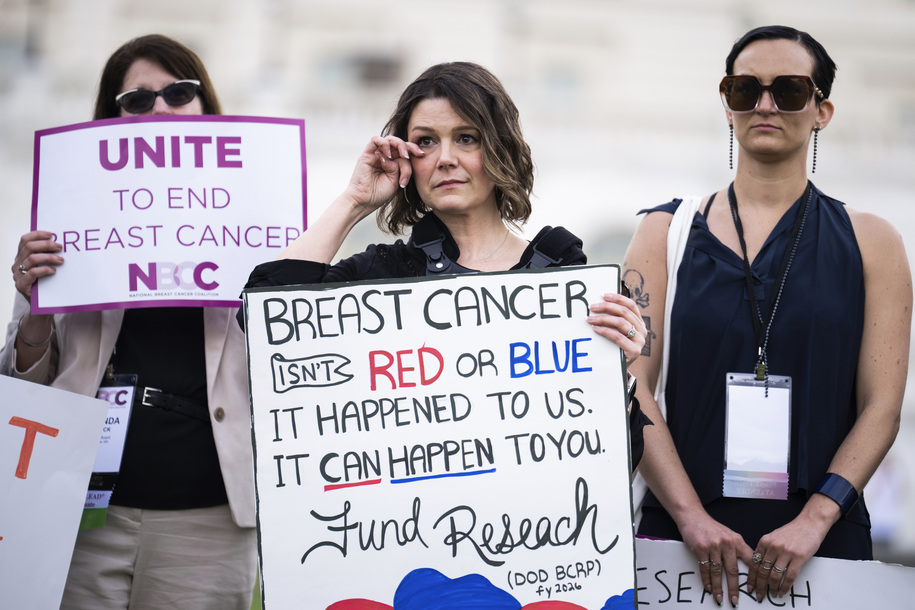
By Rachana Pradhan and Arthur Allen for KFF Health News The Trump administration’s broadsides against scientific research have caused unprecedented upheaval at the National Cancer Institute, the storied federal government research hub that has spearheaded advances against the disease for decades. NCI, which has long benefited from enthusiastic bipartisan support, now faces an exodus of clinicians, scientists, and other staffers — some fired, others leaving in exasperation. After years of accelerating progress that has reduced cancer deaths by a third since the 1990s, the institute has terminated funds nationwide for research to fight the disease, expand care, and train new oncologists. “We use the word ‘drone attack’ now regularly,” one worker said of grant terminations. “It just happens from above.” The assault could well result in a perceptible slowing of progress in the fight against cancer. Nearly 2 million Americans are diagnosed with malignancies every year. In 2023, cancer killed more than 613,000 people, making it the second-leading cause of death after heart disease. But the cancer fight has also made enormous progress. Cancer mortality in the U.S. has fallen by 34% since 1991, according to the American Cancer Society. There are roughly 18 million cancer survivors in the country. That trend “we can very, very closely tie to the enhanced investment in cancer science by the U.S. government,” said Karen Knudsen, CEO of the Parker Institute for Cancer Immunotherapy and a globally recognized expert on prostate cancer. “We’re winning,” Knudsen said. “Why we would let up, I really don’t understand.” Related | Trump is playing a deadly game with cuts to medical research This article is based on interviews with nearly two dozen current and former NCI employees, academic researchers, scientists, and patients. KFF Health News agreed not to name some government workers because they are not authorized to speak to the news media and fear retaliation. “It’s horrible. It’s a crap show. It really, really is,” said an NCI laboratory chief who has worked at the institute for three decades. He’s lost six of the 30 people in his lab this year: four scientists, a secretary, and an administrator. “If we survive I will be somewhat surprised,” he said. After a mandate by the Department of Health and Human Services and the Department of Government Efficiency to slash contract spending by more than a third, the cancer institute is cutting contracts to maintain precious biological specimens used in its research, according to three scientists. “The required contract cuts are going to be devastating,” a senior scientist said. Secretary of Health and Human Services Robert F. Kennedy Jr. at a House subcommittee budget hearing on May 14. On the NCI campus in Bethesda, Maryland, scientists describe delays in getting essential supplies — “literally anything that goes into a test tube or a petri dish,” a recently departed clinician said — because of staffing cuts and constant changes in policies about what they can order. Even the websites that publish new evidence on cancer treatment and diagnosis aren’t being updated, because HHS fired workers who managed them. And when NCI scientists do communicate with outsiders, what they say has been severely restricted, according to documents viewed by KFF Health News. Forbidden topics include mass firings, President Donald Trump’s executive orders, and “DEIA” – diversity, equity, inclusion, and accessibility. The turmoil at the National Institutes of Health’s largest arm could haunt the country and the world for years to come. “I really, really don’t understand what they’re trying to achieve,” said Sarah Kobrin, chief of NCI’s health systems and interventions research branch. “It just doesn’t make sense.” “Efforts that are lifesaving now are being curtailed,” one scientist said. “People will die.” Years of Bipartisan Support Initially, some workers said, they thought the cancer institute might be spared. HHS Secretary Robert F. Kennedy Jr. has called chronic disease — cancer is one — “an existential threat” to the country. Cancer research, with multiple NCI-funded breakthroughs in genetics and immunotherapy, has sidestepped the political minefields around other public health issues, like vaccination. “People who care about cancer might be the biggest lobby in the country,” said Paul Goldberg, editor and publisher of The Cancer Letter, which has monitored oncology science and policy since 1973. Count Mike Etchamendy, 69, of Big Bear Lake, California, as part of that lobby. Since 2013 he’s flown to the East Coast scores of times to participate in five clinical trials at the cancer wing of NIH’s Clinical Center. “They call it the House of Hope,” Etchamendy said. Between drugs, therapeutic vaccines, and expert treatment for his rare bone cancer, called chordoma, he said, he believes he’s gained at least 10 years of life. He’s proud to have served as a “lab rat for science” and worries about NCI’s future. “People come from all over the world to learn there,” Etchamendy said. “You cut funding there, you’re going to cut major research on cancer.” Related | Beyond Ivy League, RFK Jr.’s NIH slashed science funding across states that backed Trump In response to a list of detailed questions from KFF Health News about the cuts and chaos at NCI, HHS spokesperson Andrew Nixon said the reporting amounted to a “biased narrative” that “misrepresents a necessary transformation at the National Cancer Institute.” Nixon declined to elaborate but said research into cancer and other health conditions continues to be a high priority “for both NIH and HHS.” “We are refocusing resources on high-impact, evidence-based research — free from ideological bias or institutional complacency. While change can be uncomfortable for those invested in the status quo, it is essential to ensure that NCI delivers on its core mission,” he said. Much of NCI’s work is authorized by the National Cancer Act of 1971, which expanded its mandate as part of President Richard Nixon’s “War on Cancer.” Three of four of the cancer institute’s research dollars go to outside scientists, with most of the remainder funding more than 300 scientists on campus. And Congress was generous. Harold Varmus, one of more than 40 Nobel laureates whose work was funded by NCI, said