Author name: moderat ereport

The Hill

Conservatives mourn death of Heritage Foundation founder

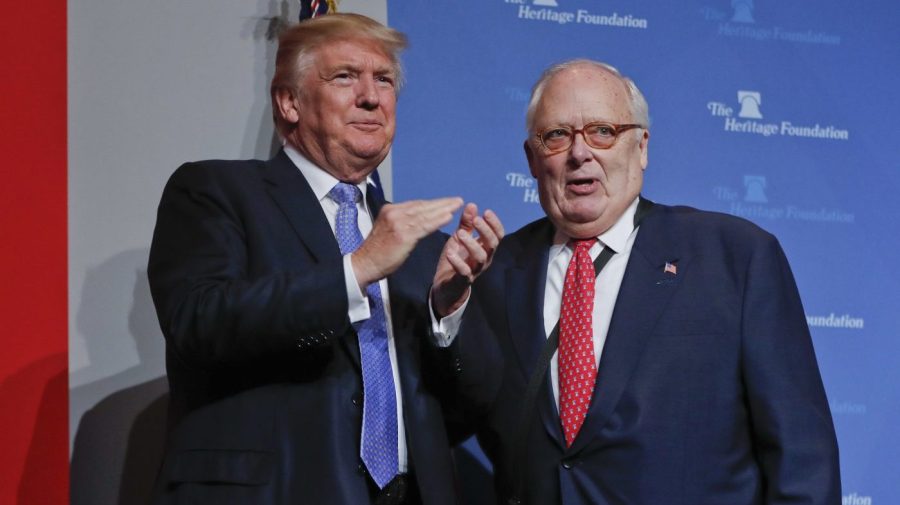
The death of Ed Feulner, the co-founder of the Heritage Foundation, has sparked an outpouring of support from Republican lawmakers and leaders. Feulner helped start the Heritage Foundation in 1973 and served as its president for nearly 40 years. “In the passing of Dr. Ed Feulner, the conservative movement has lost one of its true…

The Hill

The 5 Senate seats most likely to flip

An already active start to the 2026 cycle has kicked into overdrive in recent weeks with a major retirement announcement, the passage of a key GOP priority and moves by candidates that could further scramble the chess board. Sen. Thom Tillis (R-N.C.) made waves in the lead-up to the passage of President Trump’s “big, beautiful…

The Hill

Joe Rogan urges Texas Democrat to run for president

Podcast host Joe Rogan offered high praise for state Rep. James Talarico (D) on his podcast Friday, telling the Texas lawmaker that he should launch a White House bid. “You need to run for president. We need someone who is actually a good person,” Rogan said at the end of a multi-hour interview. Talarico, who…

Politics

Trump administration prepares to drop seven major housing discrimination cases

Federal housing officials spent years investigating cities from Chicago to Memphis to Corpus Christi for putting industrial plants and unwanted facilities in poor, nonwhite neighborhoods. Now, under Trump, the agency plans to drop the cases. By Jesse Coburn for ProPublica The U.S. Department of Housing and Urban Development is preparing to shut down seven major investigations and cases concerning alleged housing discrimination and segregation, including some where the agency already found civil rights violations, according to HUD records obtained by ProPublica. The high-profile cases involve allegations that state and local governments across the South and Midwest illegally discriminated against people of color by placing industrial plants or low-income housing in their neighborhoods, and by steering similar facilities away from white neighborhoods, among other allegations. HUD has been pursuing these cases — which range from instances where the agency has issued a formal charge of discrimination to newer investigations — for as many as seven years. In three of them, HUD officials had determined that the defendants had violated the Fair Housing Act or related civil rights laws. A HUD staffer familiar with the other four investigations believes civil rights violations occurred in each, the official told ProPublica. Under President Donald Trump, the agency now plans to abruptly end all of them, regardless of prior findings of wrongdoing. Four HUD officials said they could recall no precedent for the plan, which they said signals an acceleration of the administration’s retreat from fair housing enforcement. “No administration previously has so aggressively rolled back the basic protections that help people who are being harmed in their community,” one of the officials said. “The civil rights protections that HUD enforces are intended to protect the most vulnerable people in society.” In the short term, closing the cases would allow the local governments in question to continue allegedly mistreating minority communities, said the officials, who spoke on the condition of anonymity out of fear of retaliation. In the long term, they said, it could embolden local politicians and developers elsewhere to take actions that entrench segregation, without fear of punishment from the federal government. Related | Yes, Trump’s trying to make America segregated again HUD spokesperson Kasey Lovett declined to answer questions, saying “HUD does not comment on active 3 matters or individual personnel.” Three of the cases involve accusations that local governments clustered polluting industrial facilities in minority neighborhoods. One concerned a protracted dispute over a scrap metal shredding plant in Chicago. The facility had operated for years in the largely white neighborhood of Lincoln Park. But residents complained ceaselessly of the fumes, debris, noise and, occasionally, smoke emanating from the plant. So the city allegedly pressured the recycling company to close the old facility and open a new one in a minority neighborhood in southeast Chicago. In 2022, HUD found that “relocating the Facility to the Southeast Site will bring environmental benefits to a neighborhood that is 80% White and environmental harms to a neighborhood that is 83% Black and Hispanic.” Chicago’s mayor called allegations of discrimination “preposterous,” then settled the case and agreed to reforms in 2023. (The new plant has not opened; its owner has sued the city.) Related | Chicago’s plan to replace lead pipes puts it 30 years behind the federal deadline In another case, a predominantly white Michigan township allowed an asphalt plant to open on its outskirts, away from its population centers but near subsidized housing complexes in the neighboring poor, mostly Black city of Flint. The township did not respond to a ProPublica inquiry about the case. Still another case involved a plan pushed by the city of Corpus Christi, Texas, to build a water desalination plant in a historically Black neighborhood already fringed by oil refineries and other industrial facilities. (Rates of cancer and birth defects in the area are disproportionately high, and average life expectancy is 15 years lower than elsewhere in the city, researchers found.) The city denied the allegations. Construction of the plant is expected to conclude in 2028. Three other cases involve allegations of discrimination in municipal land use decisions. In Memphis, Tennessee, the city and its utility allegedly coerced residents of a poor Black neighborhood to sell their homes so that it could build a new facility there. In Cincinnati, the city has allegedly concentrated low-income housing in poor Black neighborhoods and kept it out of white neighborhoods. And in Chicago, the city has given local politicians veto power over development proposals in their districts, resulting in little new affordable housing in white neighborhoods. (Memphis, its utility and Chicago have disputed the allegations; Cincinnati declined to comment on them.) The last case involved a Texas state agency allegedly diverting $1 billion in disaster mitigation money away from Houston and other communities of color hit hard by Hurricane Harvey in 2017 and toward more rural, white communities less damaged by the storm. The agency has disputed the allegations. Flood-damaged debris from homes lines the street in the aftermath of Hurricane Harvey in Houston in Sept. 2017. All of the investigations and cases are now slated to be closed. HUD is also planning to stop enforcing the settlement it reached in the Chicago recycling case, the records show. The move to drop the cases is being directed by Brian Hawkins, a recent Trump administration hire at HUD who serves as a senior adviser in the Fair Housing Office, two agency officials said. Hawkins has no law degree or prior experience in housing, according to his LinkedIn profile. But this month, he circulated a list within HUD of the seven cases that indicated the agency’s plans for them. In the cases that involve Cincinnati, Corpus Christi, Flint and Houston, the agency would “find no cause on [the] merits,” the list reads. In the two Chicago cases and the one involving Memphis, HUD would rescind letters documenting the agency’s prior findings. Hawkins did not respond to a request for comment. The list does not offer a legal justification for dropping the cases. But Hawkins also circulated a memo that indicates the reasoning behind dropping one — the Chicago recycling case. The memo cites an executive order issued by Trump in April eliminating federal

Politics

Wisconsin town that disavowed voting machines loses appeal in federal court

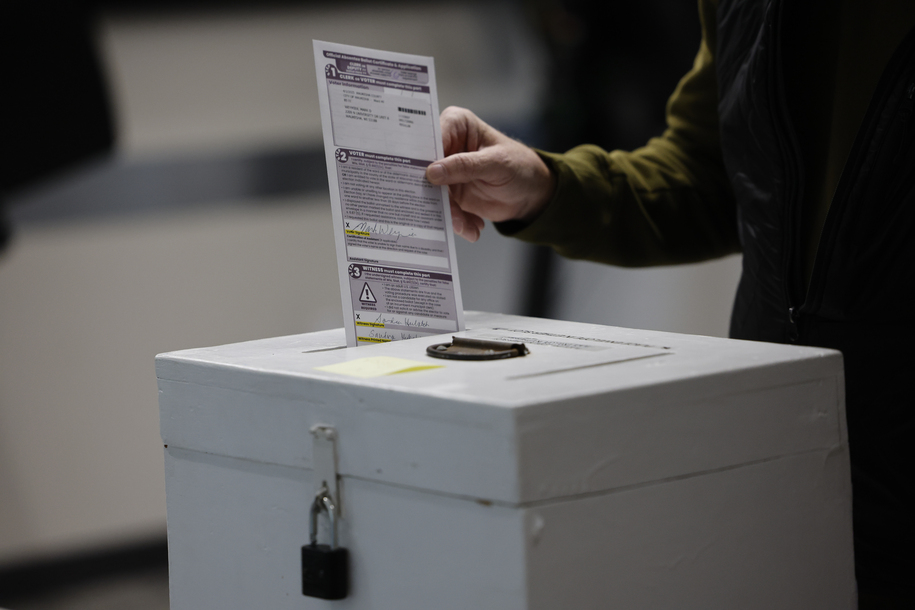
Trump’s Justice Department has forged ahead in this case even as it has withdrawn from several other voting lawsuits brought under the Biden administration. By Alexander Shur for Votebeat What happened? A federal appeals court ruled Monday against a Wisconsin town that disavowed electronic voting machines, siding with the U.S. Justice Department’s argument that this would unfairly harm voters with disabilities. What’s the dispute? Leaders of Thornapple, a town of 700 people in northern Wisconsin’s Rusk County, voted in 2023 to stop using electronic voting machines, in favor of allowing only hand-marked ballots. They did without the machines for two elections in a row, in April and August 2024. The DOJ, under the Biden administration, sued the town in September 2024, arguing that its decision violated the Help America Vote Act, which requires every “voting system” to be accessible for voters with disabilities. Accessible voting machines allow voters with disabilities to hear the options on the ballot and use a touch-sensitive device to mark it. The town argued that it wasn’t subject to the federal law’s accessibility provision because its use of paper ballots didn’t constitute a “voting system.” A district court judge rejected the town’s argument last September, and ordered it to use electronic voting machines for the November presidential election. The town appealed that order, but did use a machine in November. Related | Election officials face limited options as federal security resources fall away On Monday, a three-judge panel on the 7th U.S. Circuit Court of Appeals affirmed the lower-court order, finding that “individuals with disabilities would lack the opportunity to vote privately and independently if they only had access to a paper ballot.” The court based that finding partially on Thornapple Chief Inspector Suzanne Pinnow’s testimony about a blind woman who relied on her daughter’s assistance to fill out a ballot, and a man who had a stroke and who needed Pinnow to guide his hand so he could mark a ballot. Who are the parties? The DOJ had sued two northern Wisconsin towns and their officials in September after both decided not to use electronic voting equipment for at least one federal election. One of the towns, Lawrence, immediately settled with the Justice Department, vowing to use accessible voting machines in the future. Related | Trump launches new ‘lawless’ attack on voting rights Thornapple officials decided to fight the case. They’re currently represented by an attorney with the America First Policy Institute, a group aligned with President Donald Trump. Why does it matter? The case reaffirms what has long been election practice in Wisconsin: Every polling place must have an electronic voting machine that anybody can use but is especially beneficial for voters with disabilities. Distrust of voting machines, which has grown on the right following misinformation about the 2020 election, has led to a movement to ban them across Wisconsin. But the Thornapple case shows that for now, municipalities still have obligations under federal law to allow voters to cast ballots on electronic machines. The case is relevant nationally, too. Since Trump took office in January, the U.S. Justice Department has withdrawn from multiple voting-related cases. But the Justice Department forged ahead in this lawsuit, signaling that, at least for now, it is not backing the movement to forgo electronic voting equipment entirely. What happens now? Thornapple is “considering our options,” said Nick Wanic of the America First Policy Institute. The case could get appealed to the U.S. Supreme Court or proceed in the lower federal court. Although the order that required Thornapple to use accessible voting machines applied only to the November 2024 election, at this point, two federal courts in this case have ruled that towns must have accessible voting machines for people with disabilities. Related | Work on new voting system guidelines already in motion after Trump executive order “Voters with disabilities already face many barriers in the electoral process, and making sure they have access to a voting system which allows for basic voting rights to be met is a minimum — and legal — standard that they should not be worried about when exercising their right to vote,” said Lisa Hassenstab, public policy manager at Disability Rights Wisconsin.

Politics

Is another Texas Republican about to shake up the state’s Senate race?

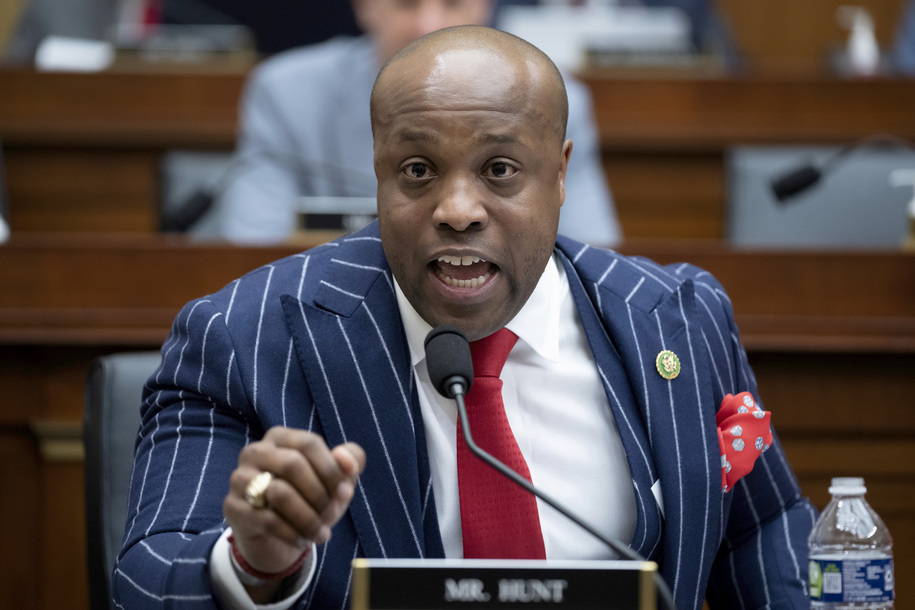
Rep. Wesley Hunt may be about to make an already chaotic Texas GOP Senate primary even messier. The Houston-area congressman has reserved ad time on Fox News in the Washington, D.C., market, with the spot scheduled to air on Saturday, according to ad-tracking firm AdImpact. Axios reports Hunt is also spending six figures on ads in the Dallas and Houston media markets—an unmistakable sign he’s eyeing a statewide run. And this isn’t his first appearance outside his district. In April, a political action committee ran biographical ads about Hunt in cities far from Houston—including Washington, D.C., and West Palm Beach, Florida, home to Trump’s Mar-a-Lago—according to the Associated Press. Medium Buying, another ad-tracking firm, says Hunt’s congressional campaign also aired spots on Newsmax in Dallas, Houston, and San Antonio from July 12-18. Rumors of Hunt running for Senate have been swirling for months. But this latest media blitz marks his clearest signal yet. Axios reports the newest ad features Hunt alongside his wife and three young children, with a voiceover declaring: “Family, faith, freedom. These are the values that define Texas, and they’re the values that define Wesley Hunt.” Texas Attorney General Ken Paxton The message seems aimed at creating a stark contrast with Attorney General Ken Paxton, the scandal-plagued front-runner who’s now going through a high-profile divorce. State Sen. Angela Paxton filed last week on “biblical grounds,” accusing her husband of adultery and saying the couple has lived apart for over a year. Paxton didn’t exactly deny the allegations. Instead, he released a statement saying, “I could not be any more proud or grateful for the incredible family that God has blessed us with, and I remain committed to supporting our amazing children and grandchildren.” That kind of baggage may give Hunt the opening he needs. He’s been emphasizing his military background—a time-tested selling point for Texas Republicans—and his ads have reached beyond major metros, airing in Amarillo, San Antonio, and Waco. With Paxton mired in scandal and Sen. John Cornyn trailing badly in primary polling, Hunt could emerge as a viable alternative for Republican voters fed up with both. Cornyn, who has held his seat since 2002, still has party leadership support, but that might not be enough to carry him through a tough primary. Sen. John Cornyn Even Trump is holding back. According to Senate GOP sources, White House officials recently told Minority Whip John Thune that the president plans to stay neutral, at least for now. He’s waiting to see if Cornyn can close the gap before weighing in. Meanwhile, more potential candidates are eyeing the race. Rep. Ronny Jackson—Trump’s former White House physician—is also said to be considering a bid. And Democrats are preparing for their own fight. Former Rep. Colin Allred, who challenged Ted Cruz in 2024, has already entered the race. But other high-profile Democrats—Rep. Joaquin Castro, state Rep. James Talarico, and former Rep. Beto O’Rourke—are also considering runs, setting the stage for a possible intraparty showdown. For now, the Republican field is fractured, the front-runner is under scrutiny, and the establishment pick is struggling. If Hunt enters, it almost guarantees a fierce primary fight. So, yes—grab your popcorn. Texas Republicans are gearing up to tear each other apart—again.

Scroll to Top