
Amber weather warning issued as thunderstorms and flooding to cause significant disruption
The Met Office has issued an amber warning for thunderstorms and flooding for Saturday morning with disruption expected.


The Met Office has issued an amber warning for thunderstorms and flooding for Saturday morning with disruption expected.
This week, President Trump didn’t want to talk about a thing. If you know what that thing is, you’ll get at least one question right. Plus: Emmys! Babies! Tennis!

by Sawyer Loftus, Bangor Daily News This article was produced for ProPublica’s Local Reporting Network in partnership with The Bangor Daily News. Sign up for Dispatches to get stories like this one as soon as they are published. Off a two-lane stretch of U.S. Route 1 in rural Caribou, Maine, sits a white ranch-style house that’s been consumed by weeds and vines. The house was once the fulfillment of a dream. The owner had purchased it in 2006 through a federal mortgage program designed specifically for people like her: impoverished, first-time homeowners who live in the most rural parts of the United States. The loan, which came directly from the U.S. Department of Agriculture, required no down payment. But things started going wrong from the day she moved in. First, the basement flooded. Then the furnace stopped working. As major repair costs accumulated over the next six years, the woman’s health deteriorated until she was forced to leave her job as a manager at Kmart. Her disability check was not enough to cover medical expenses and the upkeep required for the house — let alone the $855 monthly mortgage. So in 2012 she drove to a USDA office 20 miles away and tried to give the house back. She said staff there would not accept her keys, telling her instead to call a toll-free number for help, as agency protocol requires. She left a message and did not hear back. She stopped paying her mortgage and moved out. Her dream home sat abandoned for more than a decade. USDA guidance says the agency should act quickly when borrowers fall behind on payments “to minimize any potential loss to the Government and to the borrower.” A prompt sale keeps the government from having to pay the legal and administrative costs associated with foreclosure down the road and may protect the borrower from incurring a major blemish on their credit history. But that did not happen. Rather, 13 years passed before a sheriff’s deputy knocked on the door of the woman’s public housing apartment in May and served her with foreclosure papers on the now dilapidated ranch home that’s been overtaken by squatters. The government’s delay hurt the value of its investment and left the woman with a bill far greater than the cost of the loan she initially took out — with additional interest and other fees that had accumulated over those years. The woman, now 68, declined to be interviewed, but her attorney, Tom Cox, said she allowed him to share her experience on the condition that she not be named to protect her privacy. Since March, the USDA has filed 56 foreclosures in the federal court system against properties purchased with a rural development mortgage, also known as a Section 502 direct loan. All but one were in Maine. The borrowers have been in default for an average of nearly nine years. As in the case of the Caribou homeowner, the USDA’s delays in those cases have resulted in borrowers racking up more debt because of the interest and fees that piled up in the intervening years, according to a Bangor Daily News and ProPublica examination of the foreclosure cases and interviews with former USDA officials and legal experts. On average, borrowers in the 55 Maine cases owe $110,000 more than they would have had the agency moved to take possession of the properties when they first defaulted, the Bangor Daily News and ProPublica found. This includes what the USDA calls “preservation and inspection” fees, a broad category on the foreclosure filings that can include home repairs and yard maintenance, among other things. Borrowers who can’t pay risk having the government garnish their wages or federal benefits such as Social Security. The Caribou woman had her disability checks garnished six times since 2015 to offset her debt before the USDA even foreclosed on her property, according to her lawyer. The best way to keep the government from garnishing federal benefits is to file for bankruptcy, attorneys said. “It really undermines the concept of giving access to homeownership to a population who might not otherwise have been able to afford it,” said Rhiannon Hampson, former USDA rural development director for Maine who stepped down in January before President Donald Trump was inaugurated. “The irony, with all of these fees piled on, is that they can’t afford to get out of it.” The recent wave of foreclosure filings in Maine underscores the government’s failure to monitor a mortgage program that since its founding in 1949 has poured tens of billions of tax dollars into giving the poorest Americans a shot at homeownership. The USDA does not publicly report how often it files foreclosures. U.S. Rep. Chellie Pingree, a Maine Democrat and member of a House appropriations subcommittee overseeing the USDA’s direct loan program, has proposed language in the House agriculture appropriations report for the 2026 fiscal year calling on the agency to regularly report the number of foreclosures and abandoned properties related to the direct loan program. The bill awaits a vote before the full House of Representatives. The USDA regularly filed foreclosures in Maine prior to the coronavirus pandemic but has rarely done so in recent years, according to Richard H. Broderick Jr., a Maine attorney with whom the agency had contracted to file foreclosures until 2022. Kevin Crosman, the Maine attorney now filing foreclosures on behalf of the USDA, would not comment on why the agency started doing so again. Reporters visited 12 of the 55 homes in the Bangor Daily News’ core coverage area in May. At least five appeared to be abandoned and in disrepair — with windows boarded up or a sign affixed to the door saying it was being cared for by a New York company — raising doubts that the government will recoup its investments. The USDA is supposed to take custody of properties purchased with a Section 502 direct loan and begin the foreclosure process when the homeowner becomes incapacitated, dies or

Congress passed the first-ever major U.S. cryptocurrency legislation on Thursday, boosting the industry. But digital coins remain a risky investment.

Recent comments by the Israeli prime minister and a Fox News commentator about their suburban Philadelphia high school have inflamed a debate.

The record rainfall has prompted authorities to raise the weather-related disaster alert to its highest level.

PM Benjamin Netanyahu says Thursday’s strike on the Holy Family Church in Gaza City was a “mistake”.
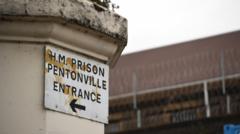
Data shows 130 inmates were held illegally, after their release date, in the last six months.

Gregor Townsend’s Scotland score seven tries to comfortably see off Samoa in Auckland.

The temporary ban affects more than 1.4 million customers in Kent, East Sussex and West Sussex.