Politics

Politics

Let’s celebrate the bad week Elon Musk’s businesses are having

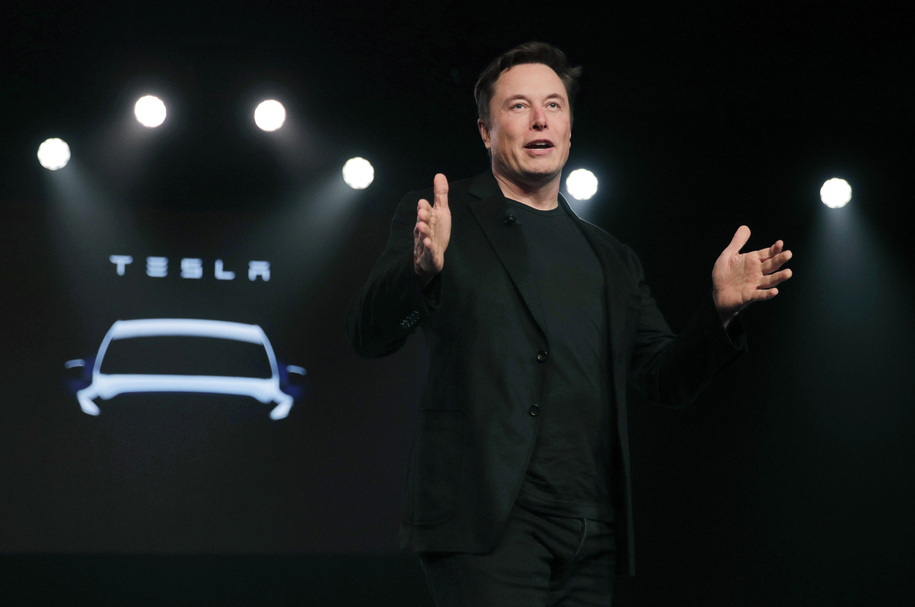
As a general rule, celebrating the misfortunes of someone is unseemly. But when that person is billionaire Elon Musk, let’s do this. The past week has not been terrific for both Tesla and X, and it couldn’t happen to a worse dude.  Last Friday, a Florida jury slapped Musk’s electric car company, Tesla, with a $243 million verdict in a wrongful death lawsuit brought by the family of a woman killed due partly to Tesla’s glitchy Autopilot self-driving software. The Tesla driver dropped his cell phone and reached down to grab it, letting Autopilot take over. The Tesla promptly blew through an intersection at over 60 miles per hour and crashed into an SUV, killing Naibel Benavides and severely injuring her boyfriend.  Of course, Tesla is being exceedingly dramatic about the verdict, saying that it “works to set back automotive safety and jeopardize Tesla’s and the entire industry’s efforts to develop and implement lifesaving technology.” Of course, that’s a weird statement to make when your “lifesaving technology” appears to have been involved in someone’s death.  Normally, the government plays a regulatory role here, investigating the safety of cars. However, once Trump took office and Musk burrowed in as the head of the so-called Department of Government Efficiency, most of those investigations were expected to just go away.  Though who knows what will happen now that Musk and Trump have fallen out. Last month, Trump said he wanted Musk’s businesses to “thrive.” However, Tesla’s launch of self-driving taxis in Austin, Texas, went so poorly that the National Highway Traffic Safety Administration is looking into the taxis’ myriad problems, including a penchant for reportedly veering into oncoming traffic. Seems bad! Demonstrators protest against Elon Musk outside a Tesla dealership in Kansas City, Missouri, on April 12. Generally, Tesla has dodged these sorts of lawsuits or prevailed in court. But now there’s a template for future settlements to be more expensive. In other words, the company may have to up the amount it is willing to pay to settle or face a nine-figure jury verdict.  Unfortunately, while this hurts Tesla, the board still wants to shower Musk with money for … what exactly? He just got 96 million new shares, worth roughly $29 billion.  It’s not just Tesla having a dark day, though let’s all take a moment to engage in some pointing and laughing about how the jury verdict caused Tesla’s stock to fall. Meanwhile, over at the 9th U.S. Circuit Court of Appeals, things are not going great for Musk’s social media platform, X. The court ruled that while X cannot be held liable if it fails to remove child sex abuse material immediately, the company could face negligence claims going forward for not reporting such material to the National Center for Missing and Exploited Children and for not having an easy way for users to flag posts. Basically, once X is aware of that material on the platform, it has a legal duty to report it to NCMEC, not that Musk is really into following laws.  This has been a problem since Musk took over X in October 2022. In 2023, the Stanford Internet Observatory reported that Twitter (as X was then known) failed to address 40 CSAM items over two months. For Musk, though, posting CSAM isn’t really a dealbreaker. He reinstated the account of right-wing conspiracy theorist Dominick McGee after McGee’s account had posted an image taken from one of the worst, most violent child abuse videos out there. But hey, McGee claims he did it to raise awareness! Musk tried to wave this away by saying only people on X’s safety team saw McGee’s post, but it actually got 3 million views and 8,000 reposts, according to The Washington Post.  Of course, McGee now gets to go to White House press briefings, and we can all thank Musk for that.  There should be consequences for turning X into a Nazi bar that aids the exploitation of children, and the 9th Circuit gave a roadmap on how to do that. There should also be consequences for Tesla’s apparent refusal to make its cars safer. That Florida jury verdict might get reduced on appeal, but it still puts Tesla on notice that going to trial may not be the greatest idea.  And anything that makes Musk’s life harder and more expensive, we’re here for it.

Politics

Mitch McConnell’s legacy comes under fire in Kentucky race to replace him in the Senate

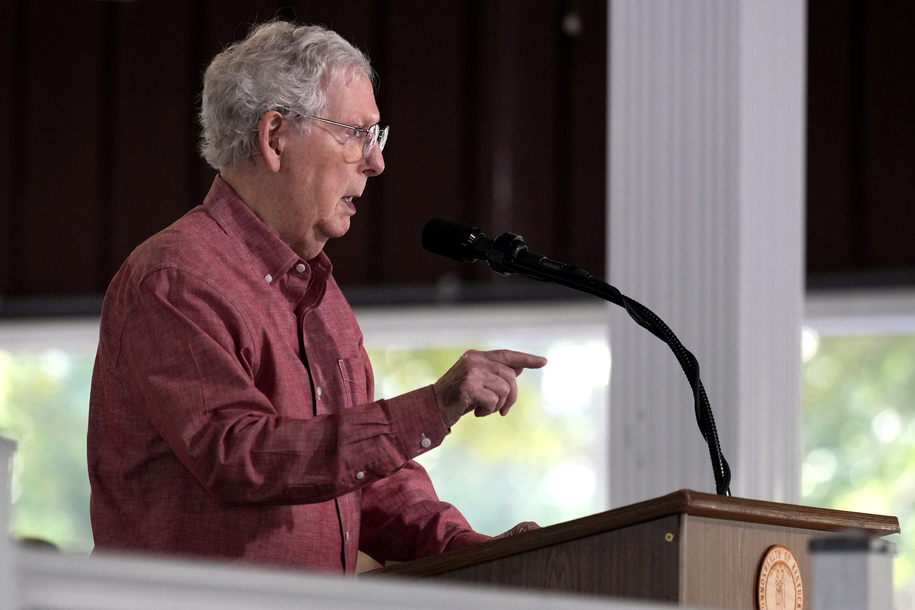
Republican Nate Morris had deftly warmed up a crowd of party faithful, gushing about President Donald Trump and recounting his own life’s journey — from hardscrabble childhood to wealthy entrepreneur — when he turned his attention to the man he wants to replace, Sen. Mitch McConnell. That’s when things got feisty. While bashing Kentucky’s longest-serving senator at a GOP dinner on the eve of Saturday’s Fancy Farm picnic, a tradition-laden stop on the state’s political circuit, Morris was cut off in midsentence by a party activist in the crowd, who noted that McConnell isn’t seeking reelection and pointedly asked Morris: “What are you running on?” Morris touted his hard line stance on immigration and defended Trump’s tariffs as a boon for American manufacturing. But he didn’t retreat from his harsh critique of McConnell. “We’ve seen 40 years of doing it the same way,” Morris said. “And, yes, he’s not on the ballot, but his legacy is on the ballot. Do you want 40 more years of that? I don’t think you do.” McConnell’s blunt-force approach used against him The pushback from a county GOP chairman revealed the political risks of attacking the 83-year-old McConnell in the twilight of his career. Towering over Kentucky politics for decades, McConnell is regarded as the master strategist behind the GOP’s rise to power in a state long dominated by Democrats. The state Republican headquarters bears McConnell’s name. As the longest-serving Senate party leader in U.S. history, McConnell guided Republican policymaking and helped forge a conservative Supreme Court. Back home, his appropriating skills showered Kentucky with federal funding. Now, his blunt-force style of campaigning — which undercut so many foes — is being used against him. Related | McConnell announces he’s done taking a dump all over democracy Morris is running against two other prominent Republicans — U.S. Rep. Andy Barr and former state Attorney General Daniel Cameron — for McConnell’s seat. The outcome will be decided in the spring primary next year. Kentucky hasn’t elected a Democrat to the Senate since Wendell Ford in 1992. All three Republican hopefuls lavish praise on Trump — in hopes of landing his endorsement — but also have ties to McConnell, who mentored generations of aspirational Republicans. Cameron and Barr have chided McConnell at times, but it’s been mild compared to Morris’ attacks. Morris interned for McConnell but glosses over that connection. McConnell pushes back Mitch McConnell and his wife, Elaine Chao, acknowledge applause at the annual Fancy Farm picnic on Aug. 2 in Fancy Farm, Ky.  At events surrounding the Fancy Farm picnic, an event long known for caustic zingers that he has always relished, McConnell showed no sign of backing down. “Surely this isn’t true, but I’ve heard that one of the candidates running for my office wants to be different,” McConnell told a Republican crowd that included Morris at a pre-picnic breakfast in Mayfield. “Now, I’m wondering how you’d want to be different from the longest-serving Senate leader in American history. I’m wondering how you’d want to be different in supporting President Trump.” McConnell received multiple standing ovations. Morris stayed seated. McConnell has consistently voted for Trump’s policies more often than Kentucky’s other Republican senator, Rand Paul, according to a Congressional Quarterly voting analysis. McConnell recently supported Trump’s signature tax and spending measure. Paul opposed it, saying it would drive up debt. Yet Morris has taken on McConnell, who has famously had an up-and-down relationship with Trump. McConnell teamed with Trump to put conservatives on the federal bench and pass tax cuts during the president’s first term. McConnell also guided the Senate — and Trump — through two impeachment trials that ended in acquittals. But the relationship was severed after McConnell blamed Trump for “disgraceful” acts in the Jan. 6, 2021, Capitol attack by Trump’s supporters. McConnell endorsed Trump in 2024, but in a biography by Michael Tackett of The Associated Press, released shortly before the election, McConnell described him as “a despicable human being.” Running against career politicians Morris, who started a waste management technology company, says the senator has been insufficiently loyal to Trump and allowed festering issues like immigration and the national debt to grow worse during his years in Senate leadership. Morris wants to tether his opponents to McConnell while running on anti-establishment themes that his campaign thinks will appeal to legions of Trump supporters in the Bluegrass State. Nate Morris speaks at the annual Fancy Farm picnic on Aug. 2 in Fancy Farm, Ky. “Let’s face it, folks, career politicians have run this country off a cliff,” Morris said. Morris’ rivals sum up the anti-McConnell attacks as an angry, backward-looking message. Cameron called it a diversionary tactic to obscure what he said is Morris’ lack of both a message and credibility as a supporter of Trump’s MAGA movement. “He can’t talk about his actual record. So he has to choose to pick on an 83-year-old,” Cameron said. At Fancy Farm, where candidates hurl insults at one another against a backdrop of bingo games and barbecue feasts, Morris took a swipe at McConnell’s health. “I have a serious question: who here can honestly tell me that it’s a good thing to have a senior citizen who freezes on national television during his press conferences as our U.S. senator?” Morris said. “It seems, to me, maybe just maybe, Mitch’s time to leave the Senate was a long time ago.” McConnell had his customary front-row seat for much of the event but wasn’t there for Morris’ remarks. He typically leaves before all the speeches are delivered and exited before his would-be successors spoke. Living by the sword McConnell complimented Trump in his speech, singling out Trump’s bombing of Iranian nuclear sites. “He turned Iran’s nuclear program into a pile of rocks,” McConnell, a steadfast advocate for a muscular U.S. foreign policy, said to cheers. At the GOP dinner the night before in Calvert City, where candidates typically are more politely received, party activist Frank Amaro confronted Morris for his anti-McConnell barrage. “He keeps bashing Mitch McConnell like he’s running against Mitch McConnell,”

Politics

So much for Trump saving manufacturing jobs

I will never stop marveling at President Donald Trump’s uncanny ability to surgically hurt the very people who put him in office. Middle column here is just May and June incorporating the revision, where private education and health services account for 170% of all private sector job growth. Manufacturing jobs are being lost at a comparable clip to Federal jobs, -11/-12 in July and -13/-18 previously. /3 pic.twitter.com/YDZl7voEfr — Mike Konczal (@mtkonczal) August 1, 2025 From the start of his latest term as president, Trump has taken a wrecking ball to the federal workforce. He and onetime “first buddy” Elon Musk took glee in destroying as many government jobs as possible. Agencies were hollowed out. Experienced civil servants pushed out. Entire departments left leaderless. Meanwhile, Trump sold tariffs as a way to bring manufacturing jobs back to the U.S. He promised a revival of American industry with factories buzzing again, and “Made in America” stamped on everything from steel to semiconductors. But here we are, half a year into his term, and manufacturing jobs are being lost at the same rate as the government jobs that Trump has been intentionally eliminating. It’s a breathtaking and deliberate policy failure. The very communities that bet their futures on Trump’s economic nationalism are the ones now getting steamrolled by it. States like Michigan, Ohio, Pennsylvania—they’re bleeding the jobs Trump vowed to protect. The wheels are now falling off of Trump’s economic train. Friday’s jobs report was an absolute, unmitigated disaster. The stock market tanked on the news and Trump responded in the worst possible way—by firing the director of the Bureau of Labor Statistics.  Related | New jobs numbers hint at Great Recession 2.0 When has shooting the messenger ever worked out? Meanwhile, he keeps doubling down on the tariffs that are screeching the American economy to a halt. Imports are more expensive, exports are retaliated against, and key industries—including autos, agriculture, and tech—are taking a hit. Even his supposed successes, like the trade framework with the European Union that raises baseline tariffs to 15%, are an effective tax increase on American businesses and consumers. And even that “agreement” provides little relief from the Sword of Damocles hanging over the U.S. economy, as it isn’t so much an agreement as a political statement that’s subject to Trump’s irrational and ever-changing whims.  So what’s left? Fewer jobs, higher prices, less stability. And no plan to fix anything—just blame, bluster, and firing anyone who dares to tell him the truth.

Politics

Chronically ill? In Kennedy’s view, it might be your own fault

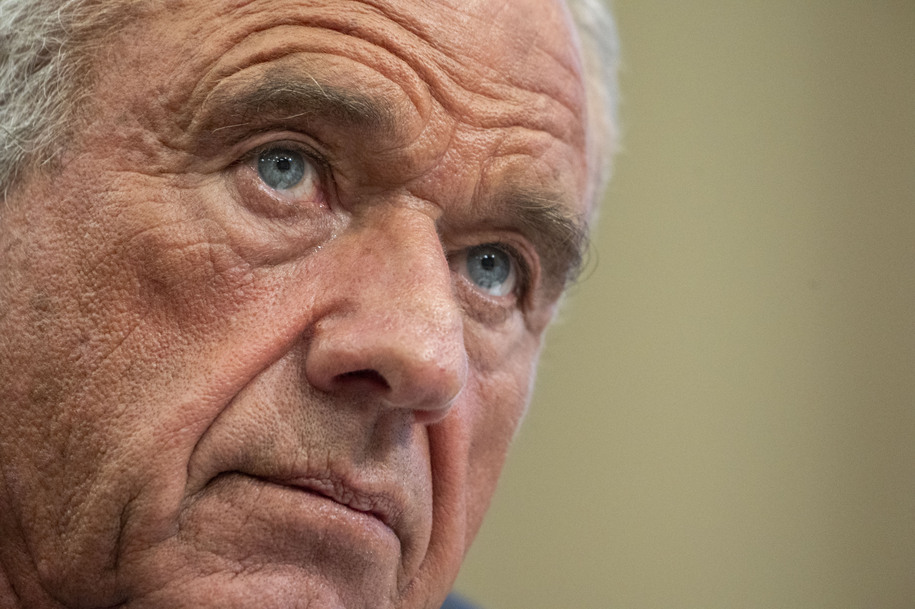
By Stephanie Armour for KFF Health News On a recent weekday evening, Ashly Richards helped her 13-year-old son, Case, with homework. He did math problems and some reading, underscoring how much he’s accomplished at his school for children with autism. Richards has heard Trump administration officials suggest that food dyes and pediatric vaccines cause autism and ADHD. That stance, she said, unfairly blames parents. “There’s no evidence to support it,” said Richards, 44, a marketing director in Richmond, Virginia. “As a parent, it’s infuriating.” In their zeal to “Make America Healthy Again,” Trump administration officials are making statements that some advocacy and medical groups say depict patients and the doctors who treat them as partly responsible for whatever ails them. Health and Human Services Secretary Robert F. Kennedy Jr. and agency leaders have attributed a panoply of chronic diseases and other medical issues — such as autism, attention-deficit/hyperactivity disorder, depression, diabetes, and obesity — to consumers and their lifestyle choices, according to a review of 15 hours of recorded interviews, social media statements, and federal reports. Related | RFK Jr. ramps up his ignorant—and dangerous—war on autism He said at a news conference on April 16 that autism is preventable and that rates are rising because of toxic substances in the environment, despite a lack of evidence there is any link. “These are kids who will never pay taxes. They’ll never hold a job. They’ll never play baseball. They’ll never write a poem. They’ll never go out on a date,” he said. “Many of them will never use a toilet unassisted.” The vast majority of people on the spectrum do not have those severe challenges. The statements are more than rhetoric. These attitudes, ranging from judgments about individual behaviors to criticism of the chronically poor, are shaping policies that affect millions of people. The sentiments have been a factor behind decisions to cut Medicaid, keep federal insurance programs from covering anti-obesity drugs, and impose new barriers to COVID vaccines for healthy people, say public health leaders and doctors. GOP lawmakers and federal health officials, they say, hold a reproachful stance toward chronic illnesses and the estimated 129 million people in the U.S. affected by them. “This is at the heart of so much of our national problem with health,” said Robert Califf, who led the Food and Drug Administration during the Obama and Biden administrations. “It’s these two extreme views. It’s every health decision is up to the ‘rugged individual,’ versus the other extreme view that it’s all controlled by environment and social determinants of health. The truth is, it’s on a continuum.” The Blame Game Self-reliance is a common theme among adherents of MAHA, an informal movement for which Kennedy has fashioned himself the figurehead that promotes medical freedom, skepticism of vaccines, and a focus on nontraditional medicine to treat disease. Taking medication to manage diabetes? FDA Commissioner Marty Makary suggested on Fox News in late May that it would be effective to “treat more diabetes with cooking classes” instead of “just throwing insulin at people.” People with Type 1 diabetes must take insulin because their pancreases don’t produce it, according to the National Institutes of Health, which also notes that many with Type 2 diabetes “need to take diabetes medicines as well.” Related | Things are going great under RFK Jr.—why do you ask? Taking birth control pills? Casey Means, President Donald Trump’s nominee to be U.S. surgeon general, has said that’s a “disrespect of life” for short-term gain and efficiency. “We are prescribing them like candy,” she said last year on “The Tucker Carlson Show,” adding that birth control medications “are literally shutting down the hormones in the female body that create this cyclical, life-giving nature of women.” Have a child on ADHD meds? Calley Means, who is an adviser to Kennedy and is Casey Means’ brother, said on the same show that Adderall is prescribed as the standard of care when children get a little fidgety because they’re in sedentary environments with limited sunlight and eat too much ultraprocessed food. As a society, he said, “we’re really committing mass child abuse in many ways, and we’re normalizing that and we’re not speaking out about that. And then we’re giving people stimulants developed by Nazi Germany.” Calley Means was probably referring to Pervitin, a methamphetamine-based drug administered to Adolf Hitler’s forces in World War II. Adderall is a prescription drug containing amphetamine, a stimulant that’s not the same as methamphetamine. The Department of Health and Human Services didn’t respond to messages seeking comment from Means. Some conservatives and MAHA adherents argue that people need to take more responsibility for their health. But comments that shift blame to patients and physicians risk perpetuating stigmas, fostering the spread of misinformation, and eroding trust in modern medicine, say medical groups, doctors, and patient advocacy groups. Related | RFK Jr. injects more chaos into the nation’s public health system The statements assume consumers and patients have control over improving their health and preventing chronic disease when the reality is more complex, according to some public health leaders. Lower-income people, they say, often lack access to grocery stores and healthy food, may juggle too many jobs to have time to cook from scratch, and may live in dangerous areas where it’s harder to get outside and exercise. Jerome Adams, surgeon general during the previous Trump administration, told KFF Health News that he worries efforts to promote health will be undone by “the return of vaccine-preventable diseases, increasing mistrust in the health care system, and the tearing down of social supports which are critical for making healthy choices.” Tough Talk The attitudes held by top Trump health officials have affected policy decisions, some doctors and public health leaders say. Kennedy and other Trump administration health leaders have been especially outspoken, targeting issues they consider especially egregious in recent federal actions, research, or policy. For example, the Biden administration proposed a rule in November that would let Medicare cover weight loss medications such as Wegovy and Zepbound. But Kennedy and other political appointees at HHS and its agencies have criticized the drugs and

Politics

Cartoon: A strange new world

As always, if you find value in this work I do, please consider helping me keep it sustainable by joining my weekly newsletter, Sparky’s List! You can get it in your inbox or read it on Patreon, the content is the same. Don’t forget to visit the Tom Tomorrow Merchandise Mall, and, if you’re so inclined, follow me on Bluesky! Related | Wait, Trump’s idiotic plan to reopen Alcatraz could cost how much?

Politics

Pete Hegseth’s Pentagon Is Becoming a Bubble

Last month, a group of seven U.S. generals and admirals—including the top admiral in charge of U.S. military operations in the Asia-Pacific region—prepared to travel to the Aspen Security Forum, in Colorado. Security officials had spoken at the annual conference for years, including during Donald Trump’s first term, and were set to discuss topics such as the wars in Gaza and Ukraine, the future of AI, and threats from China. But a day before the forum began, the officers’ staff got calls from the Pentagon telling them to stay away. On social media, Sean Parnell, the Defense Department’s top spokesperson, later made clear why: The forum, he said, was “hosted by an organization that promotes the evils of globalism, disdain for America, and hatred for our great president, Donald J. Trump.” Aspen, it turned out, was only the beginning. Within days, Defense Secretary Pete Hegseth had ordered the DOD to vet all future event attendance by any defense official. In a statement to Politico, Parnell declared that the move was meant to “ensure the Department of Defense is not lending its name and credibility to organizations, forums, and events that run counter to the values of this administration.” (The Aspen Institute, which sponsors the security forum, describes itself as nonpartisan.) Parnell’s characterization of the new policy was vague, but it represented an abrupt departure from long-established DOD practices, and an important shift in the way that the military engages with the outside world: A Pentagon that has already grown more insular under Hegseth could end up cutting itself off from thinkers and ideas beyond the building, or at least those with which the administration disagrees. [Tom Nichols: The Pentagon against the think tanks] Military personnel and conference planners I spoke with described the decision as the latest battle in a broader war on ideas at the Pentagon under Hegseth. Earlier this year, the DOD eliminated the Office of Net Assessment, which had been created in the 1970s as a hub for strategic analysts to produce internal assessments of U.S. readiness against potential foes. Hegseth, who himself keeps a small group of advisers, was behind both decisions, defense officials told me. Troops and civilians attend hundreds of events annually on behalf of the Pentagon, and have been doing so for decades. Whether gatherings on heady topics such as economic warfare and “gray zone” tactics or highly technical symposia about combatting rust on ships and the future of drone warfare, these events keep the military plugged into ideas from scholars and industry. Particularly since the Iraq War, the military has said that it wants to seek out ways to challenge its assumptions and solicit outside views—to make officers think through their plans and strategies and the second- and third-order effects of their decisions. Conferences are some of the main venues for this kind of exchange, though not the only ones; officers from dozens of other nations sit alongside American counterparts at U.S. war colleges, for example. Previous administrations have required military personnel to secure approval to attend conferences. The difference, this time, is the apparently partisan slant to the vetting process. By prohibiting DOD personnel from engaging with viewpoints that the administration disagrees with, defense officials and conference planners told me, the Pentagon risks groupthink that could have real consequences. Pete Mansoor, a retired Army colonel who served as executive officer to General David Petraeus during the 2007 surge in Iraq, told me he believes that Hegseth’s emphasis on “lethality” over the kind of strategic thinking often fostered at conferences and think tanks could prove dangerous. “The fact that officers stopped thinking strategically and only thought about lethality resulted in a war that was almost lost in Iraq,” Mansoor, now a senior faculty fellow at Ohio State University’s Mershon Center for International Security Studies, said. “I’m sure the Russian army also stresses lethality,” he continued, “but they have educated their generals on the basis of a million casualties” in Ukraine. [Read: Trump’s cosplay Cabinet] If the department continues to ban conference attendance in a substantial way, it will also make U.S. forces more like their Russian and Chinese counterparts, which in many cases can seek outside views only through state-sanctioned academics. “When did our ideas become so fragile that they can’t stand up to someone who has alternate views?” one defense official asked me. (The official requested anonymity because they were not authorized to speak publicly about this issue.) The Defense Department review of conference attendance is having an immediate impact. Only after the policy was announced did Pentagon officials realize how many conferences military personnel attend, leading to a scramble to draft formal guidance across the force, defense officials told me. A DOD spokesperson was unable to tell me when such guidance will be released, and responded to a request for comment by pointing me to Parnell’s statement about the review. In the meantime, military personnel are preemptively canceling their attendance at conferences. Some inside the Pentagon have even canceled internal meetings, fearful of running afoul of the new ban on “events” and “forums” not approved beforehand. National-security experts at think tanks, which often host security conferences, told me they are now unsure how much they can engage with American service members and the civilians working alongside them. Also unclear is whether the policy applies to industry-related conferences, some of which are sponsored by private companies that spend millions of dollars to host them. Adding to the confusion, it was not initially clear whether the policy applied to one of the services, the Coast Guard, which falls under the Department of Homeland Security, not the DOD; a Coast Guard spokesperson told me that the service is working to align its policy with current DOD guidance. Some military leaders dislike attending conferences and think-tank events, of course. Appearing in public forums can mean facing political questions and potentially giving a career-ending answer. Moreover, some leaders argue, think tanks are not always the best source of new ideas, particularly given that so

Politics

What a DHS post says about white womanhood and the American empire today

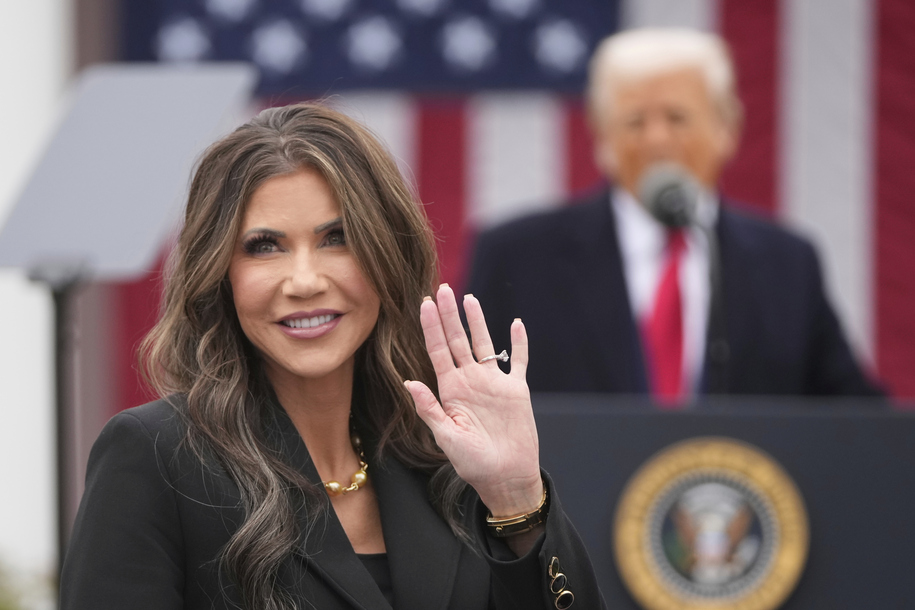
“There’s a deliberate kind of deception being practiced here that is really cynical and really dangerous,” a historian tells the 19th. Published by The 19th Last week, the official social media accounts of the Department of Homeland Security deviated from a series of action shots of Secretary Kristi Noem and various law enforcement officers to post a painting from the 19th century. “American Progress” portrays a floating White woman leading the charge for homesteaders and technological progress, herding buffalo and Native people off Western lands. View this post on Instagram A post shared by Dept. of Homeland Security (@dhsgov) The painting, completed in 1872 by John Gast, is on display at the Autry Museum of the American West, nestled in the hills of Los Angeles. Over the weekend, the museum hosted festivities for the National Day of the Cowboy and Cowgirl, during which Stephen Aron, the museum’s director, invited The 19th to visit and discuss what this painting represents about America, empire and White womanhood. The image of “American Progress” has been trending ever since it appeared across DHS’ social channels on July 23 with the caption: “A Heritage to be proud of, a Homeland worth Defending.” The painting is a deviation from the recent content on the official DHS Instagram page, which since Trump’s inauguration has become a collection of memes, vintage-inspired propaganda posters and highly produced hype videos of law enforcement officers. At the Autry, the small painting is part of an extensive salon tableau of wilderness canvases, depicting the American West as a fertile land to be conquered. People are secondary or absent in most works, with few exceptions. Next to “American Progress” is a large portrait of three White children and a dog, showing the type of life settlers were striving for in pursuit of manifest destiny. In real-life Los Angeles, where the Autry is located, the city has been ground zero for the Trump administration’s federal immigration agenda, which has focused on a particular version of “Homeland’s Heritage” — one about protecting White women and families. Founded in 1988 by Gene and Jackie Autry to share the heritage and legacy of the American West, the museum combines art, historical collections and cultural events. Central to its mission is bringing “together the stories of all peoples of the American West.” This is exemplified by the layout of the gallery where “American Progress” lives. Aron points out three massive Navajo chief blankets are displayed across the room as a different kind of landscape. In the middle of the room is an enormous sculpture, known as “Grounded,” by third-generation Santa Clara Pueblo artist Rose B. Simpson. “American Progress” was acquired after it was displayed as a part of a controversial 1991 exhibit at the Smithsonian Museum of Art that sought to reinterpret art of the American West with fresh context on conquest and colonization. Several lawmakers criticized the exhibit as overtly political, and threatened to defund the Washington, D.C., cultural institution in retaliation. Critics and patrons felt the exhibition unnecessarily villainized America’s history — a sharp contrast to the shining beam of progress depicted in Gast’s piece. It’s a reaction that is echoing through American politics today, as the Trump administration considers removing books about slavery from national parks, erasing factual information that “disparages” American history and renaming a warship honoring LGBTQ+ activist Harvey Milk. Trump’s executive orders seek to rollback mentions of gender, racial and ethnic diversity from the federal government. Related | Will Trump’s DEI cuts come for more iconic Black history? Experts at the Autry made clear that the capital-H “Heritage” celebrated in the DHS caption is a matryoshka doll of romanticization. The painting depicts three waves of “American Progress,” with a floating White woman bearing “the star of empire” ushering Indigenous people and animals out of the frame, leading the way for miners and homesteaders. It’s looking back on the 1840s through the eyes of post-Civil War America, when the West represented a way to stitch together the nation and provide a rebirth, Aron told The 19th. In order for White Americans to settle in the West, they had to unsettle a diverse group of Indigenous, Spanish and Mexican people. And the main symbol — and weapon — of settlement was the White family, said Virginia Scharff, distinguished professor emerita at the University of New Mexico and chair of Western history at the Autry. “The presence of White women is absolutely essential to the idea of permanent occupation of formerly Indigenous lands by the United States and the cementing of a legitimacy to occupy that land,” Scharff said. White men first headed west alone, to work on railroads or as miners, but they didn’t begin to occupy the land in a meaningful way on their own. Visitors walk by a statue of Gene Autry at the entrance to the Autry Museum in Los Angeles in Oct. 2016. And in Gast’s painting, White womanhood looms large — literally. Clad in classical white, the passive figure brings light westward; in contrast to the bare-breasted Indigenous woman, she embodies decency and civility. As this spectre of “progress” claimed new states in the mid-1800s, the rights of women diverged based on racial and ethnic background. “There were always women who existed there prior to Americans coming, who had different ideas of womanhood, different roles in their communities, that often became under attack when a new government was established,” said Carolyn Brucken, senior curator at the Autry, during a phone call. Mexican women had more rights than American women in the East, including the ability to own property, Brucken said. Native women, who participated in public councils across myriad tribal traditions, were removed from ancestral lands and different cultural ideals were forced upon them. At the same time, Gast’s floating, symbolic woman erases the very real contributions of women on the frontier. “You miss how much women were active agents of change in the West,” Brucken said. They fought for their rights and communities — Wyoming was the first state to legalize women’s suffrage in 1869. In contrast to the resurgence of traditional gender roles today, gender roles could be more fluid in frontier communities with limited resources, and women

Politics

Texas Democrats To Leave The State To Block Trump Gerrymander

PoliticusUSA is never bending the knee. Please support our work by becoming a subscriber. Subscribe now Dozens of Texas Democrats will be leaving the state to deny Republicans a quorum needed in the House to vote on the mid-decade gerrymandered map that is the brainchild of Donald Trump. Politico reported: Dozens of Texas Democrats plan to flee the state amid a special session Sunday afternoon, making a last-ditch effort to disrupt a mid-decade redistricting attempt forced by President Donald Trump, according to two people briefed on the matter. … “Breaking quorum is an extreme step.It should be a last resort,” State Rep. James Talarico told POLITICO in an interview last Tuesday. He was among the 50 Democratic lawmakers who fled the state in 2021 over an election bill. Democrats are said to be headed to Illinois, a blue state with a governor who has accused Texas Republicans of cheating by trying to finagle redistricting ahead of the 2026 elections. They are expected to touch down in Illinois on Sunday, setting off a standoff with Abbott in the high-stakes redistricting battle. Leaving the state is not a step that is done lightly. There is the potential for fines and arrest for members of the state legislature who flee. Gov. Pritzker in Illinois will protect the Democrats from anything that Greg Abbott and his party may try to do. Read more

Scroll to Top