Politics

Politics

These West Virginians love Trump and food stamps—but they can’t have both

McDowell County, West Virginia—the birthplace of the food-stamps program—is watching its safety net collapse due to President Donald Trump’s domestic policy law. In 1961, President John F. Kennedy sent his agriculture secretary to hand out food cards to a miner’s family in Welch, launching the pilot that would become the modern Supplemental Nutrition Assistance Program, or SNAP. Today, many of the county’s 17,000 residents rely on SNAP. More than half of the children are enrolled in the Children’s Health Insurance Program, and one-third of seniors depend on Medicaid. Now the Associated Press reports that new eligibility restrictions embedded in Trump’s new law will tighten access to SNAP, hitting counties like McDowell especially hard—places where a third of the population lives below the poverty line. Nonprofits that were already on the brink are laying off staff or burning through reserves just to stay afloat. As Rosemary Ketchum, the executive director of the West Virginia Nonprofit Association, told the AP, “These federal cuts are starving people.” Last year, Trump won 79% of the vote in McDowell County. Datawrapper Content West Virginia isn’t just one of the poorest states in the country—it’s also one of the reddest, and it’s the third-most dependent on federal support. It’s a genuine triumph of conservative culture-war politics that the people who most depend on government services are the ones voting for the party that destroys those services. These people are voting for their own demise, cheering the latest attack on a transgender kid while their food assistance vanishes. And because West Virginia relies so heavily on federal money, it’s absorbing the full weight of Trump’s policies. Coal jobs vanish, Medicaid shrinks, food programs dry up, disaster relief disappears—and yet MAGA devotion remains untouched. Republican governors in red states, proud of their rock-bottom tax rates, are now privately begging Trump not to cut the federal aid they can’t live without. In West Virginia, federal dollars make up nearly 50% of the state budget. But that doesn’t stop them from ranting about so-called socialism in California, New York, New Jersey, Massachusetts, and Washington—the very states subsidizing them. Coal miners wave signs as then-candidate Donald Trump speaks during a rally in Charleston, West Virginia, in May 2016. And yet we liberals never complained about that arrangement. We were happy to help the less fortunate—yes, including white people in dirt-poor Appalachia. And how did they repay that generosity? By voting for the guy who’s now gutting the very programs keeping them alive. West Virginia isn’t alone, of course. As I noted in my story on how red counties depend on the very government they hate, this is the national pattern. Us coastal elites have been subsidizing these salt-of-the-earth, bootstrap types for decades. And McDowell County may be the clearest example yet: The place is utterly reliant on federal dollars, and it’s now being crushed by the policies of lawmakers it helped elect. The people of McDowell County helped create SNAP. Now they’re likely to lose much of it—not because it failed, but because they voted for leaders who see federal programs as the enemy, not the solution. And those cuts aren’t theoretical. They’re meals skipped, hospitals closing, and seniors going hungry. Don’t worry—most people in McDowell will still find a way to blame Democrats like Joe Biden or Barack Obama for their misery. The MAGA cult is hard to escape, and West Virginia is all in. All we can do is shake our heads and marvel at this ongoing, breathtaking act of self-destruction.

Politics

Broken promise: How the Trump administration dismantled pathways to protection for Afghans

When the United States pulled troops out of Afghanistan and the Taliban took over, Ed went back to his home country to rescue his family. Ed had already lost his only brother as punishment for Ed’s work with the U.S., first as a translator and then enlisted directly in the U.S. Army, he said. He didn’t want anyone else to die. He and others interviewed for this article asked not to be fully identified to protect their safety and that of their family members. After about two years, he was finally able to get permission for his mother and several sisters to come to the U.S., he said. They left, believing that his other sister would soon follow with her husband and children. Last year, that sister and her family made it as far as Doha, Qatar, where the Biden administration staged Afghan refugees for processing under a special program called Enduring Welcome that was not widely publicized due to the safety risks. Related | Tortured by the Taliban, locked up in the US At the time the U.S. government was moving up to 5,000 Afghans per month through its satellite processing sites to the U.S., according to Jessica Bradley Rushing, a former State Department employee who worked in the office that resettled Afghans. When President Donald Trump took office in January, he quickly stopped the flights bringing Afghans to the U.S. An executive order shut down the refugee resettlement program and canceled travel for the Afghans who already had flights booked, including Ed’s sister. Her family was scheduled to fly to the U.S. on Jan. 27, Ed said. “We were concerned that if it were too publicly understood, that the Taliban would be a mitigating factor,” Bradley Rushing said. “At this point in time, the Taliban is not the obstacle. The obstacle is the Trump administration. I think that says a lot about where we are with this administration if the barrier to our allies is Trump, not the Taliban.” The State Department recently laid off staff in the office where she worked and is letting contracts expire with others, Bradley Rushing said. Ed’s sister is among roughly 1,500 Afghans who were promised new lives in the U.S. and are now waiting in limbo in Qatar, terrified of the possibility of being returned to Afghanistan, according to Bradley Rushing. Tens of thousands more had crossed the border into Pakistan and were awaiting processing at the U.S. consulate there, she said. It’s not clear how much longer the countries hosting them will allow them to stay. Afghan passengers board a U.S. Air Force C-17 Globemaster III during the Aug. 2021 Afghanistan evacuation at Hamid Karzai International Airport in Kabul, Afghanistan. According to #AfghanEvac, an advocacy organization that has helped Afghans who worked with the U.S. government flee their country, more than 50,000 Afghans are waiting in third countries to be resettled in the U.S., and more than 200,000 others had been identified inside Afghanistan as needing evacuation. Some Afghans have fled their country on their own and made it to the U.S. border. But the Trump administration’s changes to the asylum system have complicated their paths to protection as well. Others who were here already have had their protection stripped, as the administration recently ended temporary protected status for Afghans. Trump has also blocked U.S citizens and green card holders from sponsoring Afghan relatives’ visas with the latest travel ban. The collective result of these policies has left a countless number of Afghans separated from family, stranded in countries that might kick them out or stuck in the country they were trying to flee, hiding from the Taliban. When asked about the policy changes, the Department of Homeland Security sent a press release from when it announced the end of temporary protected status for Afghans. In the statement, Homeland Security Secretary Kristi Noem said that conditions in Afghanistan no longer merit protection. On Sunday, Trump posted on social media that “starting right now” he would “try to save” Afghans who worked with the U.S. military and are currently in the United Arab Emirates facing imminent deportation back to Afghanistan. He did not mention the other places where Afghans are waiting while facing the possibility of being returned to danger. The Department of Defense deferred to the State Department, which did not respond to a request for comment from Beyond the Border. Veterans Feel Betrayed Ed said that because of his service in the U.S. military, nobody in his family would be safe in Afghanistan. “There’s no way back for my sister and her husband,” Ed said. “We have a collective culture. We live collectively. We are punished collectively as well.” He said he felt betrayed that the country he served would leave his family behind. “Nothing makes sense,” Ed said. Mohammad, another former translator who went on to join the U.S. Army, said he felt similarly. He still has shrapnel in his body from a roadside bomb blast that killed a young Marine next to him, he said. A cyclist passes in front of the former U.S. embassy while a vendor waits for customers on June 5, in Kabul, Afghanistan. He was in Afghanistan working as an intelligence contractor when U.S. troops withdrew, he said. He managed to get out during the chaos at the airport, but his family members did not. His parents and siblings stayed on the move and in hiding for years until the U.S. government approved them for a flight to Qatar. Now they are in limbo, too. “It’s unbearable for someone like me, with my background and sensitivity of jobs and work that I have done, for my family to be sent back. It’s an absolute nightmare to be honest with you,” Mohammad said. “It’s horrifying.” He pointed out that it’s a violation of international and U.S. law to return refugees to a country where they will be persecuted. He said many of his family members need medical treatment that they aren’t receiving while at the temporary camp in Qatar. He said he talks with his

Politics

Democrats land top Senate recruit, buoying midterm hopes

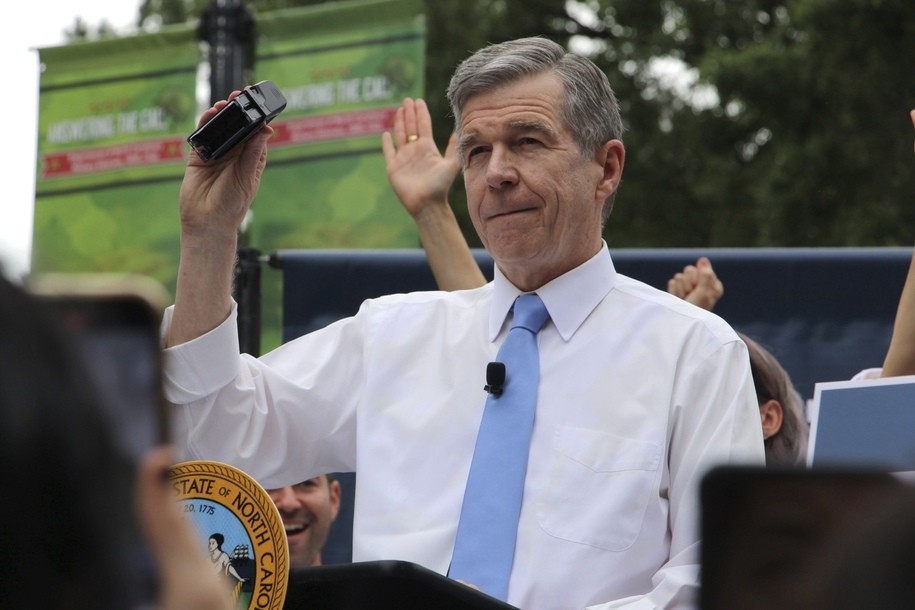
Former North Carolina Gov. Roy Cooper announced on Monday that he’s officially launching a bid for U.S. Senate in the Tar Heel State, landing Democrats a prized recruit and boosting the party’s chances of picking up a critical Senate seat. Cooper made the announcement in a two-and-a-half-minute-long video posted to X, in which he said he is running to help the middle class succeed, focusing on his successes as governor in expanding Medicaid coverage, raising teacher pay, and balancing the state budget. “Right now, our country is facing a moment as fragile as any I can remember, and the decisions we make in the next election will determine if we even have a middle class in America anymore,” Cooper said. “I never really wanted to go to Washington. I just wanted to serve the people of North Carolina right here where I’ve lived all my life. But these are not ordinary times. Politicians in D.C. are running up the debt, ripping away our health care, disrespecting our veterans, cutting help for the poor, and even putting Medicare and Social Security at risk just to give tax breaks to billionaires. That’s wrong and I’ve had enough.” North Carolina Sen. Thom Tillis’ departure will make way for Cooper to run. North Carolina’s Senate seat will be open in the 2026 midterms, after GOP Sen. Thom Tillis announced that he’s not seeking reelection because there is no room to defy President Donald Trump in the Republican Party. Tillis made that unexpected announcement on the day he voted against the “One Big, Beautiful Bill” that rips Medicaid and food stamps from the poor in order to give tax breaks that benefit the richest few.  That already boosted Democratic chances, as history shows that incumbency provides politicians a boost at the ballot box. “In the face of opposition from President Donald Trump, GOP Sen. Thom Tillis announced he will not seek re-election in 2026. The senator’s decision doesn’t change the overall Senate battleground, but it makes the seat more vulnerable to a Democratic takeover without an incumbent,” Inside Elections’ Nathan L. Gonzales wrote in a piece reassessing the competitiveness of the seat after Tillis’ announcement.  But Cooper is likely Democrats’ strongest recruit in North Carolina—a purple state that Trump carried by just over 3 points in 2024. Until January, Cooper had been a top statewide official in North Carolina since 2001—when he first took office as attorney general. He served in that role for 16 years, winning four statewide elections even as Republicans won at the presidential level in all but one of those years (2008, when former President Barack Obama romped his way to victory). In 2016, Cooper then ran for governor, defeating GOP incumbent Pat McCrory even as Trump won at the top of the ticket. Cooper then won reelection again in 2020, when Trump carried the state as well. Datawrapper Content In 2026, the political environment should be more favorable for Democrats—as the party in power traditionally loses ground. Cooper will likely have a glide path to the Democratic nomination. Former Rep. Wiley Nickel, who had been running in the Senate primary, dropped his bid when it became clear that Cooper was going to run. On the GOP side, Republican National Committee Chair Michael Whatley announced his bid last week. Trump endorsed Whatley in the race, likely giving him a clear shot to the GOP nomination as well. Trump’s daughter-in-law Lara Trump had been mulling a bid, but she announced on Thursday that she is not going to run, paving the way for Whatley’s announcement. Inside Elections rates the race a toss-up, saying it’s the best chance for a Democratic pick-up next fall.

Politics

Trump brags about new trade deal that will hike costs

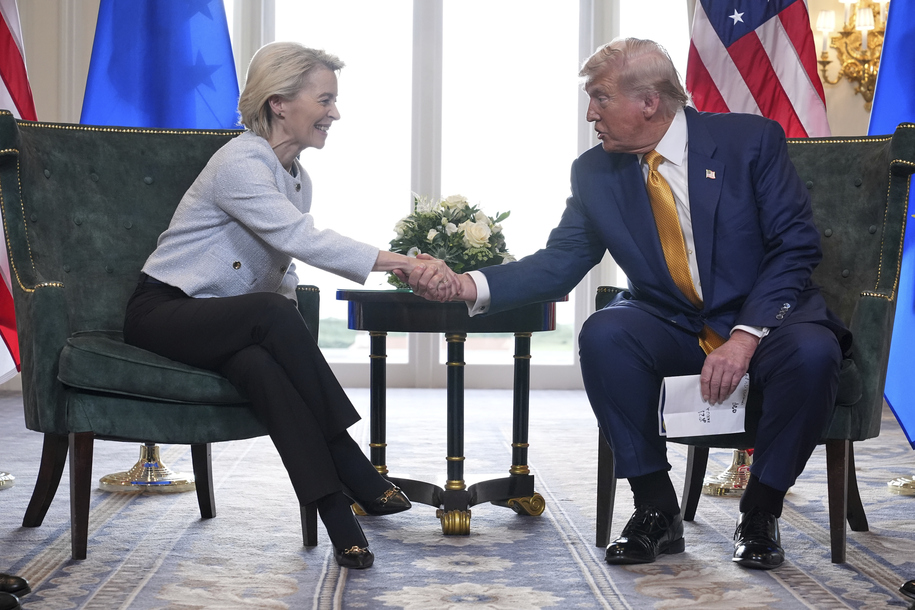
President Donald Trump on Sunday announced a major trade deal with the European Union, which he portrayed as a major policy win, but American families are likely to see significant cost increases as a result. Trump announced the deal after meeting with European Commission President Ursula von der Leyen. The agreement will impose a 15% tariff on most goods imported from European countries, which is below the 30% rate that Trump had previously threatened—but far more than the average 1.2% rate last year. “It’s a very powerful deal, it’s a very big deal, it’s the biggest of all the deals,” Trump said, attempting to spin the announcement as a victory for his unpopular administration. Tariff costs historically have been passed on to consumers, which is a concept that economic experts—and political leaders like former Vice President Kamala Harris—have warned about. Trump has disregarded these concerns and pursued economically harmful policies. A worker tends to a vineyard in the southern France region of Provence, in October 2019. The tariff deal is expected to increase the cost of French wine in the U.S. Joe Brusuelas, chief economist at accounting-firm network RSM, told CNN after the latest announcement, “You’re going to pay more for your European imports. That’s what this means.” “These trade deals are all underwhelming for one simple reason: While trade barriers were a big deal in Trump’s youth, they’ve been tiny for decades. When tariffs are 1-2%, there’s not much to gain from a trade war,” Justin Wolfers, a University of Michigan economics professor, wrote on social media. “But you can do a lot of harm by charging Americans a 15% (or higher) import tax.” Despite his victory proclamation, Trump failed to secure an agreement from the E.U. to eliminate value-added taxes and digital taxes. Trump’s approach to trade runs contrary to the economic improvements experienced under the Biden administration. The tariffs he has imposed and negotiated increase prices for American consumers. The agreements have also been slammed by major American-based industries, like auto manufacturers, for giving foreign competitors a leg up over U.S. companies. Trump is desperate for wins after the bulk of his campaign promises have failed to materialize. His “big” tariff deal is more of the same and not a victory.

Politics

How NASA Engineered Its Own Decline

In the beginning, there was the name. A prophet guided Errol Musk to bestow it on his eldest son, or so he claimed. The seer was Wernher von Braun, a German engineer and an inspiration for Stanley Kubrick’s Dr. Strangelove. Though von Braun had built missiles for Hitler and used concentration-camp prisoners for manual labor, the U.S. government recruited him, and eventually brought him to a base in Alabama and tasked him with sending men into orbit, then to the moon. Von Braun had always dreamed of venturing deeper into the galaxy. Back in 1949, before he emerged as the godfather of the American space program, he spilled his fantasies onto the page, in a novel titled Project Mars. He described how a new form of government would take hold on the red planet: a technocracy capable of the biggest and boldest things. At the helm of this Martian state would sit a supreme leader, known as the Elon. Whatever the truth of this origin story, Elon Musk has seized on von Braun’s prophecy as his destiny. Since the founding of SpaceX in 2002, his business decisions and political calculations have been made with a transcendent goal in mind: the moment when he carries the human species to a new homeland, a planet millions of miles away, where colonists will be insulated from the ravages of nuclear war, climate change, malevolent AI, and all the unforeseen disasters that will inevitably crush life on Earth. Far away from the old, broken planet, a libertarian utopia will flourish, under the beneficent sway of the Elon. This sense of destiny led Musk on October 5, 2024, to a Trump rally in western Pennsylvania. Wearing a gray T-shirt bearing the slogan OCCUPY MARS, Musk told the crowd that Trump “must win to preserve democracy in America.” Thanks to their alliance, Musk briefly achieved powers that few unelected Americans have ever possessed. As the head of the Department of Government Efficiency, he demolished large swaths of the federal government and began to remake the infrastructure of the state. For a few erratic months, he assumed the role of the terrestrial Elon. Five months into Trump’s second term, Musk’s inflated sense of his place in history clashed with the ego of his benefactor, the relationship ruptured, and each man threatened to ruin the other. Musk vowed that his spaceships would no longer carry Americans, or the supplies that sustain them, to the International Space Station. Trump threatened SpaceX’s federal contracts, reportedly worth $22 billion. Weeks later, they were still bludgeoning each other. In July, Trump mused that he might deport the South African–born Musk, who in turn impishly announced that he would bankroll a new third party. Both men are likely bluffing. Musk still needs the U.S. government to fund his grand designs. And the U.S. government very much needs Elon Musk. Last year, 95 percent of the rockets launched in the United States were launched by SpaceX. NASA was a mere passenger. Musk has crowded low Earth orbit with satellites (nearly 8,000) that are becoming indispensable to the military’s capacity to communicate and the government’s surveillance of hostile powers. Even if Trump had pushed to dislodge Musk, he couldn’t. No rival could readily replace the services his companies provide. [Read: American spaceflight is now in Elon Musk’s hands] That Musk has superseded NASA is a very American parable. A generation ago, NASA was the crown jewel of the U.S. government. It was created in 1958 to demonstrate the superiority of the American way of life, and it succeeded brilliantly. In the course of landing humans on the lunar surface, NASA became the symbol of America’s competence and swagger, of how it—alone among the nations of the Earth—inhabited the future. NASA’s astronauts were 20th-century cowboys, admired in corners of the world that usually abhorred Americans. The Apollo crews traveled to the heavens on behalf of “all mankind,” a phrase that appeared both in the act that created NASA and on the plaque left on the moon by Apollo 11. Even NASA’s engineers, with their skinny ties and rolled-up sleeves, became the stuff of Hollywood legend. The rocket pioneer Wernher von Braun. In his novel, Project Mars, he imagined humans traveling to the red planet. (Evening Standard / Getty) NASA was born at the height of liberalism’s faith in government, and its demise tracks the decline of that faith. As the United States lost confidence in its ability to accomplish great things, it turned to Musk as a potential savior, and ultimately surrendered to him. This isn’t an instance of crony capitalism, but a tale about well-meaning administrations, of both parties, pursuing grandiose ambitions without the vision, competence, or funding to realize them. If the highest goal of policy is efficiency, then all the money that the government has spent on SpaceX makes sense. Even the company’s most vituperative detractors acknowledge its engineering genius and applaud its success in driving down launch expenses (unlike many defense contractors, SpaceX largely eats the cost of its failures). But in the course of bolstering Musk, in privatizing a public good, the government has allowed one billionaire to hold excessive sway. With the flick of a switch, he now has the power to shut down constellations of satellites, to isolate a nation, to hobble the operations of an entire army. Because of Musk’s indispensability, his values have come to dominate America’s aspirations in space, draining the lyricism from the old NASA mission. Space was once a realm of cooperation, beyond commercial interests and military pursuits. Now it is the site of military brinkmanship and a source of raw materials that nations hope to plunder. The humanistic pursuit of the mysteries of the universe has been replaced by an obsession with rocket power. Musk wants to use his influence to impose the improbable endeavor of Mars colonization on the nation, enriching him as it depletes its own coffers. In the vacuum left by a nation’s faded ambitions, Musk’s delusions of destiny

Politics

Trump 2.0 makes history—and not in a good way

Survey Says is a weekly series rounding up the most important polling trends or data points you need to know about, plus a vibe check on a trend that’s driving politics. Trump in the tank Donald Trump is somehow only six months into his second presidency but if it feels like it’s torturously longer, you’re not alone. Americans are souring on him quickly. Gallup finds Trump with his lowest approval rating since retaking the White House in January. Just 37% of Americans approve of the way he’s handled his job as president. That’s down from a high of 47% in January, and it brings him very close to the numbers he exited the White House with in January 2021, when 34% approved of him. Independents are primarily the ones steering his approval rating south. Only 29% approve of the way he’s handling the presidency, down from 36% in June.  Republicans and Democrats largely haven’t changed their minds about him. Eighty-nine percent of Republicans approve of him, slightly lower than his high of 93% in February. Meanwhile, 2% of Democrats approve, which is down from a high of 6% in January. Datawrapper Content Altogether, Trump’s poor approval rating is historic. Literally. Among presidents who first took office after World War II, none have had a lower average approval rating in the second quarter of their second term, which, for Trump, spans April 20 to July 19 of this year. Dwight Eisenhower, Ronald Reagan, and Bill Clinton each enjoyed majority approval on average in the second quarter of their second terms. Barack Obama, George W. Bush, and Richard Nixon landed in the high-to-mid-40s. Trump, though? Just 40%. In fact, the only president who got a worse rating in his second quarter was … Trump, in his first term. In 2017, he scored just 39% approval on average in the second quarter of that term. Datawrapper Content The reason for this souring public sentiment appears to be his falling numbers across many key issues. Since February, he has fallen 8 percentage points on his handling of immigration, 6 points on foreign trade, 4 points on foreign affairs, and 4 points on the situation between Israelis and Palestinians. Since March, he’s slipped 8 points on his handling of the situation in Ukraine and a shocking 14 points on his approach to the federal budget. Most damning for him, though, is his grade on inflation. Data from YouGov finds Trump with his worst approval on that issue since retaking office in January. Only 1 in 3 Americans approves of his handling of inflation, while 61% disapprove, according to the latest polling. That makes for a net approval rating of -29 points. In January, he was +6 points on the issue. Datawrapper Content That finding is backed up by a new poll from the famed Marquette University Law School, which finds Trump 30 points underwater on handling inflation. Worse for him, inflation is the most important issue to Americans, with 1 in 3 flagging it as the top problem. Of course, there may be another problem that’s causing his approval to tumble … Epstein scandal gains even more steam Trump’s biggest unforced error yet might just be his administration’s bungled handling of the case files around convicted sex offender Jeffrey Epstein, one of Trump’s former pals. Americans are mad about the administration’s handling of the files, but a deluge of new polling shows they think they have a good idea of why the administration is being cagey. Fifty-three percent of Americans think the administration hasn’t released the files because Trump is named in them, according to YouGov. The firm also finds that 61% think Trump is named in the Epstein files. Both results were released on Thursday, the day after The Wall Street Journal reported that the Justice Department briefed Trump about his name appearing “multiple times” in the files. Datawrapper Content Both polls find that Republicans are not outright defending Trump, either. In both, around 1 in 3 Republicans answers “not sure” instead of responding “yes” or “no,” signaling discomfort with the issue. Which makes sense. The Republican base has long sought for the government to release its files on Epstein—and now it could harm their main guy? Talk about friendly fire. On July 17, commuters walk past a bus stop in London as activists put up a poster of Donald Trump and Jeffrey Epstein. The reason for that squeamishness? Well, 49% of Republicans think Trump had at least a little knowledge of Epstein’s crimes before any allegations became public, according to a July 18 poll from YouGov. Only 21% say he knew nothing. That said, it could also be that Democrats are more willing to jump on this scandal and assume they know more than they do. In all three of these polls, only 11-12% of Democrats answered “not sure,” and in all three, independents’ “not sure” figures were much more closely aligned with Republicans’. Either way, it’s notable that Republicans aren’t also assuming they know more and that Trump is clean in the scandal.  Something else to keep in mind: Despite two bombshell reports from The Wall Street Journal, one hitting on July 17 and the other this past Wednesday, the share of Americans who think Trump is involved in Epstein’s crimes is high—but largely unchanged since early June. Around 45% of Americans think Trump was involved. Datawrapper Content Maybe if the Justice Department ends up folding and releasing more files, that number will increase. And maybe, just maybe, that’s why we haven’t seen them. Is there a landfill in your backyard? Three months ago, Trump’s head of the Environmental Protection Agency, Lee Zeldin, visited a hazardous landfill near St. Louis, where an underground garbage fire burns toward an old cache of nuclear waste. After this, he moved to speed up cleanup. The Trump administration is weakening regulations around landfill emissions, even when those emissions contain toxic chemicals like benzene, which can cause leukemia and other cancers. So you might be wondering

Politics

Clips of the week: The Epstein files haunt Republicans

President Donald Trump and his legion of Republican bootlickers are running scared as millions of Americans, including many in their base, demand the government release its files on accused sex trafficker Jeffrey Epstein. Whether it’s Republicans faltering as they try to deflect questions about their apparent apathy toward an alleged network of sex criminals, or whether it’s Democrats taking the opportunity to press the GOP on their marble-mouthed responses, the Epstein scandal is not going away any time soon. And it’s all on video! Senate candidate shows Democrats how to run on Trump’s Epstein scandal YouTube Video Michigan state Sen. Mallory McMorrow is running for a Senate seat held by fellow Democrat Gary Peters, who is retiring. She recently dropped a video that demonstrates why she has outraised all other candidates in the Democratic primary so far. Watch GOP lawmaker get caught BS-ing about Jeffrey Epstein YouTube Video GOP Rep. Jason Smith of Missouri had all kinds of problems on CNN Tuesday. He struggled to explain why he was so willing to use his committee’s subpoena power as part of a Hunter Biden witch hunt—and yet thought it was beyond the pale to subpoena anyone in relation to Epstein.  Guess who’s reportedly named in the Epstein files YouTube Video Trump denied credible reports that he was told in May that his name appears multiple times in the trove of documents the Department of Justice possesses about Epstein—a bombshell revelation that sheds light into why Trump is likely so desperate to keep the files under wraps.  What the f-ck is the First Lady Melania Trump Opera House? YouTube Video What do Republicans do when they’re slacking off on the job? Suck up to Dear Leader, of course! During the markup of a recent funding bill, Republican Rep. Mike Simpson of Idaho proposed an amendment to rename the Kennedy Center’s Opera House the “First Lady Melania Trump Opera House.” Watch Mike Johnson try to show he’s totally not scared of the Epstein files YouTube Video House Speaker Mike Johnson seemed a tad bit anxious while defending his decision to block any votes related to the Epstein-files scandal before the chamber departed for its summer break.  Tulsi Gabbard embarrasses the hell out of herself over Epstein scandal YouTube Video National Intelligence Director Tulsi Gabbard is doing her part to deflect from the growing scrutiny over the Epstein files. After accusing former President Barack Obama of a “treasonous conspiracy” to undermine Trump during the 2016 presidential election, she refused to provide any real evidence. Watch this Democrat slam Trump team for ongoing Epstein cover-up YouTube Video House Minority Leader Hakeem Jeffries did a great job simplifying the abject hypocrisy of the Trump administration’s refusal to release the long-promised Epstein files. “Let’s be clear about the situation here: Jeffrey Epstein was a friend of Donald Trump,” he said. It’s been yet another chaotic week of Republican incompetence, and unfortunately, there are no signs they’ll learn from their mistakes anytime soon. For more video content, please check out Daily Kos on YouTube.

Politics

Republicans frantically try to change the subject from the Epstein files

Congressional Cowards is a weekly series highlighting the worst Donald Trump defenders on Capitol Hill, who refuse to criticize him—no matter how disgraceful or lawless his actions. It has been a week of transparent attempts at misdirection by GOP lawmakers, who are trying to appease Dear Leader Donald Trump by heeding his demand to distract the public from the Epstein files—a scandal his own administration created when they said the government doesn’t possess any files from the disgraced sex predator that incriminate powerful third parties. GOP leaders in the House have gone to great lengths to block the release of the Epstein files, which Trump’s name appears in as Trump and Jeffrey Epstein were close friends for many years. Other Republican lawmakers took Trump’s direction and are calling for former President Barack Obama to be investigated, after Trump and Director of National Intelligence Tulsi Gabbard made up a bullshit accusation that Obama committed “treason” in the 2016 election when it was said Russia meddled in that contest. Other rank-and-file Republicans even came to Trump’s defense, saying that the Epstein files are no big deal and the public should simply move on.  This is particularly curious as Trump’s own MAGA influencers had built the files up for years as a ticking time bomb that would take down the elites who palled around with Epstein. Let’s take a look at this week’s cowards, shall we? First there’s House Speaker Mike Johnson, who sought to beat back bipartisan legislation that would compel the Trump administration to release the Epstein files by crafting his own toothless resolution. That bill says the Trump administration should release the Epstein files, but would carry no legal weight to actually compel the documents into public view. House Speaker Mike Johnson But Johnson then refused to put that legislation up for a vote, saying he would wait until after the House returned from a five-week-long August recess to allow the Trump administration time to interview convicted Epstein associate Ghislaine Maxwell to see if she had any incriminating evidence to share. (Of course, Maxwell has a lot to gain by telling Trump what he wants to hear, as she is serving 20 years in federal prison and could be released if Trump pardoned her or commuted her sentence.)  Some Republicans defended that ridiculous legislation, with Rep. Chip Roy (R-TX) writing in a post on X: “A bill passed by the House is not ‘binding’ if it has zero chance of being signed by the President even if passed by both houses. Meanwhile—a strong Congressional statement of transparency asked of an administration similarly seeking transparency is what Americans seek.” But then, when Johnson got wind that Democrats would force Republicans on the Rules Committee—a powerful committee that tees up bills for votes on the House floor—to vote on Epstein-related amendments, he shut down the House and sent members home early. “No one in Congress is blocking Epstein documents,” Johnson said at a news conference on Capitol Hill, even though he was absolutely running defense to ensure Trump wouldn’t have to release the files. “No one in Congress is doing that. What we are doing here, Republicans, are preventing Democrats from making a mockery of the rules committee process because we refuse to engage in their political charade.” Other GOP leaders also tried to deflect criticism for Trump not releasing the documents. “At the end of the day, look, Democrats are yelling and screaming,” House Majority Leader Steve Scalise whined to Politico. “They spent four years covering up for Epstein, and you know, at least President Trump’s in the courts right now trying to get documents released, and I really think you’re gonna see, hopefully, a lot unsealed from that and then we’ve got some other options.” House Minority Whip Steve Scalise House Majority Whip Tom Emmer went a step further, calling the Epstein scandal a “non-issue,” even though polling shows Americans think Trump is hiding something by not releasing the documents. Then, there are the other GOP lawmakers who said everyone needs to just move on. “We got a lot more important things to do for the American people than what happened eight, ten, twenty years ago… we need to move on,” Florida Republican Rep. Carlos Gimenez said. But Gimenez went on to say just seconds later in the same interview that the government needs to look into former President Barack Obama’s role in the government’s probe into Russia’s interference in the 2016 election. Trump had encouraged Republicans this week to push this new fake conspiracy that his administration cooked up to distract from the Epstein files scandal. “We need to look at exactly what happened back in 2016,” Gimenez said, without realizing the irony of his statement. Other GOP lawmakers also pushed the fake scandal. “I also completely agree with President Trump, the major story should be what Director of National Intelligence Tulsi Gabbard released,” Sen. Ron Johnson (R-WI) said in a television appearance, after playing dumb about the Epstein files. YouTube Video And Sens. John Cornyn of Texas and Lindsey Graham of South Carolina called on Attorney General Pam Bondi to appoint a special counsel to look into Obama’s role in the Russia probe. Of course, there already was a special counsel named John Durham, whose probe found nothing about Obama—or anyone really.  Ultimately, Republicans are a bunch of cowards who will go to great lengths not only to appease Trump, but in this case to also protect a pedophile like Epstein. Shameful.

Scroll to Top