Politics

Politics

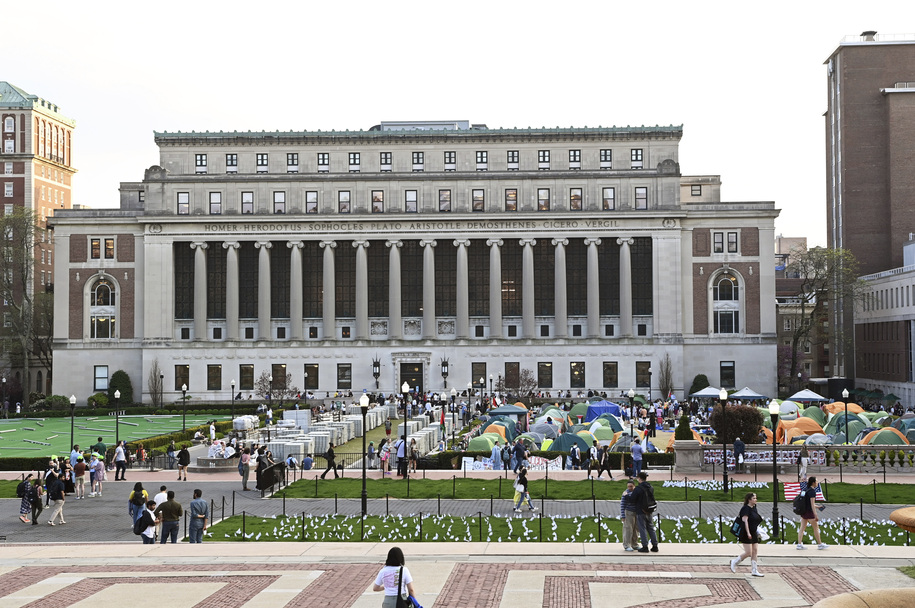
Columbia caves to Trump, setting dangerous precedent for higher ed

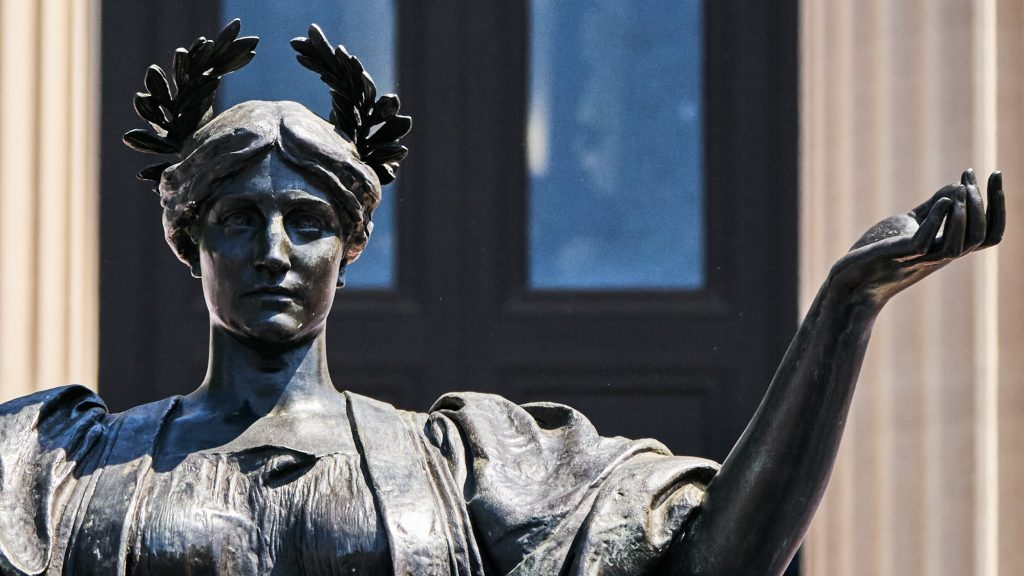
Columbia University has reached a sweeping agreement with President Donald Trump’s administration, ending months of political and financial warfare that turned the Ivy League school into a high-profile test case for Trump’s authoritarian crackdown on higher education. The university will pay $200 million over three years to settle federal claims tied to alleged discriminatory practices, plus another $21 million to resolve Equal Employment Opportunity Commission investigations. In return, the federal government will reinstate most of the $400 million in research funding it froze earlier this year and restore Columbia’s access to billions in future grants. The deal also brings external oversight and forces Columbia to adopt Trump-backed policy changes, including a controversial federal definition of antisemitism that will now guide teaching and disciplinary reviews. Related | Here is the latest way the Trump administration is attacking colleges The administration accused Columbia of failing to protect Jewish students and faculty following the October 7, 2023, Hamas attack on Israel and said the school had become a hostile environment. Columbia did not admit wrongdoing but agreed to reforms. Acting university President Claire Shipman said the agreement ends a period of sustained federal scrutiny and institutional uncertainty. She acknowledged the $221 million settlement was a substantial cost but said the university risked losing top scientists and its global research standing if restrictions continued. “I recognize these are substantial settlements. [But] we had to look at all the facts,” she said. “We have seen not only $400 million in federal grants frozen, but also the majority of our $1.3 billion a year in federal funding placed on hold. The prospect of that continuing indefinitely, along with the potential loss of top scientists, would jeopardize our status as a world-leading research institution.” Trump saw the deal as a win. On Truth Social, he claimed Columbia had agreed to end what he called “ridiculous DEI policies” and admit students based only on merit. He warned that other universities that had been unfair or misused federal dollars were next on his hit-list. Education Secretary Linda McMahon called the Columbia settlement a road map for other elite schools and a seismic shift in the nation’s efforts to hold them accountable. Columbia’s agreement follows months of behind-the-scenes negotiations in which the university took a less confrontational approach than Harvard University and signaled openness to some administration demands. The White House responded in kind, agreeing to reinstate most of Columbia’s grants. But Trump has suggested this won’t end his threats against higher education. He told CNN earlier this month that his administration could settle with Harvard next, but said there’s no rush. He added that either deal would involve “a lot of money.” The outcome at Columbia is likely to carry weight. For universities resisting federal pressure, the message is clear: Columbia backed down and got its money back—but only after making serious concessions. That could weaken Harvard’s hand in court and increase pressure on any school that dares to challenge Trump’s agenda The administration has made clear this is about more than one campus. Elite universities have been told to rein in supposed antisemitism and dismantle DEI efforts or risk losing access to federal funds. Columbia was among the first targets of Trump’s crackdown on pro-Palestinian campus protests and what he claims is rising antisemitism in academia. Columbia’s own antisemitism task force concluded last summer that during the spring 2024 demonstrations, some Jewish students were subjected to verbal harassment, social exclusion, and demeaning treatment in academic settings At the same time, other Jewish students were active participants in the protests. Organizers have repeatedly insisted their criticism was aimed at the Israeli government and its war in Gaza—not at Jewish individuals or communities. Since coming under federal fire, Columbia has cycled through three interim presidents and declared that the campus climate must change. But critics argue the federal response has gone far beyond ensuring safety. By forcing schools to adopt new definitions of antisemitism and crack down on political speech, the Trump administration is redrawing the boundaries of campus expression—and raising alarms about free speech and academic freedom. Columbia’s decision echoes a similar move by the University of Pennsylvania, which earlier this month quietly stripped a transgender athlete of her records following demands from the administration. The message from the White House is clear: Institutions that want to keep their federal funding must fall in line. Their capitulation spells trouble for Harvard—and really any other university. It doesn’t take much for Republicans to accuse schools of antisemitism or anti-Republican bias. Columbia may have gotten its money back—but only by bending hard. Other universities might not get off so easily.
Politics

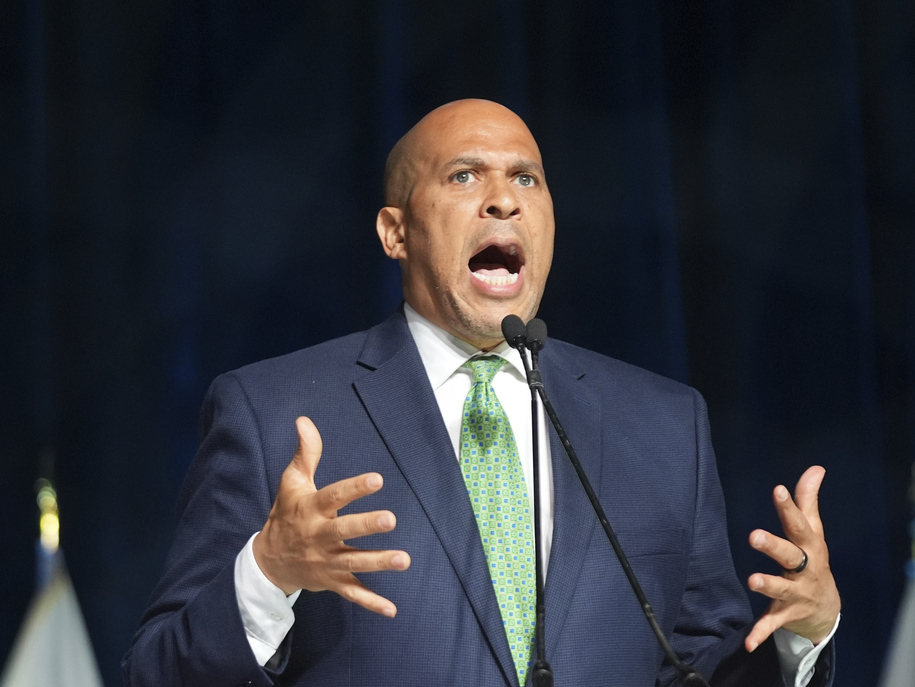
‘What are you afraid of?’: Booker slams Senate GOP over Epstein cover-up

Democratic Sen. Cory Booker of New Jersey criticized Senate Republicans on Thursday as they worked to block his amendment to create government transparency on the Jeffrey Epstein case. Booker introduced his amendment while the Senate Judiciary Committee discussed a bill relating to opioid overdoses. In response, Republican Sen. John Cornyn of Texas, introduced a measure seeking to nullify Booker’s request. And Booker noted that requests for transparency on Epstein have come from both Republicans and Democrats “We want transparency and accountability on a matter of public safety. Sen. Cornyn said that Jeffrey Epstein is dead. But his victims are not,” Booker said. “There are women who have horrific stories of vile violence that was committed against them.” Booker also noted that Attorney General Pam Bondi previously said there were “truckloads” of evidence about possible co-conspirators and others involved. Slamming Cornyn’s amendment, Booker concluded, “The real effort was just to not have accountability and transparency—what are you afraid of?” YouTube Video Ultimately, the committee, led by Republican Chuck Grassley, rejected Booker’s amendment and sided with Cornyn. The move echoes ongoing efforts by House Republicans to block legislation from Democrats pushing for openness on the Epstein case and the release of related files, including a rumored client list. The Senate confrontation occurred the same week that House Speaker Mike Johnson chose to shut down his chamber’s legislative activity rather than face additional votes on Epstein-related issues. Republicans have stuck to their guns in obstructing Epstein inquiries, even after the Wall Street Journal reported that Bondi told Trump in May that his name was included multiple times in Epstein files. Epstein was convicted in 2008 of soliciting a minor for sex and was charged with sex trafficking minors before his death in federal custody in 2019. Attempting to blunt fallout from the Trump administration’s reluctance to release information on the Epstein case, Trump and his team—led by National Intelligence Director Tulsi Gabbard—have sought to divert attention to an absurd election-related conspiracy theory involving former President Barack Obama. And the administration is getting an assist from Fox News, which has downplayed the story—even when news was broken by another outlet in owner Rupert Murdoch’s media empire.

Politics

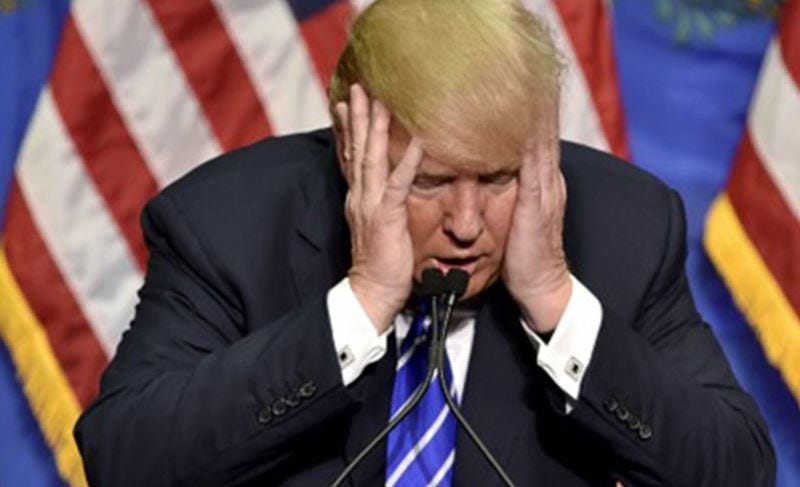
Trump’s Presidency Is Unraveling As His Approval Rating Crashes To New Low

PoliticusUSA is news that speaks truth to power, so please help amplify our voice by becoming a subscriber. Subscribe now Donald Trump was a bad president the first time he was in office, which is what made it stunning to many that he was able to get reelected. However, Trump’s second victory is more attributable to the decline in support for Democrats than any spike in popularity for Trump. Since taking office, Trump has delivered a steady stream of broken promises and unpopular policies while ignoring what the majority of Americans want. In this context, the latest poll from Gallup fits the direction that the country is moving toward: President Donald Trump’s job approval rating has dipped to 37%, the lowest of this term and just slightly higher than his all-time worst rating of 34% at the end of his first term. Trump’s rating has fallen 10 percentage points among U.S. adults since he began his second term in January, including a 17-point decline among independents, to 29%, matching his lowest rating with that group in either of his terms. … Trump’s ratings for handling each of eight separate foreign and domestic issues are also generally poor. He earns the highest marks for his handling of the situation with Iran (42%) and foreign affairs (41%). Approval is slightly lower for his job on immigration (38%), the economy (37%), the situation in the Middle East between the Israelis and Palestinians (36%), and foreign trade (36%). Americans’ ratings of Trump’s handling of the situation in Ukraine (33%) and the federal budget (29%) are even lower. The reason why Trump is so desperate to gerrymander Texas to find more Republican House seats is that poll numbers that are this bad signal a potential bloodbath for the incumbent party in the midterm election. The One Big Beautiful Bill has made Trump and his party’s situation worse, not better. Trump has fallen into the thirties on immigration and trade. There isn’t a single issue where Donald Trump has a positive approval rating. Trump is shaping up to be one of the least popular and failed presidents in history, and the worst part for Republicans is that I don’t think Trump has bottomed out yet. I think he has more support he could lose. Republicans gleefully boarded a second version of the Titanic and yet are still surprised that an even more flawed political boat hit an iceberg in less time. What do you think about Trump’s new terrible numbers? Share your thoughts in the comments below. Leave a comment

Politics

Columbia Protected Its Funding and Sacrificed Its Freedom

Exhausted and demoralized, Columbia University agreed last night to pay the Trump administration $221 million in exchange for peace. By early next week, it will deposit the first of three installments into the U.S. Treasury, as part of a settlement that ends the government’s investigations into the school’s failure to protect Jewish students from discrimination. By paying tribute to the administration—and making other concessions aimed at shifting its campus culture ideologically—Columbia hopes to ensure that research grants will begin to flow again, and that the threat of deep cuts will be lifted. In the context of the administration’s assault on American higher education, Columbia will feel as if it has dodged the worst. A large swath of the university community, including trustees who yearned for reform of their broken institution, may even be quietly grateful: When past presidents attempted to take even minor steps to address the problem of campus anti-Semitism, they faced resistance from faculty and obstreperous administrators. Ongoing federal monitoring of Columbia’s civil-rights compliance, arguably the most significant component of the deal, will almost certainly compel the university to act more decisively in response to claims of anti-Jewish bias. [Franklin Foer: Columbia University’s anti-Semitism problem] Columbia’s decision to settle is understandable, but it’s also evidence of how badly the Trump era has numbed the conscience of the American elite. To protect its funding, Columbia sacrificed its freedom. The settlement is contingent on Columbia following through on a series of promises that it made in March, when the Trump administration revoked $400 million in grants. The university agreed to install a vice provost to review academic programs focused on the Middle East to ensure they are “balanced.” It also pledged to hire new faculty for the Institute for Israel and Jewish Studies. As it happens, I agree: Many of Columbia’s programs espouse an unabashedly partisan view of the Israel-Palestine conflict, and more faculty at the Institute for Israel and Jewish Studies would be a welcome development. The fields that will receive scrutiny have professors with documented records of bigotry. Columbia has long nurtured a coterie of activist academics who regard Israel’s very existence as a moral offense. Some have been accused of belittling students who challenged their views—and their example helped shape the culture of the institution. In time, students mimicked their teachers, ostracizing classmates who identified as Zionists or who simply happened to be born in Israel. After October 7, 2023, life on campus became unbearable for a meaningful number of Jewish students. [Rose Horowitch: Anti-Semitism gets the DEI treatment] But in the government’s ideological intervention into campus culture, a precedent has been set: What Secretary of Education Linda McMahon calls “a roadmap for elite universities” is a threat to the free exchange of ideas on campuses across the country, and abuse of that map is painfully easy to contemplate. In part, many people at Columbia have shrugged at the settlement’s troubling provisions regulating the ideological composition of academic departments because the university already announced those steps in the spring. But it’s chilling to see them enshrined in a court document—signed by the university’s acting president, Claire Shipman, along with Attorney General Pam Bondi and two other Cabinet secretaries. The university’s deal with the Trump administration “was carefully crafted to protect the values that define us,” Shipman said in a statement. The settlement contains a line meant to allay critics who worry about the loss of academic freedom: “No provision of this Agreement, individually or taken together, shall be construed as giving the United States authority to dictate faculty hiring, university admissions decisions, or the content of academic speech.” If the government doesn’t like whom Columbia hires, it can raise its concerns with a mutually agreed-upon “monitor” named Bart Schwartz, a former prosecutor who worked under Rudy Giuliani during his tenure as U.S. attorney for the Southern District of New York, who will ostensibly render a neutral verdict. Schwartz’s ruling, however, won’t be binding. And if the government remains dissatisfied with Columbia’s conduct, it reserves the right to open a new investigation. But Shipman’s protestations of independence ring hollow. The university has already agreed, under duress, to alter the ideological contours of its faculty. And even if I happen to support those particular changes, I can’t ignore the principle they establish. The tactics now being used to achieve outcomes I favor can just as easily be turned toward results I find abhorrent. That’s the nature of the American culture war. One side unearths a novel tactic; the other side applies it as retribution. The Trump administration is likely to take the Columbia template and press it more aggressively upon other schools. It will transpose this victory into other contexts, using it to pursue broader purges of its perceived enemies. There’s no need to speculate about hidden motives: Both Donald Trump and Vice President J. D. Vance have been explicit about their desire to diminish the power and prestige of the American university, to strip it of its ability to inculcate ideas they find abhorrent. They are trying to tame a profession they regard as a cultural adversary. “This is a monumental victory for conservatives who wanted to do things on these elite campuses for a long time because we had such far-left-leaning professors,” McMahon told Fox Business. Universities are desperately in need of reform. The paucity of intellectual pluralism in the academy undermines the integrity of the pursuit of knowledge. Failure of university trustees and presidents to make these changes on their own terms has invited government intervention. But the government has a new toehold in faculty rooms, not just at Columbia but at every private university in the country.

Politics

A New Kind of Family Separation

Subscribe here: Apple Podcasts | Spotify | YouTube | Overcast | Pocket Casts In the Trump administration’s recent round of immigration crackdown, the American public hasn’t seen the same terrible images of migrant children at the border being snatched from their mother’s arms, as they did during his first administration. But that’s because family separation has morphed into something less visible and possibly harder to track. In President Donald Trump’s second term, his administration has focused on dismantling a system specifically constructed to protect minors from the harsher aspects of immigration enforcement. The system was built in response to reports of children dying in the custody of ICE. It diverts minors away from immigration enforcement, and toward a system focused on their safety and run through the Department of Health and Human Services. Congress provided funding, among other things, for lawyers to help minors move through asylum courts. But anti-immigration Trump officials for years have complained about this separate track, and now they are innovating many bureaucratic and legalistic ways to break down those protections. Officials have kept minors in detention for longer periods, floated the idea of charging people who are applying for asylum, and they have made it harder for family members to claim minors. In this episode, we visit two vulnerable minors who were just 5 and 2 years old when they crossed the border after escaping gang violence in Central America. The following is a transcript of the episode: Hanna Rosin: Usually when a kid encounters a Lego set, they know what to do. Put the driver in the race car, the flamingo in the pond, the astronaut in the spaceship. But the Lego set this kid is playing with, it’s not so obvious what it is, or who goes where. Boy: Pelón. Ahora es muy pelón. Rosin: It features a lot of random characters—chef, painter, a robot, a knight. Boy: Es el caballero. Caballero que defiende mi castillo. Rosin: The kid picks up the knight, turns him over, pops off the helmet. Kevin Townsend: Muy pelón. Boy: Muy pelón. Rosin: Muy pelón. “Very bald.” He shows the pirate to our producer, Kevin. Townsend: Pirata también muy pelón. Boy: Pirata muy pelón. Rosin: Also bald. He sticks the pirate behind one of the desks—that’s where the lawyers would sit. He tries the knight at the witness stand and the robot on one seat that’s higher than all the rest—that is where the judge would sit. Asiyah Sarwari: It’s really cute, but this is exactly what an immigration court will look like. So this stenographer would be there, and that’s where they have to go and talk. And so that’s where the judge comes from. Rosin: This is Asiyah Sarwari, managing attorney at the Atlanta office of the International Rescue Committee, or IRC. She and her staff built this Lego court as a makeshift solution to an impossible problem: How do you explain to a 6-year-old what immigration court is? Sarwari: I mean, immigration court is frightening for everybody across the board, adults and kids, but this is a way for the kids to understand that this is a time for them to be able to tell their story and also to just give them some comfort. It really calms the kids down because when they go to court, then they’re like, Oh, okay, this is where the judge sits. This is where I sit, sort of thing. Boy: Pirata muy pelón. Yo soy rey. Son— [Sounds of Lego pieces falling on ground] Boy: Ay! Rosin: I’m Hanna Rosin. This is Radio Atlantic. Today, Trump’s immigration policy meets a 6-year-old boy. Many of you listening might remember the phrase family separation, from Trump’s first term. Images of babies being torn from their mothers’ arms. Hysterical parents. Children in what looked like cages. [Sounds of children crying] Rosin: We haven’t seen a spectacle like that yet, mainly because there aren’t as many families crossing at the border. But that doesn’t mean things are any better for unaccompanied minors. This time around, the Trump administration is going after special protections for these kids, protections that have been carved out over the last decade. Nick Miroff: The United States government, you know, by and large, takes care of children and affords them a special treatment regardless of how they enter the country, even if they enter illegally. Rosin: That’s Nick Miroff, an Atlantic staff writer who covers immigration. Miroff: There was no need for them to try to evade capture by the U.S. Border Patrol. As minors, they could simply cross over and seek out the first Border Patrol agent they could find, turn themselves in, and knowingly be treated differently than other illegal border crossers. Because there have been some very horrible cases of deaths of children in U.S. Border Patrol custody, Border Patrol agents—who are effectively border cops—know that they have to be careful and handle these children with sensitivity, and they generally do. [Music] Rosin: The way the system is currently set up: Children who cross the border without a parent find their way to a Border Patrol agent, who then quickly turns them over to another agency, called the Office of Refugee Resettlement, or ORR. ORR tries to place them quickly with a sponsor, who’s typically a relative. ORR is part of Health and Human Services, the idea being to keep minors out of the ICE system. Or that was the idea, before the Trump administration. Miroff: They have, for the longest time, wanted to kind of break down that firewall between ICE—Immigration and Customs Enforcement—which is looking to arrest and deport immigrants who are here illegally, and Health and Human Services, whose mandate is to take good care of these kids, make sure nothing happens to them, get them to sponsors safely. You know, it’s a pivot toward an all-out, kind of enforcement-only-oriented model whose goal is to, you know, carry out the president’s mass-deportation campaign and, really, to break up the model that

Politics

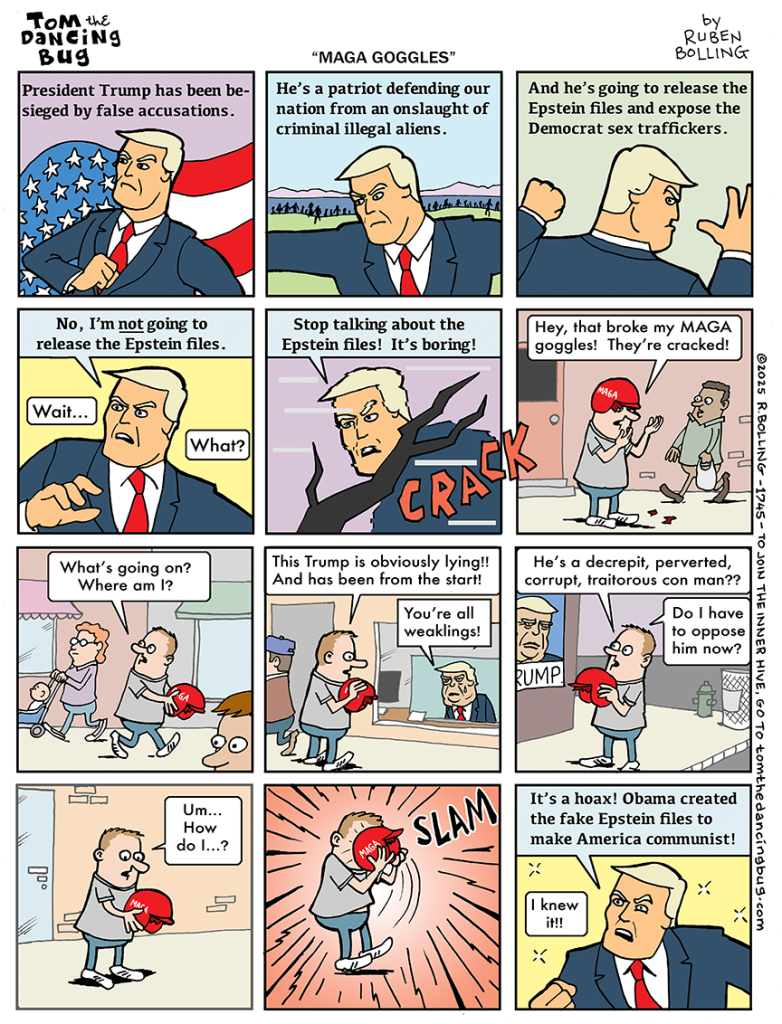
Cartoon: Tom the Dancing Bug looks through the MAGA goggles

Coming this year: Volumes 1 and 2 of The Complete Tom the Dancing Bug! “Tom the Dancing Bug: Secret Origins” and “Sex, Tom the Dancing Bug, & Rock ‘n’ Roll”! Sign up now to be informed when the Kickstarter launches later this summer! Support your friendly neighborhood independent comic strip: SIGN UP FOR THE INNER HIVE and you’ll get each week’s Tom the Dancing Bug comic at least a day before publication. Plus other exclusive content like extra comics, commentary, juicy gossip, puzzles, jokes, and Otis pics. Please do join the team that makes it possible for Tom the Dancing Bug to exist. Sign up for the free weekly Tom the Dancing Bug Review! Not nearly as good as joining the Inner Hive, but it’s free! Follow @RubenBolling on Bluesky and/or Mastodon and/or Threads and/or Facebook and/or Instagram and/or Reddit. Related | What will happen to Trump when his MAGA weirdos bail?

Politics

The worst person you know just filed the worst abortion lawsuit in Texas

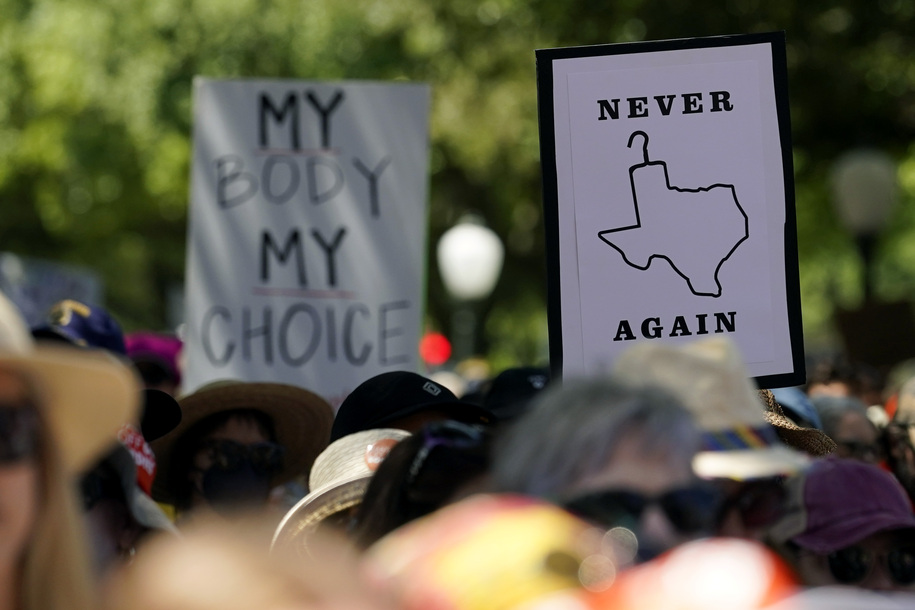
Anti-abortion Texas lawyer Jonathan Mitchell is at it again. This time, he’s representing Jerry Rodriguez, a Texas man who is suing a California doctor for allegedly mailing abortion medication to his girlfriend.  But as usual with Mitchell, there’s much more here than just the travails of Rodriguez.  First, the lawsuit is teeing up an attack on abortion pill manufacturers and distributors. Second, it’s an attempt to get a court to rule that the Comstock Act, an 1873 law that criminalized the mailing of “obscene materials,” should apply to abortion pills to prevent the mailing of them, even in states where abortion is legal.  The complaint is, in a word, gross. It’s littered with references to how Dr. Remy Coeytaux “murdered his unborn child” and how his girlfriend, Kendal Garza, “killed Mr. Rodriguez’s unborn son with abortion pills that were illegally obtained.”  Three members of the Women’s March group protest in Texas in support of abortion medication in March 2023. It’s a veritable cavalcade of statements about ownership. His unborn son, his murdered child. Mine, mine, mine.  Never one to miss an opportunity to swing for the fences, Mitchell doesn’t just say that Coeytaux is on the hook for wrongful death. The manufacturers and distributors of the abortion pills allegedly taken by Garza are also liable. Per Mitchell, that liability comes from the Comstock Act, which the complaint says “imposes federal criminal liability on anyone who knowingly sends or receives abortion pills through the mail or by using any express company, common carrier, or interactive computer service.” Except it doesn’t.  Though conservatives are incredibly eager to use the Comstock Act to decimate abortion rights, even in pro-choice states, no court has successfully ruled that it applies to abortion pills. Hardcore right-wing Judge Matthew Kacsmaryk did rule that the Comstock Act bans the mailing of abortion pills, but when the case made its way to the Supreme Court, he was overruled. Mitchell’s complaint treats his allegation as settled law. This isn’t a legal argument; it’s a polemic.  Related | Texas wants to force red-state abortion bans into blue states Mitchell wants an injunction to bar Coeytaux from sending abortion pills to Texas. That’s fairly normal—if horrible—given that Texas does have a very robust set of anti-abortion laws, in large part thanks to Mitchell. But then it gets much weirder and much worse.  Not content to only seek relief for Rodriguez, Mitchell wants the court to certify a class, which would allow him to pursue a class action lawsuit. Who would be in the class? Literally every man. No, seriously. The proposed class is “all current and future fathers of unborn children in the United States.” But in theory, an injunction and class action in this case would only apply to Coeytaux.  However, Mitchell states in the complaint that he plans to add the manufacturers and distributors as defendants once he identifies them. Those companies are definitely not in Texas, and they are definitely not bound by Texas’ rabid anti-abortion laws. At best, they could be barred from sending pills into the state, but that’s not what Mitchell is proposing here.  An abortion rights activist holds a box of mifepristone pills during a rally at the Supreme Court in March 2024. Mitchell’s proposed injunction is that anyone who distributes abortion medication is violating the Comstock Act. And since Mitchell’s proposed class includes every man, they would be able to invoke the Comstock Act to block anyone from obtaining abortion pills, even where it’s legal.  In normal times, this sort of case would quickly be dismissed. But we do not live in normal times, and we do not have normal judges. Mitchell filed this case in the Galveston Division of the Southern District of Texas, where there is only one judge.  So Mitchell knew that he would draw Trump-appointed Judge Jeff Brown, who has a record of being actively hostile toward abortion rights, including opposing Roe v. Wade and serving on an advisory board for an anti-choice organization in Texas. It’s not quite as blatant as the GOP judge shopping efforts to get cases in front of Kacsmaryk, but it’s still bad.  This is literally Mitchell’s life’s work. He was the architect of the Texas law that allows anyone to sue anyone they allege aided or abetted an abortion. He keeps trying to depose abortion funds and researchers, and in 2024, he filed petitions targeting individual women for traveling out of state to get abortions. He also handled the case of a Texas man who sued his ex-wife’s friends, alleging they helped facilitate her abortion. Mitchell’s arguments here are nonsense, but that doesn’t matter when the courts are stuffed with conservatives eager to ban abortion. He’ll never stop trying to find new, innovative ways to deprive people of their right to choose.  What a way to live. 

Politics

DOJ peppers state election officials with data requests to enforce Trump directives

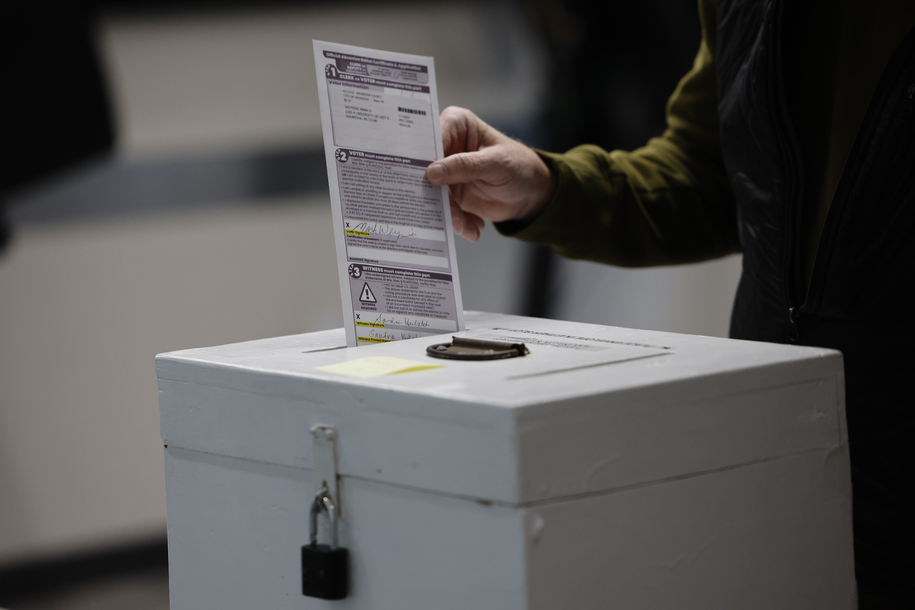
The agency has sent a flurry of letters seeking access to voter rolls and details on registration procedures. Some experts warn of federal overreach. By Carter Walker and Jen Fifield for ProPublica The U.S. Department of Justice has unnerved some state election officials by issuing sweeping requests for information that it says is pertinent to enforcing federal election laws and investigating voting crimes, which President Donald Trump has identified as priorities. In letters sent to at least a dozen states over the past two months, according to documents obtained by Votebeat and reported elsewhere, the department asked for varied sets of data and records, including voter rolls, information on potential election and voting crimes, data from past elections, and details about procedures for maintaining voter lists and checking voters’ eligibility. State officials say privately that they have been struck by the scope of the requests and uncertainty around what the administration plans to do with the information, and have been talking to one another about them. Many of these officials have faced years of near-constant scrutiny as Trump and his allies have repeatedly made unsubstantiated claims of election malfeasance, and the president has tried to use his influence and official authority to rewrite the history of his 2020 election loss. While the requests so far are mostly for data or procedures that are public information or accessible by law to the Justice Department, election law experts said, some of them were more questionable. Related | Trump launches new ‘lawless’ attack on voting rights Bryan Sells, a voting rights lawyer who worked at the Justice Department during the Obama administration, said federal law has long given the department the right to access some state data related to voter registrations, and it’s not uncommon or improper for it to use that power. “But I think the question I had after reading these emails is whether what they’re really looking for goes beyond what Congress allowed for,” he said. For example, the Justice Department sent Michigan and Arizona officials emails asking for information on “individuals who have registered to vote or have voted in your state despite being ineligible to vote.” That request arguably falls within the department’s purview, Sells said. But a request for information on people “who may otherwise have engaged in unlawful conduct relevant to the election process” is broad and might not be. Kory Langhofer, a Republican lawyer who has been counsel for the Republican National Committee and the Trump campaign in Arizona, said that it’s fair to be cautious, or even skeptical of broad data requests from the federal government. But Langhofer said, “I don’t think it’s reasonable to say the sky is falling, because the information requested here is already in the hands of both the state and federal governments,” if not necessarily the Justice Department specifically. President’s executive order stressed election law enforcement The information requests are another example of the Justice Department’s shift in enforcement priorities under the Trump administration toward finding and prosecuting election crimes, something the president explicitly called on the attorney general to do in a March executive order on elections. Federal courts have blocked key provisions of the order from going into effect, but the Justice Department and the U.S. Election Assistance Commission have begun taking steps to implement some other provisions that are still in force. That appears to be the goal of a recent round of Justice Department correspondence to key swing states including Pennsylvania, Arizona, and Michigan. In emails obtained by Votebeat, the department asks for a call with a goal of setting up an agreement to share information on election crimes, such as individuals providing false information on registration forms or registering to vote when they are ineligible. “With your cooperation, we plan to use this information to enforce Federal election laws and protect the integrity of Federal elections,” Justice Department lawyers wrote in at least two such emails. Trump’s executive order instructs the Justice Department to attempt to establish such information-sharing agreements with states, and orders it to “prioritize enforcement of Federal election integrity laws” in any state that declines to do so, as well as consider withholding federal grants to such states. The Justice Department declined to comment for this story. Michigan’s Department of State said it is reviewing the request. Officials in Pennsylvania said that they met with Justice Department officials and that “the discussion was consistent with our longstanding cooperation with our federal partners to protect the integrity of elections.” JP Martin, a spokesperson for the Arizona Secretary of State’s Office, said the office is “dealing with DOJ in a good faith manner while ensuring we are following the letter of federal and state laws.” States receive requests for voter rolls Meanwhile, several states are receiving Justice Department requests for their voter rolls, and information about voter roll cleaning. They include Wisconsin, where the department asked in June for a copy of its voter rolls, along with responses to several questions about voter registration activities, in response to complaints the department said it had received about possible violations of federal voting law. Eight other states received similar requests, the Washington Post reported. Wisconsin election officials directed the department to an online portal where the public version of the voter rolls could be purchased for $12,500. Trump’s executive order also directs the Homeland Security Department to review “publicly available” versions of the voter lists “alongside Federal immigration databases … for consistency with Federal requirements.” Related | Election officials face limited options as federal security resources fall away The DOJ requests are presumably an attempt to “gather all the relevant data in one place, conduct an authoritative study, and put these issues to rest,” Langhofer said, referring to questions Republicans have repeatedly raised about whether ineligible voters are casting ballots. “It is important to know that our voters are citizens and residents, and are not voting in more than one jurisdiction,” he said in a text message. “If there is a problem in one of those areas, we should fix it — and if there is *not* a problem there, people should know that

Politics

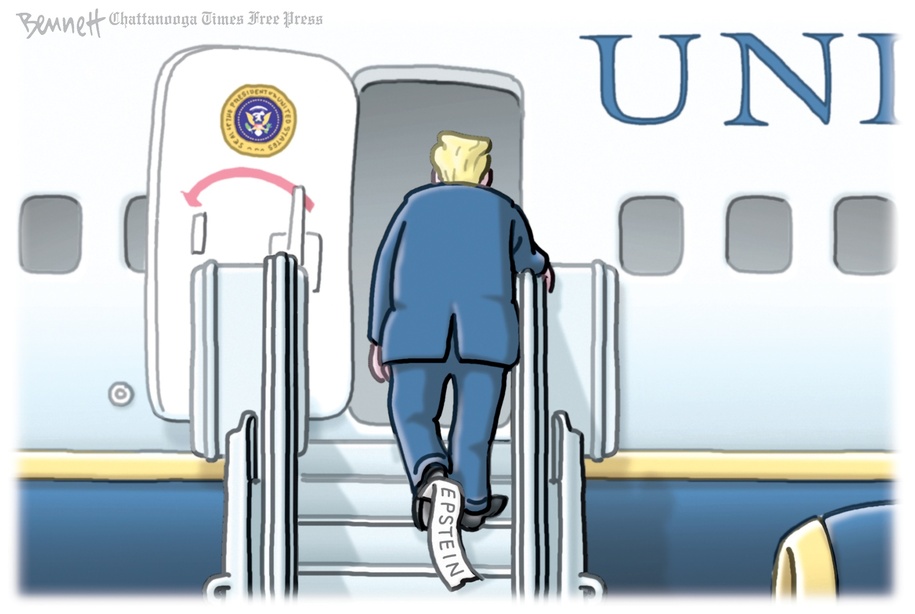
Trump Admits He’s F-cked On The Epstein Files

PoliticusUSA is 100% supported by readers like you. There are no billionaires looking over our shoulders, corporations, or political parties, but we need your help to stay independent. Please keep us strong by becoming a subscriber. Subscribe now None of it had to be this way. That’s the point that the American people should remember as the nation continues to go deeper into the Epstein files rabbit hole. The scandal blew up when Donald Trump ordered his Attorney General to reverse course and proclaim that there was no Epstein client list, and no more files would be released. The official Trump spin on this is that it was Bondi’s decision to kill the Epstein files to protect Epstein’s victims and the people mentioned in the documents from hearsay, but it looks like Bondi has positioned as Trump’s human shield and the person who will eventually take the fall. When The Wall Street Journal published its latest Epstein bombshell, it was proof of a cover-up at the White House, but the cover-up began when Trump ordered his administration to reverse course on the Epstein files. According to Politico, even Donald Trump knows where this is all heading: Trump has ruminated about the Epstein fallout for weeks. “They’re going to accuse me of some funny business,” he said recently in the Oval Office, according to a Republican close to the White House who personally heard the president make these comments. Trump again maintained his distance from Epstein’s criminal behavior, but lamented: “They’re going to fuck me anyways.” PoliticusUSA is a reader-supported publication. To receive new posts and support our work, consider becoming a free or paid subscriber. As usual, Trump is playing the innocent victim, and he seems oblivious to the reality that he created this scandal. Donald Trump campaigned on releasing the Epstein files. His administration made promises about releasing the files, but when the president found out that the files were a political ticking time bomb for him, they had to disappear. Trump 2.0 is a weaker creature than during his first term. Trump is term limited and that ticking clock means that his shelf life is constantly diminishing. Outside of people who have to worry about what he can do with the presidency right now, Donald Trump is a declining force. As the House is setting up hearings for the Epstein files in August, the scandal is set to dominate summer. The media or Democrats didn’t ‘F’ Donald Trump. Donald Trump F-ed himself. What do you think about Trump’s realization? Share your thoughts in the comments below. Leave a comment

Scroll to Top