Politics

Politics

Republicans keep voting for bills they admit are bad because Trump wants them to

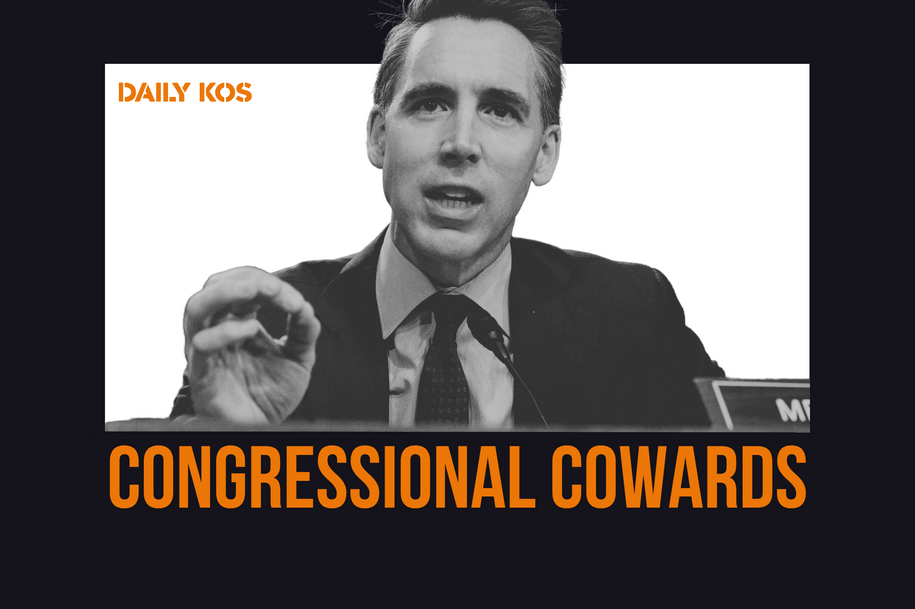
Congressional Cowards is a weekly series highlighting the worst Donald Trump defenders on Capitol Hill, who refuse to criticize him—no matter how disgraceful or lawless his actions. Republicans know that the demands President Donald Trump is making of them are bad. But true to their cowardly form, the vast majority of GOP lawmakers refuse to follow their conscience and vote against his destructive policies, fearing that Trump will sic his MAGA loyalists against them and tank their careers. This week, a number of GOP senators voted for a bill that claws back billions of funding for the Corporation for Public Broadcasting as well as foreign aid that Congress had already appropriated—even though the GOP lawmakers admitted they had reservations about the legislation. Related | Senate GOP deals blow to rural America in voting to defund NPR and PB Multiple Senate Republicans said the Trump administration did not provide them with enough information on what exactly they will cut from foreign aid funding, which gave them pause, yet not enough pause to vote against the bill. “When George W. Bush proposed Rescissions back in 1992, he listed specific programs that would receive specific amounts of cuts. And it was a rather thick proposal. But members on both sides of the aisle in both houses … had exact information about what programs would be targeted and where the cuts would be made and by what amount. That is not present in the proposal before us tonight. And that troubles me,” Sen. Roger Wicker (R-MS) told Fox News’ Chad Pergram on Wednesday. Wicker ignored his concerns and voted for the cuts, though he said he did so “with reservation.” Sen. Thom Tillis (R-NC) also said the recissions package didn’t have enough specifics to know the exact funding streams the Trump administration wanted to axe, yet he said he was voting for it anyway. Sen. Thom Tillis But he did make a toothless threat, saying on the Senate floor, “If we find out that some of these programs that we’ve communicated should be out of bounds, that advisors to the President decide that they’re going to cut anyway, then there will be a reckoning.” I’m sure the administration is shaking in their boots. And Sen. Mitch McConnell (R-KY), who voted against advancing the recissions package to a vote before the full Senate because he said it did not have enough specifics from the Trump administration about what would be cut, turned around and voted for the cuts when it mattered most.  Even Senate Majority Leader John Thune (R-SD) said the Trump administration has not been specific enough. Yet he shepherded the recissions package through and voted for it, saying their word was good enough for him.  “I don’t disagree,” Thune told reporters on Wednesday of the GOP members who said they needed more specifics. “I think that more specificity would be a good thing, and certainly more detail in terms of what exactly it is that they intend to cut as a result of all this. But I think for the most part, most of our members believe there was enough detail here to make a good decision about whether or not we want to move forward on the package.” Meanwhile, Sen. Josh Hawley (R-MO), who caved earlier this month and voted for the “One Big, Beautiful Bill” that will kick millions off of Medicaid despite saying Medicaid cuts were a line in the sand for him, is now desperately trying to reverse the damage he inflicted. Hawley introduced legislation on Tuesday to roll back some of those cuts. Hawley’s bill would nix the changes to Medicaid funding that Republicans passed in the OBBB, and would add to a fund boosting rural hospitals that are dependent on Medicaid to survive.  “President Trump has always said we have to protect Medicaid for working people. Now is the time to prevent any future cuts to Medicaid from going into effect,” Hawley said in a news release. “We should also increase our support for rural hospitals around the country. Under the recent reconciliation bill, Missouri will see an extra $1 billion for hospitals over the next four years. I want to see Medicaid reductions stopped and rural hospitals fully funded permanently.” If Hawley really didn’t want those Medicaid cuts, he could have stopped them by voting against OBBB, but he was too much of a coward to defy Dear Leader.  Over on the House side, a bunch of GOP lawmakers who purported to care about child sex trafficker Jeffrey Epstein and releasing the information the government had about his crimes voted this week to block the files from being released. Republicans blocked the release as Trump rails against anyone who is criticizing his administration for not releasing the supposed files, going as far as saying that he doesn’t count anyone who is still talking about Epstein as one of his followers.  For example, Rep. Lauren Boebert (R-CO), who after demanding the release of the Epstein files for years, voted on Tuesday to block the files from release. Even more insane is that after voting against releasing the files, Boebert said that former Rep. Matt Gaetz (R-FL)—himself accused of sex trafficking minors—should be appointed as a special counsel to get to the bottom of the Epstein case.  “We need a Special Counsel and investigation into this if we aren’t provided information. I want answers. Maybe Matt Gaetz can lead it,” Boebert told fellow MAGA conspiracy theorist and Russian asset Benny Johnson. YouTube Video You can’t make this shit up. Ultimately, every day Republicans are eager to prove that they’d jump off a bridge if Dear Leader asked them to.  In short, they’re cowards. 
Politics

RFK Jr. wants to overhaul a vital system that supports childhood immunization

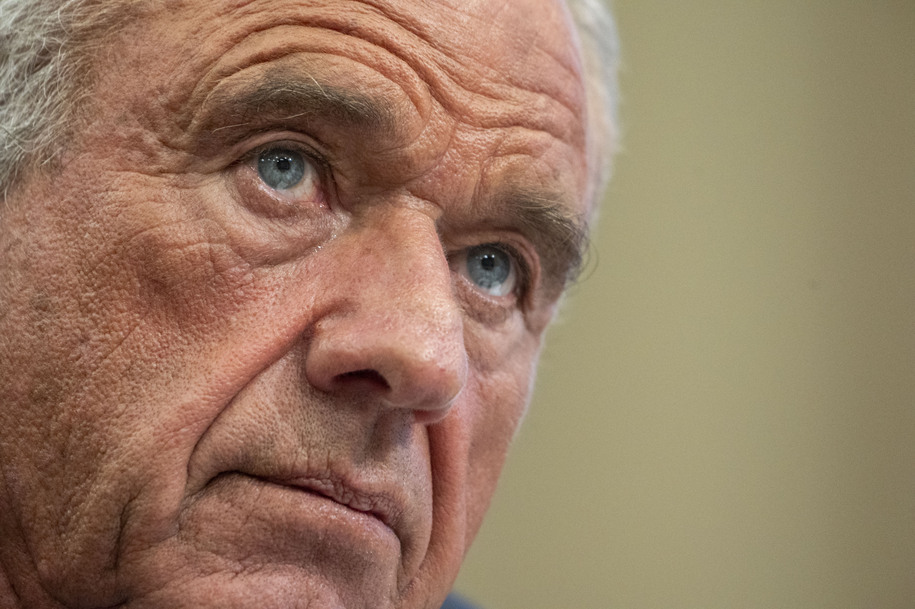
By Patricia Callahan for ProPublica Five months after taking over the federal agency responsible for the health of all Americans, Robert F. Kennedy Jr. wants to overhaul an obscure but vital program that underpins the nation’s childhood immunization system. Depending on what he does, the results could be catastrophic. In his crosshairs is the Vaccine Injury Compensation Program, a system designed to provide fair and quick payouts for people who suffer rare but serious side effects from shots — without having to prove that drugmakers were negligent. Congress created the program in the 1980s when lawsuits drove vaccine makers from the market. A special tax on immunizations funds the awards, and manufacturers benefit from legal protections that make it harder to win big-money verdicts against them in civil courts. Kennedy, who founded an anti-vaccination group and previously accused the pharmaceutical industry of inflicting “unnecessary and risky vaccines” on children for profits, has long argued that the program removes any incentive for the industry to make safe products. Related | Trump administration lends a helping hand to RFK Jr.‘s anti-vax pals In a recent interview with Tucker Carlson, Kennedy condemned what he called corruption in the program and said he had assigned a team to overhaul it and expand who could seek compensation. He didn’t detail his plans but did repeat the long-debunked claim that vaccines cause autism and suggested, without citing any evidence, that shots could also be responsible for a litany of chronic ailments, from diabetes to narcolepsy. There are a number of ways he could blow up the program and prompt vaccine makers to stop selling shots in the U.S., like they did in the 1980s. The trust fund that pays awards, for instance, could run out of money if the government made it easy for Kennedy’s laundry list of common health problems to qualify for payments from the fund. Or he could pick away at the program one shot at a time. Right now, immunizations routinely recommended for children or pregnant women are covered by the program. Kennedy has the power to drop vaccines from the list, a move that would open up their manufacturers to the kinds of lawsuits that made them flee years ago. Dr. Eddy Bresnitz, who served as New Jersey’s state epidemiologist and then spent a dozen years as a vaccine executive at Merck, is among those worried. “If his unstated goal is to basically destroy the vaccine industry, that could do it,” said Bresnitz, who retired from Merck and has consulted for vaccine manufacturers. “I still believe, having worked in the industry, that they care about protecting American health, but they are also for-profit companies with shareholders, and anything that detracts from the bottom line that can be avoided, they will avoid.” A spokesperson for PhRMA, a U.S. trade group for pharmaceutical companies, told ProPublica in a written statement that upending the Vaccine Injury Compensation Program “would threaten continued patient access to FDA approved vaccines.” The spokesperson, Andrew Powaleny, said the program “has compensated thousands of claims while helping ensure the continued availability of a safe and effective vaccine supply. It remains a vital safeguard for public health and importantly doesn’t shield manufacturers from liability.” Since its inception, the compensation fund has paid about $4.8 billion in awards for harm from serious side effects, such as life-threatening allergic reactions and Guillain-Barré syndrome, an autoimmune condition that can cause paralysis. The federal agency that oversees the program found that for every 1 million doses of vaccine distributed between 2006 and 2023, about one person was compensated for an injury. Robert F. Kennedy Jr. appears at a House subcommittee hearing on May 14. Since becoming Health and Human Services secretary, Kennedy has turned the staid world of immunizations on its ear. He reneged on the U.S. government’s pledge to fund vaccinations for the world’s poorest kids. He fired every member of the federal advisory group that recommends which shots Americans get, and his new slate vowed to scrutinize the U.S. childhood immunization schedule. Measles, a vaccine-preventable disease eliminated here in 2000, roared back and hit a grim record — more cases than the U.S. has seen in 33 years, including three deaths. When a U.S. senator asked Kennedy if he recommended measles shots, Kennedy answered, “Senator, if I advised you to swim in a lake that I knew there to be alligators in, wouldn’t you want me to tell you there were alligators in it?” Fed up, the American Academy of Pediatrics and other medical societies sued Kennedy last week, accusing him of dismantling “the longstanding, Congressionally-authorized, science- and evidence-based vaccine infrastructure that has prevented the deaths of untold millions of Americans.” (The federal government has yet to respond to the suit.) Just about all drugs have side effects. What’s unusual about vaccines is that they’re given to healthy people — even newborns on their first day of life. And many shots protect not just the individuals receiving them but also the broader community by making it harder for deadly scourges to spread. The Centers for Disease Control and Prevention estimates that routine childhood immunizations have prevented more than 1.1 million deaths and 32 million hospitalizations among the generation of Americans born between 1994 and 2023. To most people, the nation’s vaccine system feels like a solid, reliable fact of life, doling out shots to children like clockwork. But in reality it is surprisingly fragile. There are only a handful of companies that make nearly all of the shots children receive. Only one manufacturer makes chickenpox vaccines. And just two or three make the shots that protect against more than a dozen diseases, including polio and measles. If any were to drop out, the country could find itself in the same crisis that led President Ronald Reagan to sign the law creating the Vaccine Injury Compensation Program in 1986. Back then, pharmaceutical companies faced hundreds of lawsuits alleging that the vaccine protecting kids from whooping cough, diphtheria and tetanus caused unrelenting seizures that led to severe disabilities. (Today’s version of this shot is different.) One vaccine maker after another left the U.S. market.

Politics

A million veterans gave DNA to aid health research. Scientists worry the data will be wasted.

By Darius Tahir for KFF Health News One of the world’s biggest genetic databases comprises DNA data donated over the years by more than a million retired military service members. It’s part of a project run by the Department of Veterans Affairs. The initiative, dubbed the Million Veteran Program, is a “crown jewel of the country,” said David Shulkin, a physician who served as VA secretary during the first Trump administration. Data from the project has contributed to research on the genetics of anxiety and peripheral artery disease, for instance, and has resulted in hundreds of published papers. Researchers say the repository has the potential to help answer health questions not only specific to veterans — like who is most vulnerable to post-service mental health issues, or why they seem more prone to cancer — but also relevant to the nation as a whole. “When the VA does research, it helps veterans, but it helps all Americans,” Shulkin said in an interview.   Researchers now say they fear the program is in limbo, jeopardizing the years of work it took to gather the veterans’ genetic data and other information, like surveys and blood samples. “There’s sort of this cone of silence,” said Amy Justice, a Yale epidemiologist with a VA appointment as a staff physician. “We’ve got to make sure this survives.” Genetic data is enormously complex, and analyzing it requires vast computing power that VA doesn’t possess. Instead, it has relied on a partnership with the Energy Department, which provides its supercomputers for research purposes. In late April, VA Secretary Doug Collins disclosed to Sen. Richard Blumenthal, the top Democrat on the Senate Veterans’ Affairs Committee, that agreements authorizing use of the computers for the genomics project remained unsigned, with some expiring in September, according to materials shared with KFF Health News by congressional Democrats. Secretary of Veterans Affairs Doug Collins testifies at a Senate subcommittee hearing on June 24. Spokespeople for the two agencies did not reply to multiple requests for comment. Other current and former employees within the agencies — who asked not to be identified, for fear of reprisal from the Trump administration — said they don’t know whether the critical agreements will be renewed. One researcher called computing “a key ingredient” to major advances in health research, such as the discovery of new drugs. The agreement with the Energy Department “should be extended for the next 10 years,” the researcher said. The uncertainty has caused “incremental” damage, Justice said, pointing to some Million Veteran Program grants that have lapsed. As the year progresses, she predicted, “people are going to be feeling it a lot.” Related | Veterans Affairs chief looks to slash agency—even if veterans suffer Because of their military experience, maintaining veterans’ health poses different challenges compared with caring for civilians. The program’s examinations of genetic and clinical data allow researchers to investigate questions that have bedeviled veterans for years. As examples, Shulkin cited “how we might be able to better diagnose earlier and start thinking about effective treatments for these toxic exposures” — such as to burn pits used to dispose of trash at military outposts overseas — as well as predispositions to post-traumatic stress disorder. “The rest of the research community isn’t likely to focus specifically” on veterans, he said. The VA community, however, has delivered discoveries of importance to the world: Three VA researchers have won Nobel Prizes, and the agency created the first pacemaker. Its efforts also helped ignite the boom in GLP-1 weight loss drugs. Yet turbulence has been felt throughout VA’s research enterprise. Like other government scientific agencies, it’s been buffeted by layoffs, contract cuts, and canceled research. “There are planned trials that have not started, there are ongoing trials that have been stopped, and there are trials that have fallen apart due to staff layoffs — yes or no?” said Sen. Patty Murray (D-Wash.), pressing Collins in a May hearing of the Senate Veterans’ Affairs Committee. The agency, which has a budget of roughly $1 billion for its research arm this fiscal year, has slashed infrastructure that supports scientific inquiry, according to documents shared with KFF Health News by Senate Democrats on the Veterans’ Affairs Committee. It has canceled at least 37 research-related contracts, including for genomic sequencing and for library and biostatistics services. The department has separately canceled four contracts for cancer registries for veterans, creating potential gaps in the nation’s statistics. Job worries also consume many scientists at the VA. According to agency estimates in May, about 4,000 of its workers are on term limits, with contracts that expire after certain periods. Many of these individuals worked not only for the VA’s research groups but also with clinical teams or local medical centers. When the new leaders first entered the agency, they instituted a hiring freeze, current and former VA researchers told KFF Health News. That prevented the agency’s research offices from renewing contracts for their scientists and support staff, which in previous years had frequently been a pro forma step. Some of those individuals who had been around for decades haven’t been rehired, one former researcher told KFF Health News. Related | Trump finds a ‘heartless and dangerous’ new way to screw over veterans The freeze and the uncertainty around it led to people simply departing the agency, a current VA researcher said. The losses, the individual said, include some people who “had years of experience and expertise that can’t be replaced.” Preserving jobs — or some jobs — has been a congressional focus. In May, after inquiries from Sen. Jerry Moran, the Republican who chairs the Veterans’ Affairs Committee, about staffing for agency research and the Million Veteran Program, Collins wrote in a letter that he was extending the terms of research employees for 90 days and developing exemptions to the hiring freeze for the genomics project and other research initiatives. Related | Now VA doctors can refuse to treat unmarried veterans and Democrats Holding jobs is one thing — doing them is another. In June,

Politics

How much will the Epstein saga hurt Trump?

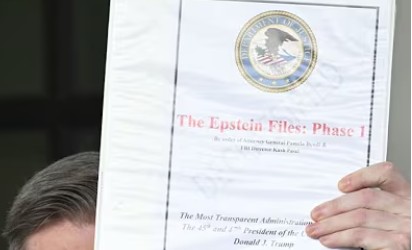
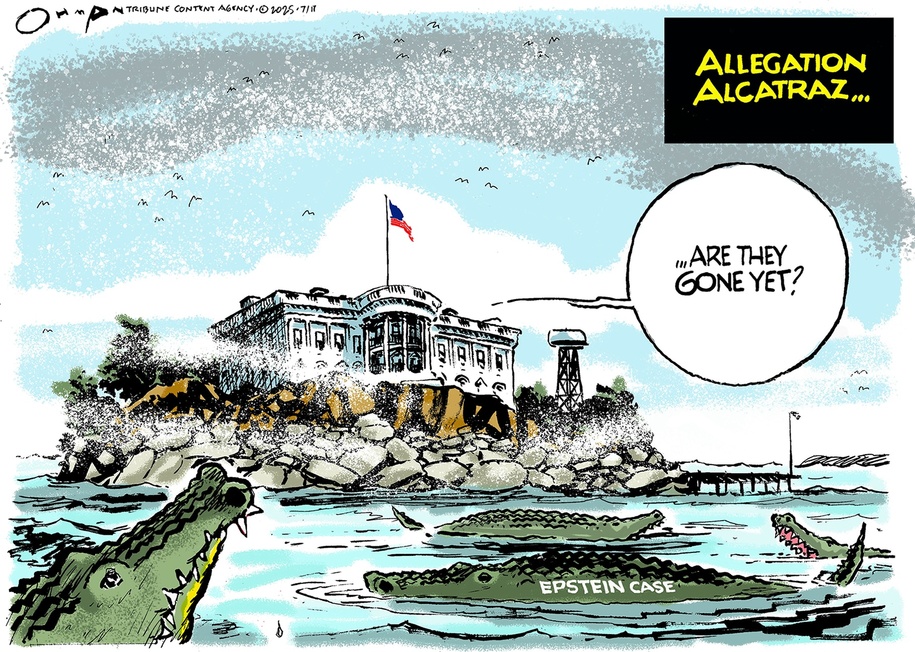
Survey Says is a weekly series rounding up the most important polling trends or data points you need to know about, plus a vibe check on a trend that’s driving politics. It was a bombshell statement from Attorney General Pam Bondi. In early May, she told reporters the FBI was reviewing “tens of thousands of videos” of convicted sex offender Jeffrey Epstein “with children or child porn.” The comment ignited a firestorm. For years, Trump-aligned conspiracy theorists believed he held the key to exposing Epstein’s alleged sex-trafficking network and long-rumored “client list,” which Trump promised to release if he won last year’s election. And Bondi’s remarks raised expectations that damning new evidence was imminent. Attorney General Pam Bondi speaks to the media on June 27 in the briefing room of the White House. But now she is walking it all back. The Justice Department, which she leads, released a memo saying there was no client list, which she publicly claimed in February to have “sitting on my desk right now to review.” And just as suddenly, Trump told his supporters to stop talking about Epstein altogether, calling the issue “a hoax.” That abrupt pivot stunned many MAGA loyalists who had built entire narratives around Trump being the one to blow the Epstein case wide open. Now Trump is trying to recalibrate. While he’s not recommending a special prosecutor in the Epstein case, he reluctantly encouraged Bondi on Wednesday to release any “credible” information regarding it. It’s unclear whether that olive branch will satisfy his base or pour fuel on the fire, though. Even some GOP lawmakers, like House Speaker Mike Johnson, are signaling they want more transparency. And new polling indicates the public feels the same. A CNN/SSRS survey, conducted July 10-13, finds that only 3% of Americans are satisfied with the information released about the Epstein case. Fifty percent are dissatisfied, including 56% of Democrats and 40% of Republicans. Datawrapper Content The dissatisfaction is strongest at the ideological extremes. The poll shows that very conservative Republicans and more liberal Democrats are the most unhappy with the lack of information. Among Republicans, 48% of the very conservative group are dissatisfied, compared with 40% of those who are only somewhat conservative. On the Democratic side, 70% of liberals want more information, compared with 52% of moderates and conservative Democrats.  A separate survey by The Economist/YouGov, conducted July 11-14, finds similar frustrations. Nearly 4 in 5 Americans want the government to release all Epstein-related documents, including 85% of Democrats and 75% of Republicans. Quinnipiac University’s new poll shows that just 17% of voters approve of how the Trump administration is handling the Epstein files, while 63% disapprove. And Republicans are nearly split on the issue. Datawrapper Content This narrative isn’t just background noise, though. It shows a deeper breakdown in how Americans are viewing the Epstein scandal. Both Republicans and Democrats are upset, but the political fallout may run deeper on the right. Trump told his base to move on. Some are listening—but others aren’t. YouGov data reveals that Republicans’ confidence in the Epstein investigation has plummeted since January—a surprising change given that Trump’s administration now oversees it. In early January, 36% of Republicans believed that “all people connected with Jeffrey Epstein who are alleged to have committed sex crimes will be thoroughly investigated,” per the poll’s wording. But as of early July, that number is now just 19%. A right-wing influencer holds up a binder with a cover titled “The Epstein Files: Phase 1” at the White House on Feb. 27. However, nearly none of the information contained therein was new. “Top Trump officials have spent years promoting baseless conspiracy theories about Epstein, and now that they’re in charge, the pressure is on for them to produce,” said Matthew Dallek, a history professor at George Washington University who focuses on the conservative movement. “Trump was supposed to come in and expose [Epstein], and I think the bill is coming due for that savior narrative. They have to deliver on that promise.” YouGov’s data also shows that Democrats’ confidence in the investigation dropped from 41% in January to 16% in July. But Dallek believes Democratic frustration may be more political than principled. If Democratic voters want more information, it’s often because they suspect Trump could be implicated. A July 9 poll from YouGov finds that 69% of Democrats believe Trump was involved in Epstein’s alleged crimes. Just 7% of Republicans hold the same view. This partisan gap gives Democrats a strategic opportunity.  “The fact that Democrats are making an issue of it could suggest they want to fan the flames and exploit the rift within MAGA, so it’s pretty opportunistic,” Dallek said. “But just because it’s shameless doesn’t mean it will fail. It could be shameless and effective at the same time.” This appears to be happening. Axios recently reported that House Minority Leader Hakeem Jeffries surprised some colleagues by fully supporting efforts to exploit GOP divisions over Epstein. And Democrats have proposed measures to force the DOJ to release documents, but Republicans have blocked them. There has long been high public interest in the case. In July 2019, after Epstein’s arrest on charges of child sex trafficking but before his death, The Economist/YouGov found that 37% of adults had heard “a lot” about the case.  Jeffrey Epstein appears in court in West Palm Beach, Florida, in July 2008. In January 2024, YouGov found that 37% believed Epstein was murdered, compared with 20% who thought he died by suicide, which is Epstein’s official cause of death. And these numbers have shifted only slightly since then: As of this month, 39% think Epstein was murdered, and 20% believe he took his own life. While many issues could hurt Republicans heading into the 2026 midterm elections, it’s unclear whether Epstein will be one. Dallek warned that even if some MAGA voters become disillusioned with Trump’s failure to “deliver” on Epstein, it might not outweigh concerns over inflation or immigration. “People have been saying Trump

Politics

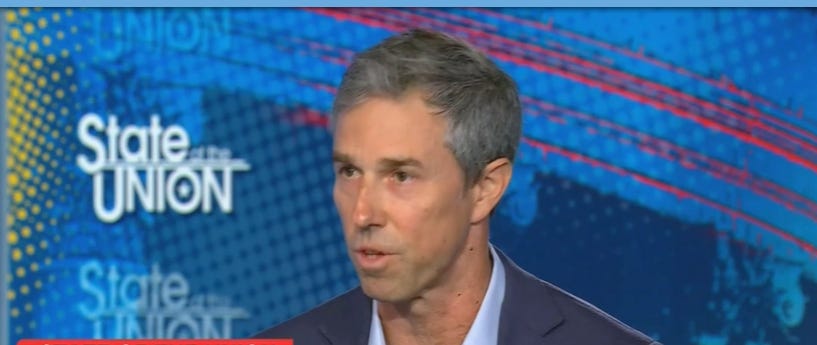
Beto O’Rourke Tells Democrats To Be Absolutely Ruthless In Winning Back Power

PoliticusUSA is news that you can rely on, but we need your support. Please consider supporting us by becoming a subscriber. Subscribe now Democrats have long been held back by their desire to be right or to do the right thing, while Republicans are obsessed with gaining and keeping power. It could be argued that the Biden presidency is the most recent example of Democrats attempting to do the right thing through governance while overlooking the politics necessary to maintain power. However, without power, policies can’t be enacted. As the nation is currently witnessing, Democrats can’t protect and enhance democracy or do things that help people without power. The need to get back into power ahead of anything else was something that Beto O’Rourke discussed on CNN. Video: While talking about the proposed Republican gerrymander of Texas, O’Rourke said: Governor Gavin Newsom in California has talked about a redistricting in his state. I think it’s time that we match fire with fire. I think Democrats in the past too often have been more concerned with being right than being in power. Read more

Politics

Trump Hits A New Low As His Base Splits Over Jeffrey Epstein

PoliticusUSA is corporate-free and proudly independent. Please consider supporting us by becoming a subscriber. Subscribe now Trump can’t make the Jeffrey Epstein questions go away. He continues to try all of the tricks that he knows, but his own supporters won’t pressure him and demand the release of the Epstein files. The president even called his supporters stupid and tried to blame Democrats, but it didn’t work. MAGA still wants the Epstein files. Trump’s newest effort at distraction was to post on Truth Social: The Washington “Whatever’s” should IMMEDIATELY change their name back to the Washington Redskins Football Team. There is a big clamoring for this. Likewise, the Cleveland Indians, one of the six original baseball teams, with a storied past. Our great Indian people, in massive numbers, want this to happen. Their heritage and prestige is systematically being taken away from them. Times are different now than they were three or four years ago. We are a Country of passion and common sense. OWNERS, GET IT DONE!!! Trump’s demand is both weird and sad. It also reveals a great deal about the limitations of Donald Trump’s style of politics. Trump doesn’t have the ability to lift up and bring together. Donald Trump is America’s tyranny of the minority president, and his hold on power is based on his ability to keep people divided. Trump has exploited cultural fault lines and culture war issues to gain and maintain power. The answer to why Trump chose now to suddenly demand the return of sports teams’ names and mascots that are racial slurs can be found in a different Truth Social post from the president on Sunday morning. Trump wrote: My Poll Numbers within the Republican Party, and MAGA, have gone up, significantly, since the Jeffrey Epstein Hoax was exposed by the Radical Left Democrats and, just plain “troublemakers.” They have hit 90%, 92%, 93%, and 95%, in various polls, and are all Republican Party records. The General Election numbers are my highest, EVER! People like Strong Borders, and all of the many other things I have done. GOD BLESS AMERICA. MAGA! Yeah, Trump was lying. His overall MAGA approval rating doesn’t tell the whole story. MAGA is split over his handling of the Epstein files, according to a new CBS News Poll: Just as a divided House can not stand, a divided party will struggle to win the midterm election. The damage being done will be reflected in congressional races and Republican turnout in 2026, not Trump’s approval ratings. Trump is still trying to do damage control, and he is really sinking to new lows and grasping for anything, including slurring Native Americans, to keep his party together. What do you think about Trump slurring Native Americans? Share your thoughts in the comments below. Leave a comment

Politics

Program that keeps millions of people with HIV alive may be spared from Trump spending cuts

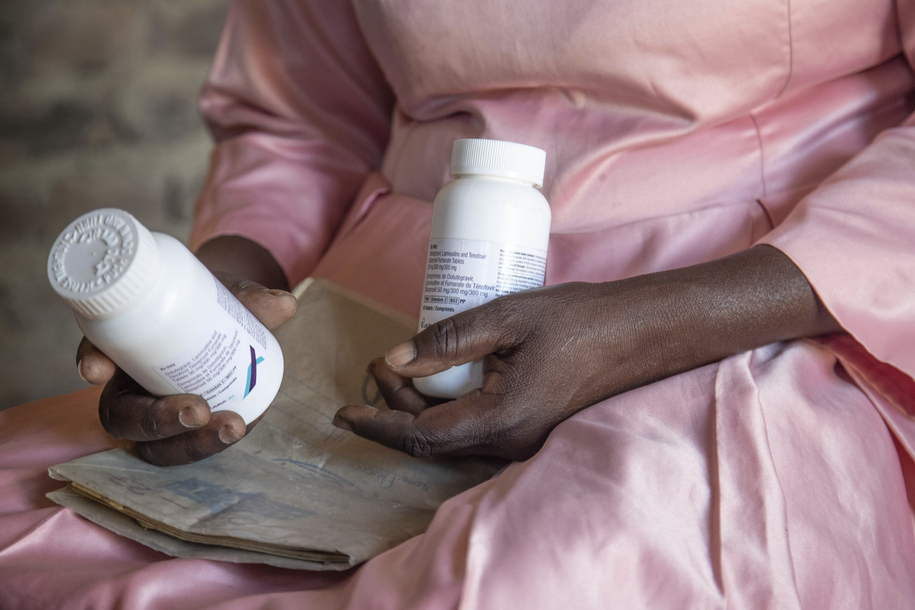
The program known as PEPFAR is one of the most effective and popular U.S. foreign aid projects in history, and the government says it has saved the lives of over 25 million people around the world with HIV. But despite years of bipartisan support, PEPFAR has faced a severe threat as the Trump administration dismantles most U.S. foreign aid. PEPFAR on Tuesday appeared to be spared a $400 million cut as Republicans acted in rare defiance of a request by President Donald Trump. But governments, health experts and people with HIV around the world are alarmed by the effects of other U.S. aid cuts and chaos that are already disrupting the crucial supply of HIV drugs — which are meant to be taken daily. Here’s a look at PEPFAR and how it affects millions of people globally. Fears of an AIDS resurgence Today, many babies are born infection-free to mothers with HIV — the U.S. State Department says PEPFAR has been responsible for 5.5 million such births — and most people around the world no longer see an infection as a death sentence. Governments in Africa and elsewhere had even begun to worry about complacency as people, especially youths, took the widespread availability of HIV drugs for granted. In another significant step forward, the U.S. Food and Drug Administration recently approved for use the world’s only twice-a-year shot to prevent HIV. But the abrupt U.S. aid cuts have health officials in developing countries warning of a return to the early days of the AIDS pandemic, when drugs were nonexistent or severely limited and clinics were filled with the dying. PEPFAR was launched in 2004 in response to those grim scenes. Related | Trump administration is happy to let kids starve Also known as the U.S. President’s Emergency Plan for AIDS Relief, the program has partnered with nonprofit groups to provide HIV medication — including the preventative PrEP — to millions around the world. It has strengthened national health care systems, cared for children orphaned by AIDS and provided job training for people at risk. It has played an important role in testing for and tracking HIV infections. HIV/AIDS has no cure, and it has killed over 40 million people globally over the years. Now the U.N. agency on AIDS is warning that analysis suggests 4 million additional AIDS-related deaths between now and 2029, including 300,000 additional children’s deaths, if programs permanently lose PEPFAR’s support. From widespread support to baseless claims Since PEPFAR’s creation by Congress and Republican President George W. Bush, the program has largely enjoyed support across the political spectrum — and gratitude from countries whose health systems have been poorly equipped to care for millions with HIV. George W. Bush marks 20 years of PEPFAR at the Peace Institute in Washington in Feb. 2023. But misinformation has crept in. The Heritage Foundation, an influential conservative Washington think tank, accused the Biden administration of using PEPFAR “to promote its domestic radical social agenda overseas.” Conservatives claimed there were efforts to integrate abortion with HIV/AIDS prevention, a claim the Biden administration denied. Similar claims linger under the Trump administration. Trump and his officials also claim widespread waste and fraud as they seek to dismantle U.S. foreign aid. But PEPFAR has been repeatedly scrutinized. Last year, the government said the State Department’s Office of Inspector General had conducted 80 audits, inspections, and special reviews that included oversight of PEPFAR programs, “including 21 thematic reviews and audits specifically focused on PEPFAR.” Impossible to replace US funding The $400 million proposed cut to PEPFAR still could be restored, in part or in full, as the bill on spending cuts faces a final vote in the Senate, a vote in the House of Representatives and Trump’s signature before a Friday deadline. “We must stay vigilant,” International AIDS Society President Beatriz Grinsztejn said in a statement Wednesday after PEPFAR appeared to be spared. No matter what, countries and health experts say it will be impossible to fill the funding gap left by the overall U.S. withdrawal of billions of dollars in aid for the global HIV response, including via PEPFAR. Last month, a UNAIDS report said the abrupt cuts have “destabilized supply chains, led to the closure of health facilities, left thousands of health clinics without staff, set back prevention programs, disrupted HIV testing efforts and forced many community organizations to reduce or halt their HIV activities.” South Africa, where more people live with HIV than anywhere else in the world, has said 12 specialized HIV clinics that were funded by the U.S. have had to close down and over 8,000 health workers in its national HIV program are out of work. Related | Trump’s retreat from the world has been great for China Now health workers there and elsewhere are trying to track down an unknown number of people who have lost access to HIV medication. The stakes are deadly. Stopping the drugs allows the virus to start multiplying again. HIV can rebound to detectable levels in people’s blood in just a few weeks, putting sexual partners at risk. The virus could even become drug-resistant. “It has really been hectic for us,” said Mbonisiwe Hlongwane, manager of the HIV program at the Bertha Gxowa public hospital in Germiston, east of Johannesburg. And the uncertainty only continues.

Politics

Does Elon Musk believe in affirmative action after all?

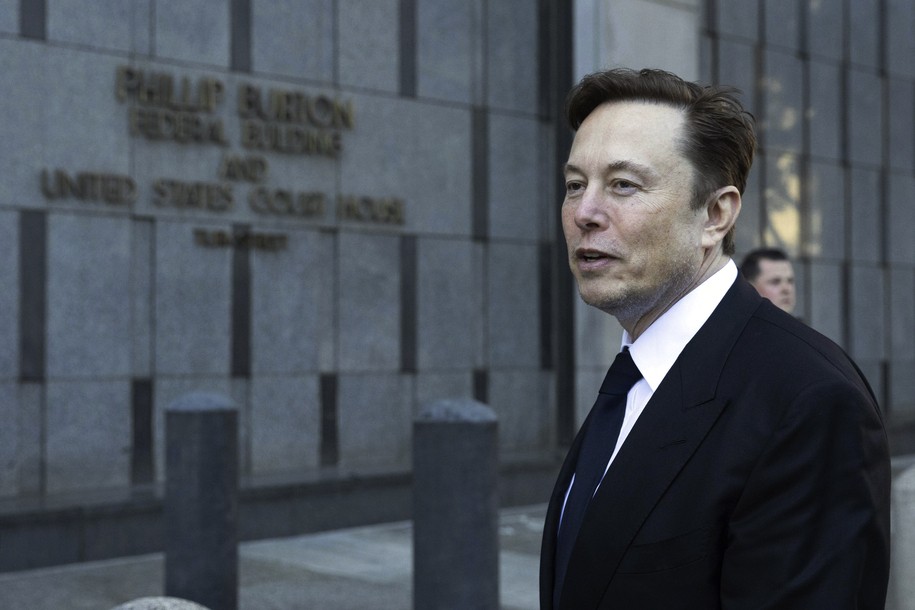
It’s tough to keep track of all the ways in which billionaire Elon Musk has enriched himself with your tax dollars. But that windfall seemingly wasn’t enough for Musk, whose brain-chip company Neuralink reportedly lied on federal forms, falsely calling itself a “small disadvantaged business.” The outlet Musk Watch unearthed the filing, dated April 24, which was when Musk was still a “special government employee” of the federal government. Hello, DOGE? Here is some apparent fraud and waste for you to discover! To qualify as a small disadvantaged business, the majority ownership of a company must be held by members of a “socially and economically disadvantaged” group. According to the Code of Federal Regulations, socially disadvantaged people are those “subjected to racial or ethnic prejudice or cultural bias within American society.” Economically disadvantaged individuals are those with a net worth of less than $850,000. As of midday Friday, Musk’s net worth is over $413 billion. He’s a white, straight man and is not subject to any prejudice, which means he meets neither prong of the SDB requirements.  To be fair, perhaps Musk’s company thought it could claim Musk was suffering ethnic prejudice because he is a white South African, given that both he and Trump believe so fervently that white South Africans are the most persecuted people in existence, basically the only people oppressed enough to get refugee status these days. Demonstrators protest against Elon Musk and the so-called Department of Government Efficiency outside a Tesla dealership on April 12 in Kansas City, Missouri. This doesn’t appear to be a onetime error, either. Musk Watch found that Neuralink has claimed this same designation in 11 different federal filings since 2017. It isn’t clear if Neuralink has actually received any money from the government via this apparent scam, but that isn’t really the point. The mere act of signing off on the federal forms would be fraud—the exact sort of fraud that the administration has pretended it is rooting out.  All of this is especially ironic given that Musk otherwise actively scorns diversity efforts.  Things at Tesla, his electric vehicle company, have allegedly been so racist that last year a California state judge ruled that 6,000 of its Black workers could jointly sue the company as a class because they alleged Tesla had a “pattern or practice” of failing to address and prevent discrimination against Black workers.  Additionally, under then-President Joe Biden in 2023, the Equal Employment Opportunity Commission sued Tesla for allegedly tolerating racist harassment and retaliating against workers who opposed the harassment. It’s unclear what will happen with that suit, but Tesla already got a gift from the Trump administration, which reportedly dropped a Department of Labor investigation into discrimination at the company.  Musk has also been eager to attack any diversity efforts and has gleefully slashed funding for related initiatives. He turned Twitter into X, a neo-Nazi hangout whose chatbot turned so antisemitic that Musk had to shut it down. This is not a person who believes the government should lend a helping hand to people who have suffered racial, ethnic, or cultural prejudice.  That said, Neuralink’s reported actions make perfect sense within the paradigm of the Trump administration. In that worldview, the people who actually qualify for the small-disadvantaged-business designation don’t deserve it, because they weren’t chosen on the basis of merit. To them, the real racism is anything that doesn’t reward white people. So why shouldn’t Musk’s company seemingly engage in a little light fraud to get the advantage it believes it so richly deserves?

Scroll to Top