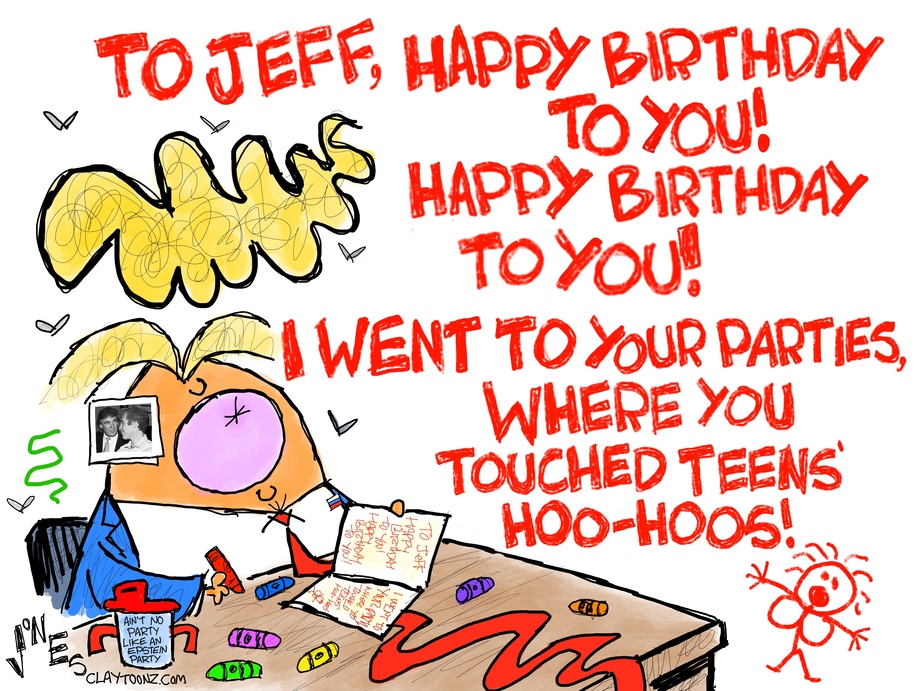
Cartoon: Happy birthday, Jeff
A cartoon by Clay Jones. Related | Trump melts down after lewd letter to Jeffrey Epstein is made public

A cartoon by Clay Jones. Related | Trump melts down after lewd letter to Jeffrey Epstein is made public
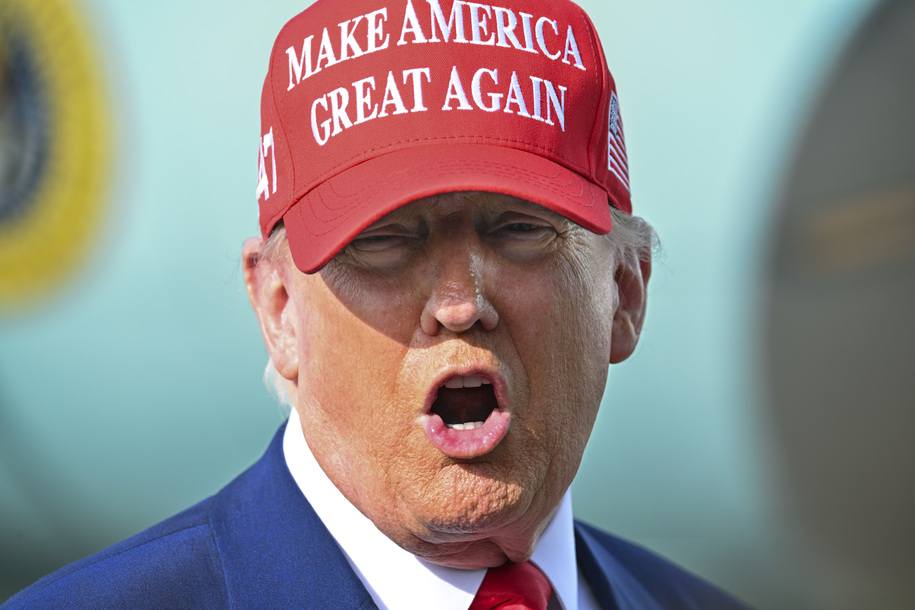
It’s been absolutely fascinating to watch swaths of the MAGA base turn on President Donald Trump over—of all things—his handling of the Jeffrey Epstein conspiracy theory. I just covered how conservatives on Reddit are losing their minds about it. But they’re not alone. Take Philip Anderson, a pardoned Jan. 6 insurrectionist: I can’t overstate what a sycophant this guy has been. This gives you a pretty good idea: He was staring down prison time for his role in the insurrection, but Trump bailed him out. To go from that kind of worship to … this? That’s not a small shift. And he’s not the only one. X is full of prominent right-wing influencers now questioning the faith: Every time this guy lost a job or a friend—or claimed to be stalked and harassed—it only deepened his love for Trump. That persecution complex is classic cult behavior.—it tightens the grip and makes it us vs. them. And more importantly, it shuts down dissent. But something is cracking, and the cult is splintering. Take Trisha Hope, a former Trump national convention delegate: She’s upset that Trump called her stupid. He actually called his supporters “weaklings” and “PAST supporters” and said, “I don’t want their support anymore!” It’s a funny complaint, given that Trump has always called them stupid, famously saying, “I love the poorly educated.” But somehow, Trump’s open disdain had flown under their radar—until now. Whatever spell he cast has finally broken. Now, none of these people are about to develop empathy or fight for a just and caring society. They’re still dangerous conspiracy theorists. But they’ve turned on Trump because they believe he’s now complicit in the Epstein cover-up. And here’s the thing: Trump’s power depends entirely on the unwavering devotion of people like this. So what happens when that devotion falters? What happens if Elon Musk follows through on his threats to primary Republicans over Trump’s “One Big, Beautiful Bill”—and actually succeeds, powered by this festering backlash on the far right? And what happens if the fractured right allows Democrats not just to win big in the House, but to do the seemingly impossible and retake the Senate? Trump’s influence is only as strong as his grip on his base. So what happens when that grip disappears? Shit is getting interesting.

Can the city of New York sell groceries more cheaply than the private sector? The mayoral candidate Zohran Mamdani thinks so. He wants to start five city-owned stores that will be “focused on keeping prices low” rather than making a profit—what he calls a “public option” for groceries. His proposal calls for opening stores on city land so that they can forgo paying rent or property taxes. Skeptics have focused on economic obstacles to the plan. Grocers have industry expertise that New York City lacks; they benefit from scale; and they run on thin profit margins, estimated at just 1 to 3 percent, leaving little room for additional savings. Less discussed, though no less formidable, is a political obstacle for Mamdani: The self-described democratic socialist’s promise to lower grocery prices and, more generally, “lower the cost of living for working class New Yorkers” will be undermined by other policies that he or his coalition favors that would raise costs. No one should trust that “there’s far more efficiency to be had in our public sector,” as he says of his grocery-store proposal, until he explains how he would resolve those conflicts. Mamdani’s desire to reduce grocery prices for New Yorkers is undercut most glaringly by the labor policies that he champions. Labor is the largest fixed cost for grocery stores. Right now grocery-store chains with lots of New York locations, such as Stop & Shop and Key Food, advertise entry-level positions at or near the city’s minimum wage of $16.50 an hour. Mamdani has proposed to almost double the minimum wage in New York City to $30 an hour by 2030; after that, additional increases would be indexed to inflation or productivity growth, whichever is higher. Perhaps existing grocery workers are underpaid; perhaps workers at city-run stores should make $30 an hour too. Yet a wage increase would all but guarantee more expensive groceries. Voters deserve to know whether he’ll prioritize cheaper groceries or better-paid workers. (I wrote to Mamdani’s campaign about this trade-off, and others noted below, but got no reply.) [Read: New York is hungry for a big grocery experiment] In the New York State assembly, Mamdani has co-sponsored legislation to expand family-leave benefits so that they extend to workers who have an abortion, a miscarriage, or a stillbirth. The official platform of the Democratic Socialists of America, which endorsed Mamdani, calls for “a four-day, 32-hour work week with no reduction in wages or benefits” for all workers. Unions, another source of Mamdani support, regularly lobby for more generous worker benefits. Extending such benefits to grocery-store employees would raise costs that, again, usually get passed on to consumers. Perhaps Mamdani intends to break with his own past stances and members of his coalition, in keeping with his goal of focusing on low prices. But if that’s a path that he intends to take, he hasn’t said so. City-run grocery stores would purchase massive amounts of food and other consumer goods from wholesalers. New York City already prioritizes goals other than cost-cutting when it procures food for municipal purposes; it signed a pledge in 2021 to reduce greenhouse-gas emissions associated with food that it serves, and Mayor Eric Adams signed executive orders in 2022 that committed the city to considering “local economies, environmental sustainability, valued workforce, animal welfare, and nutrition” in its food procurement. Such initiatives inevitably raise costs. Mamdani could favor exempting city-run groceries from these kinds of obligations. But would he? Batul Hassan, a member of the Democratic Socialists of America steering committee and a supporter of Mamdani, co-authored an article arguing that city-run stores should procure food from vendors that prioritize a whole host of goods: “worker dignity and safety, animal welfare, community economic benefit and local sourcing, impacts to the environment, and health and nutrition, including emphasizing culturally appropriate, well-balanced and plant-based diets,” in addition to “suppliers from marginalized backgrounds and non-corporate supply chains, including small, diversified family farms, immigrants and people of color, new and emerging consumer brands, and farmer and employee owned cooperatives.” If one milk brand is cheaper but has much bigger environmental externalities or is owned by a large corporation, will a city-run store carry it or a pricier but greener, smaller brand? Mamdani has said in the past that he supports the BDS (boycott, divestment, sanctions) movement, which advocates for boycotting products from Israel. That probably wouldn’t raise costs much by itself. And Mamdani told Politico in April that BDS wouldn’t be his focus as mayor. But a general practice of avoiding goods because of their national origin, or a labor dispute between a supplier and its workers, or any number of other controversies, could raise costs. When asked about BDS in the Politico interview, Mamdani also said, “We have to use every tool that is at people’s disposal to ensure that equality is not simply a hope, but a reality.” Would Mamdani prioritize low prices in all cases or sometimes prioritize the power of boycotts or related pressure tactics to effect social change? Again, he should clarify how he would resolve such trade-offs. Finally, shoplifting has surged in New York in recent years. Many privately owned grocery stores hire security guards, use video surveillance, call police on shoplifters, and urge that shoplifters be prosecuted. Democratic socialists generally favor less policing and surveilling. If the security strategy that’s best for the bottom line comes into conflict with progressive values, what will Mamdani prioritize? [Read: Shoplifters gone wild] This problem isn’t unique to Mamdani. Officials in progressive jurisdictions across the country have added to the cost of public-sector initiatives by imposing what The New York Times’s Ezra Klein has characterized as an “avalanche of well-meaning rules and standards.” For example, many progressives say they want to fund affordable housing, but rather than focus on minimizing costs per unit to house as many people as possible, they mandate other goals, such as giving locals a lengthy process for comment, prioritizing bids from small or minority-owned businesses, requiring union labor, and instituting
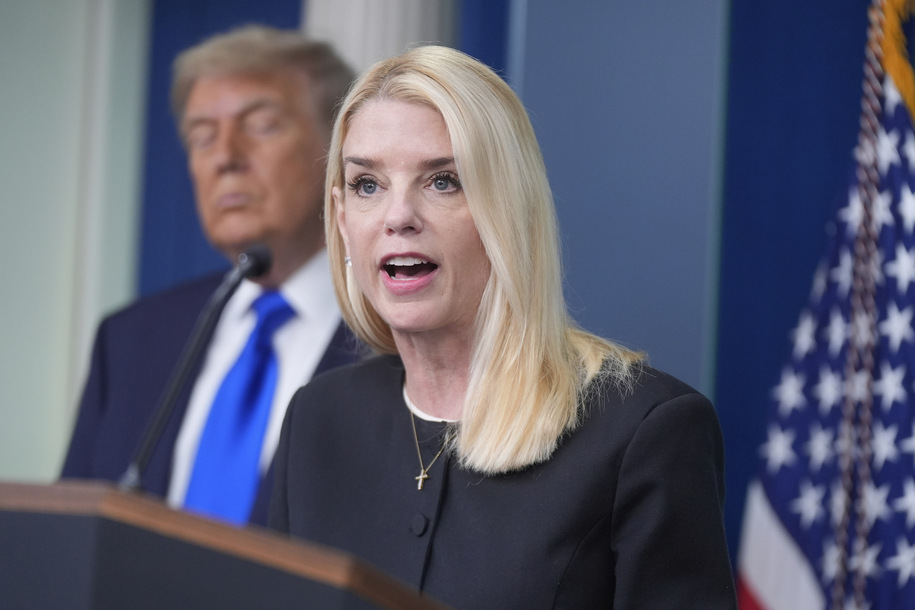
The Justice Department asked a federal court on Friday to unseal grand jury transcripts in Jeffrey Epstein’s case at the direction of President Donald Trump amid a firestorm over the administration’s handling of records related to the wealthy financier. The move — coming a day after a Wall Street Journal story put a spotlight on Trump’s relationship with Epstein — seeks to contain a growing controversy that has engulfed the administration since it announced that it would not be releasing more government files from Epstein’s sex trafficking case. Deputy Attorney General Todd Blanche filed motions urging the court to unseal the Epstein transcripts as well as those in the case against British socialite Ghislaine Maxwell, who was convicted of luring teenage girls to be sexually abused by Epstein. Epstein killed himself in 2019 shortly after his arrest while awaiting trial. Todd Blanche The Justice Department’s announcement that it would not be making public any more Epstein files enraged parts of Trump’s base in part because members of his own administration had hyped the expected release and stoked conspiracies around the well-connected financier. Trump’s demand to release the grand jury transcripts came after The Wall Street Journal reported Thursday on a sexually suggestive letter that the newspaper says bore Trump’s name and was included in a 2003 album for Epstein’s 50th birthday. The letter bearing Trump’s name includes text framed by the outline of what appears to be a hand-drawn naked woman and ends with, “Happy Birthday — and may every day be another wonderful secret,” according to the newspaper. The outlet described the contents of the letter but did not publish a photo showing it entirely. Trump denied writing the letter, calling it “false, malicious, and defamatory” and promised to sue. Trump said he spoke to both to the paper’s owner, Rupert Murdoch, and its top editor, Emma Tucker, and told them the letter was “fake.” “These are not my words, not the way I talk. Also, I don’t draw pictures,” the president wrote on social media. Related | Trump melts down after lewd letter to Jeffrey Epstein is made public The Justice Department said in the court filings that it will work with with prosecutors in New York to make appropriate redactions of victim-related information and other personally identifying information before transcripts are released. “Transparency in this process will not be at the expense of our obligation under the law to protect victims,” Blanche wrote. But despite the new push to release the grand jury transcripts, the administration has not announced plans to reverse course and release other evidence in its possession. Attorney General Pam Bondi had hyped the release of more materials after the first Epstein files disclosure in February sparked outrage because it contained no new revelations. A judge would have to approve the release of the grand jury transcripts, and it’s likely to be a lengthy process to decide what can become public and to make redactions to protect sensitive witness and victim information. The records would show testimony of witnesses and other evidence that was presented by prosecutions during the secret grand jury proceedings, when a panel decides whether there is enough evidence to bring an indictment, or a formal criminal charge.
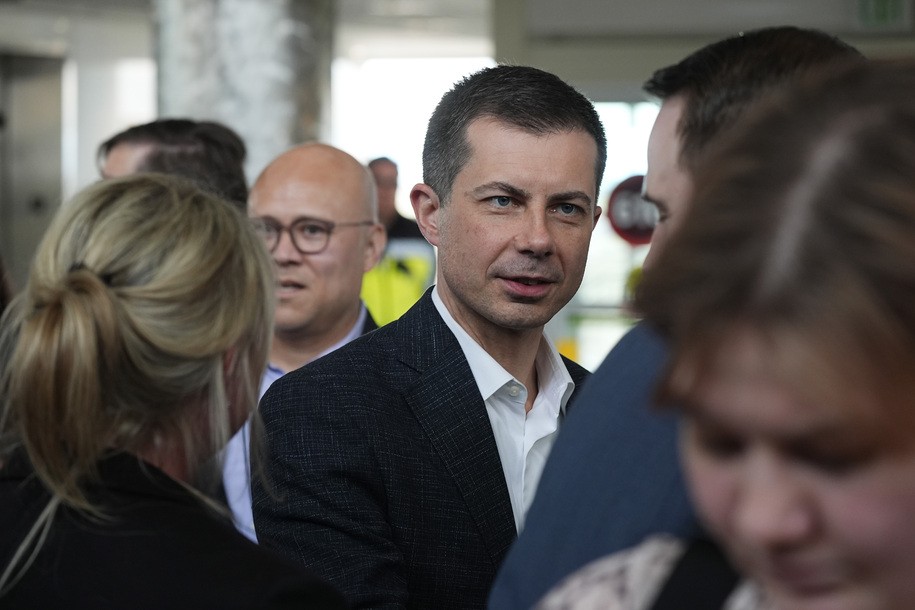
Pete Buttigieg, who served as secretary of transportation under former President Joe Biden, made a surprise appearance Friday on “Pardon My Take,” a popular sports podcast. The guest spot comes as Democrats try to make inroads with young male voters, the core constituency of the so-called manosphere of online content. Buttigieg appeared to announce that internet personality Jersey Jerry had won the podcast’s “Lib of the Year” award. As Jersey Jerry looked on, wearing a “Make America Great Again” hat featuring President Donald Trump’s signature, Buttigieg congratulated him on his “evolving perspective on immigration” and “being open to the idea that vaccines actually work.” Pete Buttigieg did a cameo on the Barstool podcast Pardon My Take presenting a Lib of the Year award lmao pic.twitter.com/u7jd3qsFYL — chyea ok (@chyeaok) July 18, 2025 “Pardon My Take” is one of the most listened to and watched sports podcasts. Buttigieg’s appearance on the program is even more notable since “Pardon My Take” is a part of Barstool Sports, which is led by outspoken conservative Dave Portnoy. Democrats have been fumbling for the past year to find a way to reach out to male voters, 55% of whom voted for Trump in last year’s presidential election, according to exit polls. Online podcasts and streams like “Pardon My Take” have been seen as a main pathway to reaching this demographic. During last year’s presidential campaign, Trump made multiple appearances on programs in the “manosphere,” while the campaign of Democratic nominee Kamala Harris was more reluctant about reaching out to similar programming. Recently, liberal donors have also been strategizing on how to bankroll progressive content that appeals to men. Buttigieg, who also served as the mayor of South Bend, Indiana, from 2012 to 2020, has been discussed as a likely candidate in the 2028 Democratic presidential primaries. By appearing on the podcast and reaching an audience that may be unaware of him or even hostile to Democrats, Buttigieg could be signaling plans to reach beyond the party’s traditional supporters if he decides to run.
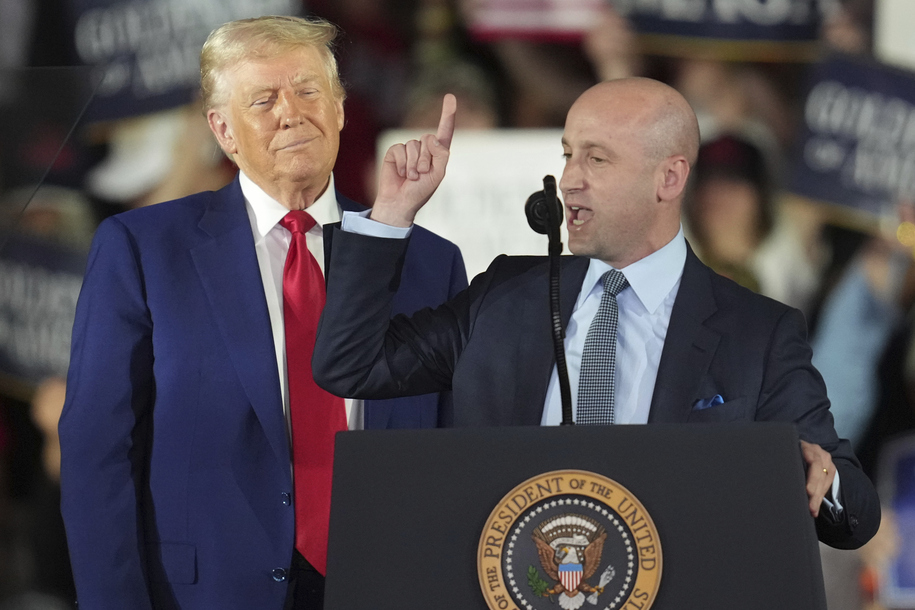
The Trump administration is doing an outstanding job of obliterating every last shred of affirmative action and diversity, equity, and inclusion efforts. But they can’t do it alone. Enter America First, the legal group founded by current White House deputy chief of staff Stephen Miller, here to lend a helping hand. So, the group just filed a complaint with the Department of Justice demanding an “immediate investigation and enforcement action” into Johns Hopkins School of Medicine. You can pretty much guess what the letter says, because it’s just the same ghoulish racist rhetoric that Miller has been engaging in since he was a teenager. Per America First, Johns Hopkins is discriminating on the basis of race, sex, ethnicity, national origin, and “other impermissible immutable characteristics.” “Trump’s New Whip” by Tim Campbell. The complaint pretends that the real concern of the professional racists over at America First is the safety of Americans. Yes, they are just looking out for you, because if medical schools admit anyone but white dudes, basically, they are going to become subpar physicians, and that “endangers public trust in the medical system itself.” But the eroding of public trust is already happening. The administration is currently letting Health and Human Services Secretary Robert F. Kennedy Jr. trash public health efforts, instead pushing his anti-vaccine quackery. Cuts at the National Institutes of Health are endangering cancer research, because everyone knows that fighting cancer is woke, or something. Normally, it wouldn’t be logical or fair to attribute those actions of the administration to a private legal group like America First. But America First is nothing but an extension of Miller’s work in the administration. So the private law firm founded by Miller can tee up complaints so that the administration can “investigate” those complaints. Indeed, the group’s complaint is essentially the same as the administration’s announcement back in March—that it was investigating Johns Hopkins over DEI. Procedurally, it’s glaringly obvious that the complaint was filed as a fig leaf to give the DOJ another tool to attack Johns Hopkins. The administration has been targeting the school for months, sending the Federal Task Force to Combat Antisemitism to Johns Hopkins and nine other schools. America First could have filed a lawsuit against Johns Hopkins and made the same demands, but then they wouldn’t have had the option to tee up a sweetheart settlement of their complaint, allowing the DOJ to run roughshod over Johns Hopkins. America First would also have needed a plaintiff to file a lawsuit, but they don’t need one to file a complaint. That’s not just cynical speculation. It’s basically what the administration already did by filing a sham lawsuit against the state of Texas over its law granting in-state tuition to undocumented students. The state settled with the DOJ the same day the suit was filed, with Texas declaring its own law unconstitutional. Related | Texas throws immigrants under the bus as it caves to DOJ It isn’t clear if America First quite intended to say the quiet part out loud, but their racist screed takes a step that was inevitable, but is still disgusting. The argument is that if Johns Hopkins considers socioeconomic status in admissions, that’s actually still affirmative action because “wealth and income gaps vary significantly between racial groups, with Black and Hispanic households possessing a fraction of the wealth held by White and Asian households. By leveraging these disparities, Johns Hopkins masks racial preferences behind income thresholds.” Yes, that’s an argument Johns Hopkins is doing forbidden DEI by admitting students with lower incomes, because the poors are all Black or Hispanic. To grant America First’s demands here, Johns Hopkins would have to stop admitting students from lower-income families. Well, unless they’re white, of course. This is in keeping with the overall thrust of the Trump administration to make it harder for anyone except rich white people to obtain advanced degrees. The “One Big, Beautiful Bill” capped student loans at an amount that makes it impossible for a lower- or average-income student to go to medical school. Johns Hopkins, for example, costs about $72,000 per year, or $288,000 total, but graduate student loans are capped at $100,000 total. The administration is also functionally killing Public Service Loan Forgiveness, so anyone who chooses a lower-paying public service job will be absolutely hobbled by their loans forever. Just like the administration, America First pretends that if you simply eradicate all efforts to attract anyone except white, straight, moneyed men, then you will get people chosen on pure merit. Except in this administration, “merit” means people like Defense Secretary Pete Hegseth and Transportation Secretary Sean Duffy, objectively unqualified people who got their jobs because Trump watches a lot of Fox News. A medical school filled with dudes like that is the real danger.
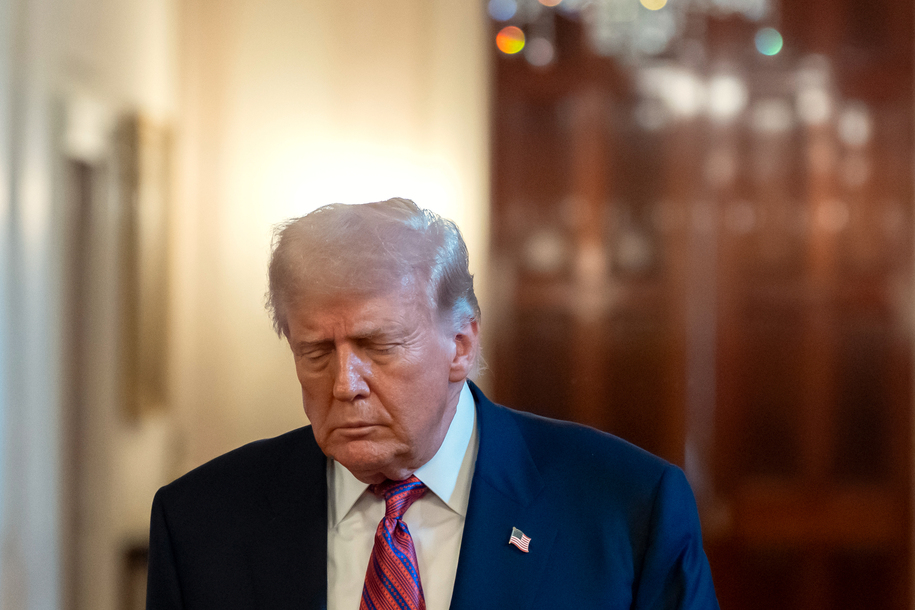
President Donald Trump filed a $10 million lawsuit against The Wall Street Journal and media mogul Rupert Murdoch Friday, a day after the newspaper published a story reporting on his ties to wealthy financier Jeffrey Epstein. Jeffrey Epstein The move came shortly after the Justice Department asked a federal court on Friday to unseal grand jury transcripts in Epstein’s sex trafficking case, as the administration tries to contain a firestorm that erupted after it previously announced it would not be releasing additional government files from the case. Trump had promised the lawsuit after thet Journal put the spotlight on his relationship with Epstein, publishing an article that described a sexually suggestive letter that the newspaper says bore Trump’s name and was included in a 2003 album compiled for Epstein’s 50th birthday. Trump denies writing the letter, calling the story “false, malicious, and defamatory.” Related | Justice Department asks court to unseal Jeffrey Epstein grand jury records In a post on his Truth Social site, Trump cast the lawsuit as part of his efforts to punish news outlets, including ABC and CBS, which both reached multimillion-dollar settlement deals with the president after he took them to court. “This lawsuit is filed not only on behalf of your favorite President, ME, but also in order to continue standing up for ALL Americans who will no longer tolerate the abusive wrongdoings of the Fake News Media,” he wrote. A representative of Dow Jones, the Journal’s publisher, did not immediately respond to a request for comment Friday. The letter revealed by The Wall Street Journal was reportedly collected by disgraced British socialite Ghislaine Maxwell as part of a birthday album for Epstein years before the wealthy financier was first arrested in 2006 and subsequently had a falling-out with Trump. The letter bearing Trump’s name includes text framed by the outline of what appears to be a hand-drawn naked woman and ends with, “Happy Birthday — and may every day be another wonderful secret,” according to the newspaper. Trump denied writing the letter and promised to sue. He said he spoke to both to the paper’s owner, Rupert Murdoch, and its top editor, Emma Tucker, before the story was published and told them the letter was “fake.” “These are not my words, not the way I talk. Also, I don’t draw pictures,” the president wrote on social media. The outlet described the contents of the letter but did not publish a photo showing it entirely or provide details on how it came to learn about it. The suit was filed in federal court in Miami. Related | Trump melts down after lewd letter to Jeffrey Epstein is made public Earlier Friday, Deputy Attorney General Todd Blanche filed motions in a separate federal court urging them to unseal the Epstein transcripts as well as those in the case against Maxwell, who was convicted of luring teenage girls to be sexually abused by Epstein. Epstein killed himself in 2019 shortly after his arrest while awaiting trial. The Justice Department’s announcement that it would not be making public any more Epstein files enraged parts of Trump’s base in part because members of his own administration had hyped the expected release and stoked conspiracies around the well-connected financier. The Justice Department said in the court filings that it will work with with prosecutors in New York to make appropriate redactions of victim-related information and other personally identifying information before transcripts are released. Todd Blanche “Transparency in this process will not be at the expense of our obligation under the law to protect victims,” Blanche wrote. But despite the new push to release the grand jury transcripts, the administration has not announced plans to reverse course and release other evidence in its possession. Attorney General Pam Bondi had hyped the release of more materials after the first Epstein files disclosure in February sparked outrage because it contained no new revelations. A judge would have to approve the release of the grand jury transcripts, and it’s likely to be a lengthy process to decide what can become public and to make redactions to protect sensitive witness and victim information. The records would show testimony of witnesses and other evidence that was presented by prosecutions during the secret grand jury proceedings, when a panel decides whether there is enough evidence to bring an indictment, or a formal criminal charge.
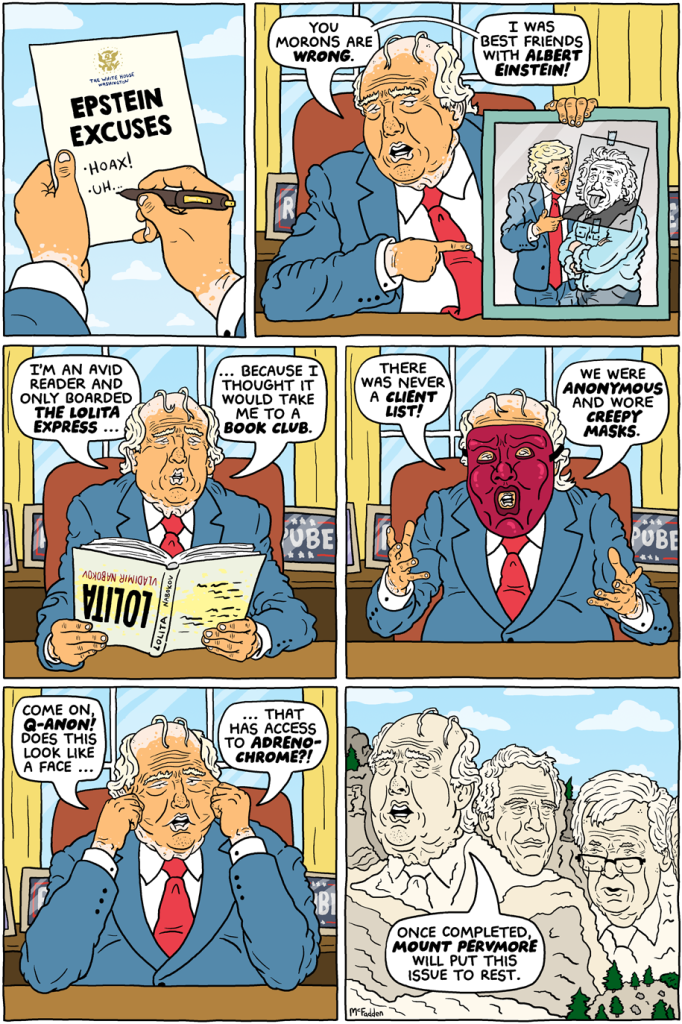
A cartoon by Brian McFadden. Follow me on Mastodon, Bluesky, Patreon, or at my website. Related | Trump melts down after lewd letter to Jeffrey Epstein is made public
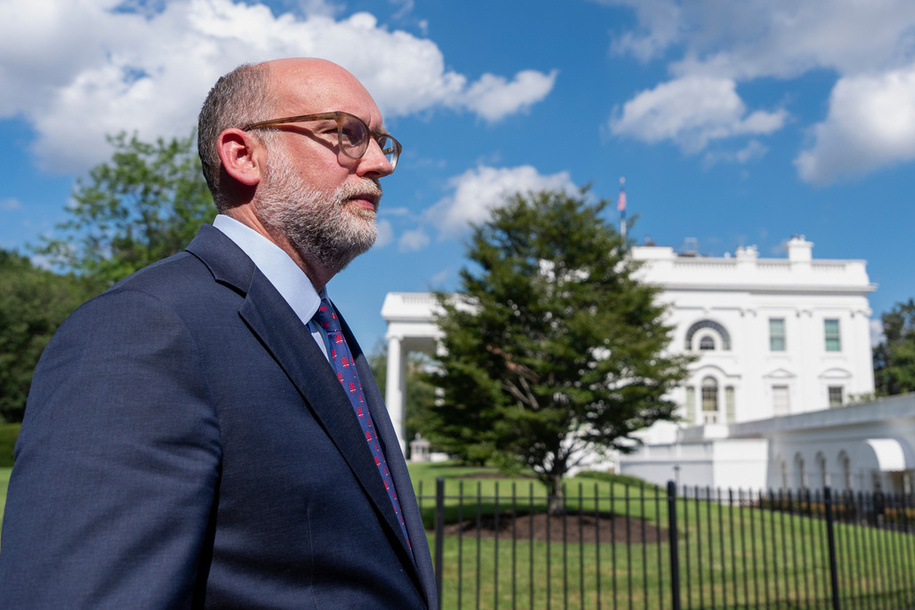
Russ Vought, the Project 2025 architect/ghoul who now runs the Office of Management and Budget, is pretty sure that when Americans voted for Donald Trump, they were enthusiastically endorsing the idea that Trump can single-handedly decide how taxpayer money is spent. This tramples on the separation of powers, but it’s also just a comical reach to say that people who pulled the lever for Trump gave him infinite power. On Thursday, during a Christian Science Monitor breakfast meeting, Vought explained his vision of how the government should work to reporters. First, bipartisanship has got to go, because “literally no one” ran and won “on an agenda of a bipartisan appropriations process.” Buddy, no one ran on that because everyone else understands that the budget process is, of necessity, bipartisan. It’s that whole thing where Congress sets spending, and spending bills need 60 votes to pass. But per Vought, he doesn’t even have to talk to congressional Democrats because he is going to “change the paradigm” of budgeting. “King Trump” by Clay Jones Somehow, cutting Democrats out of the budgeting process will make things better, according to Vought: “I actually think that over time, if we have a more partisan appropriations process—for a time—it will lead to more bipartisanship.” Yep, that is definitely how things work. Vought grudgingly acknowledged that Congress has the power of the purse, but he has a very … unique … understanding of that: “It is one of the most constitutional foundational principles, but that power of the purse does not mean—It’s a ceiling. It is not a floor.” Wait, what? That word salad sounds a lot like Vought thinks that Congress can pass a budget, but then Trump can cut whatever he wants. Actually, yes, that’s precisely what Vought means: “It is not the notion that you have to spend every last dollar.” If Trump can unilaterally refuse to spend money Congress has appropriated, then Congress no longer controls spending power, period. Vought’s actions are in keeping with Trump’s view that Americans elected him to be a king, and by electing him, affirmatively agreed to anything he wants to do. It’s also in keeping with Trump’s February executive order, which essentially said that OMB gets to tell agencies what to do, and they just have to do it. Letting Trump unilaterally cut spending is actually restoring the constitutional balance, per Vought, because it means that the executive branch is “not cowing to a legislative branch’s understanding of its own authorities and powers.” Sure, except the plain language of Article I, Section 8 of the Constitution could not be clearer about where spending power lies: “The Congress shall have Power To lay and collect Taxes, Duties, Imposts and Excises, to pay the Debts and provide for the common Defense and general Welfare of the United States.” Vought doesn’t care for your pesky thoughts about the Constitution, though. He’s a Christian nationalist who espouses a theory of “radical constitutionalism.” That theory is indeed radical, as it essentially requires you to throw out the whole Constitution and just say that the president is a king and Congress cannot place limits on him. The administration’s belief that all power rests with Trump has been, unfortunately, backed by both the Supreme Court and Congress. Since both of those branches have abdicated their duties to act as a check and balance on the executive branch, there is no one to stop Vought from implementing his vision, a world where Congress doesn’t matter and Trump controls everything. Related | GOP passes bill to steal from the poor and give to the rich In case you are wondering, Vought’s vision also means even more cuts. The administration is planning on sending additional rescission packages to Congress, continuing to cut spending even though Trump’s “One Big, Beautiful Bill” already cut the whole of government to the bone to fund tax cuts for the rich and shower money on Immigration and Customs Enforcement. It’s hilarious to watch Vought pretend to be rooting out fraud and finding savings when his boss just added at least $2.4 trillion to the national debt to fund those tax cuts. It’s hilarious to pretend that Trump should be the arbiter of spending when he’s really terrible with money. It’s hilarious to pretend that the administration’s actions have saved Americans money when Elon Musk’s antics with the so-called Department of Government Efficiency have cost the government $135 billion, which far outstrips the ostensible savings achieved by DOGE. None of these people should be in charge of a children’s checkbook, much less the federal government.
A daily roundup of the best stories and cartoons by Daily Kos staff and contributors to keep you in the know. Trump melts down after lewd letter to Jeffrey Epstein is made public He definitely felt Thursday night’s bombshell news story. CBS cancels Trump critic Colbert’s ‘Late Show’—and faces sharp blowback CBS says it was a purely financial decision to cancel the No. 1 show in late night. Sure, buddy. Virginia Republican admits Trump is an albatross around her neck The comments are from leaked audio, and you can bet she won’t repeat it publicly. Wait, Trump’s idiotic plan to reopen Alcatraz could cost how much? Trump can’t handle his own finances, so why would he be able to handle America’s? Democrats are using Trump’s playbook and going after Fox News Another move by Fox to try and protect Dear Leader. Cartoon: He’s different … Why doesn’t ICE deport Superman? Click here to see more cartoons.