Cartoon: Menacing, out of control gang
A cartoon by Mike Luckovich. Related | Trump goons take another step toward creating a secret police force
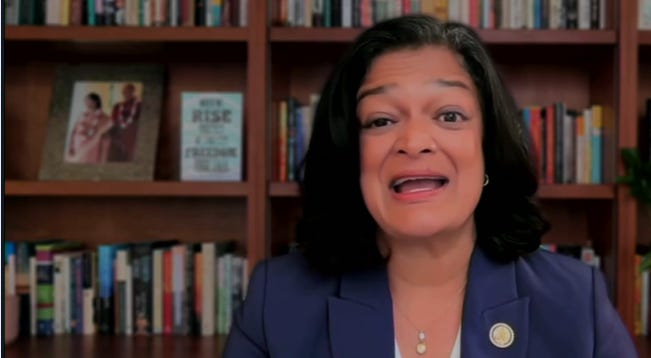
Insurance premiums through the Affordable Care Act marketplace are expected to skyrocket next year, with plans rising by a median of 15% across 105 insurers, according to an analysis from the health policy outlet KFF. The expected price increases—the largest since 2018, when President Donald Trump was first in office—can be directly linked to the actions of Trump and congressional Republicans. Much of the expected increase stems from the fact that Republicans are about to let premium tax credits expire. Those credits were passed in 2021 by congressional Democrats and signed into law by former President Joe Biden. The credits helped 22 million people afford insurance plans in ACA marketplaces. Once those tax credits expire at the end of this year, people will see a 75% increase in premiums they’d be responsible for, according to KFF. Healthier people who feel they don’t need insurance are expected to then drop their coverage rather than pay astronomically more for it. And that smaller, sicker pool of enrollees would be more expensive for insurance companies to cover, leading to spikes in premium prices. The federal website where consumers can sign up for health insurance under the Affordable Care Act is shown on a computer screen in Washington in November 2018. “Insurers expect a large share of enrollees to leave the market, and that those enrollees will be healthier on average, thus leaving the risk pool sicker on average,” KFF wrote. Meanwhile, Trump’s idiotic tariffs are also set to spike the price of drugs and medical equipment, which is, in turn, having an effect on insurance premiums. “The costs of health care services like hospitalizations and physician care, as well as prescription drug costs tend to go up every year, and insurers often raise premiums to cover their increased costs,” KFF wrote. It’s why the American Hospital Association, a major trade group, has pushed back on Trump’s nonsensical tariffs. “Tariffs on [medical devices] could impact patient care by jeopardizing the availability of vital medications and essential health care devices. They also could raise costs for hospitals and heighten shortages and supply chain disruptions,” the group wrote in a May 2025 press release about the financial pressure tariffs will put on hospitals. Already, insurers on some state insurance marketplaces are announcing even higher premiums For example, the Wall Street Journal reported that Blue Cross & Blue Shield of Illinois wants to implement a 27% increase, while Blue Cross in Texas wants to jack up rates 21%. Democrats will hang those price increases around Republicans’ necks in the 2026 midterm elections. “Trump and Republicans are making your health care more expensive,” Democratic Rep. Pramila Jayapal of Washington wrote in a post on X. We already know health insurance is a powerful issue. It’s largely how Democrats won back control of the House in 2018, after Trump and the GOP unsuccessfully tried to repeal the ACA during his first term. Now the GOP is once again coming for people’s health care. And they may find out anew how badly that will end for them.
PoliticusUSA is independent news that is here for you. Please consider supporting our work by becoming a subscriber. Subscribe now Trump and his White House like to say that they are transparent, but the American people got a dose of Trump’s definition of transparency at the White House on Friday. After signing a cryptocurrency bill, Trump departed the stage, shook a few hands, and listened to questions from reporters stationed by the door where the president would be making his exit. The reporter asked Trump about why he hasn’t done more to release the Jeffrey Epstein information. Another reporter can be overheard asking Trump about the birthday card that he wrote for Epstein. Trump didn’t say a word and got out of that room. PoliticusUSA is a reader-supported publication. To receive new posts and support our work, consider becoming a free or paid subscriber. Video: No matter how much Trump threatens lawsuits, blames Democrats, yells, or complains, the Epstein questions are not going away. After the publication of The Wall Street Journal’s story about Trump’s birthday card to Epstein, the questions are getting even louder. Trump has threatened to sue Rupert Murdoch, The Wall Street Journal, and News Corporation, but the questions keep coming. There is only one thing that Trump can do to make the questions go away. It is also the one thing that the president absolutely refuses to do. Trump could release all of the Epstein case information, which reportedly includes visitor logs to Epstein’s island. If Trump has nothing to hide, why is he hiding something? Donald Trump usually can’t get enough of the television cameras, but now that the topic has turned to Jeffrey Epstein, the president has gone quiet and has nothing to say. The one way for Trump to prove that he is innocent is to release everything. The fact that he won’t speaks volumes. What do you think about Trump fleeing the room? Share your thoughts in the comments below. Leave a comment
Abdullah Shihipar The post HHS Doesn’t Need an RFK Jr. It Needs a Lina Khan. appeared first on The Nation.
John Burbank She’s running on a populist economic message that puts affordability of care at its heart and mobilized young grassroots organizers. The post Katie Wilson of Seattle Shows Zohran Mamdani Is Not Alone appeared first on The Nation.
Kaniela Ing Voters aren’t tuning out because they don’t care. They’re tuning out because they’ve been exhausted by fake choices, sold out by both parties, and tired of inauthenticity. The post This Viral Speech Shows How We Win Back Rural America appeared first on The Nation.
Sasha Abramsky Progressive politicians must commit to expanding the court, or voters should pledge their support to other candidates who will. The post Thank the Supreme Court for the Evisceration of the Federal Workforce appeared first on The Nation.
ProPublica has obtained the blueprint for the Trump administration’s unprecedented plan to turn over IRS records to Homeland Security in order to speed up the agency’s mass deportation efforts. By William Turton, Christopher Bing and Avi Asher-Schapiro for ProPublica The Internal Revenue Service is building a computer program that would give deportation officers unprecedented access to confidential tax data. ProPublica has obtained a blueprint of the system, which would create an “on demand” process allowing Immigration and Customs Enforcement to obtain the home addresses of people it’s seeking to deport. Last month, in a previously undisclosed dispute, the acting general counsel at the IRS, Andrew De Mello, refused to turn over the addresses of 7.3 million taxpayers sought by ICE. In an email obtained by ProPublica, De Mello said he had identified multiple legal “deficiencies” in the agency’s request. Two days later, on June 27, De Mello was forced out of his job, people familiar with the dispute said. The addresses have not yet been released to ICE. De Mello did not respond to requests for comment, and the administration did not address questions sent by ProPublica about his departure. The Department of Government Efficiency began pushing the IRS to provide taxpayer data to immigration agents soon after President Donald Trump took office. The tax agency’s acting general counsel refused and was replaced by De Mello, who Trump administration officials viewed as more willing to carry out the president’s agenda. Soon after, the Department of Homeland Security, ICE’s parent agency, and the IRS negotiated a “memorandum of understanding” that included specific legal guardrails to safeguard taxpayers’ private information. Related | How DOGE’s cuts to the IRS threaten to cost more than DOGE will ever save In his email, De Mello said ICE’s request for millions of records did not meet those requirements, which include having a written assurance that each taxpayer whose address is being sought was under active criminal investigation. “There’s just no way ICE has 7 million real criminal investigations, that’s a fantasy,” said a former senior IRS official who had been advising the agency on this issue. The demands from the DHS were “unprecedented,” the official added, saying the agency was pressing the IRS to do what amounted to “a big data dump.” In the past, when law enforcement sought IRS data to support its investigations, agencies would give the IRS the full legal name of the target, an address on file and an explanation of why the information was relevant to a criminal inquiry. Such requests rarely involved more than a dozen people at a time, former IRS officials said. Danny Werfel, IRS commissioner during the Biden administration, said the privacy laws allowing federal investigators to obtain taxpayer data have never “been read to open the door to the sharing of thousands, tens of thousands, or hundreds of thousands of tax records for a broad-based enforcement initiative.” A spokesperson for the White House said the planned use of IRS data was legal and a means of fulfilling Trump’s campaign pledge to carry out mass deportations of “illegal criminal aliens.” Taxpayer data is among the most confidential in the federal government and is protected by strict privacy laws, which have historically limited its transfer to law enforcement and other government agencies. Unauthorized disclosure of taxpayer return information is a felony that can carry a penalty of up to five years in prison. The system that the IRS is now creating would give ICE automated access to home addresses en masse, limiting the ability of IRS officials to consider the legality of transfers. IRS insiders who reviewed a copy of the blueprint said it could result in immigration agents raiding wrong or outdated addresses. “If this program is implemented in its current form, it’s extremely likely that incorrect addresses will be given to DHS and individuals will be wrongly targeted,” said an IRS engineer who examined the blueprints and who, like other officials, spoke on condition of anonymity for fear of retribution. Related | Treasury IG probes if DOGE, Trump sought private taxpayer info The dispute that ended in De Mello’s ouster was the culmination of months of pressure on the IRS to turn over massive amounts of data in ways that would redefine the relationship between the agency and law enforcement and reduce taxpayers’ privacy, records and interviews show. In one meeting in late March between senior IRS and DHS officials, a top ICE official made a suggestion: Why doesn’t Homeland Security simply provide the name and state of its targets and have the IRS return the addresses of everyone who matches that criteria? The IRS lawyers were stunned. They feared they could face criminal liability if they handed over the addresses of individuals who were not under a criminal investigation. The conversation and news of deeper collaboration with ICE so disturbed career staff that it led to a series of departures in late March and early April across the IRS’ legal, IT and privacy offices. They were “pushing the boundaries of the law,” one official said. “Everyone at IRS felt the same way.” The Blueprint The technical blueprint obtained by ProPublica shows that engineers at the agency are preparing to give DHS what it wants: a system that enables massive automated data sharing. The goal is to launch the new system before the end of July, two people familiar with the matter said. The DHS effort to obtain IRS data comes as top immigration enforcement leaders face escalating White House pressure to deport some 3,000 people per day, according to reports. One federal agent tasked with assisting ICE on deportations said recent operations have been hamstrung by outdated addresses. Better information could dramatically speed up arrests. “Some of the leads that they were giving us were old,” said the agent, who spoke on condition of anonymity because he was not authorized to speak with the press. “They’re like from two administrations ago.” In early March, immigrants rights groups sued the IRS hoping to block the plan, arguing that the memorandum of understanding between
Republicans in this fall’s two governor’s races are clinging to President Donald Trump, despite running in left-leaning states. It’s a strange strategy, one made all the stranger by the fact that one of those Republicans is aware of the liability Trump poses to her campaign. In audio obtained by the news outlet Dogwood, Virginia’s Republican gubernatorial nominee, Winsome Earle-Sears, admits the damage that Trump, Elon Musk, and their so-called Department of Government Efficiency did to her chances. She claims her race against Democratic nominee Abigail Spanberger was “neck and neck” until Trump’s reelection and DOGE’s war on the federal bureaucracy rattled Northern Virginia’s D.C.-adjacent suburbs. “[Spanberger] was throwing that on the left and right,” Earle-Sears said at a Virginia Beach event in June. “Just DOGE, DOGE, DOGE, DOGE and Trump and DOGE and Trump. And so then I started down six points. Dropped me six points in January.” Abigail Spanberger, Democratic candidate the governor of Virginia, speaks during the Women’s Summit in Herndon, Virginia, in 2018. Later in the same audio, she tries to project optimism—because that’s required at campaign events—but the reality is harsher, as polling shows. A new poll from Virginia Commonwealth University shows that 49% of registered voters in the state support Spanberger, while only 37% back Earle-Sears. A December survey from the same pollster had Spanberger’s lead slightly narrower, at 44% to Earle-sears’ 34%. The new VCU poll finds Trump’s approval in Virginia at a dismal 40%. And that’s largely in line with other polling, which shows to be pretty unpopular in the state. Last month, Morning Consult found that 45% of Virginia voters disapproved of the job he was doing as president, while a majority (52%) disapproved. Worse for Earle-Sears? A CNN poll released Thursday finds that 72% of Democrats and Democratic-leaning voters are “extremely motivated” to vote in next year’s midterms, compared with just 50% of Republican-aligned voters. Despite acknowledging that Trump is a drag on her campaign, Earle-Sears can’t quit him. Just weeks ago, she went on the right-wing outlet Newsmax to praise Trump’s Big Beautiful Bill, claiming it “does so many great things.” But that’s the catch. In today’s GOP, it doesn’t pay to buck Trump—even when it’s electorally the smart thing to do.