Senate Democrats Walk Out Of Hearing In Protest As Republicans Hold Illegal Vote
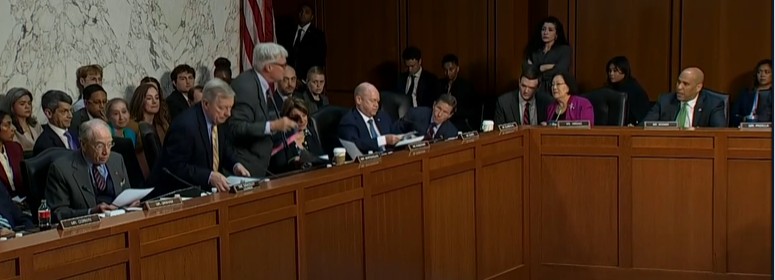
Please support PoliticusUSA by considering becoming a subscriber. Subscribe now Republicans in the House and Senate are so desperate to do Donald Trump’s bidding before they potentially lose power next November, that they are now violating the rules of their bodies to please Donald Trump As Senate Democrats walked out of the Judiciary Committee hearing on the nomination of Emil Bove to the federal bench, ranking member Sen. Cory Booker (D-NJ) said behind to deliver a statement before he too left. Booker said: Why are you doing this? This is outrageous. This is a kangaroo court. That’s all we have here. Mr. Chairman, to violate your own rules without going by the mandates of the parliamentarian. This is unbelievable. There’s a way to do this if you want to force this through. If you want to ram this through, there’s a way to do it in accordance to the rules as spelled out by the parliamentarian. It is simple. It is clear there’s a pathway to achieve what you’re trying to achieve. It shows that you do not want to simply hear from your colleagues. This is absolutely wrong. And, sir, this is this is, to me, one of those moments where we are not showing common respect for each other on both sides. I have sat here when we were in the majority and listened to my colleagues arguments, listen to their passionate statements, and then we voted. This is not that. This is us simply trying to rush through one of the most controversial nominees we’ve had under this presidential administration, sir. God bless America. You are a good man. You are a decent man. Why are you doing this? What is Donald Trump saying to you that are making you do something which is violating the decorum of this committee, the rules of this committee, the decency and the respect that we have each other to at least hear each other out? PoliticusUSA is a reader-supported publication. To receive new posts and support our work, consider becoming a free or paid subscriber. I’ve sat through so many long speeches of my colleagues, heard their objections. Listened with sincerity to try to see what their arguments are. But we are not doing that, sir. This is wrong, and you know it. There are some people on this committee who are the least firebrand people, and they’ve walked out some of the least controversial people in the Senate, some of the people that worked the hardest to find bipartisan common ground have just walked out of this committee, and you don’t even seem to care. But I know you do. I know your heart, Senator Grassley. This is wrong. I know the kind of person you are, and you know this is wrong. There’s no this is not necessary. What is another half an hour to allow senators to be heard? It’s what the Constitution mandates. It’s the ideals of the United States Senate. The world’s most deliberative body should take a decent amount of time to deliberate. But here, we’re not doing that here. We are jamming this through with some sense of false urgency. It’s one thing not to hear from whistleblowers. It’s another thing not to hold another hearing. But to not even allow my colleagues to have their moment to speak against this justice. It’s just wrong. And I know you know this. I know you know this. The only time this rule has ever been overturned by both parties was done when one minority was trying to pull some stunt to stop the committee from hearing this is not that. This is not the two-hour rule. This is a basic element of the ideals of this committee, sir. It is the basic understanding of having debate and deliberation. It’s a basic understanding of we can listen to each other, even if we disagree, that we should have time and space and a forum to listen. Sir, this is just wrong in every way. It is wrong in every single way. This is an abuse of power. It’s an undermining of the well-being and the integrity of this, this senate and this committee that I have for so long. I’ve been so honored to be a part of. This is wrong, sir. And I joined with my colleagues and leaving. This is a sham vote. This is wrong. Committee Republicans violated the committee rules that require at least two members of the minority party be present before a vote can be held. Chairman Chuck Grassley held the vote on the nomination with zero Democrats present. Republicans took these extreme steps to silence a whistleblower whose claims suggest that Bove is completely unfit and unqualified for a lifetime appointment to the federal bench. What was more important than the Democratic walkout was Cory Booker explaining exactly why they were walking out. The American people need to understand that the disease of lawlessness has infected more than the White House. It has also consumed the Republican majorities in Congress. Republicans are abusing their power, and it is up to Democrats to expose them. What do you think of the Democratic walkout and Republican abuse of power? Share your thoughts in the comments below. Leave a comment