Politics

Politics

Dismantling the Department of Education, Without Saying Why

The Supreme Court is allowing Donald Trump to dismantle the Department of Education. But it won’t say why. Yesterday—almost exactly a week after the Court lifted a lower court’s block on Trump’s plans to fire thousands of federal employees—a majority of the justices decided to give the president the go-ahead for a different set of mass layoffs. Last week, the Court provided a handful of sentences that vaguely gestured at why it might have allowed the administration to move forward. This week, it offered nothing at all. There’s something taunting, almost bullying, about this lack of reasoning, as if the conservative supermajority is saying to the country: You don’t even deserve an explanation. Whereas last week’s case involved orders to lay off employees from across the entire federal government, this week’s involves just the Education Department. Over the course of his 2024 campaign and in the first few months of his second term, Trump repeatedly announced his plans to close the agency. The department was “a big con job,” he told reporters in February, and he would “like to close it immediately.” In March, Education Secretary Linda McMahon announced plans to cut the department’s workforce in half. Trump followed up with an executive order mandating that McMahon “take all necessary steps to facilitate the closure of the Department of Education.” There was one minor problem with this plan: The executive branch, at least theoretically, did not have the unilateral authority to abolish the Education Department, which was created by an act of Congress in 1979. A coalition of states, school districts, and unions sued, and a federal district court temporarily blocked the administration from moving forward. That court order required the department to rehire employees already laid off, pointing to both the Constitution and a statutory prohibition against “arbitrary and capricious” actions by federal agencies. [David A. Graham: What does the Department of Education actually do?] In that lower court, the government argued that it sought only to improve the “efficiency” and “accountability” of the department through “reorganization,” but District Judge Myong J. Joun was unconvinced. “A department without enough employees to perform statutorily mandated functions is not a department at all,” he wrote. An appeals court upheld Joun’s ruling, freezing Trump’s plans while the district court continued to weigh the underlying legal questions. At this point—stop me if you’ve heard this one before—the Supreme Court stepped in. Despite a frustrated dissent from the Court’s three liberal justices, the majority’s unsigned emergency ruling allowed Trump to carry out his plans while the litigation in the lower courts continues. “The majority is either willfully blind to the implications of its ruling or naive,” Justice Sonia Sotomayor wrote, “but either way the threat to our Constitution’s separation of powers is grave.” She went on: “The President must take care that the laws are faithfully executed, not set out to dismantle them.” The odd protocol of the Court’s emergency docket—sometimes called the “shadow docket”—means that the underlying question of whether Trump has the legal authority to tear apart the Education Department remains unresolved, even as a majority of the justices have allowed him to carry out his plans. Courts—even the Supreme Court—could still find the department’s dismantling illegal down the road. But in the meantime, the agency will have been devastated, perhaps irreparably. Layoffs will dramatically reduce the staffing of the already overworked Office of Civil Rights, which is responsible for ensuring equal access to education, including for disabled students. The administration will eviscerate the office responsible for helping students with financial aid for higher education; the government has said that this portion of the agency’s portfolio will be shifted over to the Treasury Department, but what this will look like in practice is unclear. The cuts will almost erase the Institute for Education Science, which publishes authoritative data on American schools and has already missed key deadlines this year. Given the potentially devastating effects of the Supreme Court’s ruling on congressionally mandated programs, it’s all the more galling that the majority didn’t bother to provide even a cursory explanation of its thinking. This terseness has become common as the Court has scaled up its use of emergency rulings—rulings that, it’s hard not to notice, have a striking tendency to align with the Trump administration’s priorities. Stephen I. Vladeck, a law professor at Georgetown University and an authority on the shadow docket, tallied the Education Department order as the 15th since early April in which the Court has granted Trump emergency relief, and the seventh in which the justices have provided not a word of explanation. (Until recently, the shadow docket was used far more rarely, and only for truly urgent matters.) Do the conservative justices feel that the president really does have the legal authority to destroy a Cabinet department on his own? Or perhaps they believe that the plaintiffs lacked the ability to bring the case at all in federal court? Maybe the reason was something else altogether. There’s no way to know. This silence is damaging, both to the legitimacy of the Court and to the rule of law. The judiciary is a branch of government that is meant to provide reasons for its actions—to explain, both to litigants and to the public, why judges have done what they have done. This is part of what distinguishes law from the raw exercise of power, and what anchors the courts as a component of a democratic system rather than setting them apart as unaccountable sages. With a written opinion, people can evaluate the justices’ reasoning for themselves. Without it, they are left to puzzle over the Court’s thinking like ancients struggling to decipher the wrath of gods in the scattering of entrails.

Politics

What on earth are Elon Musk and Greg Abbott emailing about?

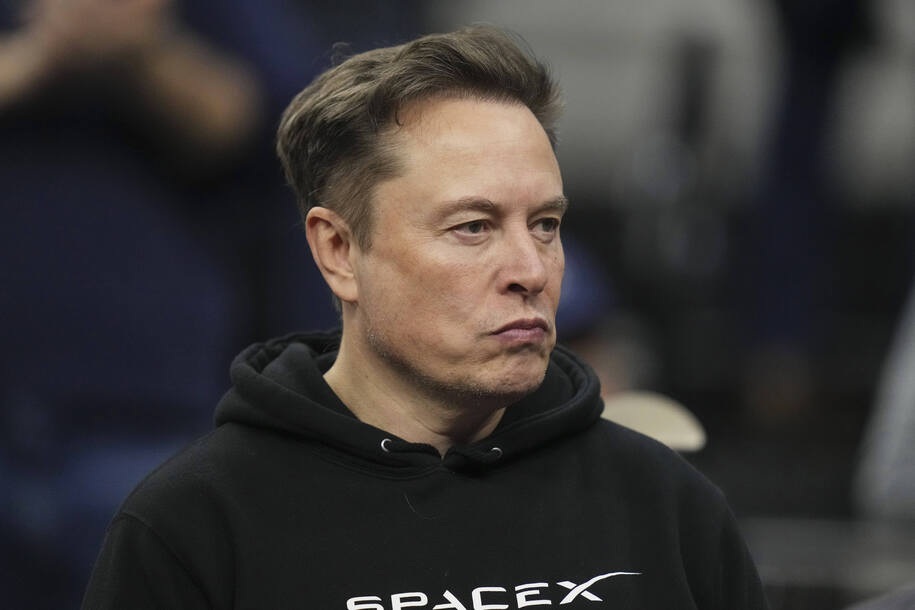
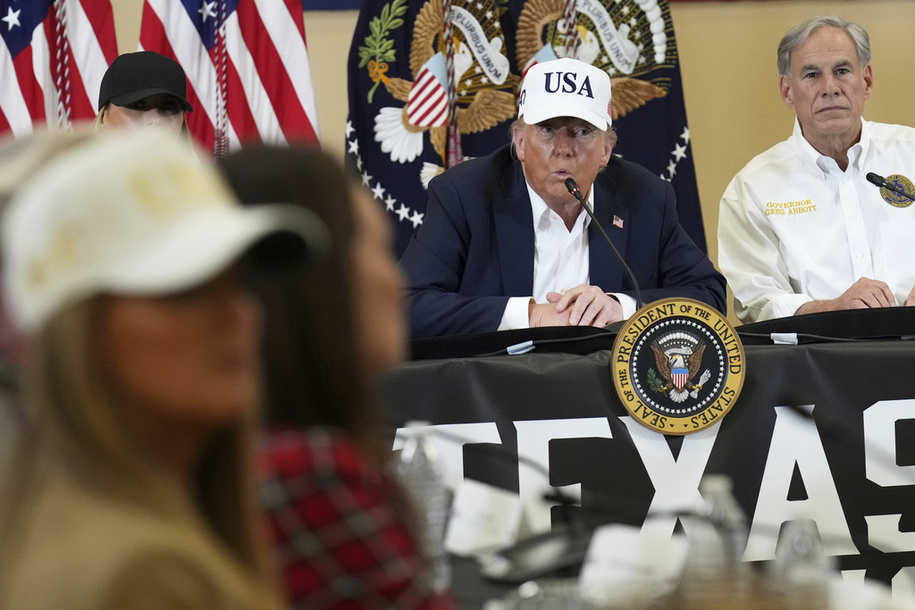
Texas Gov. Greg Abbott is refusing to release months’ worth of emails between his office and right-wing billionaire Elon Musk, claiming that the contents are too “intimate or embarrassing” to share. That’s not a joke. According to a joint report from ProPublica, The Texas Newsroom, and The Texas Tribune, the correspondence spans from last fall to now and was requested under public records laws. Abbott’s office initially estimated it would take more than 13 hours to review the emails, and accepted a $244.64 processing fee. Then it suddenly changed course. Instead, the governor’s office argued the records were protected by “common-law privacy”—a legal doctrine that, as some attorneys say, is usually reserved for personal health information or details about minors, not conversations between elected officials and billionaires with big business interests in the state. “Section 552.101 encompasses the doctrine of common-law privacy, which protects information that is (1) highly intimate or embarrassing, the publication of which would be highly objectionable to a reasonable person and (2) not of legitimate concern to the public,” Abbott’s public information coordinator, Matthew Taylor, wrote in a letter to the Texas attorney general’s office. The letter went further, claiming the emails included “financial decisions that do not relate to transactions between an individual and a governmental body,” as well as privileged exchanges with lawyers, internal policy discussions, and information on how Texas courts major companies to invest in the state. Releasing them, Taylor warned, “would have a chilling effect on the frank and open discussion necessary for the decision-making process.”  Then-President-elect Donald Trump listens to Elon Musk as he arrives to watch SpaceX’s rocket Starship lift off for a test flight in Texas in November 2024. That might sound plausible—if it didn’t also seem like a dodge. “Embarrassment” is a strange excuse for hiding messages between one of the country’s most powerful Republican governors and the world’s wealthiest man. Musk’s companies are deeply involved in state policy, and Abbott has openly allied himself with Musk, promoting him as a symbol of Texas’s pro-business, anti-regulation stance. As ProPublica notes, the privacy exemption cited by Abbott’s office is rarely used to block records about high-profile government dealings. It’s usually invoked to hide things like medical records, not secret communications between public officials and politically connected billionaires. Musk’s SpaceX rocket company, for its part, also objected to releasing its communications, claiming the emails contained proprietary info and warning of “substantial competitive harm” if made public. Meanwhile, a recent Texas Supreme Court decision has made it even easier for state officials to avoid open records laws. And Abbott’s office still has not given a clear explanation for why these specific emails with Musk should stay under wraps. That only adds to the mystery. Records like these allude to Musk’s growing influence in Texas politics. Earlier this year, The Texas Newsroom published emails and calendar entries revealing that the tech billionaire’s company’s representatives met regularly with lawmakers who backed Musk’s priority bills. The outlet also found a letter from Lt. Gov. Dan Patrick to the Federal Aviation Administration, pushing for faster approval of SpaceX rocket launches. Since then, Musk’s Texas operations have expanded. Tesla, SpaceX, and X are now or will soon be headquartered in the state. Voters recently approved turning Starbase—SpaceX’s launch site in South Texas—into an official town. And as Musk has moved further right politically, Abbott and other Texas leaders have kept paving the way for his business ventures. So the real question isn’t whether the emails are embarrassing. It’s what, exactly, Abbott and Musk were discussing behind closed doors—and why they’re working so hard to hide it.

Politics

The Foster care system has a suicide problem. Federal cuts threaten to slow fixes.

By Cheryl Platzman Weinstock for KFF Health News If you or someone you know may be experiencing a mental health crisis, contact the 988 Suicide & Crisis Lifeline by dialing or texting “988.” Elliott Hinkle experienced depression and suicidal thoughts even before entering the foster care system in Casper, Wyoming, at age 15. At the time, Hinkle, who is transgender, struggled with their sexual identity and gender issues, and their difficulties continued in foster care. They felt like they had no one to confide in — not their foster parents, not church leaders, not their caseworker. “To my knowledge, I don’t remember ever taking a suicide screening,” Hinkle said. “No one ever said: ‘Are you having thoughts of taking your life? Do you feel hopeless?’” With their psychological and behavioral health needs left unaddressed, Hinkle’s depression and suicidal thoughts worsened. “Do I stay in the closet and feel terrible and want to end my life?” Hinkle said. “Or do I come out and lose all my supports, which also feels dangerous?” Children in foster care are significantly more likely to have mental health issues, researchers say. They attempt or complete suicide at rates three to four times that of youths in the general population, according to several studies. LGBTQ+ people in foster care, like Hinkle, are at an even higher risk of having suicidal thoughts. Elliott Hinkle struggled with mental health issues as a teenager in the Wyoming foster care system, falling into systemic gaps experts say affect many children and young adults in the system. Yet despite the concentration of young people at risk of serious mental illness and suicide, proactive efforts to screen foster children and get them the treatment they need have been widely absent from the system. And now, efforts underway to provide widespread screening, diagnosis, and treatment are threatened by sweeping funding cuts the Trump administration is using to reshape health care programs nationwide. In June, federal officials announced they would shut down a suicide hotline serving LGBTQ+ youths as part of those cuts. Children in foster care use a disproportionate amount of Medicaid-funded mental health services. Meanwhile, President Donald Trump’s massive budget package, passed this month by Congress, contains substantial shifts in Medicaid funding and policies that are projected to drastically reduce services in many states. “I think anybody who cares about kids’ well-being and mental health is concerned about the possibility of reduced Medicaid funding,” said Cynthia Ewell Foster, a child psychologist and clinical associate professor in the University of Michigan psychiatry department. “The most vulnerable children, including those in foster care, are already having trouble getting the services they need.” A lack of federal standards and other system-level issues create barriers to psychological and behavioral care in the child welfare system, said Colleen Katz, a professor at Hunter College’s Silberman School of Social Work in New York. “When you’re talking about anyone getting screened for suicide ideation upon entrance into the system, it’s inconsistent at best,” she said. Katz said all children entering foster care should have a brief, standardized suicide screening embedded into their initial medical assessment. And more screenings need to be conducted throughout a foster care stay, she said, because youths getting ready to transition out of the system are also vulnerable. Hinkle, now 31, said the summer before they aged out of the system was “one of the darkest periods, because I was coming to terms with the church not wanting me to be gay and I was about to lose stable housing and whatever foster care support there was.” Related | Trump cruelly cuts off suicide prevention hotline for queer youth Katz studied transition-age youths in foster care in California, which has the highest numbers of placements in foster care nationwide. According to her analysis, 42% of study participants had thoughts of taking their life and 24% had attempted suicide, and she expects findings would be similar in other states. Katz also examined suicide screening tools and found many that already exist could work and be easily administered by trained child welfare workers or alternative frontline service providers, or embedded in existing mental health services. Still, the quality of services varies by state and locality and can hinder attempts to curb suicides. Julie Collins, vice president of practice excellence at the Child Welfare League of America, which advocates for improvements to the child welfare system, said the gap in suicide prevention in foster care mirrors the overall nationwide void of behavioral health services for children and adolescents. “The preparation of people coming into the field isn’t what it needs to be,” Collins said of the lack of training for caseworkers. Ewell Foster is trying to change that. She worked with the state of Michigan to redefine and update the competencies required to earn an undergraduate certificate in child welfare in the state. Eighteen colleges and universities that offer certificate programs in child welfare in Michigan now teach about suicide prevention. “It’s something the workforce has asked for,” Ewell Foster said. “They need real clear guidance on what to do when they are worried about someone.” So far, Ewell Foster’s effort to change the wider system has not run into any roadblocks. Her work with Michigan’s child welfare agency is still being funded under a grant administered by the Substance Abuse and Mental Health Services Administration. Agency spokesperson Danielle Bennett said such grants will continue for up to three years. However, the future of the federal agency has been in question for months. The Trump administration has laid off hundreds of its employees and has proposed folding its functions into another agency. Related | The Trump administration’s war on children Some states have made changes to address the foster care gaps on their own, but often it has taken legal action to spark changes in suicide prevention efforts. In Kansas, officials made several changes after the state settled the McIntyre v. Howard class action lawsuit in 2021 on behalf of foster children who the suit alleged were subjected to inadequate access to mental health resources and moved from home to home

Politics

The Recap: Biden shuts down right-wing conspiracy, and Trump sends economy reeling

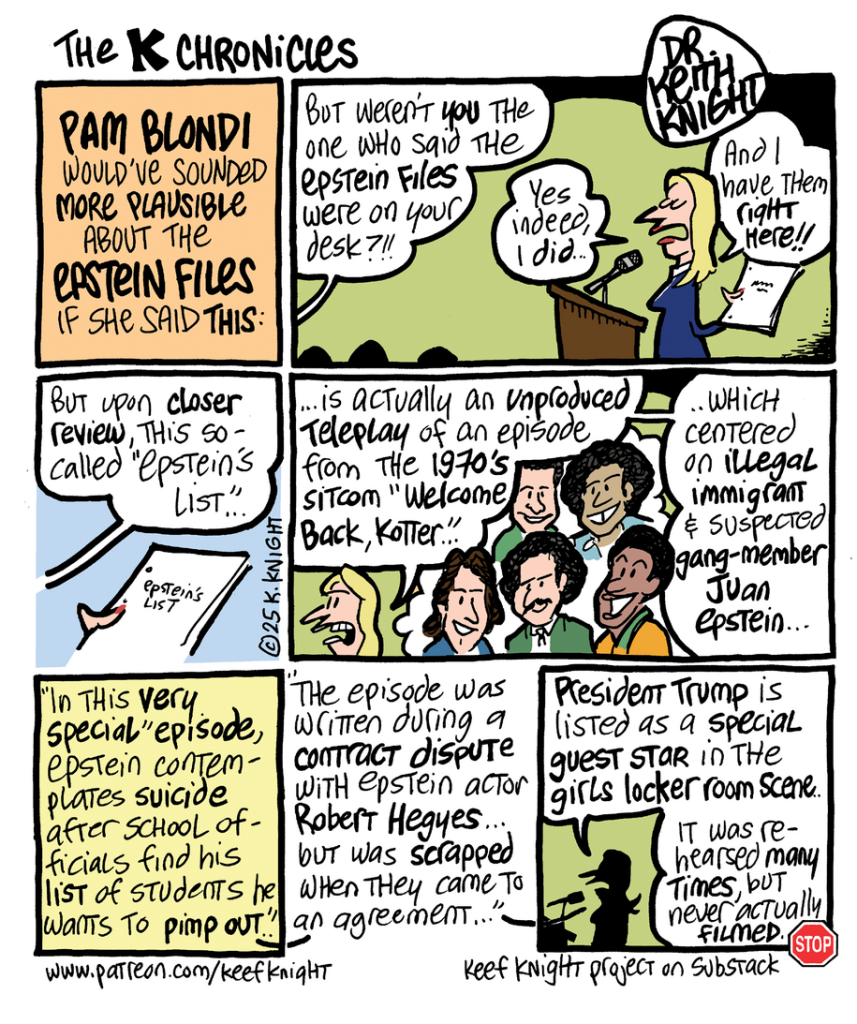
A daily roundup of the best stories and cartoons by Daily Kos staff and contributors to keep you in the know. Trump unleashes new hell on the economy—even if he pulls a TACO Put simply, the economy is fucked. Republicans bet on Trump in blue state governor races Let’s hope it builds a blue wave. Trump officials think fraud is just fine—if you’re a Republican When it comes to letting right-wingers get away with crimes, the Trump team won’t even pretend to back the blue. Cartoon: Accident prone Whoops—Elon Musk just keeps accidentally being a Nazi. Trump and MAGA turn on each other over Epstein files Hmm, any reason why he wouldn’t want a purported list of sex criminals released? Biden smacks down GOP’s fake scandal The right just can’t let the autopen conspiracy go. Click here to see more cartoons.

Politics

Florida built a black site and other red states are sure to follow

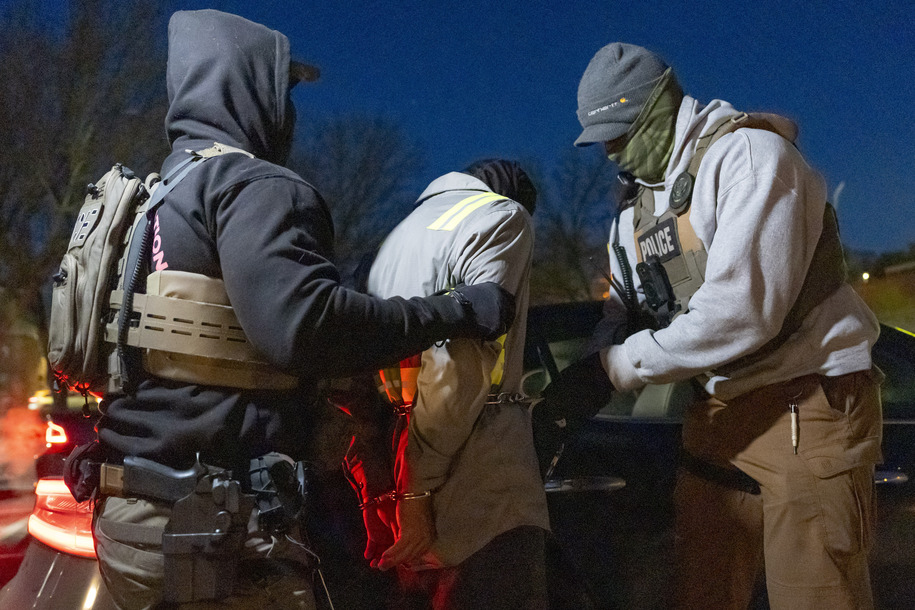
Hundreds of people who are being detained in Florida’s “Alligator Alcatraz” have no criminal charges in the United States whatsoever. But that hasn’t stopped the Trump administration from constructing a stateside facility with the level of dehumanization and terror that previously required deporting immigrants to other countries’ prisons, like El Salvador’s CECOT.  Why outsource your black sites when you can build them at home? So efficient, so America First. Protesters gather outside of “Alligator Alcatraz.” The Miami Herald found that, of the more than 700 people currently being held in the Florida detention center or scheduled to be transferred there shortly, only about one-third have criminal convictions, ranging from attempted murder to traffic violations. Only in the bigoted nativist Trump administration do traffic violations make you a “deranged psychopath” who has to be locked up in a black site in the Everglades.  There was never any reason to suspect that stateside immigrant detention facilities would be more humane or grounded in reality than those that the administration has illegally rendered to other countries. Innocent people aren’t getting deported to foreign prisons because the Trump administration’s efforts are slapdash and hasty; they’re getting deported because the Trump administration doesn’t care if they’re innocent people.  Department of Homeland Security records show that the Trump administration knew that a large majority of the Venezuelan immigrants it sent to CECOT in March had no criminal convictions. If the use of the term “black site” feels a bit inflammatory or like overreach here, that’s understandable. It’s the term usually reserved for secret prisons in other countries run by the Central Intelligence Agency during the Iraq War. But Florida’s detention center features the same brutality, lack of oversight, and opacity. So if the shoe fits … For example, immigration attorneys are reporting that they’re not able to visit their clients who are detained at “Alligator Alcatraz.” One attorney even said that, when she arrived to visit her client and other possible clients, she wasn’t allowed in. One of the detainees she was trying to see was a 15-year-old boy who she said was kept at the detention center for at least 3 days. Other attorneys have said that their clients don’t even appear in the immigration court system, making it impossible to file motions on their behalf.  Florida is also refusing to let state lawmakers—well, Democratic lawmakers—into the facility, which is a violation of state law. Per Florida, that law only applies to facilities run by the Department of Corrections, and the immigrant detention facility isn’t under DOC jurisdiction.  Related |Trump says he wants other states to build migrant detention centers after Florida tour So who is running this thing?  Last month, two environmental groups filed a lawsuit over how the government dropped this monstrosity into one of the most sensitive ecosystems in the country without a required environmental review. In a recent filing in that case, DHS told the court that it has no authority over the facility because DHS hasn’t given any federal money to Florida.  The location of “Alligator Alcatraz” So, when it comes to liability, it’s not under the jurisdiction of either the state or federal government, but somehow, some government entity has the authority to enter into sweetheart deals with companies run by big GOP donors.  Vendors who donated millions to Florida Gov. Ron DeSantis and President Donald Trump, among other GOP candidates, have been rewarded with contracts to provide the facility with services that remain secret because they signed nondisclosure agreements.  Florida already has plans for a second facility, with other red states following suit. Homeland Security Secretary Kristi Noem bragged that the Trump administration is in talks with five GOP governors about the exciting opportunity that awaits them. And what state wouldn’t want a black site of its very own? There’s a staggering amount of federal money sloshing around, it gets to engage in brutality against immigrants, and it can shovel business to its biggest donors. It’s the epitome of Trump’s American dream. 

Scroll to Top