Politics

Politics

When ICE came up empty

A community’s rapid response to a heavily militarized raid targeting undocumented immigrants in Los Angeles’ diverse MacArthur Park neighborhood helped stave off authorities. By George B. Sánchez-Tello for Capital & Main Los Angeles’ MacArthur Park was strangely desolate on a summery Monday morning until the ground began to rumble. Then, the convoy arrived: The eight-wheel diesel-powered U.S. Army tactical trucks, Humvees and armored vehicles — with roof hatches. They accompanied white, unmarked passenger vans and black SUVs, not to mention a large trailer containing numerous horses. Federal agents use an armored truck to block off Wilshire Boulevard and Alvarado Street, the eastern road through MacArthur Park. The Humvees blocked traffic on Wilshire Boulevard, which bisects the 35-acre park at the heart of this densely populated and famously Central American neighborhood west of Downtown Los Angeles, leaving diesel exhaust in their wake. Immigration and Customs Enforcement had arrived, along with its support, including U.S. Border Patrol agents on horseback. Those agents wore black padded armor, helmets and, beneath them, masks that made them virtually unidentifiable. Dozens of other masked agents, dressed in camouflage and tactical vests and heavily armed, emerged from armored cars and unmarked vans. Their faces too were hidden — beneath reflective glasses, military-style helmets and more masks. (Their U.S. Border Patrol patches were visible on their uniforms.) A black Department of Homeland Security helicopter circled overhead.   Meanwhile, the normal daily life of MacArthur Park had come to a halt. There were no children hanging from its jungle gyms, swinging from its bars or just running around on the playground. The parents who typically lounge about on the nearby benches, keeping an eye on their children, were gone, as though by some magic spell. The ambulant vendors who sell candy, fruit, juices, soft drinks and cheap plastic toys were nowhere to be seen. No one kicked a soccer ball. Border Patrol agents atop horses equipped with protective armor march across an empty soccer pitch in MacArthur Park. Other typical sounds of the park, like people speaking Spanish or the ancient Quiché Maya indigenous language from Central America, were gone. There was no music — no cumbias, merengue and reggaeton blasting from visitors’ handheld speakers — and no evangelical preachers quoting Bible verse to warn listeners of the End of Days on mobile speakers. The previous day, warnings appeared — single sheets of paper taped to light poles, trees and fences around the park — warning locals to stay away. They cited rumors of possible ICE raids at MacArthur Park. Word also spread on Instagram, as well as other social media apps such as Signal, Telegram and WhatsApp. A federal agent looks at a flyer taped to an electric box warning residents of rumored ICE raids that morning at MacArthur Park. Ad hoc community defense groups that have formed in recent weeks to protect locals and document raids in many parts of Los Angeles played a substantial role in spreading the warnings in online discussion threads. Such efforts succeeded in essentially emptying the vast park of its habitual patrons. So, when the agents on horseback and others swept through the park, they encountered little more than empty playgrounds, fields and benches. The agents, for the most part, advanced quickly. But the area wasn’t empty. Local Spanish-language television crews were ready to broadcast from their branded vans. Photographers representing the New York Times, the Associated Press, Agencia Press, the Los Angeles Times and other news organizations were present near the park’s amphitheater and beyond. Dozens of anti-ICE rapid response team organizers, as well as legal observers in bright yellow t-shirts, stayed close, some speaking into megaphones to tell residents to stay away. One man rolled a mobile P.A. system that played a pre-recorded message in English and Spanish laying out people’s rights — to remain silent; to speak to an attorney; to ask for a signed warrant; and to not sign documents. The cacophony of their announcements drew people out of surrounding businesses, medical offices and apartments, even as more reporters arrived to document the scale of the “raid,” as well as its lack of any apparent success in detaining people without papers. A federal agent wears a keffiyeh, a traditional Palestinian scarf. By the time agents walked from the west end of the park to the eastern edge, the rapid response teams and people in the neighborhood — collectively numbering in the hundreds — began to surround the agents and their cars, in some cases cutting them off from their own route out of the area. Some yelled, “ICE out of L.A!” Many recorded the confrontation on their phones, live streaming it onto Instagram and other social media platforms. Related | Trained volunteers patrol LA streets as ICE raids intensify On the northeastern corner of the park, beyond the intersection of Sixth and Alvarado, a pair of dark SUVs attempted to drive into a traffic blockage where federal agents had shut down the intersection. The window of one of the vehicles, which had police sirens blaring, rolled down, revealing the head of Los Angeles Mayor Karen Bass, who peered out. Recognizing their mayor, people moved toward the vehicle, yelling at her to protect the city — before the vehicles made their way through traffic and onto Wilshire Boulevard. In a subsequent news conference, Mayor Bass described the Customs and Border Protection action at MacArthur Park as “outrageous and un-American.” Federal agents gather on Wilshire Boulevard, empty of traffic because of federal vehicles blocking the road. Soon after, the mounted officers retreated back to the horse trailers, and the armed agents returned to their vehicles. A separate group of people followed armed agents back to another collection of parked vehicles. Agents gathered around a black armored car with a decal of U.S. Immigration and Customs Enforcement. A gold stencil on the vehicle read “Special Response Team Police Rescue.” Atop the vehicle was a tripod-mounted rifle. Below, a rifleman peaked out of the roof hatch, looking east through the gun’s scope while aiming his weapon. An agent in

Politics

Trump’s Decline Worsens As He Threatens To Revoke Rosie O’Donnell’s Citizenship

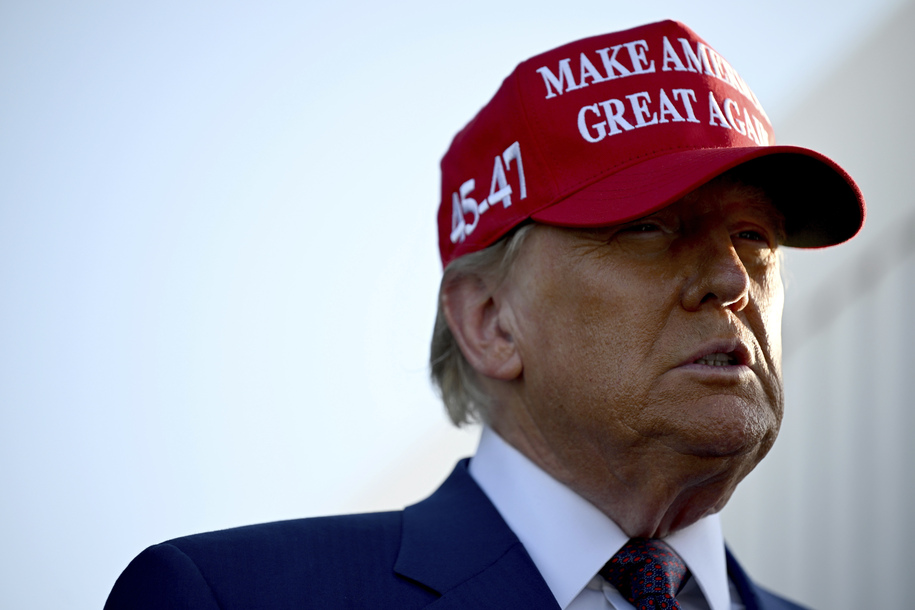
PoliticusUSA will provide independent news, thanks to the support of readers like you. Please consider supporting our work by becoming a subscriber. Subscribe now Those who attribute any sort of rational calculation or sane motive to Donald Trump’s words and actions are trying to rationalize the irrational. In simple terms, Trump is an impulsive bully who tries to hide his weaknesses by projecting strength through threats and intimidation. As Donald Trump ages and declines more, his blustery bag of tricks takes on a twinge of sadness. Preceived old enemies become fodder again, as an aging man can’t let go of his grudges. PoliticusUSA is a reader-supported publication. To receive new posts and support our work, consider becoming a free or paid subscriber. Such is the case when Donald Trump posted on Truth Social, “Because of the fact that Rosie O’Donnell is not in the best interests of our Great Country, I am giving serious consideration to taking away her Citizenship. She is a Threat to Humanity, and should remain in the wonderful Country of Ireland, if they want her. GOD BLESS AMERICA!” Trump is living all of his fantasies of power and dreams that he gets to decide what is best for America. The president’s mindset and impulse are fundamentally undemocratic. Donald Trump’s mindset is also an impossible fantasy. The secret of Donald Trump’s success isn’t that he is a visionary, strategist, or a master at pulling the levers of government to get things done. Trump’s only skill is that he has been able to sell the fantasy in his head to enough Americans to get elected president twice. The problem is that after he takes office, fantasy meets reality, and the American people get stuck with a person in charge of the federal government who is living in a dreamland that only exists in his mind. Donald Trump can’t take Rosie O’Donnell’s citizenship away. Trump can’t change election law with an executive order, or bring peace to Ukraine in 24 hours. Trump can’t lower prices or magically deport 20 million people. It’s all a fantasy. The reality of the current right-wing Republican run federal government is much more brutal for regular people than detached Trump could ever understand. Trump is declining, and when he lashes out at someone like Rosie O’Donnell, it is a sign that the overmatched man is sinking. What do you think about Trump’s threat to take away Rosie O’Donnell’s citizenship? Share your thoughts in the comments below. Leave a comment

Politics

Climate change helped fuel heavy rains that led to devastating Texas flood

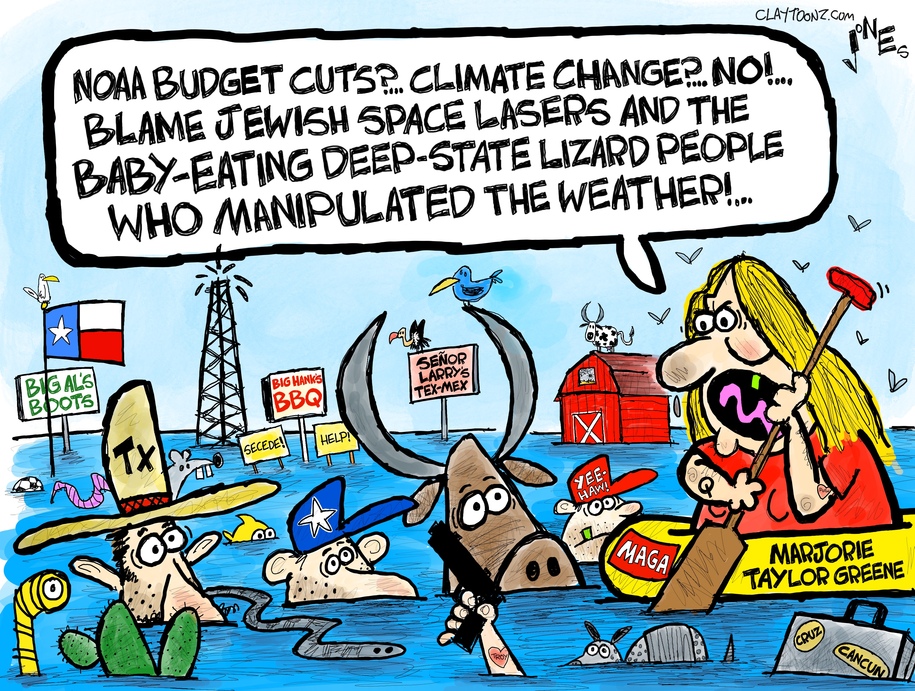
Officials are reporting more than 100 fatalities, including children and camp counselors. By Arcelia Martin for Inside Climate News Heavy rains last weekend that pushed the Guadalupe River in Texas’ Hill Country to its second-highest height on record had by Tuesday resulted in more than 100 reported deaths, including 27 children and counselors from Camp Mystic. But as search and rescue teams and volunteers sweep the banks of the river for missing people, the number of confirmed deaths is expected to grow. Climate scientists said the torrential downpours on July 4 exemplify the devastating outcomes of weather intensified by a warming atmosphere. These disasters, they said, will become more frequent as people around the world continue to burn fossil fuels and heat the planet. Related | The Texas flash flood is a preview of the chaos to come “This is not a one-off anymore,” said Claudia Benitez-Nelson, a climate scientist at the University of South Carolina. Extreme rainfall events are increasing across the U.S. as temperatures rise, she said. Warmer temperatures allow for the atmosphere to hold more water vapor, producing heavier rainfalls, she and other climate scientists said. This coupled with old infrastructure and ineffective warning systems can be disastrous. “It is an established fact that human-induced greenhouse gas emissions have led to an increased frequency and/or intensity of some weather and climate extremes since pre-industrial time, in particular for temperature extremes,” the United Nations’ Intergovernmental Panel on Climate Change reported in 2021. “At the global scale, the intensification of heavy precipitation will follow the rate of increase in the maximum amount of moisture that the atmosphere can hold as it warms about 7% per 1°C of global warming.” The U.S. government’s fifth National Climate Assessment, released in November 2023, says that “the number of days with extreme precipitation will continue to increase as the climate warms” and that “these changes in precipitation patterns can lead to increased flood hazards, impacting infrastructure, ecosystems, and communities.”   First responders from College Station Fire Department search along the banks of the Guadalupe River on July 6. Central Texas is infamous for its flash flooding and arid soil, hard-packed ground into which water does not easily infiltrate. So when rain hits the ground, it runs off the region’s hilly terrain and canyons and accumulates into creeks and rivers rapidly, overwhelming them, causing them to rise quickly. The flash flooding wasn’t a result of a full-strength storm, Benitez-Nelson said, but a remnant of a tropical storm. “That, to me, is really sad and deeply alarming,” Benitez-Nelson said. “Climate change is turning ordinary weather into these disasters.” Damp remnants of Tropical Storm Barry moved up from eastern Mexico as humid air also moved north from Mexico’s southwestern coast, stalling over Texas’ Hill Country. The warm air in both the low and high levels of the atmosphere is a recipe for intense rainfall, said John Nielsen-Gammon, the state’s appointed climatologist for more than 20 years. He and his colleagues compiled a list of all the rainfall events in Texas that produced more than 20 inches of rain a few years ago. One common feature the climatologists found was when wind blew from south to north, or when moisture was brought northward from the tropics, he said. “That sets up the possibility of very heavy rainfall,” Nielsen-Gammon said. He concluded in a report last year that extreme rain in Texas could increase 10 percent by 2036. Increased moisture from the tropics is driven by warming oceans. The oceans absorb over 90 percent of excess heat in the atmosphere produced by greenhouse gas emissions, warming ocean temperatures down to depths of 2,000 meters. Tropical storms gain strength from heat and evaporate more quickly at higher temperatures, adding more water vapor to the atmosphere, Nielsen-Gammon said. A study released Monday by ClimaMeter, a project funded by the European Union and the French National Center for Scientific Research, found that meteorological conditions leading up to Friday morning’s floods were warmer and 7 percent wetter than similar events of the past. Natural variability alone can’t explain the changes in rain associated with the exceptional weather, the report said, and points to human-caused climate change as one of the main drivers of the event. Related | Trump and Texas point fingers as flood death toll rises ClimaMeter’s analysis shows the difference in surface temperature, precipitation and wind speed between the present climate from 1987 and earlier decades, from 1950 to 1986. “Climate change loads the dice toward more frequent and more intense floods,” said Davide Faranda, one of the report’s authors who is research director of climate physics in the Laboratoire de Science du Climat et de l’Environnement, part of the French National Center for Scientific Research. “The flash flood that tore through Camp Mystic at night, when people were most vulnerable, shows the deadly cost of underestimating this shift.” He added: “A 7 percent increase of rain is a lot, but doesn’t really make the tragedy. If you have a good alert system, if the population knows the risk related to climate change for this weather phenomena and can take them into account, not minimize them, then you can save lives, because it’s not double the amount of precipitation, it’s not three times. It’s something that we can handle if we are prepared.” Other factors in the flooding death toll such as land use change, urban sprawl and warning system failures weren’t analyzed and may have further amplified the disaster, the report said. “We are in a more extreme climate,” Faranda said. “And every year, year after year, we make it more extreme by burning more fossil fuels. … These extremes now start to touch the limits of what is normal life on this planet, in terms of humans, in terms of infrastructure that we built with the old climate, in terms of resilience of the ecosystem.” Initial estimates for the damage and economic loss of this disaster will reach beyond $18 billion, according to AccuWeather. Staff writer Bob Berwyn contributed to this report.

Politics

Another red county business shutters due to Trump’s tariffs

A 100-year-old furniture manufacturer in western Michigan has shut its doors, citing President Donald Trump’s tariffs as the final blow. The company, Howard Miller, employed 195 people. “In recent years, a convergence of market influences beyond our control brought us to this point. Furniture sales are closely linked to the health of the housing market, which is struggling,” the company’s CEO, Howard J. “Buzz” Miller, said in a statement announcing the closing of his Zeeland-based company. “Our hopes for a market recovery early in the year were quickly dashed as tariffs rattled the supply chain, sparked recession fears and pushed mortgage rates higher. The furniture industry continues to shed jobs and announce plant closings.” Miller added: “This has been compounded by inflation and rising interest rates. Our business has been directly impacted by tariffs that have increased the cost of essential components unavailable domestically and driven specialty suppliers out of business, making it unsustainable for us to continue our operations.” Yes, the company was already facing headwinds, but Trump’s tariffs and the broader chaos of his economic policies drove the stake through its heart. The punchline, though not in a funny way, is that Ottawa County, Michigan, home to the company, voted 60–39 for Trump. Zeeland, where the company is based, sits in Michigan’s 4th Congressional District, which backed Republican Rep. Bill Huizenga by a 65–33 margin. Related | Look just how much red counties depend on the government they hate Asked in March by reporters about the local economic pain his party’s policies might inflict, Huizenga said, “Is there going to be some adjustments to that? Absolutely. Is it going to be easy? Not necessarily. Is it the right thing to do? Absolutely it is.” So, all good, Zeeland! This is just an “adjustment.” And if you’re looking for a social safety net to cushion the blow, don’t look to Huizenga—he proudly voted for Trump’s billionaire-rewarding “One Big, Beautiful Tax Bill.” Voting has consequences. 

Politics

Caribbean Matters: Trump, ICE, and the impact on sports

 Caribbean Matters is a weekly series from Daily Kos. Hope you’ll join us here every Saturday. If you are unfamiliar with the region, check out Caribbean Matters: Getting to know the countries of the Caribbean. While most of us who write and read here at Daily Kos are intensely focused on politics, according to polling data sports are still number one in terms of interest to the public. Interest in politics ranks lower, but sports and politics are intertwined and even more so in the age of President Donald Trump.  BBC sports editor Dan Roan raised the question of Trump’s impact on sports back in 2024 pointing out: Trump has promised the mass deportation of undocumented migrants, and to complete the building of a wall along the country’s southern border that was started during his first presidency. Such policies are set to heighten diplomatic tensions with Mexico, a fellow co-host of the 2026 World Cup (alongside Canada) and could lead to concerns among fans about travelling between the two countries. But Mexico isn’t the only concern. Cuba has been added to countries with visa restrictions for entering the U.S. which complicated things for the Cuban women’s volleyball team this month: The Cuban women’s national volleyball team was denied a chance to play in a tournament in Puerto Rico following the new visa restrictions imposed by U.S. President Donald Trump. The Cuban Volleyball Federation said last week that the team, comprising 12 athletes, a referee and several coaches, had their visa request denied and will be unable to attend the tournament later this month. […] Cuba was scheduled to play in the NORCECA Women’s Final Four tournament in Manatí, Puerto Rico. The tournament includes Puerto Rico, Mexico and Costa Rica and it awards ranking points toward qualification for the Volleyball Nations League. “We were focused on the competition because it’s right there,” said Dayana Martínez, another player. “Arriving at the embassy and being denied the visa affects us a lot because that competition gives us points to improve our ranking,” The story got me thinking about sports, international competitions, Caribbean competitors in the age of Trump, and ICE, and my thoughts turned to baseball. Though baseball is the United States’ second-favorite national sport these days after football, it is still the pastime that has the largest number of players from the Caribbean and Latin America.  There was a lot of attention in the mainstream media, like this NBC report, after the Los Angeles Dodgers’ response to ICE when agents showed up seeking access to the parking lot on June 19: YouTube Video Sports business writer Adam Minter, however, wrote a critique for Bloomberg about the response, or lack thereof, of Major League Baseball leadership. After all, not only are many baseball players from other countries, but Latinos are big fans of the sport. And up until the incident at Dodger Stadium, MLB had remained silent on the Trump administration’s immigration sweeps:  But the morning agents came, the Dodgers finally acted. The team denied them access to the parking lot and a day later announced a $1 million pledge to help immigrant families harmed by the ongoing raids. That’s a modest show of support for an organization worth an estimated $7.7 billion, and it hasn’t satisfied everyone. But satisfactory or not, it’s a clear indication of whose side the Dodgers are taking. […] In 2025, nearly 28% of MLB players are foreign-born, and it’s simply impossible to imagine baseball without stars such as Shohei Ohtani and Juan Soto. Those international stars, in turn, are leading a surge of interest in the game and the business of baseball. MLB is on track for its third straight year of attendance growth, and viewership in the US and Japan is surging in 2025. Of course, other factors are in play too, but does anyone seriously think a less international game would be as well-played, entertaining, and lucrative? Trump’s immigration policies put that success at risk. For example, under the terms of his recently enacted travel ban, the issuance of new visas to Cuban and Venezuelan nationals is severely restricted. Dozens of players from both countries — Hall of Famers like Tony Pérez and current players like Jose Altuve — have made prominent contributions to MLB for decades. The new policies will make it far more difficult for teams to bring new signees from either country to the US. But even if loopholes are found, the message to players and their families in these baseball hotbeds is hardly welcoming. So far, MLB has chosen to remain silent on these changes, just as it has clammed up over the deportations that are running through its Latino fanbase. Perhaps the league and its teams believe that quiet diplomacy is the best way to approach the Trump administration on immigration-related matters. But if so, there’s little public indication that doing so has achieved anything other than damaging relations between the Dodgers and their fans. Craig Calcaterra who writes a daily baseball newsletter, posted this to Bluesky: Every week there’s another sign that MLB is, eventually, going to have to stop pretending that it lives in a fantasyland world.  www.cupofcoffeenews.com/cup-of-coffe… [image or embed] — Craig Calcaterra (@craigcalcaterra.bsky.social) July 7, 2025 at 11:54 AM Baseball sports writer Michael Clair’s post to MLB.com with some numbers on internationally born players last season: The point is simple: Baseball is a global sport, and that’s reflected on every roster and at every ballpark. This year, a total of 264 players — nearly 28 percent of the league — representing 19 different countries and territories outside the United States were featured on 2024 Opening Day rosters, injured and inactive lists. That number is the fourth-most all-time on Opening Day rosters, trailing behind 2020 (291 players) which was played with expanded 30-man rosters; 2022 (275), which featured 28-man rosters; and is just a slight dip from last year when 270 international ballplayers made it onto Opening Day rosters. The league has been tracking this information since

Politics

The Recap: Trump’s tariff threats return, and how much can one man suck up to the president?

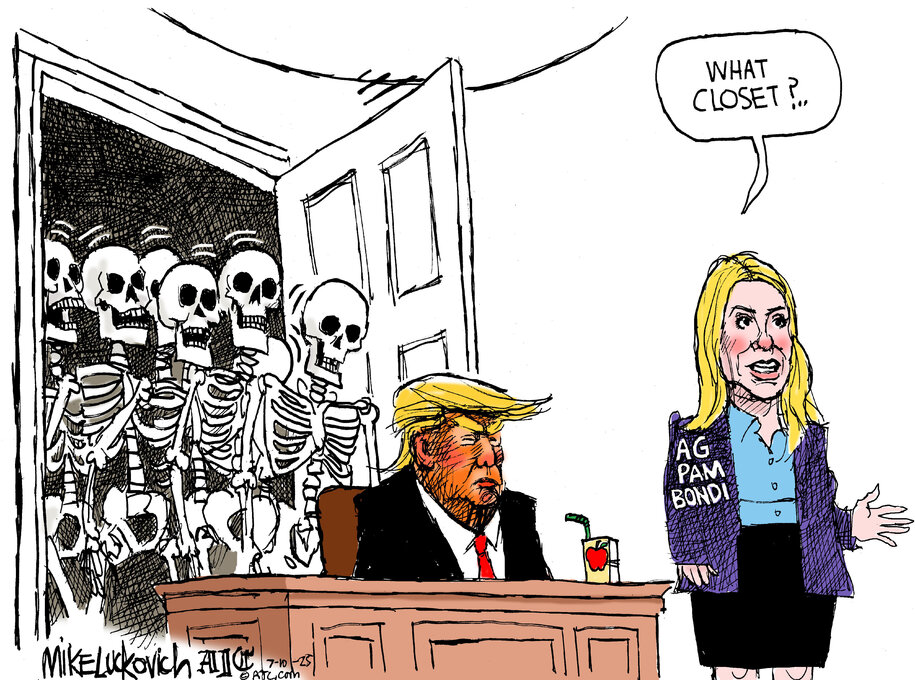
A daily roundup of the best stories and cartoons by Daily Kos staff and contributors to keep you in the know. Trump’s threats are back in full force to wreck the economy Fingers crossed he pulls another TACO. Trump’s racist ‘border czar’ admits ICE is breaking the law “People need to understand they don’t need probable cause to walk up to somebody, briefly detain them, and question them.” Trump team launches brutal purge of State Department workers Who needs diplomacy anyhow? Cartoon: Proudly not woke Easy to see why the MyPillow guy is a fan of MAGA. ‘Make halal eight bucks again’: Zohran Mamdani has the blueprint It hits at the key issue that defines basically every election. Missouri AG tries to get Trump’s attention in the most pathetic way What if all chatbots were racist? Click here to see more cartoons.

Politics

Failed X CEO declares victory on her way out as app bleeds users and cash

Linda Yaccarino resigned as CEO of X on Wednesday, declaring victory in implementing Elon Musk’s vision for the platform.  “I’m immensely grateful to him for entrusting me with the responsibility of protecting free speech, turning the company around, and transforming X into the Everything App,” she wrote. Protecting “free speech” for Nazis has certainly been important to Musk, as his own AI chatbot has fondly proven—literally the day before Yaccarino’s resignation. But he certainly doesn’t believe in the free speech of companies that don’t want to advertise on a Nazi-enabling platform, suing them for pulling their advertising. And let’s not forget Musk’s blocking of links to rivals like Mastodon and other social media sites.  Elon Musk in the Oval Office with President Donald Trump Whether the company has “turned around” is debatable, and there certainly aren’t any transparent financials to support that claim. X touted a win after raising $1 billion in new financing at a $32 billion valuation—down from the $44 billion that Musk paid for it.  While that was higher than analysts expected, much of the bump coincided with Musk’s bromance with President Donald Trump and his growing influence in the administration. “Investments” in Trumpworld have a way of getting inflated by those seeking access and favors from corrupt oligarch overlords. But we do know that the platform is hemorrhaging users. According to Similarweb, X had 388.5 million mobile users when Yaccarino took the job in June 2023. As of last month? It’s down to 311.1 million. That’s a loss of more than 75 million users—a 20% decline. In other words, 1 in 5 users has bailed. Then there’s Yaccarino’s final claim, that she transformed X into “the Everything App.” Which is funny because … she didn’t. This refers to Musk’s repeated desire to turn X into a U.S. version of China’s WeChat.  “In the months to come, we will add comprehensive communications and the ability to conduct your entire financial world,” he wrote on X in July 2023, a month after hiring Yaccarino. That was two years ago. According to The Guardian, WeChat is so prominent in China that it’s nearly impossible to navigate without it. The app, owned by the Chinese tech giant Tencent, is used for messaging, social media, payments, subscriptions, utility bills, food deliveries, transportation tickets, ride-sharing services, and more. By contrast, X remains … X. The same toxic cesspool, now with a Nazi AI attached. It’s not a super app with financial tools and killer features. It’s just empty promises, user loss, and legal drama. So what, exactly, did Yaccarino transform? Even Musk didn’t bother pretending to care about her resignation, simply responding with a frosty, “Thank you for your contributions.”  Then he moved on to posting about everything else except her.

Scroll to Top