
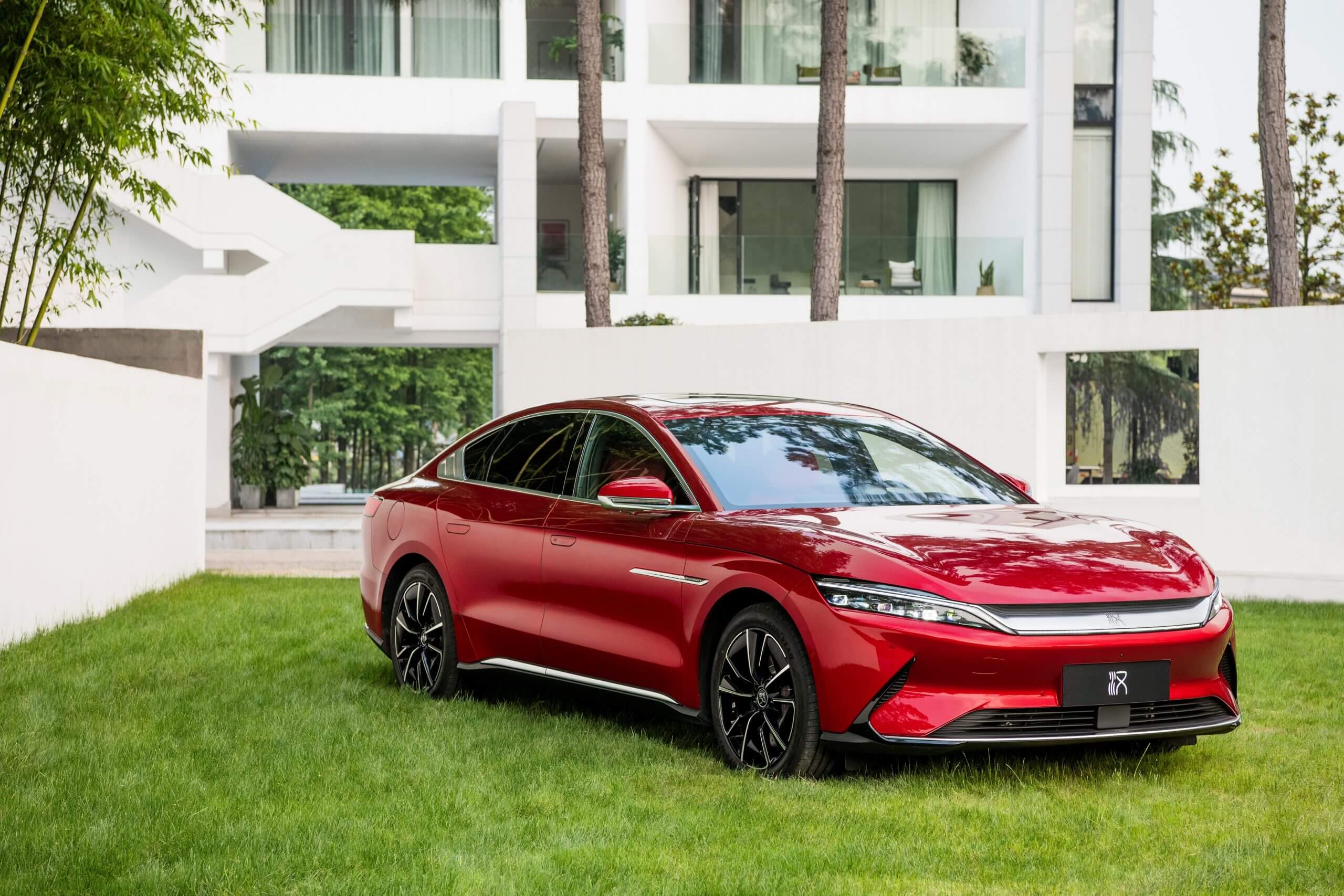
Chinese electric vehicle sales in Europe reached a record high during the first five months of 2026. Chinese brands sold 171,800 battery-electric vehicles across the 18 largest Western European markets, raising their market share from 9.4% to 14.2% in one year. One out of every seven EVs sold in Western Europe now carries a Chinese brand, despite additional EU duties of up to 35.3% on top of the standard 10% automobile tariff.
Brussels claims China is “dumping” state-subsidized vehicles, and there is no question that Beijing supported its EV industry. Yet Europe subsidizes battery factories, charging stations, renewable energy, manufacturers, and the consumers purchasing these cars. Italy’s incentives temporarily reduced the Chinese Leapmotor T03 to as little as €5,000. The difference is that China used industrial policy to build an efficient supply chain, while Europe spent public money creating regulations, mandates, compliance departments, and carbon-accounting schemes.
According to the International Energy Agency, producing a battery-electric vehicle in China costs more than 30% less than producing one in an advanced economy. China manufactured 70% of the world’s electric cars in 2025 and more than 80% of its battery cells. It also controlled approximately 85% of cathode-active-material production and more than 90% of anode-active-material production. Europe is attempting to compete with China while purchasing essential components from the same Chinese supply chain it supposedly intends to defeat.
Chinese battery packs were about 35% cheaper than European packs in 2025. Rhodium Group estimates that manufacturing a small EV in China costs nearly $10,000 less than producing the equivalent vehicle in Germany. Brussels can impose more tariffs and hold another emergency summit, but it cannot legislate away a $10,000 structural disadvantage.
China also embraced lithium-iron-phosphate batteries while Western manufacturers remained committed to more expensive nickel-based chemistry. LFP batteries are cheaper, safer, more durable, and do not require nickel or cobalt. Chinese companies spent years improving the technology until LFP represented more than 55% of global EV battery deployment in 2025. Europe debated environmental standards while China refined the chemistry, built the factories, secured the materials, and lowered the cost.
European manufacturers attempted to protect premium profit margins while Brussels ordered consumers to abandon combustion engines. They believed people would pay €40,000 or €50,000 for an electric car because regulators intended to eliminate the affordable alternative. That arrogance created an opening for BYD, Geely, SAIC, Chery, Leapmotor, and Xpeng.
Chinese manufacturers offered more than 120 electric models in Europe during the first five months of 2026, compared with roughly 100 European models. Around 30% of battery-electric models in China had an entry price below $20,000 in 2025, while fewer than 10% of European BEVs were available below $30,000.
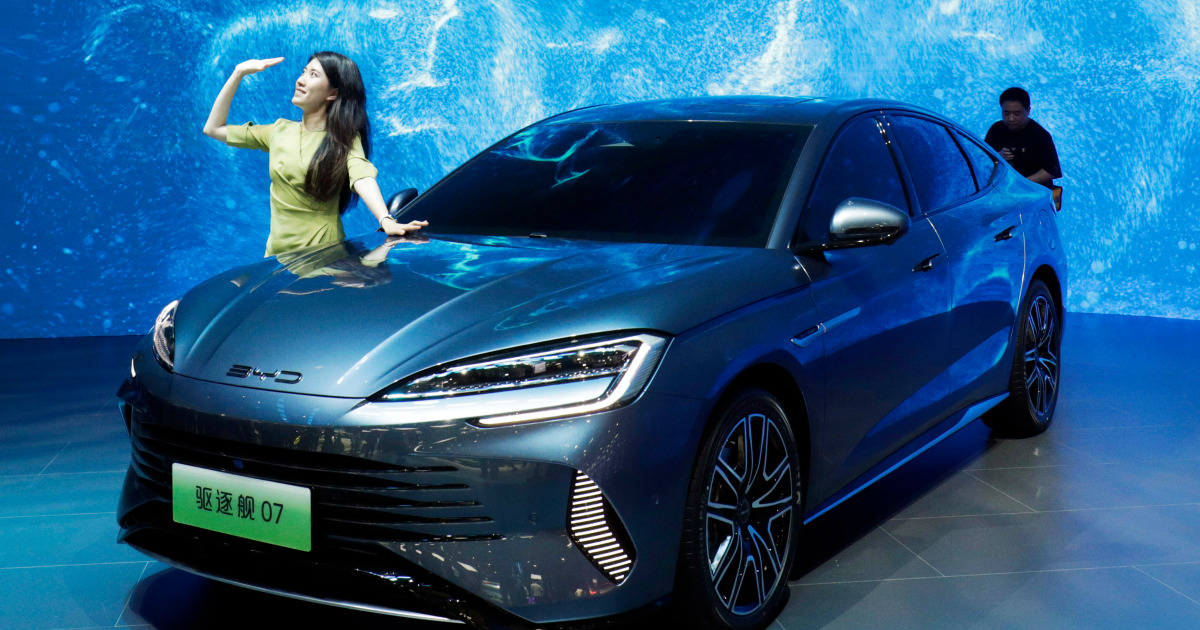
Energy remains the issue Brussels refuses to confront. Europe surrendered cheap Russian energy, closed nuclear plants, imposed carbon taxes, restricted fossil fuels, and attempted to run an industrial economy on intermittent power. China expanded coal, nuclear energy, ports, railways, refining, chemical processing, and battery production. Europe lectures China about emissions while importing Chinese vehicles and batteries manufactured with the dependable energy Europe declared unacceptable.
Brussels responded with tariffs because government punishes consumers when its own policies fail. BYD faces an additional duty of 17%, Geely 18.8%, and SAIC 35.3%. These penalties may buy time, but they do nothing to reduce European production costs, improve software, accelerate development, or rebuild the battery supply chain.
Chinese manufacturers are also moving production into Europe. BYD is establishing manufacturing in Hungary, allowing it to avoid duties on vehicles assembled inside the EU. Chinese companies can bring their production methods, battery relationships, and supply-chain discipline directly into Europe. Brussels will then discover that the problem was never simply where the vehicle was assembled, but the efficiency of the entire industrial system.
Europe cannot allow its automobile industry to disappear. The sector supports millions of jobs and provides expertise essential to steel, chemicals, robotics, semiconductors, machine tools, AI, and defense. Europe is already heavily dependent upon China for solar panels and lithium-ion batteries. Permitting the auto supply chain to vanish would turn Europe into a consumer market living on tourism, taxation, and debt.
The public is not betraying Europe by purchasing an affordable Chinese EV. Brussels betrayed Europe by making European manufacturing uneconomic and then demanding that consumers personally pay the difference. If BYD provides more equipment and technology for thousands less than Volkswagen, a working family has no obligation to impoverish itself to protect executives and politicians who refused to adapt.
China did not steal Europe’s automobile industry. Europe handed it over through arrogance, regulation, and the delusion that government could decree prosperity.